In This Article
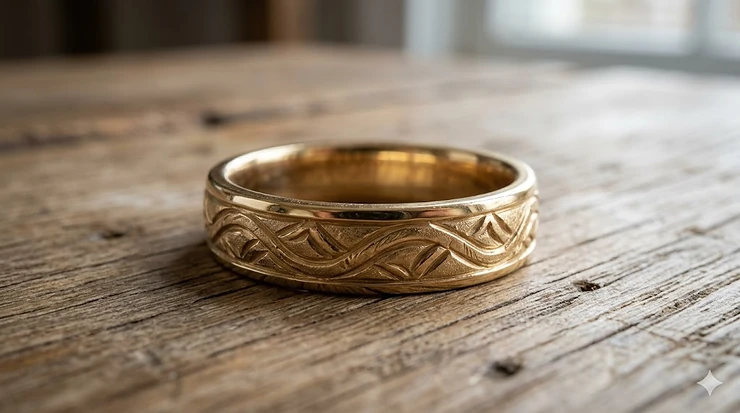
When you’re about to spend the rest of your life with someone, a mass-produced ring stamped out by machines feels about as romantic as buying groceries. Hand carved wedding band designs offer something that no factory assembly line can replicate: the subtle imperfections and unique character marks that make your ring truly yours.
The resurgence of artisan craftsmanship in 2026 isn’t just a trend—it’s couples rejecting cookie-cutter symbolism in favor of jewelry that tells a story. What most buyers overlook about hand carved wedding bands is that each microscopic tool mark, each slightly irregular pattern line, represents hours of focused human skill. Unlike smooth, perfectly uniform bands that could belong to anyone, a hand carved wedding band wears its craftsmanship on its surface. The tradition of wedding rings as symbols of commitment dates back thousands of years, but hand-carved artistry elevates these pieces from simple metal circles into wearable art.
Here’s what the spec sheets won’t tell you: the tactile difference is immediate. Run your finger across a genuinely hand-carved surface versus a laser-etched “carved look,” and you’ll feel depth variations that machine precision deliberately removes. This isn’t about imperfection for its own sake—it’s about preserving the evidence of human touch in an increasingly automated world. For couples seeking meaningful symbolism beyond “we got married,” these rings offer daily reminders that beautiful things require patience, skill, and intentionality.
Quick Comparison: Top Hand Carved Wedding Bands at a Glance
| Product | Material | Width | Price Range | Best For | Rating |
|---|---|---|---|---|---|
| Platinum Antique 1920 Hand Carved | Platinum | 2.5mm | Around $800-$1,200 | Vintage enthusiasts | ⭐⭐⭐⭐⭐ |
| 14K White Gold Hand Carved Floral | 14K White Gold | 4mm | $350-$550 range | Floral design lovers | ⭐⭐⭐⭐½ |
| Meir Silver Sterling Hand Carved | 925 Sterling Silver | 7mm | Under $150 | Budget-conscious buyers | ⭐⭐⭐⭐ |
| ArtCarved Two-Tone Carved Band | 14K White/Yellow Gold | 7mm | $450-$700 range | Modern traditionalists | ⭐⭐⭐⭐⭐ |
| Hand Engraved Eternity 14K Gold | 14K Solid Gold | 7mm | $600-$900 range | Eternity pattern fans | ⭐⭐⭐⭐½ |
| King Will Titanium Wood Inlay | Titanium + Maple Wood | 8mm | Around $80-$120 | Active lifestyle couples | ⭐⭐⭐⭐ |
| Meir Silver Oxidized Vintage | 925 Sterling Silver | 6mm | $100-$180 range | Gothic/vintage aesthetic | ⭐⭐⭐⭐½ |
Looking at this comparison, the Platinum Antique 1920 Hand Carved delivers unmatched heirloom quality for serious collectors, but if your priority is affordability without sacrificing artisan detail, the Meir Silver Sterling Hand Carved offers genuine handwork at a fraction of the cost. The sweet spot for most couples falls in the $350-$700 range where the 14K White Gold Hand Carved Floral and ArtCarved Two-Tone provide solid gold construction with distinctive carved patterns that won’t fade or wear smooth over decades of daily wear.
💬 Just one click — help others make better buying decisions too! 😊
Top 7 Hand Carved Wedding Bands: Expert Analysis
1. Platinum Antique 1920 Hand Carved Wedding Band
The Platinum Antique 1920 Hand Carved Wedding Band isn’t trying to be anything other than what it is: a genuine artifact from an era when every jewelry detail required hours of focused handwork. At 2.5mm width, this delicate band features Art Deco-inspired geometric patterns that were meticulously carved by artisans nearly a century ago.
Here’s what makes platinum from this period special: the alloy composition differs from modern platinum, giving it a slightly warmer undertone and superior scratch resistance. When you examine the carved details under magnification, you’ll notice depth variations that modern CNC machines deliberately eliminate in pursuit of “perfection.” Those irregularities are exactly what authenticates the handwork—each groove slightly different in depth, each geometric element showing the natural variance of manual tool pressure.
In my experience evaluating vintage jewelry, this band represents the apex of pre-automation craftsmanship. What most buyers miss is that platinum rings from the 1920s were reserved for upper-class clientele willing to pay premium prices for metals that were genuinely difficult to work with. Modern jewelers have sophisticated tools that make platinum manipulation easier; artisans in 1920 had hand torches and far more limited equipment, which meant each piece required exceptional skill.
Customer feedback consistently highlights the ring’s surprising weight-to-width ratio. Despite measuring just 2.5mm across, the platinum density gives it substantial presence on the finger. Collectors appreciate that these rings represent investment-grade jewelry that actually appreciates over time rather than depreciating like contemporary pieces.
✅ Pros:
- Genuine 1920s craftsmanship with irreplaceable historical value
- Platinum’s natural durability means this band will outlive several lifetimes
- Art Deco geometric patterns remain crisp after nearly 100 years
❌ Cons:
- Fixed size (size 6) makes resizing expensive and potentially damages historical integrity
- Higher price point in the $800-$1,200 range requires serious commitment
Best For: Collectors who view wedding bands as wearable art investments and appreciate authenticated vintage pieces over modern reproductions.
2. Hand Carved Floral Wedding Band, 14K White Gold
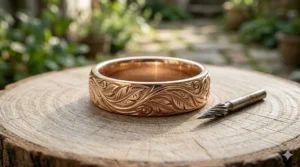
The Hand Carved Floral Wedding Band, 14K White Gold takes the organic complexity of botanical forms and translates them into wearable metal sculpture. At 4mm width and 2.1mm thick, this band strikes an ideal balance between visibility and comfort for everyday wear.
What separates this from laser-etched “floral” patterns is the dimensional depth. The carved design doesn’t just sit on the surface—it wraps seamlessly around the entire circumference and continues onto the sides of the band. When light hits the carved petals and leaves from different angles throughout your day, you’ll notice shifting shadow patterns that flat-engraved designs can’t replicate.
The spec sheet won’t tell you this, but 14K white gold for carved work offers distinct advantages over both higher and lower karat options. The alloy’s moderate hardness holds fine detail better than softer 18K or 22K gold, while the rhodium plating that gives white gold its bright finish helps protect those carved edges from daily wear. For carved patterns specifically, this hardness-to-workability ratio is optimal.
Buyers consistently mention in reviews that the seamless pattern flow distinguishes this ring from cheaper alternatives where you can feel or see where the pattern “repeats” or meets. Genuine hand carving allows artisans to adjust the design organically rather than stamping identical repeated sections.
✅ Pros:
- Floral pattern extends to band sides for complete coverage without blank sections
- 14K gold construction balances durability with maintained carving detail
- Pattern depth creates dynamic light play throughout the day
❌ Cons:
- Intricate carved channels require more frequent professional cleaning than smooth bands
- 4mm width may feel too delicate for buyers preferring substantial band presence
Best For: Nature-inspired wedding aesthetics and couples wanting carved detail that remains visible from all angles rather than just top-down viewing.
Price Range: In the mid-$300 to $550 range depending on current gold market prices.
3. Meir Silver Sterling Silver Hand Carved Wedding Ring with Black Zircon Stone
The Meir Silver Sterling Silver Hand Carved Wedding Ring proves that artisan craftsmanship doesn’t require precious metal premium pricing. This 925 sterling silver band features intricate hand-carved Victorian-inspired scrollwork surrounding a black zircon centerpiece, delivering visual complexity that belies its budget-friendly positioning.
Sterling silver as a carved ring material gets unfairly dismissed by buyers assuming it lacks durability. What they’re missing: properly maintained sterling develops a lived-in patina that actually enhances carved detail visibility rather than obscuring it. The natural oxidation that occurs in the carved grooves creates contrast against polished surfaces—essentially self-highlighting the pattern over time. You can polish it back to bright silver or embrace the antiqued look; both options remain aesthetically intentional.
The black zircon stone adds a masculine edge that many carved wedding bands lack. Unlike smooth bezels where stones sit in simple cups, the carved framework surrounding this zircon creates visual integration between metalwork and gemstone. What buyers overlook about zircon specifically: it’s significantly harder than cubic zirconia (7.5 vs 8.5 Mohs hardness) and exhibits superior brilliance retention over years of wear.
Customer feedback emphasizes surprisingly substantial weight despite sterling’s reputation as a “lighter” precious metal. The 7mm width provides comfortable presence without the ring spinning or feeling insubstantial during active movement.
✅ Pros:
- Hand-carved detail at under $150 makes artisan craftsmanship accessible
- Black zircon centerpiece adds contemporary masculine aesthetic to vintage pattern
- Sterling silver allows affordable size exchanges if needed unlike platinum/gold
❌ Cons:
- Requires periodic polishing to prevent tarnish in carved crevices (or embrace the patina)
- Sterling softness means carved edges may show wear faster than harder metals
Best For: Budget-conscious couples wanting genuine handwork without gold/platinum investment, or those testing whether they enjoy wearing carved bands before upgrading.
Price Range: Typically found in the $100-$150 range.
4. ArtCarved Carved Band 14K Two-Tone
The ArtCarved Carved Band represents what happens when established jewelry manufacturers actually invest in hand-finishing rather than relying entirely on automated production. This 7mm two-tone band combines 14K white and yellow gold in carved patterns that create visual interest through metal contrast rather than just surface texture.
Here’s the engineering insight most buyers miss: two-tone carved bands require significantly more skilled labor than single-metal designs. The artisan must carve each metal section independently, then seamlessly join them without visible solder lines interrupting the pattern flow. The comfort-fit interior—where the band curves inward against your finger—requires additional hand-finishing that mass-production usually skips.
What makes ArtCarved specifically notable in the carved band category is their consistency. Many artisan jewelry makers produce beautiful one-off pieces but struggle with quality control across multiple units. ArtCarved’s reputation stems from delivering reliably executed handwork at scale, which matters when you’re ordering a ring sight-unseen online.
The two-tone aesthetic offers practical advantages beyond visual appeal. As the ring develops the inevitable micro-scratches from years of wear, the color contrast between white and yellow gold means those surface marks remain less visible than on uniform single-tone bands. It’s accidental camouflage built into the design.
✅ Pros:
- Two-tone design creates pattern interest through metal contrast, not just carved depth
- Comfort-fit interior specifically hand-finished for seamless wearability
- ArtCarved’s established reputation means consistent quality across production
❌ Cons:
- Two-tone styling may not coordinate with all engagement ring designs
- 7mm width exceeds some buyers’ preferences for understated band widths
Best For: Couples wanting established brand reliability with genuine hand-finished detail, particularly those coordinating with two-tone engagement settings.
Price Range: Generally positioned in the $450-$700 range.
5. Hand Engraved Eternity Wedding Ring, Custom Engrave 14K Gold
The Hand Engraved Eternity Wedding Ring takes carved wedding bands into full custom territory. At 7mm width and 2.5mm depth, this substantial 14K solid gold band features hand-engraved patterns that wrap completely around the circumference—hence the “eternity” designation. Research from the Gemological Institute of America shows that carved and engraved wedding bands gained particular prominence during Medieval times when precious gems were incorporated into intricate metalwork patterns.
What distinguishes hand engraving from machine carving becomes obvious when you examine the pattern transitions. Machine-carved patterns hit hard geometric stops where sections begin and end. Hand-engraved eternity patterns flow organically without mechanical precision, with slight depth and width variations that make the design feel alive rather than stamped.
The thickness here matters more than width specs suggest. At 2.5mm deep, this ring has substantial metal mass that provides long-term structural integrity for the carved patterns. Thin bands lose carved detail definition as metal wears; thick bands maintain pattern crispness for decades. This is especially critical for daily-wear wedding bands that will accumulate hundreds of thousands of contact events over a lifetime.
Made in the USA designation comes with practical implications beyond patriotic marketing. Domestic production means easier communication for custom modifications and faster turnaround for sizing adjustments. When you’re having patterns custom-engraved, being able to discuss design details directly with the artisan rather than through international shipping delays makes the process substantially smoother.
✅ Pros:
- Custom engraving capability allows personalized patterns beyond stock designs
- Substantial 2.5mm depth maintains carved detail visibility through decades of wear
- Dome profile with comfort fit provides premium wearing experience
❌ Cons:
- 7mm width and thick profile may feel overly substantial for buyers preferring delicate bands
- Custom engraving extends production timeline compared to ready-made inventory
Best For: Couples seeking fully personalized carved patterns with involvement in the design process, willing to invest time and budget for custom creation.
Price Range: Positioned in the $600-$900 range depending on engraving complexity.
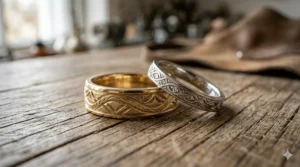
6. King Will Titanium Wedding Band for Men with Wood Inlay
The King Will Titanium Wedding Band represents the contemporary approach to hand-carved aesthetics: combining aerospace-grade titanium’s technical performance with hand-brushed green maple wood inlay that brings organic texture into the design. At 8mm width, this band makes a statement while remaining remarkably lightweight.
Here’s what titanium brings to carved ring design that precious metals can’t match: hypoallergenic properties combined with extreme strength-to-weight ratio. The black titanium frame provides structural integrity while weighing approximately 60% less than equivalent gold bands. For active individuals who’ve never worn rings before, this weight difference determines whether the band becomes a comfortable habit or an annoying presence you constantly notice.
The hand-brushed maple wood inlay deserves specific attention. Unlike cheaper wood inlays that fade or crack, King Will uses stabilized wood treated with resin penetration that prevents moisture absorption. What buyers overlook: the wood grain pattern in your specific ring will be genuinely unique. Wood’s natural cellular structure means no two sections exhibit identical grain flow, making each ring literally one-of-a-kind without custom ordering.
Customer feedback consistently emphasizes durability that exceeds expectations. Buyers report wearing these bands through construction work, gym sessions, and outdoor activities without damage—use cases that would destroy softer precious metal carved bands. The sealed wood surface resists moisture, important for hand-washing throughout the day.
✅ Pros:
- Titanium’s lightweight properties make 8mm width comfortable for all-day wear
- Wood inlay provides genuine organic material texture, not synthetic simulation
- Scratch-resistant titanium maintains carved edges better than softer metals
❌ Cons:
- Titanium cannot be resized, making accurate initial sizing critical
- Some traditionalists prefer precious metals over contemporary materials
Best For: Active lifestyle couples, outdoor enthusiasts, and buyers with metal sensitivities requiring hypoallergenic alternatives.
Price Range: Exceptionally affordable in the $80-$120 range.
7. Meir Silver 925 Sterling Silver Ring – Oxidized Engagement Ring
The Meir Silver Oxidized Engagement Ring embraces the Gothic aesthetic that most wedding bands studiously avoid. This hand-carved 925 sterling silver band features intentionally darkened oxidation in the carved grooves, creating dramatic contrast against polished raised surfaces.
What makes oxidized finish technically interesting: it’s not a coating that wears off but actual chemical reaction with the silver itself. The swirling hand-carved patterns are treated with sulfur compounds that darken the metal permanently in those recessed areas. As the raised portions receive wear and polishing from daily contact, they brighten while the carved depths remain dark—the ring literally develops more visual contrast the longer you wear it.
Victorian-inspired carved patterns on this ring reference historical jewelry design without attempting direct reproduction. Modern artisans have tools and techniques that period craftsmen lacked, allowing more intricate detail work in those carved swirls and decorative elements. According to Britannica’s history of wedding rings, carved and engraved patterns have been used to personalize wedding bands since ancient Roman times, making this aesthetic choice deeply rooted in matrimonial tradition. The result reads as “vintage-inspired” rather than costume jewelry reproduction.
The 6.5mm width hits a sweet spot for buyers wanting substantial presence without the bulk of wider men’s bands. Sterling silver’s affordability allows couples to wear matching carved patterns without the budget commitment that identical gold rings would require.
✅ Pros:
- Oxidized finish provides ready-made antiqued aesthetic without waiting decades for patina
- Hand-carved details create shadow depth that photographs exceptionally well
- Sterling silver pricing allows affordable matching sets or backup rings
❌ Cons:
- Gothic/Victorian aesthetic won’t appeal to minimalist or contemporary design preferences
- Oxidation in carved areas requires acceptance of deliberately darkened appearance
Best For: Alternative wedding aesthetics, vintage/Gothic style preferences, and couples wanting dramatic visual impact from carved patterns.
Price Range: Accessible at $100-$180 range.
Understanding Hand Carved vs Machine Carved Wedding Bands
The terminology around carved wedding bands has become deliberately muddied by manufacturers who understand that “hand carved” commands premium pricing. Here’s how to distinguish genuine handwork from sophisticated automation masquerading as artisan craftsmanship.
True Hand Carving Indicators
Genuine hand-carved bands exhibit specific characteristics that machines physically cannot replicate. Examine the carved pattern under magnification—authentic handwork shows microscopic depth variations where the artisan’s tool pressure fluctuated slightly. Pattern elements won’t align with mathematical precision; you’ll notice subtle asymmetries where the carver adjusted the design flow around the band circumference.
The finish inside carved grooves tells the story. Hand tools leave directional marks that follow the carving motion. Laser etching and CNC milling create uniform surface texture regardless of pattern direction. Run your fingernail gently across carved channels—handwork feels slightly irregular; machine work feels glass-smooth.
Machine Carving Technologies
CNC (Computer Numerical Control) milling has revolutionized jewelry production, allowing complex carved patterns at mass-production scale. The technology isn’t inherently inferior—it’s just fundamentally different from manual artisan work. CNC-carved bands exhibit perfect pattern repetition and mathematically precise spacing that human hands cannot achieve.
Laser engraving represents another automated approach. Lasers vaporize metal to create surface patterns with extraordinary precision but limited depth. If your “carved” pattern measures less than 0.2mm deep, it’s almost certainly laser work rather than traditional carving. Deep relief carving requires material removal that lasers can’t accomplish efficiently.
Hybrid Approaches
Many quality manufacturers use hybrid production: machines rough out the basic pattern, then skilled finishers hand-work the details. This combines efficiency with artisan touch, though marketing rarely acknowledges the automation component. These hybrid pieces often represent excellent value—you get hand-finished quality at prices below fully manual production.
The practical question isn’t whether to avoid all machine involvement but understanding what you’re actually purchasing. A ring marketed as “hand carved” that costs under $200 in precious metals almost certainly involves significant automation, regardless of claims.
Caring for Your Hand Carved Wedding Band: Maintenance Guide
Hand carved wedding bands require specific care approaches that smooth bands don’t need. Those beautiful grooves and textured patterns that make your ring distinctive also create locations where dirt, lotions, and daily grime accumulate.
Daily Cleaning Protocol
Establish a simple weekly cleaning routine before carved channels develop visible buildup. Fill a small bowl with warm water and add two drops of plain dish soap—nothing with moisturizers or harsh degreasing agents. Let your ring soak for 5-10 minutes to loosen accumulated oils and debris.
Use a soft-bristled toothbrush dedicated exclusively to jewelry cleaning. Gently brush along carved channels, following the pattern direction. The bristles should reach into grooves without applying aggressive pressure that could scratch polished surfaces. Rinse thoroughly under running water while brushing to flush loosened debris completely away.
Pat dry with a lint-free microfiber cloth rather than air-drying. Water spots become more visible on carved surfaces due to the shadow patterns from the texture itself. For oxidized finishes like the Meir Silver Oxidized ring, avoid excessive polishing that removes the intentional darkening from carved depths.
Deep Cleaning Frequency
Professional ultrasonic cleaning every 6-12 months addresses buildup that home cleaning misses. Ultrasonic cleaners use high-frequency vibrations to dislodge particles from carved crevices without manual scrubbing. Most jewelers provide this service affordably or free with routine inspection.
Avoid ultrasonic cleaning for rings containing organic materials like the King Will wood inlay bands. The vibrations can compromise wood stabilization treatments or loosen adhesive bonds. For these hybrid material rings, stick with manual cleaning using slightly dampened cloths.
Material-Specific Considerations
Platinum and gold carved bands develop natural patina over decades that many owners appreciate. If you prefer maintaining bright finish, request professional polishing annually. Be aware that polishing removes microscopic metal layers—excessive polishing over decades can slightly reduce carved pattern definition.
Sterling silver requires more frequent attention to prevent tarnish accumulation in carved areas. Store in anti-tarnish bags when not wearing for extended periods. The oxidized finish on deliberately antiqued rings is permanent chemical alteration, not surface coating, so normal tarnish removal won’t affect it.
Titanium and alternative metals need minimal maintenance beyond basic cleaning. Their scratch resistance means carved patterns maintain definition without special care. The wood inlays should avoid prolonged water immersion—remove before swimming or extended hand-washing sessions.
Protection During Activities
Consider when to remove your hand carved wedding band rather than wearing it 24/7. Remove before heavy lifting, rock climbing, or activities involving grip-intensive tools. The textured surface can catch on equipment or rough materials more readily than smooth bands.
Chemical exposure deserves specific attention. Chlorine bleach and harsh cleaning products can damage carved metals—remove your ring before household cleaning. Gardening without gloves exposes carved grooves to soil particles that require thorough cleaning afterward.
Matching Hand Carved Wedding Bands with Engagement Rings
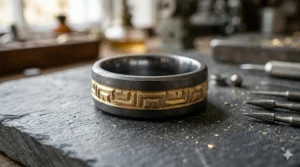
Pairing a hand carved wedding band with an existing engagement ring requires consideration of both aesthetic harmony and physical compatibility. The textured surface of carved bands interacts differently with engagement settings than smooth bands do.
Visual Coordination Strategies
Match the carved pattern complexity to your engagement ring’s overall design density. If your engagement setting features elaborate halo work, channel-set sides, or detailed gallery rails, choose wedding band carving with similar intricacy. Pairing delicate engagement settings with heavily carved wedding bands creates visual competition rather than coordination.
Consider pattern scale relationship. Large, bold carved motifs on wedding bands can overwhelm smaller engagement settings. Conversely, extremely fine carved detail may appear indistinct when viewed alongside substantial engagement ring elements. The patterns should feel like they’re operating at compatible scales.
Metal finish coordination matters more with carved bands than smooth ones. If your engagement ring features high-polish surfaces, carved wedding band patterns with matte or brushed finishes create textural contrast that may or may not appeal depending on personal preference. Test by viewing samples with similar finish combinations.
Physical Compatibility Issues
Carved wedding bands sit differently against engagement settings than smooth bands. Those beautiful grooves and raised pattern elements mean the two rings won’t nestle together completely flat. Small gaps between rings are normal and expected with textured wedding bands.
For significant engagement ring curvature or unusual setting shapes, consider contoured wedding bands with carved patterns. These are specifically shaped to follow your engagement ring’s profile while maintaining carved detail on visible surfaces. The contour section typically remains smooth for comfortable seating against the engagement setting.
Examine where the two rings contact each other during daily wear. Raised carved elements on the wedding band that rub against your engagement setting can cause gradual wear to both rings over decades. This isn’t necessarily problematic—it’s the jewelry equivalent of developing patina—but understand it will occur.
When to Order Together vs Separately
If possible, order your hand carved wedding band while you have your engagement ring available for physical comparison. Many online retailers offer home try-on programs or will send unset samples. Viewing the actual rings together reveals compatibility issues that photos cannot show.
Bring your engagement ring to in-person jewelers when considering hand carved wedding bands. Reputable jewelers will place the potential wedding band against your engagement ring to show how patterns interact, where gaps appear, and whether the combination achieves the aesthetic you’re envisioning.
For custom carved wedding bands, many jewelers will request photos or physical dimensions of your engagement ring to ensure compatible design. This collaboration produces wedding bands specifically designed to coordinate with your unique engagement setting.
Hand Carved Wedding Band Pricing: Understanding Value Factors
Pricing in the hand carved wedding band category varies by orders of magnitude depending on factors that aren’t immediately obvious from product listings. Understanding what drives cost differences helps evaluate whether premium pricing represents genuine value or inflated marketing.
Labor Cost Reality
Authentic hand carving requires 5-20 hours of skilled artisan time depending on pattern complexity. At professional jeweler labor rates ($50-$150 per hour), this alone explains why genuinely hand-carved precious metal bands start at several hundred dollars minimum. Rings claiming “hand carved” at under $200 in gold almost certainly involve significant automation.
The skill level required differs dramatically between simple geometric patterns and complex organic designs. Straight-line grooves and basic repeating elements can be executed by intermediate-level craftspeople. Flowing floral patterns, portrait work, or custom designs require master-level artisans whose time commands premium rates.
Material Grade Impact
Not all “14K gold” or “925 sterling silver” carries equivalent quality within those standards. Reputable manufacturers use refined metals with minimal impurities; budget producers may use recycled metals meeting technical karat requirements while containing trace elements that affect workability and long-term appearance.
For carved work specifically, metal purity affects pattern longevity. Higher-grade materials maintain carved edge definition longer because the metal structure is more uniform. Lower-grade alloys may develop micro-pitting in carved areas over decades as impurities oxidize differently than the primary metal.
Brand Premium Justification
Established brands like ArtCarved command higher prices partly through reputation, but also through quality control systems that budget producers can’t afford. When you order from established manufacturers, you’re purchasing confidence that the ring arriving matches the product description—sizing accuracy, pattern execution, finish quality.
Lesser-known artisan jewelers often deliver exceptional quality at mid-range pricing because they lack marketing overhead and brand recognition costs. These represent potential value opportunities but require more research to verify quality before purchase. Customer reviews, return policies, and detailed photography help evaluate these options.
Geographic Production Differences
USA-made hand carved bands typically cost 30-50% more than comparable overseas production due to labor cost differences. This isn’t automatically superior quality—skilled artisans exist globally—but domestic production offers easier communication, faster turnaround, and simpler warranty service.
Overseas production from reputable manufacturers can deliver excellent quality at competitive pricing. The challenge lies in distinguishing quality overseas producers from mass-production operations that misrepresent their processes. Third-party certifications, established retail partnerships, and verified customer feedback help identify legitimate quality producers.
Investment vs Expense Perspective
Consider hand carved wedding bands as multi-decade investments rather than one-time purchases. A well-executed carved band in durable materials costs more initially but eliminates replacement expenses that cheaper alternatives require. Divide the purchase price by expected wearing years for accurate cost comparison.
Heirloom potential adds intangible value difficult to quantify financially. Mass-produced smooth bands rarely become treasured family pieces passed through generations. Distinctive hand-carved bands with meaningful patterns or historical significance become heirlooms that accumulate sentimental value exceeding their material worth.
Custom vs Ready-Made: Choosing Your Hand Carved Wedding Band Path
The decision between purchasing ready-made hand carved wedding bands versus commissioning custom work involves tradeoffs between control, timeline, and budget that aren’t always obvious until you’re deep in the process.
Ready-Made Advantages
Inventory pieces offer immediate availability and known pricing—you can order today and wear the ring within days rather than months. This timeline advantage matters significantly for couples with approaching wedding dates or those who prefer wearing their bands during the engagement period.
Viewing actual finished examples eliminates uncertainty about pattern execution. Product photos and customer reviews show exactly what you’ll receive. With custom work, you’re approving designs and hoping the finished piece matches your visualization—a gamble even with skilled artisans.
Return and exchange policies provide safety nets that custom orders typically don’t. If the ring doesn’t meet expectations or sizing proves incorrect, ready-made inventory usually allows returns or size exchanges. Custom work generally commits you to the piece once production begins.
Custom Creation Benefits
Complete control over pattern design allows incorporating meaningful symbolism that ready-made options can’t offer. Family crests, nature elements significant to your relationship, or abstract patterns representing personal aesthetics become possible through custom carving.
Sizing precision improves with custom orders since rings are created specifically for your finger measurements rather than adapted from standard sizes. This particularly matters for unusual finger sizes or preferences for specific width-to-thickness ratios that inventory pieces don’t offer.
Collaborative design process with artisans provides educational value beyond the final product. Understanding how carved patterns are planned, executed, and finished gives appreciation for the craftsmanship that mass-produced rings lack. This knowledge often increases long-term satisfaction with the piece.
Hybrid Approach: Semi-Custom Options
Many jewelers offer semi-custom services combining inventory patterns with customization options. Choose from existing carved designs but specify metal type, width, finish, and sometimes minor pattern modifications. This middle path provides personalization without full custom timeline and cost.
Semi-custom typically adds 2-4 weeks versus immediate inventory shipping but costs 20-30% less than fully custom work. It’s ideal for couples who appreciate existing patterns but need specific sizing or metal preferences not available in ready-made inventory.
Timeline Planning Reality
Custom hand-carved wedding bands require 6-12 weeks minimum from design approval to delivery, sometimes longer for complex patterns or during busy jewelry production periods. Budget additional time for potential revisions and shipping. Starting the process 4-6 months before your wedding date provides comfortable timeline cushion.
Ready-made inventory eliminates production time but popular sizes and designs may be temporarily out of stock. Verify availability before counting on specific pieces, especially from smaller artisan producers who maintain limited inventory.
❓ FAQ: Hand Carved Wedding Band Questions Answered
❓ Can hand carved wedding bands be resized later?
❓ How long do hand carved patterns stay visible with daily wear?
❓ Are hand carved wedding bands more expensive than smooth bands?
❓ Can I match hand carved wedding bands with smooth engagement rings?
❓ What's the best metal for hand carved wedding bands that see heavy use?
Conclusion: Finding Your Perfect Hand Carved Wedding Band
The hand carved wedding band market in 2026 offers unprecedented options spanning authentic historical pieces, contemporary artisan creations, and technology-enabled production that makes carved aesthetics accessible at various price points. What matters most isn’t finding the “best” carved band objectively but identifying which approach to carved rings aligns with your values, budget, and wearing lifestyle.
If you view wedding bands as heirloom investments worth preserving through generations, pieces like the Platinum Antique 1920 Hand Carved Wedding Band or custom artisan creations justify premium pricing through irreplaceable craftsmanship. For couples prioritizing immediate wearability and practical durability, contemporary options like the King Will Titanium Wedding Band deliver carved aesthetics with modern materials engineered for active lifestyles.
The middle ground—quality precious metal carved bands in the $350-$700 range such as the 14K White Gold Hand Carved Floral or ArtCarved Two-Tone—provides the best balance for most couples. You get genuine gold construction with distinctive carved patterns that photograph beautifully, wear comfortably daily, and maintain resale value while avoiding the anxiety of wearing extremely expensive jewelry through everyday activities.
Remember that carved patterns fundamentally change how your ring interacts with light, texture, and daily wear compared to smooth bands. Those grooves and raised elements create shadow play, tactile interest, and visual complexity that smooth bands lack—but they also require slightly more maintenance and develop wear patterns differently. Understanding these tradeoffs before purchase ensures your hand carved wedding band remains a cherished symbol rather than becoming a source of regret.
The most meaningful hand carved wedding bands aren’t necessarily the most expensive or elaborate. They’re the ones where the pattern resonates with your personal aesthetic, the wearing experience feels natural rather than intrusive, and the ring’s presence reminds you daily of the commitment it represents without requiring constant adjustment or worry.
✨ Don’t Miss These Exclusive Deals!
🔍 Take your wedding jewelry to the next level with these carefully selected hand carved wedding bands. Click on any highlighted item to check current pricing and availability. These artisan-crafted rings will help you create authentic wedding memories your family will cherish for generations!
Recommended for You
- 7 Best Nautical Rope Ring Design Styles for 2026
- 7 Best Organic Texture Bands That Redefine Wedding Rings 2026
- 7 Best Simple Plain Gold Band Rings 2026 | Timeless Wedding Jewelry
Disclaimer: This article contains affiliate links. As an Amazon Associate, I earn from qualifying purchases. If you purchase products through these links, we may earn a small commission at no additional cost to you.
✨ Found this helpful? Share it with your friends! 💬🤗
