In This Article
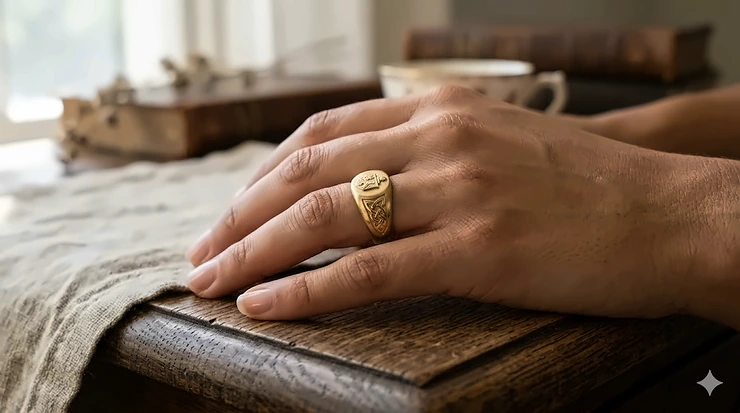
Your ancestry isn’t just a collection of names in a family tree—it’s a living story etched into symbols, patterns, and traditions passed down through generations. A heritage symbol ring transforms that story into something you can wear every day, a tangible connection to the people and cultures that shaped who you are.
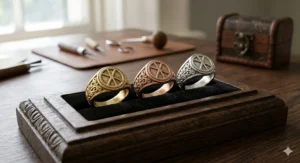
What most people don’t realize is that heritage symbol rings aren’t just decorative accessories. They’re functional heirlooms rooted in centuries-old traditions, from the wax-sealing signet rings of medieval nobility to the intricate Celtic knotwork that symbolized eternal bonds in ancient Ireland. The difference between a generic piece of jewelry and an authentic heritage symbol ring lies in the meaning behind every curve, line, and engraving.
In 2026, the market for cultural pride rings has exploded as more people seek meaningful ways to honor their roots. But with hundreds of options flooding online marketplaces, how do you find a piece that’s genuinely crafted with ancestral authenticity rather than mass-produced symbolism? This guide cuts through the noise, examining real products currently available and providing the expert commentary you need to make an informed decision. Whether you’re looking for a traditional motif jewelry piece featuring your family crest or an ethnic design wedding band with Norse runes, you’ll find actionable insights that Amazon product listings won’t tell you.
Quick Comparison: Top Heritage Symbol Rings at a Glance
| Ring Model | Heritage Type | Material | Price Range | Best For |
|---|---|---|---|---|
| Faravahar Zoroastrian Ring | Persian/Zoroastrian | Sterling Silver | $60-$90 | Ancient Persian heritage seekers |
| Slavic Sun Symbol Band | Slavic/Eastern European | 925 Sterling Silver | $70-$110 | Ethnic wedding bands, daily wear |
| Silverly Celtic Love Knot | Irish/Celtic | Sterling Silver | $25-$45 | Budget-conscious Celtic enthusiasts |
| Mia Silver Studio Celtic Ring | Norse/Nordic | Oxidized Sterling Silver 925 | $45-$75 | Detailed traditional patterns |
| ElmasIs Family Crest Ring | Customizable/European | Sterling Silver/Gold Plated | $80-$150 | Personalized family heritage |
| ENXICO Vegvisir Compass Ring | Viking/Norse | Stainless Steel | $20-$35 | Affordable Norse symbolism |
| ackatahl Celtic Knot Set | Irish/Celtic | Stainless Steel | $25-$40 | Spinner rings for meditation |
Looking at this comparison, the ElmasIs Family Crest Ring delivers the most customization flexibility for those with documented European heraldry, but if you’re working with a tighter budget and want authentic Celtic patterns, the Silverly option punches well above its price point. The Faravahar ring stands alone for Persian heritage—there’s no real competitor in that specific cultural niche at this price range. For everyday durability without worrying about scratches, the stainless steel options from ENXICO and ackatahl will outlast sterling silver in harsh conditions, though they sacrifice some of the traditional aesthetic purists prefer.
💬 Just one click — help others make better buying decisions too! 😊
Top 7 Heritage Symbol Rings: Expert Analysis
1. Asoodehdelan Faravahar Sterling Silver Ring – Persian Zoroastrian Heritage
This handcrafted piece features the Faravahar symbol, representing the human soul’s journey in Zoroastrian philosophy. The ring is solid 925 sterling silver with genuine onyx stone integration, measuring approximately 8-9mm in width with detailed relief engraving.
What most listings won’t tell you: The Faravahar isn’t just decorative—it depicts a winged figure with one hand pointing upward (representing good thoughts) and holds significance for anyone connected to ancient Persian culture. This particular model from Asoodehdelan uses the traditional raised relief method rather than simple surface etching, which means the symbol won’t wear down with daily use the way cheaper alternatives do. The onyx stone adds weight and presence, making this feel like genuine ceremonial jewelry rather than costume pieces you’d find in tourist shops.
Customer feedback consistently praises the craftsmanship quality, though several reviewers note that sizing runs slightly large—order a half size down from your normal ring size if you’re between measurements. The lifetime warranty backing is unusual for handmade silver pieces in this price tier, suggesting the manufacturer stands behind their metalwork quality.
Pros:
✅ Authentic Zoroastrian symbol with historical accuracy
✅ Solid sterling silver construction with lifetime warranty
✅ Onyx stone adds distinctive visual contrast
Cons:
❌ Limited availability in larger sizes (typically up to size 10)
❌ Higher price point than mass-produced alternatives
Price Verdict: At around $75-$90, this represents fair value for handcrafted sterling silver with gemstone accent—comparable custom work from jewelers would easily reach $150-200.
2. Sterling Silver Slavic Symbol Sun Wedding Band – Traditional Eastern European Design
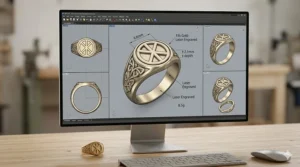
This 8mm ethnic ring features the Slavic sun wheel symbol hand-engraved into 925 sterling silver. Made to order by Ukrainian artisan Max, each piece is individually cast and finished, with customizable sizing available.
The sun wheel (kolovrat) carries deep cultural meaning in Slavic tradition, representing life cycles and the eternal nature of existence. What separates this from generic “ethnic patterns” is the artist’s attention to authentic symbol proportions—the eight spokes follow traditional iconography rather than simplified modern interpretations. The 8mm width strikes a practical balance: substantial enough to showcase the detailed pattern work without feeling bulky for everyday wear, which matters if you’re planning to use this as an actual wedding band rather than occasional accessory.
Production timeline runs 5-10 days since each ring is made from scratch, not pulled from warehouse stock. Customer reviews mention the ring arrives heavier than expected—in a good way—indicating solid metal construction without hollow backing or thin sidewalls that would flex under pressure.
Pros:
✅ Authentic Slavic cultural symbolism, not generic patterns
✅ Handcrafted by Eastern European artisan with traditional methods
✅ Customizable sizing for perfect fit
Cons:
❌ Longer production time (no instant shipping)
❌ Oxidized finish requires occasional maintenance
Price Verdict: In the $85-$110 range, you’re paying for legitimate artisan work. Mass-produced ethnic wedding bands might cost $30-40, but they lack the cultural accuracy and craftsmanship depth you’re getting here.
3. Silverly Sterling Silver Celtic Love Knot Ring – Irish Heritage Wedding Band
This Irish-inspired design features continuous Celtic knotwork around the band in genuine 925 sterling silver. The infinity knot pattern symbolizes eternal love and unity, with each loop flowing seamlessly into the next.
Here’s what the Amazon listing glosses over: Celtic knot patterns aren’t interchangeable decoration—each design carries specific meaning. This particular endless knot configuration (also called a love knot or trinity knot variation) appears in ancient Irish manuscripts and stone carvings, making it culturally grounded rather than modern jewelry invention. The band width measures approximately 4-5mm, leaner than some competitors but ideal if you’re stacking this with other rings or prefer subtle styling over statement pieces.
Silverly’s production standards include proper hallmarking and a cleaning cloth, which matters more than you’d think—sterling silver tarnishes, and having the right maintenance tool from day one extends the ring’s pristine appearance. Customer consensus points to accurate sizing and comfortable all-day wear, with the smooth interior preventing the irritation some cheaper cast rings cause.
Pros:
✅ Authentic Celtic symbolism from documented historical sources
✅ Affordable entry point for heritage jewelry ($25-45 range)
✅ Comfortable for continuous wear, includes maintenance cloth
Cons:
❌ Thinner band may not suit those preferring bold statement rings
❌ Tarnishes like all sterling silver (requires periodic cleaning)
Price Verdict: At $25-45, this is genuinely budget-friendly without sacrificing authenticity. You’re not getting custom engraving or unique sizing, but for ready-to-wear Celtic heritage jewelry, the value proposition is solid.
4. Mia Silver Studio Celtic Knot Ring – Norse Nordic Heritage Design
Ukrainian artisans at Mia Silver Studio craft this oxidized sterling silver ring featuring traditional Norwegian Rosemaling pattern adaptations in filigree style. Available in sizes 5-12, the ring measures approximately 1/2 inch width and weighs around 3.2 grams.
The oxidization process isn’t just aesthetic—it creates deeper contrast that makes the intricate Celtic knot work pop visually, especially important when patterns get this detailed. What you’re seeing here is actual filigree construction (delicate metalwork) rather than stamped or printed patterns, which means each curve and intersection is formed metal, not surface decoration. The Norse rune formula engraved on some variants carries protection symbolism from Viking tradition, though you should verify the specific rune meanings if that’s central to your purchase decision.
Customers from Scandinavian heritage backgrounds specifically note the pattern accuracy compared to historical artifacts, suggesting the Ukrainian workshop does their research. The labeled pouch packaging makes this gift-ready, and the craftsmanship quality justifies the mid-tier pricing.
Pros:
✅ Authentic Norse/Celtic pattern integration with historical accuracy
✅ Filigree construction (formed metal, not surface etching)
✅ Oxidized finish enhances pattern visibility and depth
Cons:
❌ Oxidized silver requires specific cleaning methods (not all polishes work)
❌ Filigree is more delicate than solid band designs
Price Verdict: Around $45-75 depending on size and customization, this sits between mass-market and custom jeweler pricing. The filigree work alone typically costs $60+ from US jewelers, so the value holds.
5. ElmasIs Coat of Arms Family Crest Ring – Customizable Heritage Signet
This personalized signet ring allows you to engrave your actual family coat of arms into sterling silver or gold-plated brass. The manufacturer provides sketch approval before production, ensuring your hereditary symbols are accurately rendered.
Here’s where this ring category gets interesting: most people don’t realize that coat of arms designs follow specific heraldic rules established in medieval Europe. If your family has documented heraldry (common in British, German, Italian, and Spanish lineage), this ring becomes a wearable archive of that history. ElmasIs will research your surname in their database if you don’t have existing artwork, though be aware that newly created designs aren’t the same as historically registered arms—they’re inspired interpretations.
The customization process involves email exchange and sketch approval, adding 2-3 weeks to delivery time. Customer reviews split between those thrilled with historically accurate reproductions and those who expected faster turnaround. The lifetime warranty specifically covers manufacturing defects, not wear-and-tear from daily use, which is standard for custom jewelry but worth noting.
Pros:
✅ Genuine family crest customization with historical research
✅ Sketch approval process ensures satisfaction before production
✅ Lifetime manufacturing warranty backing
Cons:
❌ Extended production timeline (3-4 weeks typical)
❌ Requires family heraldry research or existing artwork
Price Verdict: At $80-150, this pricing reflects custom engraving work. Commercial jewelers charge $200-400 for comparable signet ring customization, making this competitively positioned despite the wait time.
6. ENXICO Vegvisir Runic Compass Ring – Viking Norse Protection Symbol
Stainless steel construction with Celtic knot pattern sides and the Vegvisir (Viking compass) symbol engraved on the face. The ring is hypoallergenic, rust-resistant, and comes with a bonus Warrior Bead Bracelet.
The Vegvisir symbol—often called the Icelandic compass—appears in historical grimoires as a wayfinding and protection symbol. This ring’s stainless steel choice is practical: unlike sterling silver, it won’t tarnish, scratch easily, or require maintenance beyond occasional cleaning. The Celtic knot engravings on both sides frame the central Vegvisir, creating visual balance. At 8mm width, this feels substantial without the bulk some Norse-style rings carry.
Customer feedback emphasizes the ring’s durability for manual work environments—mechanics, construction workers, and outdoor enthusiasts report zero degradation after months of harsh conditions. The silvertone and dark oxidized contrast comes from multi-tone finishing rather than plating, so it won’t flake off.
Pros:
✅ Extremely durable stainless steel (ideal for active lifestyles)
✅ No maintenance required (won’t tarnish or oxidize)
✅ Hypoallergenic for sensitive skin
Cons:
❌ Cannot be resized (order correct size initially)
❌ Less traditional feel than precious metal options
Price Verdict: Around $20-35, this is budget-tier pricing for what functions as indestructible Norse heritage jewelry. If you prioritize durability over traditional precious metals, the value is exceptional.
7. ackatahl 3-Piece Celtic Knot Spinner Rings – Irish Meditation Bands
Stainless steel spinner rings (anxiety rings) featuring hollowed-out Celtic knot patterns with rotating outer bands. The set includes three different designs, each 8mm width, packaged in decorative gift box.
The spinning mechanism serves dual purposes: traditional Celtic symbolism meets modern stress-relief functionality. The hollowed-out pattern construction means the interwoven Celtic designs extend through the metal rather than sitting on the surface—this creates dimensional depth and ensures the pattern won’t wear away. Each ring’s outer band rotates independently, providing the fidget-friendly element that makes these popular as anxiety management tools.
Multiple customer reviews mention using these during meditation practices or as discrete stress relief during work meetings. The stainless steel construction mirrors the ENXICO ring advantages: no tarnish, no allergy concerns, and scratch resistance that keeps them looking new longer than silver equivalents.
Pros:
✅ Three rings for price of one (different patterns for variety)
✅ Spinner function adds stress-relief utility beyond symbolism
✅ Hollowed pattern won’t fade or wear down
Cons:
❌ Spinning mechanism requires occasional cleaning to maintain smooth rotation
❌ Stainless steel lacks the traditional weight/feel of precious metals
Price Verdict: At $25-40 for three rings, you’re getting approximately $8-13 per ring. Even accounting for stainless steel being less expensive than silver, the value proposition is strong for anyone wanting variety or backup rings.
How Heritage Symbols Tell Your Family Story
Every symbol engraved into a heritage ring carries generations of meaning—but only if you understand the language. The difference between wearing generic decoration and authentic cultural jewelry lies in knowing what those symbols actually represent.
Take the Celtic knot patterns found across Irish and Scottish heritage rings. These aren’t random interwoven lines—each configuration tells a specific story. The trinity knot (triquetra) represents the Christian Holy Trinity in later Celtic tradition, while earlier pagan interpretations linked it to earth, sea, and sky. The endless knot symbolizes eternity because it has no beginning or end, making it popular for wedding bands. When you see these patterns on authentic heritage jewelry, you’re looking at visual language developed over 2,000 years.
Heraldic symbols in family crests follow even more precise rules. The lion represents courage and strength, but its position matters—a lion “rampant” (standing on hind legs) differs from one “passant” (walking). Colors carry meaning too: gold symbolizes generosity, red indicates military strength, and blue represents loyalty. These weren’t arbitrary choices; medieval heralds used systematic symbolism so coats of arms could be “read” by anyone familiar with the visual vocabulary.
Norse and Viking symbols operate similarly. The Vegvisir (wayfinding compass) isn’t just decorative—it was believed to prevent travelers from losing their way, making it particularly meaningful for anyone whose ancestors were explorers or immigrants. Thor’s hammer (Mjölnir) represents protection and strength, while the Valknut (three interlocking triangles) connected to Odin symbolizes the transition between life and death, often worn by warriors.
Understanding these distinctions transforms how you select heritage jewelry. Instead of choosing based purely on appearance, you can match symbols to your actual family history and values. A ring bearing your documented family crest carries lineage information—who your ancestors allied with, what values they held, where they came from. Cultural symbols from your ethnic background connect you to traditions practiced by your grandparents’ grandparents, creating tangible links across generations.
Choosing the Right Heritage Ring: Expert Decision Framework
Most buying guides list features—this one gives you the decision framework professional jewelers use when matching clients with heritage pieces.
Start with authenticity verification. If a ring claims to feature “traditional” or “historical” symbols, check whether the seller provides any historical context or cultural background. Generic listings that say “Celtic inspired” or “Viking style” often mean the pattern is loosely based on that tradition without accuracy. Look for specific pattern names (like “Borre knot” for Norse, “Claddagh” for Irish) or historical references. Sellers who research their symbolism typically mention it—those who don’t, didn’t.
Material choice impacts longevity and maintenance. Sterling silver (.925) is traditional and prestigious but tarnishes without regular polishing. Gold (10K-18K) holds value better and requires less maintenance but costs significantly more. Stainless steel is modern, essentially indestructible, and hypoallergenic—ideal if you work with your hands or have metal sensitivities. Brass with plating (gold-plated, rhodium-plated) offers affordable luxury aesthetics but the plating will eventually wear through, usually within 1-3 years of daily wear.
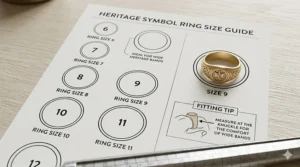
Sizing matters more than you think. Rings worn daily should fit snugly enough they won’t spin freely but loosely enough to slide over your knuckle without force. Fingers swell slightly in heat and shrink in cold, so test fit at different times of day if possible. Rings ordered online without sizing kits are gambles—many heritage ring sellers won’t resize after engraving, so measure twice before ordering custom work. If you’re buying a family crest or personalized piece, getting the size right the first time isn’t optional.
Match symbol meaning to intended purpose. Wedding bands benefit from symbols representing unity, eternity, and partnership—Celtic love knots, infinity patterns, or matching family crests. Memorial or commemorative rings might incorporate symbols related to the person being honored or their heritage. Daily wear pieces should feature symbols that resonate with your values rather than just aesthetic appeal. A ring you’ll wear for decades should mean something every time you see it.
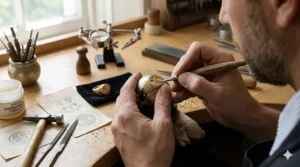
Consider production method. Cast rings (molten metal poured into molds) are standard for mass production and perfectly fine for most purposes. Hand-forged or hand-engraved pieces involve individual craftsmanship—you’re paying for artisan time, which increases cost but also uniqueness. Laser engraving offers precision but less character than hand engraving. For heritage pieces, the production method often affects authenticity—historical patterns hand-carved into metal feel different than machine-perfect modern reproductions.
Budget honestly for quality tiers. Under $50 gets you stainless steel or basic sterling silver with simple patterns, perfect for testing whether you’ll actually wear heritage jewelry daily before investing more. $50-150 range includes solid sterling silver, detailed engraving, and some customization—this tier offers real craftsmanship without custom jeweler pricing. Above $150 moves into precious metals (gold), gemstone accents, or fully custom family crest work—investment territory where you should expect heirloom quality.
Heritage Ring Materials: What Actually Matters for Daily Wear
The material you choose determines whether your heritage ring becomes a daily companion or a dresser-drawer item you’re too nervous to wear.
Sterling silver rings (.925 silver) look beautiful when polished but develop tarnish from exposure to air, skin oils, and chemicals. This isn’t a defect—it’s silver reacting with sulfur compounds in the environment. If you wear silver daily, plan on gentle polishing every few weeks with a soft cloth and proper silver cleaner. Avoid wearing silver rings in pools, hot tubs, or while handling harsh cleaning chemicals. The upside: sterling silver can be professionally refinished multiple times, so scratches and dents aren’t permanent.
Gold rings (10K, 14K, 18K) resist tarnish and maintain their appearance with minimal care. Higher karat gold is softer and more prone to scratching—18K gold will show wear marks faster than 10K, which is alloyed with more durable metals. Gold costs more initially but holds resale value that other materials don’t. For heritage pieces passed down through families, gold’s longevity justifies the premium. If your heritage ring will become an heirloom, gold is the traditional choice for good reason.
Stainless steel rings offer practical advantages that precious metals can’t match. They’re essentially scratch-proof, won’t tarnish, never need polishing, and work for people with metal sensitivities that react to silver or lower-karat gold. The tradeoff: stainless steel can’t be resized after manufacturing, so incorrect sizing means replacement rather than adjustment. It also lacks the weight and “feel” of precious metals—whether that matters depends on whether you prioritize symbolism or sensory experience.
Brass with plating (gold-plated, silver-plated, rhodium-plated) provides budget-friendly luxury aesthetics. The base brass ring gets coated with a thin layer of precious metal, creating the appearance of solid gold or silver at a fraction of the cost. Plating wears through with daily wear—typically 1-3 years depending on thickness and friction exposure. Areas that rub against other fingers or surfaces will lose plating first, eventually revealing the brass underneath. These work well for occasional wear but aren’t ideal for heritage pieces meant to last decades.
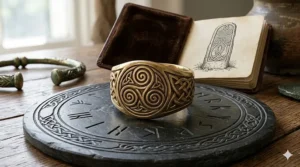
Oxidized or antiqued finishes on silver or brass create the darkened, aged look popular in Viking and medieval-style heritage rings. This finish sits in the recessed pattern areas, making engraved details pop visually. The oxidation will gradually wear away in high-contact areas (like the inside of the band), which some people like as it creates natural patina. You can’t use aggressive polishing on oxidized rings without removing the finish, so maintenance requires specific cleaning methods.
Family Crest Rings: Personalizing Your Heritage
Family crest rings represent the most personalized form of heritage jewelry—but most people get this process wrong.
If your family has documented heraldic arms (common in British, Irish, Scottish, German, Italian, and Spanish ancestry), a family crest ring displays your legitimate historical heritage. These aren’t decorative inventions; they’re registered symbols that identified your ancestors in medieval Europe. The heraldic tradition established strict rules about who could bear which arms, and those traditions continue today through organizations like the College of Arms in England.
Researching your family arms: Start with genealogy records—family Bibles, old documents, or existing jewelry might show your crest. Online databases like the House of Names or 4crests.com provide starting points, though verify any findings with primary sources. Professional heraldic researchers can trace your lineage through official records, but this costs $200-500+ depending on complexity. Some ring sellers offer research services, but quality varies—check whether they reference specific heraldic registries or just create “inspired by” designs.
What authentic family crests include: A proper coat of arms has multiple elements: the shield (escutcheon) with its charges (symbols), the helmet, the crest (what sits atop the helmet), mantling, and often a motto. Most signet rings display just the shield or the crest, as including everything would require a surface too large for wearable jewelry. The simplified version still identifies your family if rendered accurately.
Creating new family heraldry: If your surname lacks documented arms, some services will design original heraldry for you. Understand that newly created designs aren’t historical coats of arms—they’re modern interpretations inspired by heraldic tradition. There’s nothing wrong with this, but know what you’re purchasing. A ring bearing custom-designed arms represents your immediate family’s chosen symbols, not ancestral heritage.
Ring design considerations for crests: Signet rings (flat-faced rings with engraved design) are the traditional choice for coats of arms because they were originally used to seal wax on letters. The engraving can be intaglio (cut into the metal, producing a raised impression in wax) or relief (raised on the ring face). Relief is more common for modern heritage rings since they’re not actually used as seals. The ring face needs sufficient size to show detail—typically 15-20mm diameter minimum for recognizable crests.
Customization process timeline: Custom family crest rings require 3-6 weeks from order to delivery. Reputable makers send design sketches or renderings for approval before engraving, preventing costly mistakes. Rush orders exist but often sacrifice review time, increasing error risk. Budget 4-5 weeks for best results.
Cultural Heritage Rings: Celtic, Norse, and Beyond
Different cultural traditions produce distinctly different heritage jewelry styles—understanding these differences helps you choose pieces that genuinely represent your background.
Celtic heritage rings (Irish, Scottish, Welsh, Breton): Celtic designs feature continuous interwoven patterns representing interconnectedness and eternity. The Claddagh (two hands holding a crowned heart) is specifically Irish, symbolizing love, loyalty, and friendship—how you wear it indicates relationship status. Trinity knots (triquetras) appear in both pagan and Christian Celtic tradition. Celtic cross designs blend Christian symbolism with traditional Celtic knotwork. Authentic Celtic patterns follow mathematical principles governing how lines intersect and overlap—mass-produced “Celtic-style” rings often get these proportions wrong.
Norse and Viking heritage rings (Scandinavian): Norse symbols tend toward runic inscriptions, mythological creatures, and geometric patterns. The Vegvisir (compass symbol) and Aegishjalmur (helm of awe) are popular but historically appear in later Icelandic magical texts rather than Viking Age artifacts—still meaningful if that’s your tradition, but not ancient Viking items. Thor’s hammer (Mjölnir) is authentically Viking Age. Valknut symbols (three interlocked triangles) connect to Odin mythology. Borre and Mammen knot styles reference specific Viking Age art periods with documented historical examples.
Germanic and Eastern European heritage: Slavic patterns often incorporate solar symbols, nature motifs, and geometric designs tied to pre-Christian traditions. Germanic heraldry follows similar rules to British heraldry but with distinctive aesthetic choices—eagles are more common, and tincture combinations differ. Polish, Czech, and Hungarian traditions blend Western European heraldry with local symbolism.
Mediterranean heritage (Italian, Greek, Spanish): Italian family crests follow heraldic tradition with distinctive regional variations—Venetian, Florentine, and Sicilian arms each have characteristic styles. Greek heritage rings might feature ancient symbols like the meander pattern, olive branches, or mythological references. Spanish heraldry often includes castle and lion symbols reflecting the Castile and León kingdoms.
Middle Eastern and Persian heritage: Zoroastrian symbols like the Faravahar represent one of world’s oldest continuous religious traditions. Islamic geometric patterns feature in jewelry from cultures spanning Morocco to Indonesia, with strict prohibitions on depicting living beings leading to extraordinary abstract pattern development. Persian designs often incorporate calligraphy and poetry into jewelry.
Matching symbols to your actual heritage: Generic “Celtic” or “Viking” rings work if you’re simply drawn to the aesthetic, but specific cultural accuracy matters if the ring represents your documented ancestry. A Claddagh ring makes sense for Irish heritage; a Vegvisir suits Icelandic descent; family crests require European nobility lineage. Mixing traditions (like wearing Norse runes with Celtic knots) is fine for personal expression but isn’t historically authentic.
Maintaining Your Heritage Ring for Generations
Heritage rings become family heirlooms when properly maintained—here’s what jewelry professionals actually do, not what generic care instructions suggest.
Sterling silver maintenance: Tarnish is inevitable, not preventable. Store silver in anti-tarnish cloth pouches or bags with anti-tarnish strips between wears. For cleaning, use proper silver polish cloths or liquid silver cleaner—not toothpaste, baking soda paste, or other home remedies that can scratch. Oxidized silver requires gentle cleaning with soap and water only; aggressive polishing removes the intentional dark finish. Professional re-oxidation costs $20-40 if you accidentally polish it away.
Gold ring care: Gold tarnishes minimally but accumulates oils and dirt. Soak in warm water with mild dish soap, brush gently with a soft toothbrush, rinse, and dry with lint-free cloth. Do this monthly for daily-wear pieces. Avoid ultrasonic cleaners on rings with gemstones unless you know the stone type can handle it—some stones crack under ultrasonic vibration. Professional jeweler cleaning costs $25-50 and includes inspection for loose settings or wear damage.
Stainless steel upkeep: Wash with soap and water, dry thoroughly. That’s it. Stainless steel doesn’t tarnish or require polishing. For stubborn grime, soak in warm soapy water overnight. Spinner rings need occasional lubrication—a tiny drop of mineral oil on the rotating parts keeps them spinning smoothly.
Preventing common damage: Remove rings before working out (weights scratch metal), swimming (chlorine damages silver and some gold alloys), cleaning (harsh chemicals cause discoloration), or sleeping (rings catch on bedding and can bend). Don’t wear heritage rings during contact sports or heavy manual labor. These warnings sound excessive until you see a $200 custom signet ring bent out of shape from a single incident.
Professional maintenance schedule: Sterling silver benefits from professional cleaning every 6-12 months ($25-40). Gold rings should be inspected annually for wear issues—prongs loosening, band thinning, or clasp damage ($40-60 for inspection plus any repairs). Custom engraved pieces can be professionally re-engraved if they wear shallow after decades—expect $80-150 for skilled hand engraving restoration.
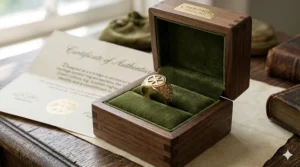
Passing rings down through generations: Document your ring’s history—write down what symbols mean, why you chose this piece, and any family stories connected to it. Include care instructions and any professional services used. Store in a dedicated jewelry box with anti-tarnish protection. Consider having valuable heritage rings appraised and insured ($50-100 for appraisal, then 1-2% of value annually for insurance).
Heritage Rings vs Modern Symbolic Jewelry: What’s the Difference
Walk into any jewelry store and you’ll see “symbolic” rings everywhere—but heritage rings occupy a different category entirely.
Modern symbolic jewelry uses universal or commercialized symbols: infinity signs, hearts, arrows, anchors, semicolons, zodiac signs. These carry personal meaning but lack cultural or historical depth. A infinity symbol ring might represent eternal love to you, but it won’t tell future generations anything about where your family came from or what traditions they practiced.
Heritage rings ground their symbolism in documented history and cultural practice. Celtic knot patterns appeared in Irish manuscripts 1,500 years ago with specific meanings understood across that culture. Family crests were registered with heraldic authorities and followed precise rules governing design and inheritance. Norse runes represented actual letters in the Elder Futhark alphabet, each with associated meanings from mythology. These symbols connect you to systems of meaning developed over centuries, not marketing campaigns from the past decade.
The craftsmanship differs too. Mass-market symbolic jewelry often uses stamped patterns or printed designs—metal stamped into shape or designs printed onto surfaces. Traditional heritage jewelry involves hand-engraving, cast relief work, or filigree construction where the pattern is formed metal, not surface decoration. You can feel the difference when you handle both—heritage pieces have dimensional depth and weight that flat stamped patterns lack.
Authenticity verification separates genuine heritage jewelry from mass-market imitations. Reputable heritage ring makers reference specific historical sources—museum artifacts, archaeological finds, documented family records. Generic “Celtic-style” or “Viking-inspired” rings borrow aesthetics without cultural accuracy. If a seller can’t tell you the historical origin of their patterns or what the symbols traditionally represented, you’re buying decoration styled to look ethnic, not authentic heritage jewelry.
Price reflects this distinction. Machine-stamped “symbolic” rings cost $15-50 because they’re mass-produced with minimal craftsmanship. Authentic heritage rings range $50-500+ because they involve research, traditional metalworking techniques, and quality materials. You’re paying for cultural accuracy and craftsmanship skill, not just metal and basic labor.
Does this mean modern symbolic jewelry is worthless? Not at all—it just serves a different purpose. Wear what resonates with you personally, but understand that a Celtic heritage ring bearing your Irish family’s traditional patterns functions differently than an infinity ring you thought looked nice. One connects you to centuries of tradition and tells a story about where you came from; the other expresses individual style and personal meaning. Both are valid; they’re just not interchangeable.
❓ Frequently Asked Questions
❓ What is a heritage symbol ring?
❓ How do I find my family coat of arms for a ring?
❓ Are stainless steel heritage rings less authentic than silver?
❓ Can I wear heritage rings if I'm mixed ethnicity?
❓ How long does custom family crest ring engraving take?
Conclusion: Connecting Past, Present, and Future Through Heritage Rings
The heritage symbol ring you choose becomes more than personal jewelry—it’s a conversation starter about where you came from, a tangible link to ancestors you’ll never meet, and potentially an heirloom your grandchildren will wear while telling stories about you.
What we’ve covered reveals the depth behind what might seem like simple jewelry choices. Real heritage rings aren’t decorative accidents; they’re deliberate connections to specific cultural traditions, family histories, and symbolic languages developed over centuries. The difference between authentic heritage jewelry and mass-market imitations lies in that cultural grounding—whether the symbols mean something within documented historical tradition or were simply designed to look ethnic.
Your decision should balance cultural accuracy with practical wearability. A family crest ring displaying your documented European heraldry carries different significance than a Celtic-inspired pattern you simply find beautiful. Both are valid choices, but know which you’re selecting. Sterling silver requires maintenance but offers traditional prestige. Stainless steel demands nothing but occasional cleaning while surviving conditions that would damage precious metals. Gold costs more initially but becomes the heirloom material that lasts multiple generations without degradation.
The seven rings examined here represent different approaches to heritage jewelry: precise cultural symbols (Faravahar), traditional artisan craftsmanship (Slavic Sun Band), budget-accessible authenticity (Silverly Celtic), detailed traditional patterns (Mia Silver), full customization (ElmasIs), practical durability (ENXICO), and modern functionality (ackatahl spinners). Each serves different needs, budgets, and heritage backgrounds.
Remember that these rings tell stories—make sure yours tells the truth about your family’s journey and the traditions you want to carry forward. Whether you’re honoring documented family heraldry, celebrating ethnic heritage, or simply drawn to cultural symbolism that resonates with your values, choose pieces that will mean something when you pass them down someday.
Recommended for You
- 7 Best Multiple Family Birthstone Rings That Tell Your Story (2026)
- 7 Best Hidden Heart Detail Ring Picks for 2026: Secret Symbols Inside
- Best Locket Ring Compartment: 7 Secret Storage Rings Worth Wearing in 2026
Disclaimer: This article contains affiliate links. As an Amazon Associate, I earn from qualifying purchases. If you purchase products through these links, we may earn a small commission at no additional cost to you.
✨ Found this helpful? Share it with your friends! 💬🤗
