In This Article
Somewhere around the third jewelry tab you’ve got open, a strange thought creeps in: these two rings look identical, and one costs about as much as a used car. That’s the moment most people actually start researching a lab grown vs natural diamond ring instead of just clicking “add to cart” on whatever sparkles hardest. Good instinct. This is a decision with a four- or five-figure price tag attached, and the marketing on both sides is loud enough to drown out the actual facts.
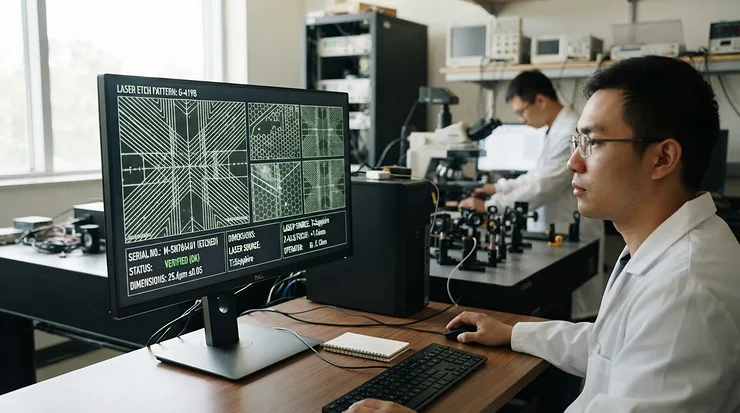
Here’s the short version, so you’re not left hanging: a lab grown diamond is pure carbon crystallized into a diamond cubic lattice inside a controlled chamber, using either high-pressure-high-temperature (HPHT) or chemical vapor deposition (CVD) technology, in a matter of weeks. A natural diamond is the same carbon lattice, formed by geological pressure and heat over roughly one to three billion years, then mined. Chemically and optically, they’re the same mineral. Financially and historically, they’re worlds apart — and that gap is exactly what this guide is going to unpack.
We spent real time in the weeds of retailer inventories, gemological lab reports, and the secondary market data nobody puts on a billboard, so you can walk into this purchase — or this proposal — with your eyes open. That means honest specs, honest resale numbers (the good, the bad, and the “well, that’s disappointing”), and seven real rings worth actually looking at, spanning budget to genuinely showstopping. No invented five-star reviews. No pretending we personally wore each ring down the aisle. Just what the data, the labs, and the aggregated buyer feedback actually say.
By the end, you’ll know exactly where lab and natural diamonds diverge, where they don’t, and which of the seven options below fits your budget, your values, and your particular brand of “I need this to be perfect.”
Quick Comparison Table: Lab Grown vs Natural Diamond Ring at a Glance
| Factor | Lab Grown Diamond Ring | Natural Diamond Ring |
|---|---|---|
| Chemical composition | Identical carbon crystal lattice | Identical carbon crystal lattice |
| Typical price (1ct, G/VS2, excellent cut) | Roughly $700-$1,800 | Roughly $5,000-$12,000 |
| Formation time | Weeks (HPHT or CVD) | 1-3 billion years, geologically |
| Certification | GIA Laboratory-Grown Report, IGI | GIA, AGS, GCAL |
| Resale value (typical) | Around 10-40% of purchase price | Around 20-60% of purchase price |
| Best for | Maximizing size and budget | Long-term value retention, heirloom appeal |
That table looks tidy, but the real story is in the gap between the columns, not the columns themselves. The price difference is the single biggest reason lab grown demand has exploded — you can buy a visibly larger, better-cut stone for a fraction of the outlay. The resale gap tells a quieter story: neither type is an investment vehicle, but natural stones currently retain more of their original value on the secondary market, largely because lab-grown wholesale prices keep falling as production scales, which drags resale offers down with them. Certification matters equally for both — an uncertified stone of either origin is a hard sell down the line, full stop.
💬 Just one click — help others make better buying decisions too!😊
Top 7 Lab Grown vs Natural Diamond Rings: Expert Analysis
We picked these seven to cover real ground: pure lab-grown specialists, natural-only heavyweights, and the hybrid retailers that let you cross-shop both in one cart. Budget, mid-range, and premium are all represented, and every product name below stays bold throughout the article so you can scan and jump straight to what matters to you.
1. James Allen True Hearts Lab-Grown Round — best hearts-and-arrows precision at lab prices
James Allen True Hearts Lab-Grown Round built its reputation on obsessive cut precision, and the lab-grown version of the line inherited that DNA rather than getting a watered-down version of it. The standout here isn’t the origin story — it’s that James Allen curates only the top slice of its inventory into the True Hearts collection, filtering for the hearts-and-arrows optical pattern that signals genuinely superior light return.
A 1-carat G-color, VS1-clarity stone in this line typically lands in the $900-$1,400 range, which is a fraction of what equivalent natural cut precision costs elsewhere. What that means in practice: you’re not just buying “a lab diamond,” you’re buying one that’s been through an extra curation filter most lab-grown listings skip entirely.
Reviewers consistently flag the 360-degree HD video and magnified imagery as the reason they felt confident buying a stone sight-unseen, since you can actually inspect the hearts-and-arrows symmetry yourself before checkout rather than trusting a static photo.
Pros:
- ✅ Hearts-and-arrows curation delivers verifiable, above-average cut precision
- ✅ 360° HD video lets you inspect the actual stone, not a stock photo
- ✅ Strong price-to-brilliance ratio versus comparable natural cuts
Cons:
- ❌ Setting customization is slightly less extensive than some ethically-focused competitors
- ❌ Premium True Hearts pricing sits above James Allen’s standard lab-grown inventory
Price range and value verdict: expect the mid-$1,000s for a well-specced 1-carat ring, and for buyers who want provable cut quality without paying natural-diamond premiums, this is genuinely one of the smarter lab-grown picks on the market right now.

2. Astor by Blue Nile Natural Diamond — best GemEx-verified natural brilliance
If you’ve decided a natural stone is non-negotiable — maybe it’s the heirloom factor, maybe it’s the resale math — Astor by Blue Nile Natural Diamond is the retailer’s answer to “prove it’s actually well cut.” Every stone in the Astor line comes with a GemEx light-performance report on top of its GIA grading, which quantifies brilliance, fire, and scintillation numerically instead of asking you to just trust the marketing copy.
Typical pricing for a 1-carat I-color-or-better, SI-clarity Astor stone runs $6,500-$9,500, reflecting natural rarity rather than manufacturing cost. What the spec sheet won’t tell you outright is that the GemEx data is genuinely useful leverage if you’re comparing multiple natural stones — it’s one of the only quantifiable cut-performance metrics available at this price tier that isn’t just “GIA Excellent,” a grade that itself covers a fairly wide performance range.
Aggregated customer sentiment points to strong satisfaction with the in-hand brilliance matching the online video, which is the exact anxiety most online diamond buyers have going in.
Pros:
- ✅ GemEx report adds quantifiable proof of light performance
- ✅ Natural rarity supports stronger long-term resale positioning
- ✅ Strong inventory depth across shapes, including fancy cuts
Cons:
- ❌ Significant price premium over lab-grown for equivalent visual size
- ❌ GemEx reporting isn’t available on Blue Nile’s non-Astor natural inventory
Price range and value verdict: this sits firmly in premium territory, but for buyers prioritizing verified cut quality in a natural stone, the GemEx documentation genuinely justifies the price gap over unverified “Excellent” cuts.
3. Brilliant Earth Truly Brilliant Lab Diamond (Petite Twist Solitaire) — best sustainability-focused lab pick
Brilliant Earth Truly Brilliant Lab Diamond paired with the Petite Twist Solitaire setting is the pick for buyers who want their purchase to say something about how the stone got there, not just what it looks like. Brilliant Earth built its brand on traceability and recycled-metal settings, and the Truly Brilliant curation applies that same values-driven filter to its lab-grown stones — selecting for a blend of high cut grade and documented sourcing.
A 1-carat G/VS2 stone in this collection typically runs $1,400-$2,200 with the Petite Twist setting included, positioning it as mid-range rather than bargain-basement lab-grown. Here’s what most buyers overlook: the recycled 14k or 18k gold band isn’t just a marketing footnote, it measurably reduces the mining footprint of the setting itself, which is something even a fully lab-grown center stone doesn’t address on its own.
Reviewers frequently mention the responsive customer service during resizing and warranty claims as a differentiator versus larger, more automated competitors.
Pros:
- ✅ Recycled-metal settings extend the sustainability angle beyond the stone
- ✅ Documented sourcing appeals to values-conscious buyers
- ✅ Praised customer service for resizing and post-purchase support
Cons:
- ❌ Pricing runs higher than pure-value lab-grown specialists for similar specs
- ❌ Accent stones in many settings are natural, not lab-grown, which surprises some buyers
Price range and value verdict: expect the mid-$1,000s to low-$2,000s, a fair premium for buyers who want the ethical sourcing story to extend past the center stone.
4. Clean Origin Lab-Grown Solitaire — best value pure-lab specialist
Clean Origin Lab-Grown Solitaire remains one of the most aggressively priced entry points into a certified lab-grown center stone, even after the brand’s 2024 acquisition by Grown Brilliance reshaped some of its policies. A 1-carat G/VS2 IGI-certified solitaire commonly lands around $1,000-$1,600, and the brand’s entire original catalog was lab-grown-only, which still shapes its pricing structure today.
Based on the spec comparison against larger multi-brand retailers, Clean Origin trades some bells and whistles — smaller inventory, less universal 360° video coverage — for a meaningfully lower price on comparable IGI-graded stones. What’s changed and matters for buyers: the return window shrank from a widely advertised 100 days down to 60, and natural diamonds have since been added to the catalog, so double-check the listing’s origin disclosure carefully before checkout.
Aggregated reviews still describe the core buying experience — preset rings that ship within roughly 24 hours — as a real advantage for anyone working against a proposal deadline.
Pros:
- ✅ Genuinely competitive pricing on IGI-certified 1-carat solitaires
- ✅ Preset rings ship quickly, useful for time-sensitive proposals
- ✅ 60-day return window still beats many competitors’ standard policies
Cons:
- ❌ Smaller stone inventory than James Allen or Blue Nile
- ❌ Catalog now mixes lab-grown and natural, requiring careful label-checking
Price range and value verdict: in the four-figure range, this is one of the strongest pure-value plays for a certified lab-grown center stone, provided you confirm origin on the specific listing.
5. Whiteflash A CUT ABOVE® Natural Diamond — best light-performance-verified natural premium pick
Whiteflash A CUT ABOVE® Natural Diamond sits at the top of the natural-diamond quality ladder for buyers who care about cut precision more than almost anything else. The line requires both ASET and Idealscope imaging for every stone — two independent optical mapping tools that show exactly how light travels through the diamond, something even GIA’s “Excellent” cut grade doesn’t fully capture on its own.
A well-specced 1-carat A CUT ABOVE® stone typically runs $8,000-$14,000, reflecting both natural rarity and the tight cut tolerances the line demands. What most buyers overlook about this tier is that you’re not paying for the diamond’s size or clarity number so much as its measurable optical performance — the “spread” (how big it looks face-up) and light return are engineered variables here, not luck of the mine.
Reviewers who’ve compared A CUT ABOVE® stones side-by-side with standard “Excellent” cuts consistently describe a visible difference in fire and scintillation, which is a meaningfully rare claim in a category full of marginal marketing distinctions.
Pros:
- ✅ ASET and Idealscope imaging on every stone, not just marketing claims
- ✅ Genuinely differentiated optical performance versus standard Excellent cut
- ✅ Strong reputation for expert consultative service on high-value purchases
Cons:
- ❌ Among the highest price points in this roundup
- ❌ Smaller inventory than mass-market natural retailers, given the strict curation
Price range and value verdict: this is the premium natural pick, and for buyers who’ve decided natural is non-negotiable and cut performance is the priority, the documentation genuinely earns the price gap.
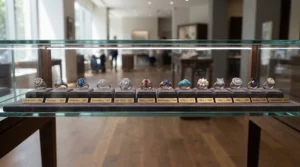
6. Ritani Natural Diamond Solitaire — best real-time pricing transparency, natural mid-range
Ritani Natural Diamond Solitaire carved out a niche by publishing more granular, real-time pricing on its natural inventory than many competitors, letting buyers configure carat, color, clarity, and cut and watch the price shift live rather than requesting a quote. A 1-carat G/SI1 natural solitaire commonly falls in the $4,500-$6,500 range depending on the exact certificate, which positions Ritani as accessible-premium rather than entry-level or ultra-luxury. Here’s what the spec sheet won’t tell you directly: that live-pricing transparency is genuinely useful leverage when you’re deciding between, say, a slightly lower clarity grade versus a better cut grade, since you can see the dollar trade-off in real time instead of guessing. Aggregated reviewer sentiment highlights the in-store partner network — Ritani lets online shoppers finalize the purchase at a local partner jeweler — as a meaningful trust bridge for buyers nervous about a four-figure online purchase.
Pros:
- ✅ Real-time price configuration removes guesswork on trade-offs
- ✅ In-store partner network for hands-on final inspection
- ✅ Solid mid-range natural inventory across popular shapes
Cons:
- ❌ Not every U.S. region has a convenient partner-jeweler location
- ❌ Inventory is smaller than James Allen or Blue Nile at the high end
Price range and value verdict: mid-to-upper four figures for a well-specced natural solitaire, with the live pricing tool alone worth using even if you ultimately buy elsewhere.
7. VRAI Lab-Grown Diamond (Foundry Created) — best vertically-integrated eco lab option
VRAI Lab-Grown Diamond stands apart because the company grows its own diamonds using hydro-powered foundries rather than sourcing stones from third-party growers and reselling them, which is how most competitors on this list actually operate. A 1-carat G/VS1 VRAI stone typically runs $1,800-$2,600, positioning it above budget lab-grown specialists but below natural equivalents by a wide margin.
Based on the spec comparison, the vertical integration doesn’t change the diamond’s physical properties — it’s still the same carbon lattice — but it does give VRAI tighter control over both quality consistency and the sustainability claims it makes, since there’s no third-party supply chain to verify. What most buyers overlook is that “foundry-grown” branding is a genuine differentiator in a market where a lot of lab-grown marketing about renewable energy is difficult to verify independently; VRAI’s vertical model makes that specific claim more checkable than most.
Reviewers frequently cite the minimalist, editorial-style setting designs as a reason they chose VRAI over more traditional-looking competitors.
Pros:
- ✅ Vertically integrated growth process supports verifiable sustainability claims
- ✅ Distinctive, modern setting design language versus traditional competitors
- ✅ Consistent quality control from growing stones in-house
Cons:
- ❌ Priced above several other lab-grown specialists for comparable specs
- ❌ Setting styles skew modern, which won’t suit every taste
Price range and value verdict: expect the high-$1,000s to mid-$2,000s, a fair premium for buyers who want the sustainability story to be genuinely traceable rather than taken on faith.
Top 7 Products: Specs, Price Range & Best For
| Product | Origin | Typical Price (1ct) | Certification | Best For |
|---|---|---|---|---|
| James Allen True Hearts Lab-Grown Round | Lab (CVD/HPHT) | $900-$1,400 | IGI | Verified cut precision on a budget |
| Astor by Blue Nile Natural Diamond | Natural | $6,500-$9,500 | GIA + GemEx | Quantified natural brilliance |
| Brilliant Earth Truly Brilliant Lab Diamond | Lab | $1,400-$2,200 | IGI | Sustainability-focused buyers |
| Clean Origin Lab-Grown Solitaire | Lab | $1,000-$1,600 | IGI | Maximum value, fast shipping |
| Whiteflash A CUT ABOVE® Natural Diamond | Natural | $8,000-$14,000 | GIA + ASET/Idealscope | Premium natural cut performance |
| Ritani Natural Diamond Solitaire | Natural | $4,500-$6,500 | GIA | Transparent mid-range natural |
| VRAI Lab-Grown Diamond | Lab | $1,800-$2,600 | IGI | Verifiable eco-conscious lab stone |
Line them up like this and the pattern jumps out immediately: lab-grown options cluster under $2,600 across the board, while natural options start around $4,500 and climb past $14,000 for verified premium cut performance. That’s not a retailer pricing quirk, it’s the fundamental economics of mining scarcity versus manufacturing scale, and it’s the single biggest factor most buyers should weigh before anything else. If your priority is stretching a fixed budget toward a bigger, cleaner-looking stone, the lab column wins outright; if long-term resale and heirloom weight matter more than size, the natural column is where your money should go.
Ready to compare real stones side by side? 🔍 Take your search further — browse verified inventory from these retailers and see exactly what your budget buys before you decide.
Real-World Scenarios: Which Ring Fits Which Buyer
Specs are only useful once you map them onto an actual life. Here are three fairly common buyer profiles and how the math tends to shake out for each.
If you’re a couple in your late twenties on a $3,000 total ring budget who wants the biggest, cleanest-looking stone possible for the money, a lab-grown pick like the Clean Origin Lab-Grown Solitaire or James Allen True Hearts Lab-Grown Round typically lets you buy a full carat at G-VS clarity — a combination that would eat your entire budget and then some in a natural stone. The trade-off you’re explicitly accepting is weaker resale, but if the ring is going on a finger for decades rather than into a safe as an asset, that trade-off is usually the right one.
If you’re buying for a partner who’s explicitly said “I want something that’ll be a family heirloom,” or you come from a family with strong feelings about mined provenance, a natural stone like the Ritani Natural Diamond Solitaire hits a sensible mid-range price point without requiring the five-figure spend that the ultra-premium natural tier demands. You’re paying for the story and the resale floor, not just the sparkle, and that’s a legitimate reason to spend more.
If budget is essentially unlimited and cut performance is the obsession, the Whiteflash A CUT ABOVE® Natural Diamond or Astor by Blue Nile Natural Diamond both offer independently documented optical performance that goes beyond a standard grading report — worth the premium specifically because you can verify what you’re paying for instead of taking a salesperson’s word for it.
Practical Buying & Care Guide: Steps to a Confident Purchase
Getting the ring is one thing. Buying it without a knot in your stomach is another. A few steps make that gap smaller. First, decide origin before you shop for shape or setting — it filters out roughly half the market instantly and keeps you from falling for a stone you can’t actually afford once you check the label. Second, always confirm the grading lab on the listing itself; a GIA or IGI report number should be visible, searchable, and match the stone in front of you, not buried in fine print. Third, budget an extra 1-2% of the ring’s value annually for insurance — most standard renters’ or homeowners’ policies won’t cover a lost stone without a jewelry rider, and this is true regardless of whether the diamond is lab-grown or natural. Fourth, get the setting inspected and re-tightened roughly once a year; prong wear is the single most common cause of a lost center stone, and it’s an entirely preventable one. Fifth, avoid ultrasonic cleaners on rings with fracture-filled or heavily included stones, since the vibration can worsen existing inclusions — a jeweler can tell you in thirty seconds whether your specific stone is a candidate. None of this changes based on origin; a lab-grown diamond needs exactly the same maintenance discipline as a natural one, because the mineral itself doesn’t know where it came from.
How to Choose Between a Lab Grown and Natural Diamond Ring
- Set your total budget first, ring and setting combined — this single number eliminates more options than any spec preference will, and it forces an honest conversation about trade-offs before emotion takes over in the showroom or on the checkout page.
- Decide how much resale value genuinely matters to you — if the ring is a lifelong keepsake, resale math is close to irrelevant; if you might upgrade or convert to cash in a decade, weigh the retention data in the resale section below carefully.
- Prioritize cut over every other “C” if brilliance is your main visual concern — a well-cut lab-grown stone will out-sparkle a poorly cut natural one every time, regardless of origin or price tag.
- Confirm the certification lab before you fall in love with a listing — GIA and IGI reports carry the most weight with jewelers, insurers, and future buyers; anything from an unrecognized lab is a resale liability waiting to surface.
- Match carat size to your partner’s actual hand and lifestyle, not Instagram — an active lifestyle argues for a lower-profile setting regardless of stone size, since a snagged prong is a snagged prong whether the diamond cost $900 or $9,000.
- Ask directly whether accent stones are lab-grown or natural — mixed-origin settings are common and not disclosed as clearly as center stones, so read the fine print or ask the retailer directly before checkout.
- Get a second, independent appraisal within 30 days of purchase — this creates a paper trail that protects you on insurance claims and gives you real market context, separate from the retailer’s own certificate.
Is a Lab Grown Diamond Real? Origin, Certification & FTC Rules Explained
Short answer: yes. This isn’t industry spin — it’s the Federal Trade Commission’s official position under its 2018 revision of the Jewelry Guides, which removed the word “natural” from the legal definition of a diamond and permits lab-grown stones to be marketed as diamonds provided the origin is clearly and conspicuously disclosed. What the FTC drew a hard line around instead is the difference between a lab-grown diamond, which is real carbon in a real diamond crystal lattice, and a diamond simulant like cubic zirconia or moissanite, which is a different mineral entirely and cannot legally be sold as a diamond at all. That distinction matters enormously and gets muddled constantly in casual conversation.
The origin gemological certificate is where this gets practical for you as a buyer. GIA issues a distinct Laboratory-Grown Diamond Report for lab stones, separate from its standard natural-diamond grading report, and laser-inscribes “LABORATORY-GROWN” directly onto the girdle of every stone it grades, alongside the report number. IGI does the same on its own reports. That inscription is permanent, microscopic, and travels with the stone for its entire life — it’s the single most reliable way to confirm what you’re actually holding, regardless of what a listing or a salesperson tells you verbally. If a retailer can’t produce this certificate, or if the listing is vague about origin, that’s a legitimate reason to walk away, not a technicality to overlook.
Carbon Crystal Structure: Why Lab and Natural Diamonds Are Chemically Identical
Here’s the science in plain terms: a diamond, by any legal or gemological definition, is pure carbon atoms arranged in a specific repeating cubic lattice — the diamond cubic crystal structure. That arrangement is what gives diamond its hardness, its refractive index, and its distinctive fire and brilliance under light. A lab-grown stone reaches that same lattice through one of two engineered processes. In HPHT growth, a small diamond seed is placed in carbon-rich material and subjected to enormous pressure and heat, essentially recreating the conditions found deep in the earth’s mantle, but inside a press instead of underground. In CVD growth, a diamond seed sits in a vacuum chamber filled with carbon-rich gas, and a plasma field breaks the gas down so carbon atoms deposit onto the seed layer by layer, building the crystal from the bottom up.
Crucially, neither process changes the fundamental chemistry — the resulting crystal is, atom for atom, the same carbon cubic lattice you’d dig out of a kimberlite pipe. This is precisely why gemological grading labs use the same 4Cs — cut, clarity, color, and carat — to evaluate both origins, and why a jeweler’s loupe alone cannot reliably tell them apart; distinguishing the two requires specialized equipment like spectroscopy or the growth-pattern imaging GIA uses in its labs. The only meaningful difference between a lab-grown and a natural diamond isn’t in the stone itself — it’s in the billion-year timeline and geological rarity behind one of them, which is exactly what natural diamond pricing reflects and lab-grown pricing does not.

Lab vs Mined Diamond Quality: Cut, Clarity, Color and Carat Compared
Quality, in gemological terms, doesn’t actually care about origin — the 4Cs framework applies identically to both categories, and a well-cut lab stone and a well-cut natural stone perform identically under the same lighting. Where the practical differences show up is in what’s available at each price point, not in some inherent quality ceiling. Because lab-grown production has scaled dramatically and wholesale costs have fallen, growers can now more easily produce larger, higher-clarity, more colorless stones than was economical even five years ago — which is exactly why colorless D-E-F grade lab-grown diamonds above 4 carats have become noticeably more common on the market recently, according to GIA’s own lab-grown submission data. Natural diamonds of that same size and clarity combination remain genuinely rare and priced accordingly.
One nuance worth understanding before you shop: GIA has recently shifted how it reports on some lab-grown stones, moving away from the same granular color-and-clarity grading scale it uses for natural diamonds toward broader categorical descriptors for the most common quality range, on the reasoning that the vast majority of lab-grown stones cluster tightly together in that range anyway. IGI, by contrast, continues issuing full detailed grading reports for lab-grown stones on the same scale used for natural ones. That’s a meaningful, practical difference if you like comparing stones side-by-side using precise numbers — it’s worth knowing which lab graded the specific stone you’re considering, and asking why, before you assume “IGI versus GIA” is a purely cosmetic choice.
Lab Diamond Resale Value vs Natural Diamond Resale Value: Long-Term Cost Analysis
This is the section most retailers would rather you skip, so let’s not skip it. Lab-grown diamonds currently retain roughly 10-40% of their original purchase price on resale, and that range skews toward the lower end when sold through a pawn shop rather than a specialized platform — many pawn shops will assign essentially zero secondary value to the stone itself and pay only for the metal’s melt value, since they have no reliable resale channel for a depreciating manufactured good. Natural diamonds retain more, typically in the 20-60% range depending heavily on quality, certification, and where you sell, with private sales and specialist consignment platforms consistently outperforming pawn shops and even standard trade-in programs.
| Resale Channel | Lab-Grown Typical Return | Natural Typical Return |
|---|---|---|
| Pawn shop | Near $0 for the stone (metal value only) | 10-25% of retail |
| Retailer trade-in / upgrade credit | 30-50% (as store credit) | 30-50% (as store credit) |
| Private sale / specialist platform | 20-40% of retail | 50-70% of retail |
| Consignment through a jeweler | 20-40% of retail | 40-50% of retail |
Reading this table honestly: the diamond resale market rewards documentation and patience over speed, regardless of origin — a certified stone sold privately or on consignment consistently beats a fast pawn-shop cash-out by a wide margin. The bigger structural difference is that lab-grown wholesale prices have kept falling as production scales and more growers enter the market, which continuously drags down what any given used lab stone can fetch next to a brand-new equivalent; natural diamond wholesale pricing hasn’t seen anywhere near that same downward pressure, which is the core reason its resale floor sits meaningfully higher. Neither category should be treated as an investment — that’s a myth worth retiring for both — but if resale recovery genuinely factors into your decision, natural currently has the structural edge, while lab-grown wins on minimizing your total dollar loss simply because you spent less to begin with.
Common Mistakes When Buying a Lab Grown or Natural Diamond Ring
The single most common mistake is shopping by carat number alone and ignoring cut grade entirely — a poorly cut 1.2-carat stone can look visibly smaller and duller than a well-cut 1-carat stone, regardless of origin, because cut governs how much light actually returns to your eye. A close second is assuming every “certificate” carries equal weight; reports from unrecognized or in-house labs are far less useful to insurers, jewelers, and future buyers than GIA or IGI documentation, and some retailers lean on lesser-known labs specifically because their grading standards run more generous. Buyers also frequently skip independent appraisal entirely, trusting the retailer’s own certificate as the final word rather than getting a second, unaffiliated opinion within the return window — a step that costs a small amount upfront and can save real money if a stone is misgraded. Finally, plenty of buyers forget to ask about accent-stone origin, assuming a “lab-grown ring” means every stone in the setting is lab-grown, when in reality several retailers use natural melee diamonds as accents even in an otherwise lab-grown-centered ring — worth confirming explicitly before checkout, not after.
Features That Actually Matter (And Those That Don’t)
Cut grade matters enormously and is consistently underweighted by first-time buyers chasing carat size instead. Certification lab matters — GIA and IGI carry real weight with insurers and future buyers, while obscure in-house labs largely don’t. Fluorescence, on the other hand, matters far less than online forums suggest; mild-to-medium blue fluorescence is invisible to the naked eye in the vast majority of stones and shouldn’t tank a price you’re otherwise happy with. Symmetry and polish grades matter more than clarity below the SI1 threshold, since most inclusions at that clarity level are invisible without magnification anyway, while poor symmetry visibly dulls a stone’s sparkle even at high clarity. And brand-name “signature collections” like True Hearts or Astor genuinely matter if you want independently verifiable cut performance data — but the underlying stone inside them isn’t magically superior to an equivalent unbranded stone with the same grading numbers; you’re paying partly for the curation and documentation, which is a legitimate thing to pay for, just not the same thing as paying for a better diamond.

Frequently Asked Questions
❓ Is a lab grown diamond a real diamond?
❓ How much less does a lab grown diamond cost than a natural one?
❓ Do lab grown diamonds hold resale value?
❓ Can jewelers tell lab-grown and natural diamonds apart with a loupe?
❓ Which retailer is best for a lab grown diamond engagement ring?
Conclusion
If you’ve made it this far, you already know there’s no universally “correct” answer between a lab grown vs natural diamond ring — there’s only the answer that fits your budget, your values, and how much weight you put on resale math you may never actually need. Lab-grown wins decisively on price-per-carat and lets you stretch a modest budget into a genuinely impressive-looking stone, backed by the same GIA and IGI certification standards used for natural diamonds. Natural wins on long-term resale retention, geological rarity, and the heirloom weight some buyers and families simply can’t get past — and neither preference is wrong.
What matters most, regardless of which side you land on, is documentation: a real certificate from a recognized lab, clear disclosure of origin on every stone in the setting including accents, and an independent appraisal within your return window. Get those three things right, and whether you walk away with a Clean Origin Lab-Grown Solitaire or a Whiteflash A CUT ABOVE® Natural Diamond, you’ll have bought with your eyes open — which, honestly, is the only kind of diamond purchase worth making.
Recommended for You
- Affordable Bridal Ring Set Under $300: 7 Real Picks (2026)
- Engagement Ring and Wedding Band Set: 7 Best Picks (2026)
- 7 Best Solitaire Engagement Ring Women Picks for 2026 (Ranked)
Disclaimer: This article contains affiliate links. As an Amazon Associate, I earn from qualifying purchases. If you purchase products through these links, we may earn a small commission at no additional cost to you.
✨ Found this helpful? Share it with your friends! 💬🤗
