
In This Article
Here’s a scene that plays out in living rooms across the country almost every night: someone is standing in front of a bathroom mirror, wrapping a shoelace around their finger, squinting at a ruler, and silently praying they’re reading the millimeters correctly. If that’s you right now, take a breath — figuring out how to measure ring size at home is genuinely one of the easier jewelry problems to solve, even though it feels like defusing a bomb when a proposal or a surprise gift is on the line.
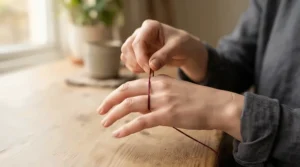
Ring size is simply the measurement of a ring’s inner circumference (or diameter), standardized into numbered sizes so a band manufactured in a factory fits a stranger’s finger a thousand miles away — a system formalized under ISO 8653 and adapted regionally into the US, UK, and EU scales you’ll see on almost every jewelry site. You don’t need a jeweler’s counter to nail this down. With a strip of paper, a printed chart, or one of the physical sizers below, most people land within a quarter-size of their true fit on the first try.
This guide walks through seven real, budget-to-premium sizing tools worth buying, the exact string-and-paper method jewelers themselves recommend as a backup, a full US-to-international conversion chart, and what to do when you’re stuck awkwardly between two sizes. Whether you’re sizing your own hand before an online order or trying to sleuth out a partner’s size for a surprise proposal, you’ll walk away with a number you can actually trust.
Quick Comparison: Which Sizing Method Should You Trust?
Before you commit to a method, it helps to see how the major approaches stack up side by side. Every option below can get you a workable ring size — the differences come down to precision, cost, and how much patience you have.
| Method | Accuracy | Cost | Best For |
|---|---|---|---|
| String/paper method | Fair (±0.5 size) | Free | Quick estimates, surprise sizing |
| Printable ring sizer | Fair-Good | Free | No physical tools on hand |
| Plastic/steel ring sizer kit | Very Good | Budget-Mid | Repeated or precise home measuring |
| Ring size adjuster clips | Good (fixes fit, doesn’t measure) | Budget | Loose rings, between-size gaps |
| Adjustable ring | N/A (sidesteps sizing) | Mid | Surprise proposals, gifting |
| In-store jeweler fitting | Excellent | Free-ish | Final confirmation before purchase |
Looking at the table, the honest takeaway is that no single method is perfect in isolation. The string method and printable sizers are wonderfully convenient but stretch-prone paper and a shaky hand can throw off a reading by a full half-size, which matters more than people assume once you’re shopping for a snug engagement ring. A physical metal or plastic ring sizer kit closes that gap for the cost of a coffee, while an adjustable ring is really a workaround — it lets you buy something today and solve the sizing question later.
💬 Found this comparison useful? A quick share helps other last-minute shoppers find it too!
Top 7 Ring Sizing Tools & Adjustable Rings: Expert Analysis
Amazon’s marketplace for ring sizers is crowded with near-identical plastic loops, so I focused on products with a genuinely distinct reason to exist — something in the material, the range, the included extras, or the problem it solves that separates it from the pack. Below are seven real, currently available options spanning budget, mid-range, and premium price points, plus two categories (adjusters and adjustable rings) that solve a different problem entirely: what to do when a ring almost fits.
1. Meowoo Ring Sizer Measuring Tool with Magnifier — clearest reading for shaky first attempts
The built-in magnifying lens is the whole pitch here, and it’s a smarter idea than it sounds. Reading tiny engraved numbers on a plastic loop wrapped around your own finger is surprisingly fiddly, and the magnifier removes the single biggest source of user error in DIY sizing. The set spans sizes 1 through 17 in the US scale, made from lightweight, flexible plastic that won’t pinch or leave an indentation the way a stiff metal band can on a first try.
Based on the spec comparison with other plastic sizers in this price bracket, the addition of a magnifier is the differentiator that actually changes outcomes rather than just looking nice in a product photo. Reviewers consistently report that the tool is easy for a total beginner to use alone, without a second person holding a ruler steady, and several note the plastic construction feels less premium than metal alternatives but performs the core job reliably.
This is the pick for someone who has never sized a ring before and wants the lowest-friction, lowest-cost entry point. Expect to pay under $15 for this tool, and given how directly it solves the “I can’t read these tiny numbers” problem, it’s a strong value even if you never use it again after finding your size.
Pros:
- ✅ Magnifier solves the most common reading mistake
- ✅ Covers the full 1–17 US size range
- ✅ Comfortable, flexible plastic build
Cons:
- ❌ Plastic feels less durable than steel kits
- ❌ Not ideal for measuring wide-band ring allowances
2. Eight Brothers Finger Measuring Tool — simplest all-in-one for total beginners
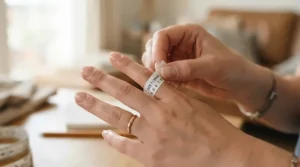
Marketed explicitly for at-home use, this ring gauge strips away extra pieces and just gives you a clean 1–17 US sizing loop for men, women, and kids. What most buyers overlook about a “simple” tool like this is that fewer parts means fewer ways to mess up the process — there’s no mandrel to separately track, no magnifier to fumble with, just a direct wrap-and-read gauge.
The sizing range covers nearly the entire adult population plus children’s sizes, which makes it genuinely useful for families sizing multiple people (say, before a group of siblings buys matching promise rings) rather than a single one-and-done purchase. Aggregated feedback on tools in this exact category tends to praise the straightforward design for first-time users, while noting that, like most plastic sizers, results can shift slightly if your finger is cold or swollen.
This is best suited to someone who wants a no-frills answer fast and isn’t planning to make a habit of sizing rings for other people. At a price typically under $10, it’s about as low-risk a purchase as this category gets, and the simplicity is the value proposition, not a shortcoming.
Pros:
- ✅ Extremely simple, beginner-proof design
- ✅ Covers adult and kids’ sizes in one set
- ✅ Very low price point
Cons:
- ❌ No magnifier for reading fine gradations
- ❌ Single-piece design offers less precision than mandrel kits
3. NIUPIKA 27-Piece Ring Sizer Measuring Tool Kit — most complete kit for future resizing needs
This is where DIY sizing starts to look like a scaled-down version of what a jeweler actually uses. The kit bundles 27 individual metal ring gauges spanning US sizes 1–13 with half sizes, plus two reusable finger sizers covering 1–17 and a magnifying glass for reading fine print. Here’s what the spec sheet won’t tell you outright: having 27 discrete, wearable ring-shaped gauges — rather than one adjustable loop — lets you actually try on a size the way you’d try on a shoe, sliding it past the knuckle and checking how it sits at the base, which is a meaningfully different (and more accurate) test than a flexible strip cinched around your finger.
That distinction matters most for anyone planning to resize gifted rings or check multiple family members’ sizes over time, since the set essentially becomes a permanent home sizing station. Review themes across comparable multi-piece metal kits point to durability being the standout benefit versus flexible plastic loops, alongside the practical bonus of a storage case keeping 27 loose rings from scattering across a junk drawer.
Expect to pay in the $15–$25 range, and for households that anticipate sizing more than one ring in their lifetime, the cost-per-use math clearly favors this over a single-use plastic strip.
Pros:
- ✅ 27 individual gauges mimic a real jeweler’s set
- ✅ Includes magnifier and reusable finger sizers
- ✅ Storage case keeps pieces organized
Cons:
- ❌ Bulkier than a single flat plastic sizer
- ❌ Metal gauges can feel cold on first contact
4. Rosenthal Collection Ring Sizer Measuring Tool & Mandrel — best for rings with stones or embedded gems
Most home sizing kits assume you’re measuring a bare finger, but this kit’s grooved mandrel design is built to also measure rings that already have stones set into the band — a detail that matters a lot more than it sounds. On plain mandrels, a gemstone-set ring can rock or sit unevenly, throwing off the diameter reading; the groove keeps the stone seated so the size reads true. The kit combines a calibrated mandrel (sizes 1–15) with a set of finger sizers (1–13), built from a sturdy hard plastic designed to resist the wear that comes from repeated slides on-and-off.
Based on the spec comparison with basic gauge sets, this is squarely aimed at people resizing or checking an existing piece of jewelry — engagement rings, wedding bands, heirlooms — rather than someone sizing a bare finger for the first time. Aggregated feedback on kits in this niche tends to highlight the grooved mandrel as the standout feature for anyone doing DIY jewelry repair or custom ring-making as a hobby, while some buyers note the plastic mandrel, while sturdy, isn’t quite as rigid as the steel mandrels used in professional jewelry benches.
In the $20–$30 range, this is a smart buy specifically if you already own rings you’re trying to check or resize, rather than a first purchase for someone starting from zero.
Pros:
- ✅ Grooved mandrel measures stone-set rings accurately
- ✅ Combines mandrel and finger sizer sets
- ✅ Durable hard-plastic construction
Cons:
- ❌ Plastic mandrel less rigid than steel bench tools
- ❌ Overkill if you’re only sizing a bare finger once
5. Splenor Tools Steel Finger Sizer, 29-Ring Set — most jeweler-accurate steel construction
If precision is the only thing you care about, this is the set to reach for. Steel doesn’t flex the way plastic does under finger pressure, which removes a subtle but real source of error — a plastic loop can compress slightly when you tighten it to a snug fit, nudging your read a touch smaller than reality, while a rigid steel ring simply does or doesn’t slide past your knuckle. The 29-piece set covers US sizes 1 through 15 including half sizes, essentially matching the resolution a professional jeweler’s sizing set offers.
What most buyers overlook about steel sizer sets is that the weight and rigidity actually make the knuckle test more reliable, not less comfortable — you get an unambiguous yes-or-no on whether a given ring clears your knuckle, rather than the “does this feel snug or too snug?” ambiguity that plastic can introduce. Aggregated review sentiment on comparable steel ring gauge sets consistently credits the metal build for longevity and accuracy over years of use, particularly among hobbyist jewelry makers and small Etsy sellers who size rings for customers regularly.
In the $25–$40 range, this sits at the premium end of the category, and the value case is straightforward: if you’re going to reference this more than a handful of times, steel outlasts and out-measures plastic.
Pros:
- ✅ Rigid steel eliminates compression-related error
- ✅ Half-size increments across sizes 1–15
- ✅ Built to last for repeated, long-term use
Cons:
- ❌ Higher price than plastic equivalents
- ❌ Heavier and less pocket-friendly for travel sizing
6. Ottemax Ring Sizers for Loose Rings, 8-Pack Adjuster Set — best fix for rings that spin or slip
This product solves a completely different problem than the six above it, and it’s worth including precisely because so many people search “how to measure ring size at home” when what they actually need is a way to stop an already-owned ring from spinning around a finger that’s shrunk slightly, or that never quite matched the ring in the first place. The eight-piece set covers eight different adjuster sizes, fitting flat bands from 1mm up to 8mm wide, and includes a polishing cloth as a small but appreciated extra.
Here’s the practical interpretation: these silicone-and-plastic inserts don’t change your official ring size, they physically take up the gap between your finger and an oversized band, which is a faster and far cheaper fix than a trip to a jeweler for a resize. Reviewers consistently note that the invisible, clear design keeps the fix discreet on delicate rings, while some mention that very wide or heavily domed bands can be trickier to fit snugly with a universal insert.
This is genuinely one of the best-value purchases in this entire lineup for the specific person who already owns a ring that’s just slightly too big — a common outcome of buying online without a perfect size — priced typically under $12 for the full 8-pack.
Pros:
- ✅ Fixes loose or spinning rings without resizing
- ✅ Eight sizes fit a wide range of band widths
- ✅ Very affordable for the problem it solves
Cons:
- ❌ Doesn’t help you determine your actual ring size
- ❌ Extra-wide or heavily domed bands can be finicky
7. PAVOI 14K Gold Plated Adjustable CZ Ring — best for surprise proposals when size is unknown
Sometimes the smartest move isn’t measuring at all — it’s sidestepping the problem with an open-back, adjustable design that flexes to fit a range of finger sizes. PAVOI’s adjustable cubic zirconia ring uses a gold-plated, open-cuff-style band that can be gently squeezed narrower or wider, the same mechanism you’ll find across most “one size fits most” adjustable rings, which typically flex comfortably across roughly a US 5 to 9 range depending on how far the band is adjusted. On paper, this means you can buy today, propose or gift tonight, and let your partner or recipient dial in the exact fit themselves without you ever needing their measurement.
The honest trade-off, and it is a real one: an open-back adjustable band is not built for permanent, everyday wear the way a closed, fully round band is, and it’s not the right choice for a final engagement ring meant to be worn for decades. Aggregated sentiment on adjustable CZ rings in this style and price tier tends to be positive for the “temporary or placeholder” use case — surprise proposals, promise rings, travel-friendly jewelry — while noting the band can lose some of its shape if adjusted too aggressively or too often.
Priced typically in the $15–$30 range, it’s a smart stopgap rather than a forever ring, and framed that way, it delivers real value.
Pros:
- ✅ Fits a wide size range without any measuring
- ✅ Ideal for surprise proposals or placeholder gifts
- ✅ Affordable gold-plated look
Cons:
- ❌ Not designed for decades of daily wear
- ❌ Band can lose shape if over-adjusted
Top 7 Products at a Glance
| Product | Type | Best For | Price Range |
|---|---|---|---|
| Meowoo Ring Sizer Measuring Tool with Magnifier | Plastic sizer, 1–17 | First-time users, budget buyers | Under $15 |
| Eight Brothers Finger Measuring Tool | Plastic sizer, 1–17 | Simplicity, sizing multiple family members | Under $10 |
| NIUPIKA 27-Piece Ring Sizer Measuring Tool Kit | Metal gauge set + mandrel | Repeat use, future resizing | $15–$25 |
| Rosenthal Collection Ring Sizer Measuring Tool & Mandrel | Grooved mandrel kit | Stone-set or existing rings | $20–$30 |
| Splenor Tools Steel Finger Sizer | 29-piece steel set | Maximum precision, hobbyists | $25–$40 |
| Ottemax Ring Sizers for Loose Rings | Adjuster clips | Fixing loose or spinning rings | Under $12 |
| PAVOI 14K Gold Plated Adjustable CZ Ring | Adjustable ring | Surprise proposals, gifting | $15–$30 |
Scanning across the table, the split is really between measuring tools (the first five rows) and fit-fixing tools (the last two). If you don’t yet know your size, the Meowoo Ring Sizer Measuring Tool with Magnifier or the Splenor Tools Steel Finger Sizer are your starting points depending on budget; if you already own a ring that just doesn’t sit right, Ottemax Ring Sizers for Loose Rings or the PAVOI 14K Gold Plated Adjustable CZ Ring solve a completely different, and often cheaper, problem.
Ring Sizing Without a Jeweler: A Step-by-Step Practical Guide
Skipping the jewelry counter entirely is completely doable, and the string method is the technique jewelers themselves point to as the reliable fallback when a physical sizer isn’t handy. Here’s the version worth following closely, since small mistakes in this exact process are where most inaccurate results come from.
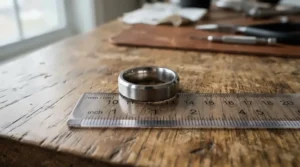
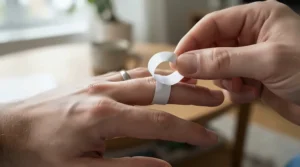
First, cut a thin strip of paper (not string, if you can help it — thread stretches under tension and quietly shrinks your result) about four inches long and roughly a quarter-inch wide. Wrap it snugly around the base of the finger you’re sizing, snug enough that it won’t slide, but loose enough to comfortably clear the knuckle on the way off. Mark the exact point where the strip overlaps itself with a pen, then lay it flat and measure the marked length in millimeters with a ruler — precision here beats eyeballing inches every time. Finally, match that millimeter circumference against a standard US ring size chart (see the conversion chart below) to land on your number.
Timing and body temperature quietly sabotage this process more than people expect. Measure in the afternoon or evening, when fingers have settled into their normal daytime size, rather than first thing in the morning or right after a cold walk outside, both of which can temporarily shrink your reading by half a size or more.
✨ Want the exact printable version of this chart? Grab one of the sizer kits above and skip the guesswork entirely!
Real-World Scenarios: Who Should Use Which Method
Not every sizing situation calls for the same tool, and matching the method to your actual constraints saves both time and money.
If you’re planning a surprise proposal and can’t ask directly, borrowing an existing ring worn on the correct hand for a few minutes — tracing its inner circle onto paper or measuring the inside diameter with a ruler — is far more reliable than guessing from memory. Pair that measurement with the conversion chart below, or consider the PAVOI 14K Gold Plated Adjustable CZ Ring as a placeholder gift while you sort out the exact size for a permanent band later.
If you’re a budget-conscious shopper sizing your own finger for a first online ring purchase, the string-and-paper method costs nothing and, done carefully in the afternoon with a paper strip rather than stretchy string, gets you close enough for casual jewelry. For anything with real financial stakes — an engagement ring, a fine gold band — upgrading to a physical kit like the Meowoo Ring Sizer Measuring Tool with Magnifier removes most of the reading error that paper strips introduce.
If you’re a hobbyist jeweler, an Etsy seller, or someone who sizes rings for family members regularly, the math flips: a one-time purchase of the NIUPIKA 27-Piece Ring Sizer Measuring Tool Kit or the Splenor Tools Steel Finger Sizer pays for itself after just two or three uses compared to a jeweler’s in-store fitting fee, and you keep the tool indefinitely.
Common Problems When Measuring Ring Size at Home
Problem: My reading changes every time I measure. This is almost always a temperature and timing issue — fingers swell slightly in heat and after exercise, and shrink in cold weather or first thing in the morning. Solution: measure two or three times at room temperature in the afternoon, and use the middle result rather than the first one.
Problem: The ring I already own fits my knuckle but is loose at the base. This is a knuckle-versus-base mismatch, common with larger knuckles or arthritic joints. Solution: measure both points and split the difference, or lean toward a size that clears the knuckle comfortably and use a set like the Ottemax Ring Sizers for Loose Rings insert to snug up the base fit afterward.
Problem: I don’t have a printer, a ring sizer, or a ruler handy. Solution: use a strip cut from a plastic bag or an index card in place of paper, and a tape measure or a phone app’s ruler tool in place of a physical ruler — accuracy dips slightly, but it’s enough for a rough estimate.
Problem: I’m secretly sizing my partner’s finger for a proposal. Solution: borrow a ring they already wear on the correct hand while they’re asleep or distracted, measure its inside diameter against a ruler, and return it before they notice — or simply go the adjustable-ring route with something like the PAVOI 14K Gold Plated Adjustable CZ Ring and remove the guesswork entirely.
Problem: I measured myself and a jeweler measured me differently. Solution: trust the jeweler’s in-store reading for a final purchase decision — it accounts for band width and finger shape in ways a flat paper strip can’t — but use your home measurement as a sanity check to catch obvious errors before you order online.
At-Home Sizing vs. a Traditional Jeweler Fitting
| Factor | At-Home (String, Printable, or Kit) | Traditional Jeweler Fitting |
|---|---|---|
| Cost | Free–$40 | Usually free, but requires a store visit |
| Accuracy | Fair to Very Good | Excellent |
| Convenience | High — done anytime, anywhere | Low — requires travel and store hours |
| Best For | Casual purchases, secrecy, quick estimates | Final confirmation before an expensive purchase |
The table makes the trade-off clear: at-home methods win on convenience and cost every time, while a jeweler wins on raw accuracy since they account for band width, knuckle shape, and finger conditions in person. A sensible middle ground many shoppers land on is using a home kit like the NIUPIKA 27-Piece Ring Sizer Measuring Tool Kit to narrow down a size, then confirming with a jeweler only if the purchase is expensive enough to justify the trip.
How to Choose the Right Ring Sizing Method
- Start with your budget for tools. If you’re not planning to size rings again, the free string method or a printable sizer covers you; if you expect repeat use, a $15–$25 kit like the NIUPIKA 27-Piece Ring Sizer Measuring Tool Kit pays for itself quickly.
- Factor in how much precision the purchase demands. A casual fashion ring tolerates a slightly loose home measurement; a fine metal engagement ring does not, so lean toward a physical metal gauge over paper for anything expensive.
- Consider whether secrecy matters. Surprise proposals favor the borrowed-ring trace method or an adjustable ring over asking directly or ordering a sizer to your shared address.
- Account for band width. Wider bands (6mm and up) fit more snugly than thin bands at the same numeric size, so most buyers should size up half a size for chunky styles — a detail confirmed by jewelry insurers who walk shoppers through this exact adjustment before a purchase.
- Think about who else might need sizing later. If you’re likely to size a partner, kids, or friends down the road, a multi-size kit beats a single printable chart used once and thrown away.
- Weigh convenience against accuracy. Digital or printable sizers are instant but device- and printer-dependent (scaling errors on a printout can silently throw off every measurement); physical tools take a few extra days to arrive but remove that variable entirely.
- When in doubt, split the difference and size up slightly. A ring that’s a touch loose is a quick, cheap fix with an adjuster insert; a ring that’s genuinely too tight often means a costly resize or an unworn drawer piece.
Engagement Ring Size Guide for Women
Engagement ring sizing carries higher stakes than everyday jewelry for a simple reason: many popular engagement ring styles — pavé bands, eternity settings, and rings with stones set close together around the entire circumference — are difficult or impossible to resize later without disturbing the stones, a limitation the Gemological Institute of America spells out clearly for exactly this reason. That makes getting the size right before purchase meaningfully more important than it is for a simple stacking band you can size up in a year.
For women specifically, average US ring sizes tend to cluster between 5 and 7, though this varies widely by height, build, and genetics — there’s no “correct” size, only your size. If you’re sizing in secret ahead of a proposal, the safest approach combines two data points rather than relying on one: trace or measure an existing ring your partner already wears on the left ring finger, and cross-reference that reading against the conversion chart below. If a physical ring isn’t available to borrow, a temporary solution like the PAVOI 14K Gold Plated Adjustable CZ Ring lets you propose with something beautiful in hand while the real, permanently sized ring gets ordered afterward with zero pressure and full accuracy.
One detail worth remembering: your dominant hand’s fingers often run slightly larger than your non-dominant hand, so always measure the actual ring finger on the actual hand the ring will be worn on, not whichever hand happens to be free.
US Ring Size Conversion Chart (Plus UK, EU & International Sizes)
Ring sizing isn’t universal — a US 7 shows up as a completely different label depending on where in the world you’re shopping, which trips up a lot of people ordering rings from international sellers. Here’s how the major systems line up.
| US Size | Diameter (mm) | Circumference (mm) | UK/AUS | EU (ISO) |
|---|---|---|---|---|
| 5 | 15.7 | 49.3 | J½ | 49 |
| 6 | 16.5 | 51.9 | M½ | 52 |
| 7 | 17.3 | 54.4 | O½ | 54 |
| 8 | 18.1 | 57.0 | Q½ | 57 |
| 9 | 18.9 | 59.5 | S½ | 59 |
| 10 | 19.8 | 62.1 | U½ | 62 |
Reading this table, notice how a difference of less than a millimeter in diameter separates each full US size — which is exactly why the string method’s small margin of error matters, and why half sizes exist at all for anyone landing between two rows. If you’re ordering from a UK or European retailer, always convert using millimeters as your anchor rather than trying to match size labels directly, since letter- and number-based systems don’t share a consistent logical relationship with the US numeric scale.
Adjustable Engagement Rings for Women: Pros, Cons & Best Uses
Adjustable rings and traditionally sized rings solve the fit problem in opposite ways, and knowing when each one actually makes sense saves you from an awkward mismatch between the tool and the occasion. A traditionally sized ring, like anything built from the Splenor Tools Steel Finger Sizer range of precise US sizes, delivers a closed, fully round band engineered for one specific finger circumference — ideal for daily, permanent wear because there’s no adjustable mechanism to eventually fatigue or lose its shape.
An adjustable ring, by contrast, uses an open-back design that flexes across a range of sizes, trading a small amount of long-term structural durability for the ability to fit an unknown finger immediately. The PAVOI 14K Gold Plated Adjustable CZ Ring exemplifies this trade cleanly: it’s genuinely excellent for a surprise proposal, a travel ring you don’t want to lose the “real” version of, or a gift for someone whose size you simply don’t know yet, but it’s the wrong choice for a final wedding band meant to survive decades of wear without reshaping.
The practical guidance most people need boils down to timeline. If a ring needs to be worn today, tonight, or this week and you don’t have a confirmed size, adjustable wins. If a ring is meant to be worn for the rest of someone’s life, invest the extra day or two it takes to get an accurate size using a physical sizer kit and order the correctly, permanently sized version instead.
Printable Ring Sizer Tools: Do They Actually Work?
Printable ring sizers — free PDF charts you print at home, cut out, and wrap around your finger — are one of the most searched-for shortcuts in this whole category, and the honest answer is that they work reasonably well, with one big asterisk: printer scaling. Most home and office printers default to “fit to page” or “scale to fit” settings that subtly shrink or stretch a document to fill the paper, and a chart that’s even 3-4% off scale will hand you a confidently wrong ring size.
To get a printable sizer right, always print at “actual size” or “100% scale” (never “fit to printable area”), and verify the printout against a real ruler before trusting it — most printable ring sizer PDFs include a small reference line marked exactly one inch or 25.4mm specifically so you can catch a scaling error before it costs you a size. Marketers of these free tools are also required to describe sizing claims accurately under the FTC’s Jewelry Guides, which is a useful reminder that “printable and precise” claims should hold up to that same actual-size verification step regardless of which brand’s chart you download.
Used correctly, a verified printable sizer is a perfectly reasonable free alternative to a physical kit for casual, lower-stakes purchases. For anything with real money on the line, pairing a verified printout with a physical check — like trying it against one of the plastic loops in the Meowoo Ring Sizer Measuring Tool with Magnifier — is the safer combination.
Common Mistakes When Measuring Ring Size at Home
Even careful people trip over the same handful of errors repeatedly. Measuring with cold hands tightens blood vessels and temporarily shrinks fingers, so always measure at room temperature, ideally later in the day. Pulling a string or paper strip too tight compresses soft tissue and produces a reading smaller than your true size — snug enough to stay put, not tight enough to indent skin, is the right tension. Skipping the knuckle check is another common slip: a ring has to physically clear your knuckle to go on and off comfortably, so always confirm the size you land on will pass over that widest point, not just wrap around the base. Finally, ignoring band width matters more than people expect — a size 7 in a 2mm thin band and a size 7 in an 8mm chunky band will feel noticeably different on the same finger, and wider bands generally warrant sizing up by half a size for comfort.
Stuck Between Ring Sizes? The Half-Size Decision Framework
Landing between two sizes is common enough that it deserves its own decision tree rather than a coin flip. If you’re between sizes and the ring in question has a wide band (6mm or more), round up to the larger size — wide bands fit tighter than thin ones at the same numeric size, and you’ll want the extra room for comfort over a full day of wear. If the band is thin or standard width (under 4mm), round up only if your knuckle is noticeably larger than the base of your finger; otherwise, the smaller of the two sizes is usually the more secure, better fit.
If precision genuinely can’t be determined — a printable sizer wasn’t scaled correctly, or a string measurement felt ambiguous — the safer default is almost always to size up slightly rather than down. A ring that’s a touch loose can be fixed cheaply and immediately with something like the Ottemax Ring Sizers for Loose Rings adjuster set, while a ring that’s genuinely too tight to comfortably remove is a far more expensive and time-consuming problem to fix, sometimes requiring a jeweler to cut and stretch the band.
What to Expect: Real-World Performance of Ring Sizers
On paper, every ring sizer promises an accurate number. In practice, real-world performance depends heavily on the surface you’re measuring against and how consistently you apply the tool. Plastic loop sizers like the Eight Brothers Finger Measuring Tool perform best for a single, careful measurement in ideal conditions but can introduce small errors if the plastic flexes unevenly during the wrap. Rigid metal ring-shaped gauges, like those in the Splenor Tools Steel Finger Sizer set, behave more like an actual ring would on your finger, which is exactly why they tend to produce results that match a jeweler’s in-store fitting more closely.
Day-to-day, expect your true ring size to fluctuate by a quarter to a half size depending on temperature, sodium intake, time of day, and even altitude on a flight. That’s normal physiology, not a flaw in your measuring technique — the goal of home sizing isn’t to find a single mathematically perfect number, it’s to land within a comfortable, realistic range and choose the size that fits best across your typical daily conditions, not your coldest or most swollen extreme.
Long-Term Cost & Maintenance of Ring Sizing Tools
A one-time paper strip costs nothing, but if you expect to size rings more than once or twice, the math shifts quickly in favor of a reusable kit. A $10–$15 plastic set like the Meowoo Ring Sizer Measuring Tool with Magnifier effectively costs a few cents per use if you size two or three people over its lifetime, versus paying a jeweler’s in-store fitting fee (where charged) each time. Metal kits like the NIUPIKA 27-Piece Ring Sizer Measuring Tool Kit or the Splenor Tools Steel Finger Sizer cost more upfront but need essentially zero maintenance beyond an occasional wipe-down, and steel construction in particular resists the wear and warping that plastic loops eventually show after repeated flexing.
Total cost of ownership also depends on what you’re solving for. If loose-fitting rings are your recurring problem rather than sizing accuracy, a set of Ottemax Ring Sizers for Loose Rings adjusters is the cheaper long-term fix, since it addresses the actual pain point — a ring that spins — rather than re-measuring a size you likely already know.

Frequently Asked Questions
❓ How accurate is the string method for ring sizing?
❓ What ring size is average for women in the US?
❓ Can I use a piece of string instead of paper to measure ring size?
❓ Do adjustable rings really fit any finger size?
❓ How do I know if I'm between ring sizes?
Conclusion
Figuring out how to measure ring size at home doesn’t require a jeweler’s counter, a chemistry-lab level of precision, or even a printer that works properly, though it certainly helps. Between the string-and-paper method, a verified printable chart, and the physical sizer kits covered above, you have multiple reliable paths to a trustworthy number — and a couple of clever workarounds, like adjustable rings and loose-ring adjusters, for the situations where an exact measurement either isn’t possible yet or isn’t the real problem.
The single highest-leverage habit to take away from this guide is simple: measure more than once, do it later in the day at room temperature, and when you land between two sizes, let the band width and your knuckle-versus-base fit break the tie rather than guessing. Get those fundamentals right, and whether you’re buying a $20 fashion ring or budgeting for a lifetime engagement piece, you’ll open the box to a ring that actually fits — the first time.
Recommended for You
- Best Engagement Ring for Small Hands: 7 Picks That Wow (2026)
- Rose Gold vs Yellow Gold Ring: 7 Picks & Surprising Truths (2026)
- Moissanite vs Diamond Engagement Ring: 7 Brilliant Picks (2026)
Disclaimer: This article contains affiliate links. As an Amazon Associate, I earn from qualifying purchases. If you purchase products through these links, we may earn a small commission at no additional cost to you.
✨ Found this helpful? Share it with your friends! 💬🤗
