In This Article
What Is a Marquise Solitaire Diamond Engagement Ring?
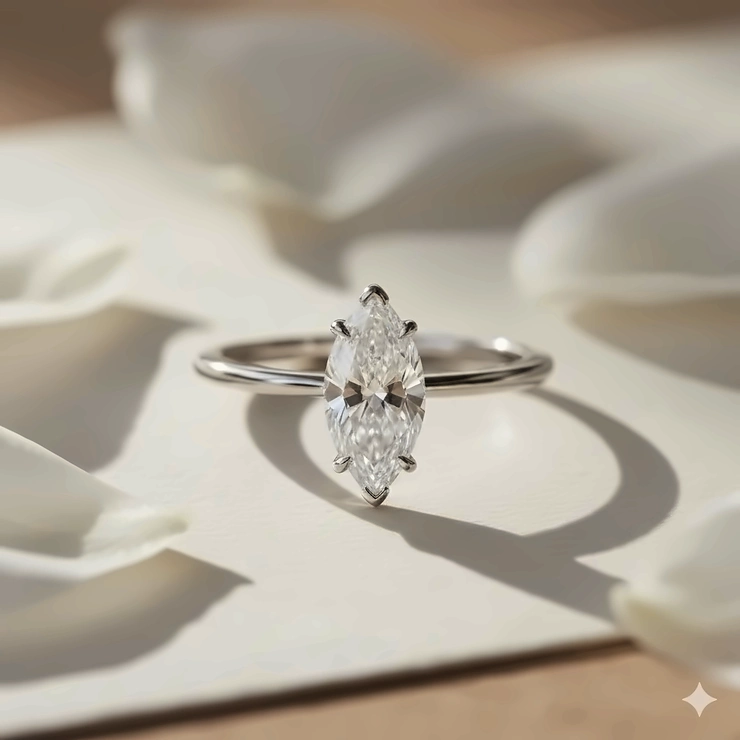
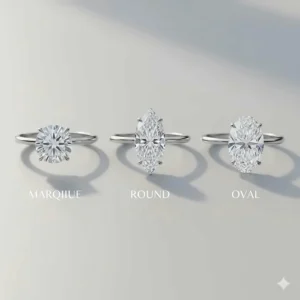
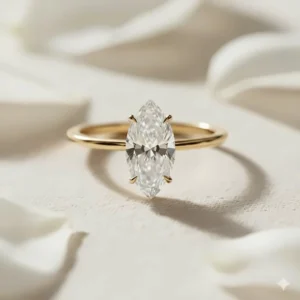
A marquise solitaire diamond engagement ring is a single-stone ring built around a boat-shaped diamond with two pointed tips and a curved belly. The silhouette is long and slender, so it faces up larger than most shapes of the same carat weight and can make fingers look longer.
Round diamonds are the sensible friend. The marquise is the one who walks in wearing a vintage trench coat and somehow upstages the room. It has royal-court roots and a sharp, graphic outline. Right now it suits a generation that wants a ring that looks like theirs rather than a catalog default.
There’s a catch, and GIA’s guide to choosing a marquise-cut diamond spells it out: proportions, tip quality, and the dark “bow-tie” shadow across the middle decide whether a marquise looks magical or muddy. Plenty of Amazon listings skip these details, so you have to know what to look for.
Here is how I built this list. I compared real Amazon listings for the marquise solitaire diamond engagement ring, and for the marquise moissanite engagement ring, by their published specs: metal, setting, stone size, certification and grade. Amazon blocks automated access to its review pages. I therefore could not pull verified review samples for individual listings, and I won’t pretend otherwise. Where I discuss feedback, I flag it as category-level or tell you what to check yourself.
You’ll find four lab-grown diamond picks and three moissanite picks. Each is labeled honestly, because the diamond-versus-simulant line matters here, legally and emotionally.
Quick Comparison: 7 Marquise Rings at a Glance
| Product | Center Stone | Metal | Setting Style | Best For |
|---|---|---|---|---|
| Houston Diamond District Marquise Solitaire | IGI lab-grown diamond, 0.75–5 ct options | 14K white or yellow gold | Classic prongs | Traditionalists who want grade choice |
| ALLORYA Sideways Bezel Marquise | IGI lab-grown diamond, 1.00 ctw | Solid 14K yellow gold | East-west bezel | Hands-on daily wearers |
| IGI Certified 1 Carat E VS1 Marquise Split Shank | IGI lab-grown diamond, E color, VS1 | 14K rose gold | Split shank | Romantic, warm-toned style |
| Hidden Halo IGI Marquise Solitaire | IGI lab-grown diamond, 1–3 ct options | Solid 14K gold | Prongs + hidden halo | Maximum sparkle |
| EleShow 3CT Marquise Moissanite | Moissanite, about 7×11 mm | 14K gold-plated 925 silver | Hand-set prongs | Big look, small budget |
| RoseShadow 1ct Marquise Moissanite | Moissanite, 1 ct label | 14K gold-plated S925 silver | Vintage solitaire | Trying the shape cheaply |
| RODIFFY 1/2/3CT Marquise Moissanite | Lab-created moissanite | Gold-plated S925 silver | Solitaire | Flexible sizing on a budget |
Read the table as a spectrum. The first four are lab-grown diamonds in real gold and are certified by a grading lab. The last three are moissanite in plated silver, which is a different material and a very different price. If longevity and resale matter most, the diamond-in-gold rings justify the premium. If you want the marquise look without a four-figure commitment, a marquise moissanite engagement ring is an easier first step.
💬 Just one click — help others make better buying decisions too!😊
Top 7 Marquise Solitaire Diamond Engagement Ring Picks: Expert Analysis
Each pick below gets the same treatment: what the specs mean in practice, who it suits, what the review picture looks like, and where it falls short. Prices are category-based ranges, so check current price before buying.
1. Houston Diamond District 14K White Gold Lab Grown Marquise Solitaire — widest grade menu in a classic prong setting
This is the closest thing on the list to a “build your own” marquise solitaire diamond engagement ring. The same design is listed in several color and clarity tiers, from D-E VVS1-VVS2 down to E-F SI1-SI2 and F-G VS1-VS2.
All variants use IGI-certified lab-grown diamonds in 14K gold, with carat options starting at 0.75. A paid-for certificate means the stone’s specs are independently documented. That’s a real advantage over the “D color VVS1” claims on unlabeled stones.
Here is how I’d read the grade ladder. Between SI1 and VS2, the extra money buys peace of mind, not necessarily visible improvement. A marquise’s long belly can reveal inclusions more easily than a round’s, though, so many buyers will want VS or better. The prong setting keeps the diamond visible. Fit the tips with V-shaped prongs if your jeweler can add them later.
I couldn’t verify a review sample for this listing. Before buying, open the rating breakdown and filter for comments on stone size versus the listed carat weight, and on how the ring arrived packaged.
Pros:
- ✅ IGI certification across the listed variants
- ✅ Many color and clarity combinations to choose from
- ✅ Real 14K gold, not plated metal
Cons:
- ❌ Variant grid can confuse first-time buyers
- ❌ Plain prong tips need regular inspection
Price: a 1-carat-class lab-grown solitaire in solid 14K typically sits in the $700–$1,800 range. Larger stones climb fast, so check current price. Verdict: strong value if you choose the grade deliberately.
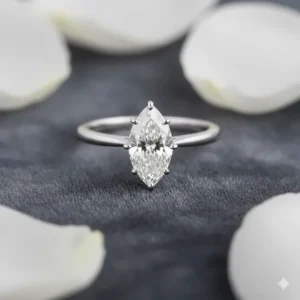
2. ALLORYA IGI Certified 1.00 Cttw Marquise Lab Grown Sideways Bezel Ring — east-west bezel built for real life
Turn a marquise on its side and it reads modern instead of vintage. Add a bezel and it becomes the least snag-prone version of the shape. The tips sit inside a metal rim instead of poking out.
The stone is a 1.00 ctw IGI-certified lab-grown marquise, set sideways in solid 14K yellow gold. In practice, east-west orientation makes a 1-carat stone look wide across the finger, which flatters smaller hands. Bezel settings also trade a little sparkle for a lot of protection. Less light enters from the sides, but the stone is far less likely to catch on sweaters or hair.
My analysis: this one is best for nurses, parents, lifters, or anyone whose hands are always busy. The yellow gold also suits warm skin tones and pairs with an east-west marquise’s artsy look.
Review sentiment: I couldn’t verify individual reviews. Because bezels hide the side profile, look for comments about whether the stone sits visibly flat or raised. Look also for how the sizing runs.
Pros:
- ✅ Bezel shields both fragile tips
- ✅ Solid 14K gold with IGI-certified stone
- ✅ Modern east-west look stands out
Cons:
- ❌ Bezel reduces light entering the stone
- ❌ Sideways orientation isn’t for classic-minded buyers
Price: around the four-figure mark for this class of ring; check current price. Verdict: the pick for daily durability.
3. IGI Certified 1 Carat E VS1 Marquise Lab Grown Rose Gold Split Shank Ring — rose gold romance with a split band
The split shank is the star here. The band forks as it nears the stone, which makes a slim marquise look bigger and gives the setting visual weight without bulky metal.
The listing specifies an IGI-certified 1-carat lab-grown (CVD) marquise in E color and VS1 clarity, set in 14K rose gold. E color is colorless, so the diamond won’t read warm. The rose gold wrapped around it does the warming. Pairing a colorless stone with rose gold also forgives a few visible inclusions less than white metal would, so VS1 is a smart clarity target.
The brand isn’t prominently named in the listing details I could see, so treat the IGI report as your anchor. Compare the report’s measurements against the length-to-width ratios in this guide. A 1-carat marquise at roughly 2:1 should measure close to 10×5 mm.
I couldn’t verify review samples. Check reviews for comments on prong tightness and finish quality at the split.
Pros:
- ✅ E color and VS1 clarity are a strong pairing
- ✅ Split shank adds presence to a slim stone
- ✅ 14K rose gold flatters warm and neutral skin
Cons:
- ❌ Seller branding is hard to identify
- ❌ Split shanks are harder to resize
Price: typically in the $700–$1,800 category range; check current price. Verdict: pretty and well-specified, but verify the seller carefully.
4. Hidden Halo IGI Marquise Solitaire (1–3 ct) — hidden halo sparkle without changing the outline
A hidden halo puts small accent diamonds under the center stone, visible only from the side. It’s a clever middle path for people who love solitaires but want a little extra glitter.
The listing offers a center marquise of 1 to 3 carats, IGI-certified and lab-grown, in solid 14K gold with a 0.10 ct hidden halo and accent stones. The color and clarity listed is E-F, VS1-VS2. In practice, the hidden halo adds side-profile sparkle but doesn’t widen the ring’s top-down footprint, which matters because a visible halo can make a marquise look wider and shorter.
Technically it’s no longer a pure solitaire, so purists may balk. Still, for the marquise solitaire diamond engagement ring shopper who wants more life at the setting, it’s a thoughtful compromise. The 3-carat option is the “statement” version, and the price curve for lab diamonds steepens past 2 carats.
I couldn’t verify review samples for this listing. Check whether buyers mention the accent stones’ quality and whether the halo remains hidden at their size.
Pros:
- ✅ Hidden halo adds side-profile sparkle
- ✅ Carat options up to 3 for statement buyers
- ✅ Solid gold with IGI-certified center
Cons:
- ❌ Accent stones add more points to maintain
- ❌ Not a pure minimalist solitaire
Price: from roughly the high hundreds up for 1 carat; larger sizes climb. Check current price. Verdict: the best “more sparkle, same silhouette” option.
5. EleShow 3CT Marquise Moissanite Ring — biggest footprint for the money
Moissanite is where the budget math becomes fun. The EleShow 3CT Marquise Moissanite Ring lists a hand-set marquise moissanite measuring about 7×11 mm, in 14K white gold plated 925 sterling silver.
Here’s the analysis the label won’t give you. That’s a length-to-width ratio of roughly 1.57. GIA treats 1.5:1 as a “short” marquise, so expect a plump, wide-bellied shape rather than an elegant slim one. It’s also less prone to a pronounced bow-tie than a very long cut. The “3CT” is a marketing label: by typical diamond size charts, 7×11 mm looks closer to a 1- to 1.5-carat diamond marquise face-up. Judge by millimeters, not carats.
This marquise moissanite engagement ring is made for someone who wants presence without commitment pricing. It also suits a placeholder ring if you plan to upgrade later.
I couldn’t verify individual reviews. For gold-plated silver generally, scan recent reviews for plating wear complaints, because plating is the weak point of this ring category.
Pros:
- ✅ Generous 7×11 mm face-up size
- ✅ Hand-set stone for better security
- ✅ Very low cost of entry
Cons:
- ❌ Plating will wear with daily use
- ❌ Short ratio won’t look elongated
Price: typically well under $150; check current price. Verdict: the best “look big, spend little” marquise.
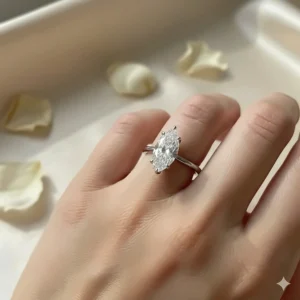
6. RoseShadow 1ct Marquise Moissanite Ring — lowest-risk way to test the shape
If you aren’t sure the marquise suits your hand, this is the experiment. The RoseShadow 1ct Marquise Moissanite Ring is a vintage-style solitaire in S925 sterling silver with 14K gold plating, and the listing mentions a certificate.
Moissanite is hard at 9.25 on the Mohs scale, so the stone resists scratching well. The weak link is the plated sterling. A thin band is also easier to bend than a solid-gold one. Wear it as a trial, a travel ring or a casual-use piece, and it’s very hard to beat on value.
“D color VVS1” appears on most budget moissanite listings, including this one. Moissanite isn’t graded on the GIA diamond color scale, so treat the phrase as seller shorthand for “colorless and clean” rather than a lab grade.
I couldn’t verify review samples here. Look at photos from buyers, which show the real size and sparkle better than staged listing shots.
Pros:
- ✅ Tiny cost makes it a risk-free trial
- ✅ Vintage styling suits stacking
- ✅ Certificate mentioned in the listing
Cons:
- ❌ Thin plated band isn’t a long-term ring
- ❌ Smaller 1ct footprint reads modest
Price: listings of this style have appeared around the mid-$30s before coupons. Prices may vary, so check current price. Verdict: great trial ring, not a forever ring.
7. RODIFFY 1/2/3CT Marquise Promise Moissanite Ring — flexible sizing on a budget
The RODIFFY 1/2/3CT Marquise Promise Moissanite Ring is sold in 1, 2 and 3 carat labels. It’s described as lab-created, in gold-plated S925 silver.
The ladder of sizes lets you pick the footprint you want rather than the one you’re given. As with the other moissanite picks, compare listed millimeter dimensions across sizes and ignore the carat label. A 2-carat label with a lean ratio can look more elegant than a 3-carat label with a stubby one.
My take: this marquise moissanite engagement ring suits couples who’d rather put money toward the wedding. It also works for someone who wants to test a size before commissioning a custom piece.
I couldn’t verify review samples. Check recent reviews for size accuracy (does it look like the listing photos?) and for how the plating holds up in the first few months.
Pros:
- ✅ Three size options for finer control
- ✅ Lab-created moissanite resists scratches
- ✅ Budget-friendly price class
Cons:
- ❌ Plated finish isn’t permanent
- ❌ Carat labels don’t match diamond sizes
Price: budget tier; check current price. Verdict: sensible for flexible sizing, as long as you accept plated metal.
Top 7 Side by Side: Price Ranges, Materials and Best-For
| Product | Stone Type | Price Tier (check current price) | Durability Outlook | Best For |
|---|---|---|---|---|
| Houston Diamond District Marquise Solitaire | Lab-grown diamond | Mid to premium | Excellent (solid gold) | Classic buyers |
| ALLORYA Sideways Bezel Marquise | Lab-grown diamond | Mid to premium | Excellent, tips protected | Active lifestyles |
| IGI Certified 1 Carat E VS1 Marquise Split Shank | Lab-grown diamond | Mid | Excellent (solid gold) | Rose gold lovers |
| Hidden Halo IGI Marquise Solitaire | Lab-grown diamond | Mid to premium | Excellent, more points | Sparkle seekers |
| EleShow 3CT Marquise Moissanite | Moissanite | Budget | Good, plating wears | Big look, tiny spend |
| RoseShadow 1ct Marquise Moissanite | Moissanite | Budget | Fair, thin plated band | Trying the shape |
| RODIFFY 1/2/3CT Marquise Moissanite | Moissanite | Budget | Good, plating wears | Flexible sizing |
The pattern is simple. Solid gold plus an IGI report costs more but behaves like a real heirloom. Plated silver plus moissanite gives you the look for a fraction of the cost, with the trade-off that the metal eventually needs replating. The ALLORYA Sideways Bezel Marquise is the practical winner for tip protection, while the Hidden Halo IGI Marquise Solitaire gives the most sparkle for the money.
Prices and ratings on Amazon move around constantly, so use this table for tier comparison rather than as a price quote. Check live listings before committing.
Your First 30 Days With a Marquise Ring: Setup, Care and Maintenance
A marquise has two points that most round diamonds don’t. They are lovely and they are vulnerable. Here’s a plan you won’t find on a listing page.
Week one: check the tips. Run a fingertip gently over each point. A tiny chip or a loose prong is easier to catch early. If the tips feel sharp against your skin, ask a jeweler whether V-shaped prongs can be added to the Houston Diamond District Marquise Solitaire or the Hidden Halo IGI Marquise Solitaire.
Week two: build habits. Take the ring off for the gym, dishwashing and anything abrasive. Bezel designs such as the ALLORYA Sideways Bezel Marquise forgive more, but nobody’s immune.
Weeks three and four: clean properly. Warm water, a drop of mild dish soap and a soft toothbrush will do. Skip ultrasonic cleaners for plated silver rings like the EleShow 3CT Marquise Moissanite or the RoseShadow 1ct Marquise Moissanite, because the vibration and chemicals can stress thin plating. Dry gently and store the ring in a soft pouch, not tossed in a drawer with other jewelry.
Ongoing: Have a jeweler inspect prongs every six months. Get an appraisal for insurance if you bought a certified diamond. Keep the IGI report in a safe place, because it matters if you ever insure or resell.
Real-World Scenarios: Which Marquise Fits Which Life
Specs only mean something once they meet a real budget and a real hand. Here are three realistic profiles.
Scenario 1: The ER nurse who washes her hands forty times a day. Her budget is about $1,200, and her ring needs to survive gloves, sanitizer and chaos. The ALLORYA Sideways Bezel Marquise fits best. The bezel protects the tips, solid gold survives the hand-washing, and the IGI report documents the stone. The sideways orientation lies flatter under gloves.
Scenario 2: The couple saving for a house. They have maybe $100 for a ring, and they’re building a wedding on a tight budget. A marquise moissanite engagement ring makes sense here. The RODIFFY 1/2/3CT Marquise Moissanite lets them choose a size, and they can plan to upgrade to a gold setting later. They should treat it honestly as a first-chapter ring.
Scenario 3: The proposer who wants a statement. The budget is around $2,000 and the style is bold. Here the Hidden Halo IGI Marquise Solitaire in a larger size gives the most visual drama. Marquise also faces up roughly 10–15% bigger than a round of the same carat, so the money stretches visually.
Problem → Solution: Fixing the Five Most Common Marquise Headaches
Problem 1: “The tips snag on everything.” Choose a bezel such as the ALLORYA Sideways Bezel Marquise, or add V-prongs to a prong setting.
Problem 2: “There’s a dark smudge in the middle.” That’s the bow-tie effect. GIA notes that a bow-tie that isn’t too dark or distracting is acceptable. Ask for a video before buying, since no certificate grades the bow-tie.
Problem 3: “The ring looks too skinny on my finger.” Check the length-to-width ratio. A ratio below 1.75 reads fuller. The EleShow 3CT Marquise Moissanite at roughly 1.57 is a good example of a plump profile.
Problem 4: “My wedding band leaves a gap.” The marquise’s pointed shape often creates a gap with a straight band. A curved or contoured band solves it, so plan for that before buying the engagement ring.
Problem 5: “The gold plating turned dull.” This is typical of plated silver such as the RoseShadow 1ct Marquise Moissanite. Have a jeweler replate it, or step up to solid gold when your budget allows.
How to Choose a Marquise Solitaire Diamond Engagement Ring
- Set a budget first. Decide whether you want a lab-grown diamond in solid gold or a moissanite in plated silver, because that choice drives everything else.
- Check the length-to-width ratio. A classic marquise is around 2:1. GIA reports that most submitted marquises fall between 1.6:1 and 2.2:1.
- Inspect the bow-tie. It’s the main visual flaw and isn’t graded on certificates, so request a video.
- Look at the points. Tips should be symmetrical and sharp, without visible chips. Check that both ends line up.
- Pick a protective setting. Bezels and V-prongs reduce chip risk.
- Verify the certificate. For diamonds, an IGI or GIA report is your anchor. Moissanite is typically sold with a seller’s card rather than a grading report.
- Match metal to lifestyle. Solid gold wears for decades, while plated silver needs replating.
Common Mistakes When Buying a Marquise Solitaire Diamond Engagement Ring
Mistake one: shopping by carat alone. Two marquises with the same carat weight can look very different in millimeters. Always compare dimensions.
Mistake two: ignoring the bow-tie. A cheap stone with a heavy bow-tie can look dull. Cut quality matters more than a clarity grade you can’t see.
Mistake three: forgetting the points. A marquise with unprotected tips can chip after a bump. Protective settings are cheap insurance.
Mistake four: believing plated means permanent. Every gold-plated silver ring will eventually show wear. Budget for replating, or be ready to replace the ring.
Mistake five: skipping the wedding band plan. Because the shape is unusual, check how a curved band sits against it before you propose.
Marquise Solitaire Diamond Engagement Ring vs Marquise Moissanite Engagement Ring
This is the choice at the heart of the list. A lab-grown diamond is carbon, chemically the same as a mined stone. Moissanite is silicon carbide, a different gemstone with its own character. Whiteflash’s comparison gives the key numbers: hardness of 10 for lab diamonds versus 9.25 for moissanite, and a higher refractive index for moissanite.
| Feature | Marquise Lab-Grown Diamond | Marquise Moissanite |
|---|---|---|
| Material | Carbon (a real diamond) | Silicon carbide |
| Mohs hardness | 10 | 9.25 |
| Sparkle style | Balanced white flashes | More rainbow fire |
| Typical price | Higher | Much lower |
| Resale value | Moderate | Lower |
| Best For | Heirloom intent | Budget-first buyers |
Looking at the table above, the diamond wins on hardness and resale, while moissanite wins on price and fire. The Houston Diamond District Marquise Solitaire is the better fit for someone planning to wear one ring for decades, while the EleShow 3CT Marquise Moissanite suits someone who wants maximum presence per dollar. Neither choice is wrong, but you should know which one you’re making.
Marquise Moissanite Engagement Ring: What to Know Before You Buy
A marquise moissanite engagement ring appeals for good reasons. Wikipedia’s moissanite entry covers the material’s background. Its hardness is high, its fire is strong, and prices are low. But a few cautions apply.
Decode the listing language. “D color VVS1” is common on moissanite listings, but moissanite isn’t graded on the diamond color scale. Treat it as marketing shorthand.
Judge size in millimeters. Moissanite is less dense than diamond, so a “3CT” label doesn’t translate directly to diamond sizes. The EleShow 3CT Marquise Moissanite at about 7×11 mm shows why.
Expect the plating question. Most Amazon moissanite rings are gold-plated sterling silver. That’s fine for the price, but not a forever finish.
Mind the fire. Moissanite throws more colorful flashes than diamond. Some people love that drama, while others prefer the cleaner white sparkle of diamond. See both in person or in video if you can.
For a marquise moissanite engagement ring, a bezel or well-protected prong setting is especially smart, because the points are the weak spot on any marquise, regardless of material.
Long-Term Cost and Maintenance: What Each Ring Really Costs Over Time
Sticker price is only the first chapter. Here’s the total-cost picture.
A solid-gold lab-grown solitaire, such as the Houston Diamond District Marquise Solitaire or the IGI Certified 1 Carat E VS1 Marquise Split Shank, costs more up front. In return you get metal that doesn’t need replating and a stone that won’t scratch easily. Over a decade, the cost per year of wear drops considerably. Plan for a prong check every six months, which is usually inexpensive.
A plated moissanite ring, such as the RoseShadow 1ct Marquise Moissanite or the RODIFFY 1/2/3CT Marquise Moissanite, costs very little up front. But if you wear it daily, expect replating or replacement within a couple of years. If you wear it occasionally, it can last much longer.
The practical math: if you’ll wear the ring every day for years, the gold diamond ring usually wins on cost per use. If you’ll wear it a few times a year, or as a placeholder, moissanite does.
Safety, Regulations and Disclosure: What to Check on the Label
A few legal facts protect you as a buyer. According to the FTC, the word “diamond” for a lab-grown stone needs a clear disclosure such as “laboratory-grown” or “laboratory-created.” The FTC’s advertising guide on diamonds, gemstones and pearls also makes clear that moissanite is a different gemstone from a diamond.
In practice, that means:
- A listing for a lab-grown diamond should say so plainly. All four diamond picks here do.
- A moissanite listing should never imply the stone is a diamond. “Diamond ring” in a moissanite title is a yellow flag.
- The FTC also notes that thermal testers used to spot diamonds can misread moissanite as a diamond. If a jeweler tests your ring, use a tester suited to moissanite.
- Verify any report number with the issuing lab before relying on it.
Honest labeling is a good sign about a seller. Vague labeling is a reason to keep shopping.
✨ Don’t Miss These Carefully Selected Picks!
🔍 Take your marquise ring search to the next level with these researched options. Click on any highlighted item to check current pricing and availability. These rings will help you create an authentic proposal moment she’ll treasure!
FAQ
❓ Does a marquise cut look bigger than a round diamond?
❓ Can I wear a wedding band with a marquise solitaire diamond engagement ring?
❓ Is a marquise moissanite engagement ring cheaper than a lab-grown diamond ring?
❓ Does an east-west marquise suit smaller hands?
❓ How do I verify an IGI-certified marquise ring on Amazon?
Conclusion
The marquise is a shape with personality. Chosen well, a marquise solitaire diamond engagement ring is slim, bold and unmistakably individual. Chosen carelessly, it’s a shadowy stone with fragile tips.
If you want one ring to wear for decades, the Houston Diamond District Marquise Solitaire and the IGI Certified 1 Carat E VS1 Marquise Split Shank give you certified stones in solid gold. If you live with busy hands, the ALLORYA Sideways Bezel Marquise is the safest design. If sparkle is your priority, the Hidden Halo IGI Marquise Solitaire delivers more life without changing the outline.
If your budget is tight, a marquise moissanite engagement ring is a respectable path. The EleShow 3CT Marquise Moissanite gives the biggest footprint, the RoseShadow 1ct Marquise Moissanite is the lowest-risk trial, and the RODIFFY 1/2/3CT Marquise Moissanite offers flexible sizing. Just go in knowing that plated metal is a temporary finish.
Whichever you pick, compare the millimeters, check the points, verify the certificate, and read the most recent reviews yourself. The right ring is the one that fits your hand and your life, not just the listing photo.
✨ Ready to find your perfect marquise? 🔍 Click on any highlighted ring above to check current pricing and availability, and give her a ring she’ll never stop admiring! 💍
Recommended for You
- Solitaire Marquise Engagement Ring: 7 Stunning Picks for 2026
- Yellow Gold Marquise Engagement Rings: 7 Stunning Picks (2026)
- Three Stone Marquise Engagement Ring: 7 Stunning Picks 2026
Disclaimer: This article contains affiliate links. As an Amazon Associate, I earn from qualifying purchases. If you purchase products through these links, we may earn a small commission at no additional cost to you.
✨ Found this helpful? Share it with your friends! 💬🤗
