In This Article
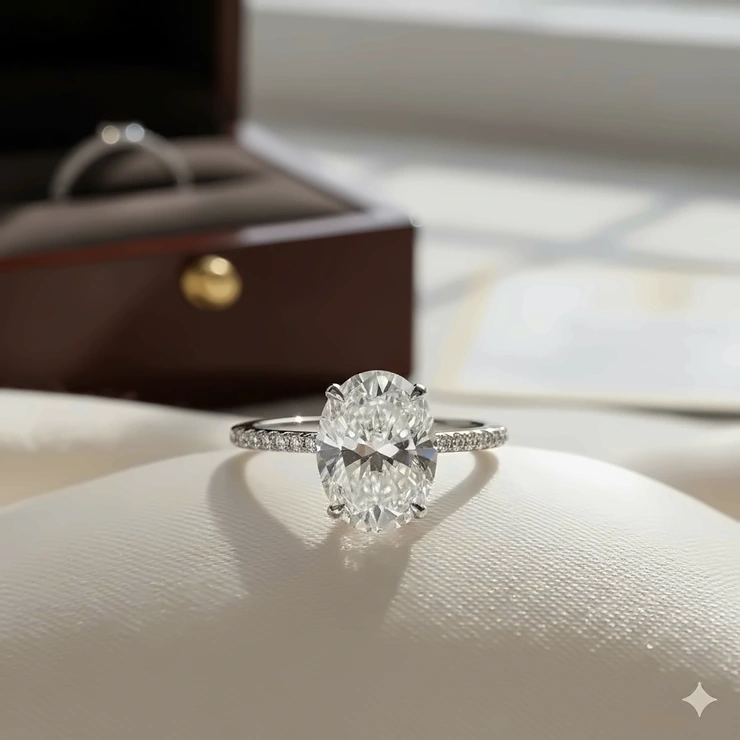
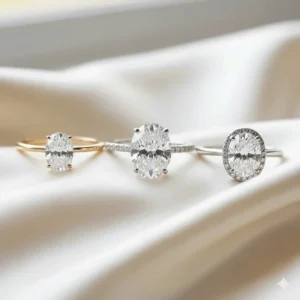
A 1 carat oval diamond ring is a ring whose center stone is an oval-shaped brilliant-cut diamond weighing about one carat (0.2 grams). Because the outline is elongated, it typically measures around 7.7 × 5.7 mm and looks noticeably larger on the finger than a round stone of the same weight.
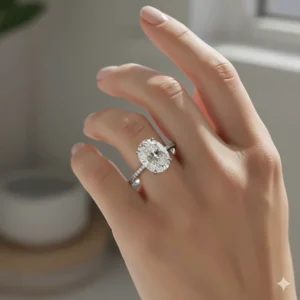
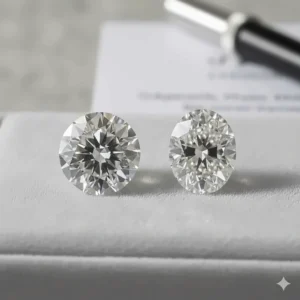
Here’s the thing about carat weight: it’s a scale reading, not a tape measure. Two stones can weigh exactly the same and look wildly different on the hand. The oval is the shape that quietly cheats in your favor. It stretches along the finger, flatters short and long hands alike, and keeps the fire of a round brilliant without the “everyone has one” feeling.
That’s why a 1 carat oval diamond ring has become the default answer for shoppers who want presence without a down-payment-on-a-house price tag. Add lab-grown stones into the mix, which are the same carbon crystal as mined ones according to this overview of synthetic diamond, and the budget stretches even further.
This guide covers seven real rings across budget, mid-range, and premium tiers. Each gets honest analysis built on published specs and whatever genuine review data exists. I haven’t handled any of these rings, so you won’t find fake “I tested it” stories here. Listings and stock change fast, and not every seller carries every ring through the same storefront, so confirm the current listing before you buy. Since many of you also search for a 1.5 carat oval diamond ring, I’ve built that size into the picks and given it its own sections.
Quick Comparison Table: 7 Rings at a Glance
Skim this first, then dig into the details below.
| Ring | Center Stone | Metal | Price Range | Best For |
|---|---|---|---|---|
| Unique Moments 1 ct Solitaire | 1 ct lab-grown diamond, H-I color, SI-I1 clarity | 14K white gold | Around $700 | Unique Moments 1 ct Solitaire suits tight budgets |
| Turandoss 1.5 Carat Moissanite Oval | 1.5 ct moissanite (not a diamond) | 925 sterling silver | Budget tier, check current price | Turandoss 1.5 Carat Moissanite Oval suits max size on a tiny budget |
| Shiree Odiz 1 Carat Oval | 1 ct lab-grown diamond, D-F color, VVS2-VS2 clarity, IGI | 14K white gold | $1,100-$1,800 range | Shiree Odiz 1 Carat Oval suits buyers who want setting choices |
| Ivy & Rose Yellow Gold Oval | 1 ct lab-grown diamond, F color, VS2, IGI | 14K yellow gold | Mid-$1,400s to mid-$1,500s | Ivy & Rose Yellow Gold Oval suits warm-metal lovers |
| Robinson’s 1.50 Total Carat Oval | 1.00 ct center, 1.50 ct total lab-grown | 14K white gold | Around $1,450 | Robinson’s 1.50 Total Carat Oval suits sparkle-on-the-band fans |
| Helzberg 1 CT Oval Solitaire | 1 ct lab-grown diamond, GCAL-certified | 14K white gold | Around $1,500 | Helzberg 1 CT Oval Solitaire suits brand-backed purity |
| Ivy & Rose GIA G SI1 Oval | 1.5 ct natural diamond, GIA-certified, G color, SI1 | Sold loose, mount separately | Around $8,000 plus setting | Ivy & Rose GIA G SI1 Oval suits natural-diamond purists |
Looking at the table, the cluster of lab-grown solitaires in the mid-$1,000s is where most buyers will find the sweet spot, because the stones are graded high enough to look bright white and clean to the eye. If budget is the only filter, Unique Moments 1 ct Solitaire gets you a real diamond for the least, though its lower grades deserve a close look. And the gap between Helzberg 1 CT Oval Solitaire and Ivy & Rose GIA G SI1 Oval isn’t just money, it’s the difference between lab-grown and natural, a decision we’ll unpack later.
💬 Just one click — help others make better buying decisions too!😊
Top 7 1 Carat Oval Diamond Ring Picks: Expert Analysis
Think of these as three tiers: budget starters, mid-range workhorses, and a premium natural-diamond splurge. Specs are paraphrased from seller listings, then interpreted so the numbers actually mean something.
1. Unique Moments 1 ct Solitaire — cheapest real-diamond route
This is the entry point if you want a lab-grown diamond in genuine 14K gold without crossing four figures. The listing describes a four-prong solitaire with a 1 carat total weight, made to order and shipping in roughly a week.
The color grade of H-I and clarity range of SI to I1 are the telling details. On paper those are the lowest grades in this guide. In practice, H-I sits near-colorless, and an oval’s long outline can show a faint warm tint at the tips, especially against white metal. Clarity in the SI-I1 band means inclusions are possible to see, so ask for a close-up video before committing.
Ratings on the listing itself are thin. The seller carries about 4.3 out of 5 across a little over 140 seller reviews, but the ring has no individual product reviews I could verify. Treat that as a gap, not a green light.
Pros:
- ✅ Genuine diamond at the lowest price here
- ✅ Real 14K white gold, not plating
- ✅ Free returns window on the listing
Cons:
- ❌ Lowest color and clarity grades in this guide
- ❌ No verifiable product-level reviews yet
Price lands around $700. Value verdict: a smart starter pick for patient shoppers willing to inspect the stone carefully before the return window closes.
2. Turandoss 1.5 Carat Moissanite Oval — biggest look for the smallest spend
Let’s be upfront: this one is not a diamond. It’s moissanite set in 925 sterling silver, which is why it’s included as a size-for-dollars alternative rather than a true diamond ring. If a seller ever calls it a diamond without qualifying that, walk away.
The stone is listed at 1.5 carats, though moissanite is sized by millimeters rather than carat equivalents, so compare dimensions, not the number on the box. Moissanite rates about 9.25 on the Mohs scale, second only to diamond, so scratches are unlikely. The weak link is the metal. Sterling silver is soft, and plating wears.
Reviewers on the listing praise the sparkle, with several five-star comments calling it stunning. One buyer who wears it as a substitute for a more delicate heirloom ring noted that the silver is soft but the plating keeps it shiny. That’s honest, useful feedback: this works as an everyday stand-in, not a forever heirloom.
Pros:
- ✅ Large 1.5 carat-equivalent visual presence
- ✅ Hard stone resists everyday scratching
- ✅ Very low cost of entry
Cons:
- ❌ Not a diamond, so no diamond resale value
- ❌ Plated sterling silver will need re-plating eventually
Price sits in the budget tier, so check current price. Value verdict: a fun, low-risk “wear it now” ring or a stand-in while you save for the real thing.
3. Shiree Odiz 1 Carat Oval — most setting choices at one price band
This seller offers the same 1 carat oval lab-grown diamond across multiple styles: a slim solitaire, a pavé band, a cathedral shoulder, and a halo. Each is 14K white gold with an IGI-certified center, graded in the D-F color range and VVS2-VS2 clarity range depending on the style.
Those grades are a notch above entry level. D-F color reads icy white, and VS-or-better clarity means the stone is eye clean, so you’re paying for visible quality rather than numbers on a certificate. The halo adds roughly 10-15% to the visual footprint, which matters if you want maximum impact from a single carat.
One catch worth flagging: at least one listing says an independent certificate is included “from 1 carat up,” so confirm in writing that your exact variant ships with its IGI report.
Reviews are sparse. A couple of buyers praise the beauty, communication, and fast shipping, but most listings show zero reviews, so the sample is tiny.
Pros:
- ✅ High color and clarity grades for the money
- ✅ Four styles to match your taste
- ✅ Lifetime warranty on manufacturing defects
Cons:
- ❌ Very thin review history
- ❌ Certificate details vary by listing
Pricing runs roughly $1,100 to $1,800 depending on style. Value verdict: excellent stone quality per dollar, as long as you verify the paperwork.
4. Ivy & Rose Yellow Gold Oval — warmest, richest look
A yellow-gold 1 carat oval hits a different mood than the sea of white-metal solitaires. The listing describes an IGI-certified oval lab-grown diamond in F color and VS2 clarity, set in a broad 14K yellow gold band weighing about 3.2 grams.
Why does the metal matter? Yellow gold can make a slightly warm diamond look whiter by contrast, so an F-color stone is a safe choice here. A wider band also looks sturdier and richer, though it feels heavier on the hand than a delicate wire band.
Pricing varies by ring size, which most shoppers miss. The listing starts in the mid-$1,400s at size 6.5 and climbs through the $1,500s as sizes increase, so the “from” price isn’t what everyone pays.
I couldn’t verify product-level reviews for this ring, so there’s no honest sentiment to report. The IGI certificate is the real quality anchor.
Pros:
- ✅ IGI-certified F-color, VS2 center stone
- ✅ Rich, wide 14K yellow gold band
- ✅ Warm tone flatters the diamond’s color
Cons:
- ❌ Price rises with larger ring sizes
- ❌ No verified customer reviews found
Price sits in the mid-$1,400s to mid-$1,500s. Value verdict: fair pricing for a certified stone in an unusually stylish setting.
5. Robinson’s 1.50 Total Carat Oval — sparkle on the band, not just the stone
Here’s where the 1.5 carat oval diamond ring conversation gets interesting. This ring’s 1.50 carat figure is total weight: a 1.00 carat oval lab-grown center plus round diamonds along the 14K white gold band.
That distinction matters. Total carat weight is a marketing-friendly number, but the center stone is what determines the oval’s face-up size, so this ring will look like a 1 carat oval with extra shimmer rather than a true 1.5 carat center. Judge it on that basis and it’s a strong buy.
The accent diamonds add light return along the shoulders, which gives the ring more sparkle from the side and from across the room. The tradeoff is more small stones to keep clean and an extra potential repair point over time.
No product-level reviews turned up, and the listing showed as sold out at the time of research, so confirm availability.
Pros:
- ✅ Accent diamonds add shoulder sparkle
- ✅ 1.50 total carats at a mid-range price
- ✅ Clean, classic 14K white gold build
Cons:
- ❌ Center stone is 1 carat, not 1.5
- ❌ More small stones means more upkeep
Price lands around $1,450. Value verdict: a great way to get a bigger-looking ring without paying for a bigger center.
6. Helzberg 1 CT Oval Solitaire — brand-backed minimalism
For buyers who want a bricks-and-mortar name behind the purchase, this is the one. Helzberg’s lab-grown solitaire pairs a 1 carat oval with a slim 2 mm 14K white gold band, certified by GCAL, a respected independent lab.
The 2 mm band is the design statement. It puts the stone on display and makes the finger look longer, though it also means the ring is lighter and a bit less rugged than a thick shank. The listing from a reseller describes the oval as classic and high-impact, which is marketing language, but the geometry backs it up.
Brand trust comes with a premium. You’re paying for the retailer’s reputation, warranty infrastructure, and in-person service network, not necessarily for a visibly better stone than the independent sellers above.
I found no verified product-level reviews for this specific ring, so customer sentiment can’t be summarized honestly.
Pros:
- ✅ GCAL-certified center stone
- ✅ Slim 2 mm band elongates the finger
- ✅ Established retailer with in-store support
Cons:
- ❌ Pricier than comparable independent lab-grown rings
- ❌ Slim band is less rugged for heavy use
Price sits around $1,500. Value verdict: pay for peace of mind and service, not for a better-looking diamond.
7. Ivy & Rose GIA G SI1 Oval — the natural 1.5 carat splurge
This is the premium pick and the clearest 1.5 carat oval diamond ring option here. It’s a loose, GIA-certified natural oval, G color, SI1 clarity, that the seller describes as having no visible bow-tie, bright white, and eye clean. You’ll need to choose a setting separately.
G color is near-colorless and fine for white metal. SI1 can be a sweet spot on an oval, since the stone’s open facet pattern often keeps inclusions from being obvious, but “often” isn’t “always,” so verify on video.
The seller’s note about no bow-tie is the real value. Nearly every oval shows some shadow, per the Gemological Institute’s own guidance, so a stone described as clean there is rare and worth paying for.
The listing showed as sold out at the time of research, and I found no reviews. Treat it as an example of what a natural 1.5 carat oval costs and looks like.
Pros:
- ✅ GIA certification, the gold standard
- ✅ Described as eye clean with minimal bow-tie
- ✅ True 1.5 carat center stone
Cons:
- ❌ Loose stone adds setting cost and time
- ❌ Costs several times the lab-grown options
Price lands around $8,000 before the setting. Value verdict: justified only if natural origin matters to you personally.
How to Choose a 1 Carat Oval Diamond Ring (Step by Step)
Shopping for this ring is mostly about learning which numbers matter. Here’s the order I’d tackle them in, with reasoning for each step.
- Set your budget first, then choose lab-grown or natural. Origin changes the price by multiples, so decide this before browsing. A lab-grown stone gets you higher grades at the same spend.
- Check the length-to-width ratio. Divide length by width. The Gemological Institute of America’s oval guide suggests 1.30 to 1.40 for a rounder look, and many buyers like 1.30 to 1.50 overall. Higher ratios look slimmer and more dramatic.
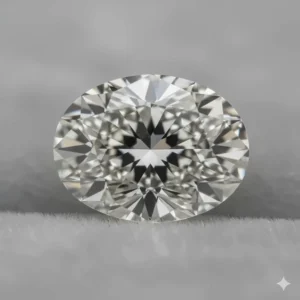
- Evaluate the bow-tie on video. Every oval shows some. You want a faint, balanced shadow, not a dark band across the middle.
- Prioritize cut over color and clarity. GIA doesn’t grade cut quality on ovals, so rely on video, symmetry, and proportions.
- Aim for eye-clean clarity, not flawless. VS2 to SI1 is usually the value zone.
- Match the metal to the color grade. White metal rewards D-G stones, yellow gold forgives H-I.
- Get a certificate. GIA, IGI, or GCAL paperwork protects you when you compare stones.
Follow these in order and you’ll skip most expensive mistakes.
Features That Actually Matter (And Those That Don’t)
Marketing loves big words. Here’s what deserves your attention and what doesn’t.
What matters: the bow-tie, the length-to-width ratio, and eye-clean clarity. These determine how the ring looks on your hand, not on a lab report. A 1 carat oval diamond ring with a muddy bow-tie will disappoint no matter how impressive its color grade sounds.
What doesn’t matter much: the difference between D and F color once the stone is set. Side by side under a loupe, you’d see it. On a finger in daylight, almost nobody will. The same goes for VVS versus VS clarity. Both are eye clean, so paying extra for the higher grade is mostly bragging rights.
What gets overlooked: shoulder bulge and symmetry. An oval with uneven shoulders looks lopsided in a prong setting, a flaw that only shows up in photos or video from above.
What’s pure hype: “total carat weight.” As Robinson’s 1.50 Total Carat Oval shows, total weight includes accent stones. The center stone controls how big the ring looks.
Spend your energy on those four filters and let the rest go.
1 Carat vs 1.5 Carat Oval Diamond Ring: Size, Look, and Cost
The jump from one carat to one and a half is the most debated upgrade in oval shopping. On paper it’s 50% more weight. On the finger, it’s a smaller change than that sounds.
According to Vrai’s published averages, a 1 carat oval measures about 7.7 × 5.7 mm, while a 1.5 carat oval averages about 8.5 × 6.5 mm. Real GIA-graded 1.50 carat ovals from UK retailers I reviewed ran from roughly 8.7 to 9.6 mm long, a reminder that proportions vary a lot.
| Factor | 1 Carat Oval | 1.5 Carat Oval |
|---|---|---|
| Average size | About 7.7 × 5.7 mm | About 8.5 × 6.5 mm |
| Finger coverage | Refined, everyday | Noticeable statement |
| Lab-grown cost | Mid-$1,000s common | Typically meaningfully higher |
| Natural cost | Several thousand dollars | Often $8,000 and up |
| Best for | Daily wear, smaller budgets | Visual impact, long fingers |
Read that table as a trade between presence and practicality. A 1.5 carat oval diamond ring makes a visible statement, but it catches on sleeves more often and costs notably more. If you’re torn, a high-quality 1 carat with a halo or accent stones often gets you 80% of the visual punch for far less. For a deeper look at how stone size reads on real hands, Blue Nile’s carat-on-finger guide is a helpful visual reference.
Buying a 1.5 Carat Oval Diamond Ring Without Overspending
A 1.5 carat oval diamond ring is the size where prices start climbing steeply, so strategy matters more than at one carat.
First, consider lab-grown. The same size in a lab-grown stone is dramatically cheaper than natural, which frees budget for better grades and a nicer setting. Second, compare total versus center weight, because a ring listed at 1.5 carats total, like Robinson’s 1.50 Total Carat Oval, has a smaller center stone than a true 1.5 carat solitaire such as Ivy & Rose GIA G SI1 Oval.
Third, use a halo or accent stones to fake a bigger center. A halo can add visual width without adding center-stone weight, which is why many buyers choose a 1 carat center in a halo setting and call it a day. Fourth, drop a color grade before you drop cut quality. Moving from F to H color saves real money and is nearly invisible in yellow gold.
Finally, don’t chase magic weights. Stones just under the one-and-a-half mark, often called “light” or “shy” sizes, can look essentially identical to the full weight for less. Look at millimeter dimensions rather than the carat number and you’ll often find a better deal hiding just below the round number.
Lab-Grown vs Natural vs Moissanite: What You’re Really Buying
Most shoppers hit this fork in the road, and the honest answer depends on what you value.
| Option | Material | Typical Cost Level | Resale Value | Best For |
|---|---|---|---|---|
| Lab-grown diamond | Real diamond, made in a lab | Mid | Lower | Best for maximum quality per dollar |
| Natural diamond | Mined diamond | High | Higher but not guaranteed | Best for natural-origin purists |
| Moissanite | Different gemstone | Low | Minimal | Best for budget sparkle |
Lab-grown stones are physically and chemically the same as mined diamonds, which is why the Shiree Odiz 1 Carat Oval and Helzberg 1 CT Oval Solitaire can offer higher grades at lower prices. Natural stones, like Ivy & Rose GIA G SI1 Oval, carry the prestige of rarity and typically hold more resale value, though neither type should be treated as an investment. Moissanite, as in the Turandoss 1.5 Carat Moissanite Oval, is a distinct gemstone with more rainbow flash and a lower price.
The takeaway: if you want to maximize what you see on the finger, lab-grown wins. If a mined origin matters emotionally, pay for natural and accept the smaller size. Moissanite is a great fashion ring but not a diamond substitute for a formal engagement unless both people know that going in.
Common Mistakes When Buying a 1 Carat Oval Diamond Ring
These pitfalls cost shoppers real money, and most are avoidable.
- Ignoring the bow-tie. A dark band across the center undermines the whole ring, and it can’t be fixed without recutting.
- Buying on the certificate alone. A report tells you grades, not how the stone looks. Always request a video.
- Overpaying for clarity. Eye-clean beats flawless. Spending on VVS over VS rarely shows.
- Skipping ratio and shoulder checks. Two 1 carat ovals can look completely different if one is chubby and one is slender.
- Forgetting ring size pricing. As with Ivy & Rose Yellow Gold Oval, listings can cost more at larger sizes.
- Missing disclosure language. A lab-grown stone must be clearly labeled as such, so confirm what you’re buying is described that way.
- Falling for total carat weight. Center size is what you’ll see across a dinner table.
Avoid these and you’ll be ahead of most first-time buyers. The theme across all seven: look at the actual stone, not the headline numbers.
Practical Guide: Setting, Sizing, and Caring for Your Ring
A great ring still needs good habits. Here’s a first-month playbook, because Amazon-style listings rarely tell you this.
Setting choice. Four prongs give security, while six prongs add insurance against a lost stone but cover more of the oval. Prong tips at the narrow ends are the most vulnerable spots, so protective V-tips are worth requesting.
Sizing. Fingers swell in heat and shrink in cold, so measure at the end of the day and avoid measuring when cold. For a wide band, size up slightly.
Cleaning routine. Soak weekly in warm water with mild dish soap, brush gently with a soft toothbrush, and rinse. This takes a few minutes and keeps the stone from going cloudy.
Prong checks. Every six months, press lightly and listen for rattling. A loose prong is far cheaper to tighten than a lost stone is to replace.
First 30 days mistakes. Wearing it while lifting weights, cleaning with bleach, or storing it loose in a bag with other jewelry. Diamonds scratch other metals and stones.
Sterling silver note. If you bought something like Turandoss 1.5 Carat Moissanite Oval, expect to replate the finish periodically and keep it away from chlorine and perfume.
Treat the ring like a tool you’ll use daily and it will last decades.
Real-World Scenarios: Which Ring Fits Which Life
Specs only matter once you picture the actual wearer. Here are three typical profiles, not individual customers, matched to the best fit.
The budget-conscious first-time proposer. You have around $700 to spend and want a real diamond. Unique Moments 1 ct Solitaire fits, provided you inspect the stone on video and use the return window. If the grade disappoints, step up to the $1,100 end of Shiree Odiz 1 Carat Oval.
The active professional with a busy hands-on job. You type, lift, and wash your hands constantly. A low-profile solitaire with a sturdier band, like Ivy & Rose Yellow Gold Oval, resists snagging and bending better than a delicate wire band. Wear it daily and clean weekly.
The bigger-look seeker with a mid-range budget. You want a ring that reads large from across the room without paying for a 1.5 carat center. Robinson’s 1.50 Total Carat Oval delivers shoulder sparkle, and a halo variation of Shiree Odiz 1 Carat Oval is the other path.
Notice what’s missing: nobody needs the most expensive option. The right ring is the one that fits how you actually live, spend, and move through a day.
Decision Framework: If This, Choose That
When you’ve read enough and just need an answer, use this quick filter.
- If you want the lowest-cost real diamond, choose Unique Moments 1 ct Solitaire, because the price is lowest, as long as you accept lower grades.
- If you want the best stone for the money, choose Shiree Odiz 1 Carat Oval, because the grades are high and the price stays in the $1,100-$1,800 range.
- If you prefer yellow gold, choose Ivy & Rose Yellow Gold Oval, because its F-color stone and wide band suit warm metals.
- If you want a retailer’s backing, choose Helzberg 1 CT Oval Solitaire, because the brand and GCAL report reduce risk.
- If you want maximum size on a small budget, choose Turandoss 1.5 Carat Moissanite Oval, with the clear understanding that it’s moissanite.
- If natural origin matters most, choose Ivy & Rose GIA G SI1 Oval, because it’s a real 1.5 carat GIA-certified natural stone.
Priority checklist: origin first, then ratio and bow-tie, then grades, then setting. If two rings tie, pick the one with a clearer return policy.
✨ Don’t Miss These Exclusive Deals!
🔍 Take your 1 carat oval diamond ring search to the next level with these carefully selected options. Click on any highlighted ring to check current pricing and availability. Each one will help you find a ring she will love for years!
Long-Term Cost and Maintenance: The True Price of Ownership
The sticker price is only the opening bid. Over a decade, a 1 carat oval diamond ring costs more than the number on the listing.
Budget for annual professional cleaning and inspection, which is typically modest, plus insurance. Jewelry insurance is usually priced as a small percentage of appraised value per year, so a pricier ring costs more to cover. Re-sizing, prong retipping, and replating are the other recurring items.
Gold rings, like Helzberg 1 CT Oval Solitaire, hold up with minimal fuss. Plated silver, such as Turandoss 1.5 Carat Moissanite Oval, needs more frequent attention because the plating wears down.
Resale value is where expectations collide with reality. Natural diamonds typically hold more value than lab-grown ones, which have been falling as production grows, but neither behaves like a reliable investment. Think of the ring as something you buy to wear, not something you buy to sell.
A simple cost-per-use view helps: a ring worn daily for ten years costs a few cents per wear even at the premium end. That’s the right lens. Pay for what you’ll enjoy seeing every day, and don’t pay extra for specs only a gemologist would notice.
Safety, Disclosure, and Certification: What the Rules Say
Diamond shopping comes with real consumer protections, and knowing them keeps you safe.
In the United States, the Federal Trade Commission’s Jewelry Guides govern how stones are described. Their 2018 revision removed the word “natural” from the definition of a diamond, so lab-grown stones can legally be called diamonds, but the lab-grown origin must be clearly disclosed. JCK’s coverage of the updated Guides explains the changes in plain English.
What that means for you: any seller offering a lab-grown stone should say so right alongside the word “diamond,” not buried in fine print. Moissanite sellers shouldn’t call their product a diamond at all. Major labs like GIA and IGI also inscribe lab-grown stones on the girdle, which is a built-in disclosure that travels with the diamond.
Practical checklist: confirm the lab and report number, match the girdle inscription to the report, read the return policy, and keep your paperwork. If a listing is vague about origin, treat that as a red flag and move on.
FAQ: Your 1 Carat Oval Diamond Ring Questions Answered
❓ Is a 1 carat oval diamond ring big enough for everyday wear?
❓ How much should I budget for a 1.5 carat oval diamond ring?
❓ Can I find a 1 carat oval diamond ring under $1,000?
❓ Does a 1 carat oval diamond ring need a certificate?
❓ Is a lab-grown 1.5 carat oval diamond ring worth it?
Conclusion: Pick the Stone, Not the Label
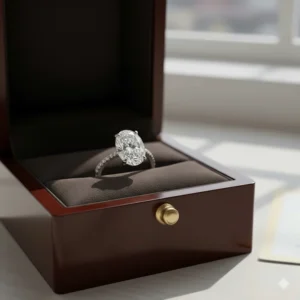
A 1 carat oval diamond ring earns its popularity for good reasons: it looks bigger than it weighs, flatters nearly every hand, and costs less than a comparable round. The best choice isn’t the one with the fanciest numbers. It’s the one whose stone looks clean, bright, and balanced when you see it on video, and whose paperwork matches the listing.
If you want my analytical shortcut, start with the lab-grown mid-range. Shiree Odiz 1 Carat Oval and Ivy & Rose Yellow Gold Oval offer certified stones with strong grades. Choose Unique Moments 1 ct Solitaire if budget rules everything, Helzberg 1 CT Oval Solitaire if a trusted brand matters, and Ivy & Rose GIA G SI1 Oval if you want a natural 1.5 carat oval diamond ring and have the budget.
Whatever you pick, check the bow-tie, confirm the certificate, and read the return policy twice. Then enjoy the part that actually matters: watching the right person see it for the first time.
Recommended for You
- Oval Diamond Ring Size & Carat Guide: 7 Expert Picks 2025
- 7 Best 2 Carat Oval Engagement Rings: 2025 Expert Guide
- 3 Carat Oval Diamond Ring: 7 Stunning Picks Under $10K (2025)
Disclaimer: This article contains affiliate links. As an Amazon Associate, I earn from qualifying purchases. If you purchase products through these links, we may earn a small commission at no additional cost to you.
✨ Found this helpful? Share it with your friends! 💬🤗
