In This Article
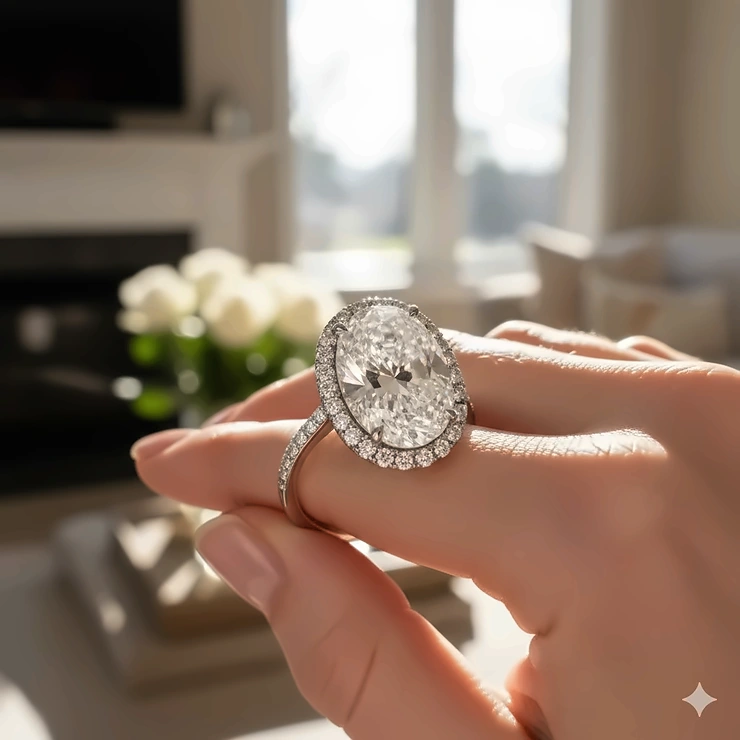
Ask a jeweler which shape people request most this year and you’ll hear one word: oval. A 4 carat oval diamond ring does something no other shape manages quite so gracefully. It lengthens the finger, throws a generous amount of sparkle, and looks bigger than a round stone of the same weight. Think of it as the round brilliant’s more interesting cousin: same fire, better posture.
Here’s the catch. A 4 carat diamond ring oval-style can cost anything from the price of a used hatchback to the price of a house deposit. Brilliant Earth’s 2026 pricing guide puts a natural four-carat oval ring at roughly $20,000 to $137,000. A lab-grown version runs roughly $3,600 to $45,000. That gap isn’t a rounding error. It’s an entire tax bracket.
So this guide does the sorting. I researched real rings and settings across three tiers: budget moissanite look-alikes, mid-range lab-grown stones, and natural-diamond splurges. For each one I’ll explain what the specs mean in practice, what to ask a seller, and where the traps hide.
One honest note first. I haven’t worn, tested, or owned any of these rings. Everything below rests on published specs, retailer data, and gemological guidance, not hands-on claims. Where I couldn’t verify review data, I’ll say so rather than invent it.
What Is a 4 Carat Oval Diamond Ring?
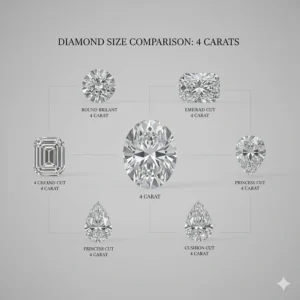
A 4 carat oval diamond ring is a ring whose center stone is an oval-cut diamond weighing about four carats, either mined or lab-grown. At that weight, an oval typically measures roughly 13 mm long by 8.5 mm wide, so it reads as a statement piece rather than a subtle sparkle.
Two clarifications save a lot of confusion. First, carat measures weight, not size. An oval spreads its weight across a larger surface than a round, which is exactly why it looks bigger. Second, “4 carat” in most retail guides means the center diamond alone, not the total weight of the center plus side stones or a halo. A ring advertised as “4 ct tw” may hold a much smaller center stone, so read the fine print.
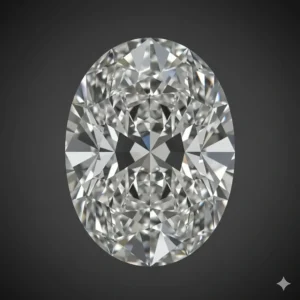
The oval is a modified brilliant cut, essentially an elongated round. It keeps the faceting that makes round diamonds so lively, but stretches it into a shape that flatters nearly any hand.
4 Carat Oval Diamond Ring Quick Comparison: Top Picks at a Glance
Before the deep dive, here’s the whole field on one screen. Prices are ranges, not quotes, and they move constantly, so check current price before you commit.
| Ring | Center Stone | Metal | Price Tier | Best For |
|---|---|---|---|---|
| Purvika Jewels 4 Ct Oval Halo | Lab-created moissanite | 14k gold plated over 925 silver | Budget (check current price) | Trying the style cheaply |
| CelaKuta 14K Gold 4ct Oval | Moissanite (listed D/VVS1) | 14K gold | Budget to lower mid | Gold on a small budget |
| Lispark 14K White Gold 4CT Oval | Moissanite | Listed as 14K white gold | Budget to lower mid | Classic or hidden-halo looks |
| Charleston Rings Twist of Grace Oval | Lab-grown diamond (F/VS1) | 14k yellow gold | Around $10,000–$13,000 | Best lab-diamond value |
| Flawless Fine Jewelry Celtic Song | Lab-grown diamond | Platinum | Mid-to-premium lab range | Daily wear durability |
| Brilliant Earth Secret Halo Oval | Lab-grown diamond (build-your-own) | Recycled gold or platinum | Wide lab range | Customization and returns |
| Flawless Fine Jewelry Kate Hidden Halo | Natural diamond | 18K yellow gold | Premium natural range | Mined-diamond purists |
Looking at the table, the real dividing line is stone type, not brand. The three moissanite rings are lookalikes, not diamonds. Twist of Grace, Celtic Song, and Secret Halo give you an actual 4 carat oval lab diamond ring at a fraction of mined pricing. Kate is the only natural option, and it sits at the top of the cost ladder. Buyers who want a real diamond on a sane budget should start with the lab-grown trio.
💬 Just one click — help others make better buying decisions too!😊
Top 7 4 Carat Oval Diamond Ring Picks: Expert Analysis
1. Purvika Jewels 4 Ct Oval Halo Moissanite Ring — cheapest way to test the oval look
If you want the silhouette of a 4 carat oval diamond ring without the five-figure commitment, this is the entry ticket.
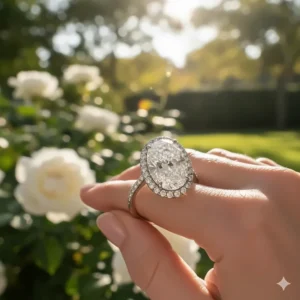
The listing describes a 4 ct oval-cut lab-created moissanite in a halo design, set in 14k gold plated 925 sterling silver. In practice, moissanite is silicon carbide, a separate gemstone from diamond. That means it can’t honestly be sold as a diamond, and it’s known for a flashier, rainbow-heavy sparkle. The gold plating sits over silver, which is softer than solid gold, so expect the finish to wear with daily use.
Based on the spec comparison, this ring suits fashion wear, a placeholder ring, or a trial run before a bigger purchase. It’s a weaker fit as a lifetime engagement ring. I couldn’t verify a trustworthy aggregate of reviews for this exact listing, so read the lower-star reviews for plating wear and sizing accuracy before buying.
Pros:
- ✅ Large oval look at a tiny fraction of diamond cost
- ✅ Halo adds extra visual size
- ✅ Low stakes for trying a style
Cons:
- ❌ Plated silver wears faster than solid gold
- ❌ Moissanite isn’t a diamond
Price: budget tier, so check current price. Verdict: strong for fashion wear, weak as a permanent ring.
2. CelaKuta 14K Gold 4ct Oval Moissanite Ring — solid-gold metal on a small budget
This one steps up the metal while keeping the stone affordable.
The listing advertises 14K gold, a 4ct oval moissanite at 9x12mm, and D color VVS1 clarity. Those two grades deserve scrutiny. Moissanite sellers typically borrow diamond-style grade labels, and they aren’t the same as independent lab grading. Also, a 4 carat diamond oval usually measures closer to 13 x 8.5 mm. A 9 x 12 mm stone gives a ratio near 1.33, which means a rounder, chunkier oval and a slightly shorter finger-lengthening effect than a true 4 carat diamond.
What most buyers overlook is that dimensions matter more than the carat label. If you’re replacing a diamond with a moissanite, compare millimeters, not carats. Reviews for this listing weren’t verifiable in my research, so confirm whether the gold is solid or plated before purchase.
Pros:
- ✅ Gold metal sturdier than plated silver
- ✅ Rounder oval suits wider fingers
- ✅ Hidden-grade claims easy to check against a certificate
Cons:
- ❌ Dimensions run smaller than a true 4ct diamond oval
- ❌ Grades are seller-stated, not independent
Price: budget to lower mid, so check current price. Verdict: solid value if the gold claim checks out.
3. Lispark 14K White Gold 4CT Oval Hidden Halo Ring — most setting variety in the moissanite tier
Lispark sells both a classic four-prong solitaire and a hidden-halo version of its 4.0CT oval, which is rare at this price.
The four-prong style exposes more of the stone, maximizing light entry but also snag risk on sweaters. The hidden halo adds a ring of small stones beneath the center, boosting sparkle from the side and letting the profile sit low. Both are listed in 14K white gold. White gold is usually rhodium-plated, so expect occasional re-plating to keep it bright.
On paper, this is the most flexible budget option. Pick the solitaire for a clean, modern look and the hidden halo for extra dazzle. The spec sheet won’t tell you this, but moissanite’s strong fire can read as “disco-ball” in sunlight compared with a diamond’s whiter flash. Seek out reviews that show the ring in daylight before you buy. I couldn’t verify a reliable review summary for this brand.
Pros:
- ✅ Two setting styles to choose from
- ✅ White gold looks sleek on most skin tones
- ✅ Hidden halo adds side sparkle
Cons:
- ❌ Rhodium plating needs periodic refreshing
- ❌ Strong rainbow fire may not suit everyone
Price: budget to lower mid, so check current price. Verdict: best budget pick for variety.
4. Charleston Rings Twist of Grace Oval — best real-diamond value on this list
This is the one that makes a spreadsheet person smile.
The retailer lists a 4 carat oval lab-grown diamond, graded F color and VS1 clarity, in 14k yellow gold. The center stone starts around $10,000, with finished rings from roughly $12,700. The seller claims a natural stone at the same price would be only about 1.5 carats. That figure comes from the retailer, so treat it as marketing, but it fits the broader pricing gap. F color is colorless to the eye in most settings, and VS1 inclusions are small enough that most people can’t see them without magnification.
Based on the spec comparison, this is the sweet spot for anyone who wants a true 4 carat oval lab diamond ring with strong grades. The twisted band adds visual interest but can make resizing trickier, so ask about it first. Reviews weren’t verifiable here.
Pros:
- ✅ Strong F/VS1 grades at this size
- ✅ Real lab-grown diamond, not a simulant
- ✅ Distinctive twisted band design
Cons:
- ❌ Twist styling complicates resizing
- ❌ Gold quality below platinum for daily abuse
Price: around $10,000–$13,000. Verdict: excellent value for a genuine diamond.
5. Flawless Fine Jewelry Celtic Song Platinum Oval — most durable setting for daily wear
Celtic Song pairs a 4 carat lab-grown oval with a platinum setting.
Platinum is denser and tougher than gold. It holds prongs more securely and doesn’t need rhodium plating, which matters when the stone weighs four carats and the prongs do the heavy lifting. The tradeoff is cost, because platinum settings usually add to the price, and platinum scratches into a soft patina instead of keeping a mirror finish.
The listing didn’t show diamond grades in the data I could access, so ask for the IGI or GIA report and compare color, clarity, and measurements to similar stones. I couldn’t verify review themes, and I won’t guess at them.
What to weigh: if the ring goes on your finger every day, platinum prongs are a smarter long-term bet than 14k gold. If it lives mostly in a box, you’re paying for durability you won’t use.
Pros:
- ✅ Platinum prongs hold a heavy stone securely
- ✅ No rhodium re-plating cycle
- ✅ Real lab-grown diamond
Cons:
- ❌ Premium over gold settings
- ❌ Grades must be confirmed independently
Price: mid-to-premium lab range, so check current price. Verdict: worth it for daily wearers.
6. Brilliant Earth Secret Halo Oval (Lab-Grown Build) — best for customization and returns
This isn’t a fixed ring. It’s a setting you build around a stone you pick.
Secret Halo is a hidden-halo design in Brilliant Earth’s lineup. Brilliant Earth offers both mined and lab-grown stones, with GIA and IGI reports, and recycled metals. Its own guide puts a 4 carat oval lab ring at roughly $3,600 to $45,000, depending on quality, which shows how much grade choices swing the total. Comparison sources generally note a 60-day return window at Brilliant Earth against about 30 days at Blue Nile, but policies change, so verify them directly.
The analytical takeaway: customization lets you spend where it matters (cut quality, ratio, bow-tie) and save where it doesn’t (a color grade or two). I couldn’t verify review data for this specific build.
Pros:
- ✅ Build the stone and setting separately
- ✅ Certified stones with generous inventory
- ✅ Recycled-metal options
Cons:
- ❌ Total price can climb fast with upgrades
- ❌ Premium over some discount sellers
Price: wide lab range, so check current price. Verdict: best for careful, informed buyers.
7. Flawless Fine Jewelry Kate Hidden Halo Oval — the mined-diamond splurge
Kate is the natural-diamond entry: a 4 carat oval in 18K yellow gold with a hidden halo.
Natural 4 carat ovals span a huge range, roughly $20,000 to $137,000 for a finished ring, per Brilliant Earth’s guide, with one industry index putting the average 4 carat oval stone near $80,000. At this size, color and clarity matter more. One comparison found a K-color SI1 stone in the high-$20,000s versus a G-color IF stone near $100,000, nearly a threefold gap. Grades for this specific ring weren’t visible in my research, so request the certificate.
The honest framing: you’re paying for mined rarity, not for better sparkle. A well-cut lab stone looks identical to the eye. Choose natural only if origin matters to you. I couldn’t verify review themes for this ring.
Pros:
- ✅ Natural, mined origin
- ✅ 18K gold looks rich and warm
- ✅ Hidden halo adds brilliance
Cons:
- ❌ Costs several times a comparable lab stone
- ❌ Grade details must be confirmed
Price: premium natural range, so check current price. Verdict: only for buyers who value mined origin.
How to Choose a 4 Carat Oval Diamond Ring
- Decide natural, lab-grown, or moissanite first. This single choice moves the price more than any other.
- Set a total budget, not a stone budget. Settings, resizing, and insurance can add meaningfully to the final figure.
- Check the length-to-width ratio. GIA’s guidance notes many buyers prefer 1.30 to 1.50; lower is rounder, higher is slimmer.
- Inspect the bow-tie in video. GIA doesn’t grade it, so you have to see it.
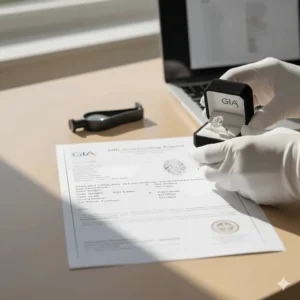
- Demand a certificate. GIA or IGI reports confirm the stone you’re actually buying.
- Match the setting to your lifestyle. Low-profile hidden halos suit active hands; high solitaires suit dressier wear.
- Confirm return and resizing policies in writing.
4 Carat Oval Diamond Ring Price: What You’ll Really Pay
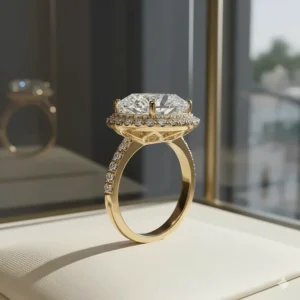
The 4 carat oval diamond ring price depends overwhelmingly on origin. Using Brilliant Earth’s guide, a natural 4 carat oval ring runs roughly $20,000 to $137,000, while a lab-grown one runs roughly $3,600 to $45,000. Brillianteers’ guide narrows the lab range for IGI-certified, excellent-cut, VS2/G stones to roughly $8,000 to $16,000, and puts comparable natural rings at roughly $55,000 to $90,000.
| Stone Type | Typical Ring Range | What Moves the Price | Best For |
|---|---|---|---|
| Natural, lower grades (K–SI1) | High-$20,000s and up | Color, clarity | Natural buyers on a limit |
| Natural, top grades (G–IF) | Around $100,000 | Rarity of grades | Collectors |
| Lab-grown, mainstream | Roughly $8,000–$16,000 | Cut, retailer margin | Most buyers |
| Moissanite (not a diamond) | Budget; check current price | Metal, brand | Fashion wear |
The pattern is clear. Retailer markup on lab stones varies wildly, so the same grades can differ by thousands depending on where you shop. A 4 carat oval lab diamond ring from a discounter and one from a premium brand can be near-identical stones at very different prices. Shop at least three sellers before you decide.
4 Carat Oval Lab Diamond Ring vs Natural: The Real Differences
A 4 carat oval lab diamond ring and a mined one share the same chemistry and structure. The U.S. Federal Trade Commission updated its Jewelry Guides in 2018 so that lab-grown stones can be called diamonds, provided the lab origin is clearly disclosed, as Rapaport reported.
| Factor | Lab-Grown Diamond | Natural Diamond | Moissanite |
|---|---|---|---|
| Is it a diamond? | Yes, with disclosure | Yes | No |
| Cost for 4 carats | Lowest of the two diamonds | Highest | Lowest overall |
| Best For | Value seekers | Origin purists | Fashion wear |
The takeaway: lab-grown wins on size per dollar, natural wins on tradition, and moissanite wins only on price. Resale is a real consideration, since lab stones generally resell for much less. Don’t treat any engagement ring as an investment.
Features That Actually Matter (And Those That Don’t)
For ovals, two features dominate: ratio and bow-tie. GIA’s oval guide explains that the length-to-width ratio sets the silhouette, and that many buyers like 1.30 to 1.50. It also notes a bow-tie, the dark shadow across the center, is common in elongated cuts, and that a well-cut stone minimizes it.
GIA doesn’t grade the overall proportions of fancy shapes, though reports do assess polish and symmetry. That means a certificate can’t tell you whether the bow-tie is distracting. Only photos or video can.
What matters less than marketing suggests: stepping from D to F in color, or from VVS2 to VS1 in clarity. At four carats, eye-clean VS stones in the near-colorless range look the same to most people. Spend on cut quality instead.
What to Expect: Real-World Size and Wear
Four carats is substantial. At roughly 13 mm long, a 4 carat oval spans most of the width of a finger. Expect it to sit tall, catch on gloves, and draw comments.
In practice, setting height matters as much as stone size. A low-profile hidden halo, like Secret Halo or Kate, sits closer to the hand and snags less. A tall four-prong solitaire, like the classic Lispark option, shows more stone but needs more care.
Weight is another surprise. A four-carat stone in a heavier setting such as Celtic Song is noticeable on a slim finger, especially during the first week. It’s normal for a heavy ring to spin until the band is sized correctly.
Common Mistakes When Buying a 4 Carat Oval Diamond Ring
- Buying on carat alone. Two 4 carat ovals can look very different at 1.30 versus 1.55 ratios.
- Ignoring the bow-tie. A certificate won’t show it. Ask for video in daylight-like lighting.
- Confusing center weight and total weight. Check whether “4 carat” means the center stone.
- Treating moissanite as a diamond. It’s a different gemstone, and honest sellers say so.
- Skipping insurance. A ring this size needs a rider.
- Forgetting the setting budget. Platinum, custom work, and resizing add real cost.
Long-Term Cost & Maintenance
Total cost of ownership extends beyond the sticker. A platinum setting like Celtic Song costs more upfront but avoids rhodium re-plating. A white gold setting like Lispark needs periodic replating. Plated silver, like the Purvika ring, may need replacing sooner.
Budget for annual professional checks of the prongs, since a loose prong risks losing a four-carat stone. Insurance typically costs a small percentage of the ring’s value per year, so get a quote before you buy. Over a decade, a mid-priced lab ring with good metal often costs less in total than a cheap plated ring replaced twice.
Safety, Regulations & Compliance Guide
Disclosure is the core rule. The FTC’s Jewelry Guides require clear disclosure that a diamond is lab-grown, and JCK’s coverage notes the agency warned sellers about vague or misleading eco-friendly claims. Terms like “real” or “natural” shouldn’t be used to imply a lab-grown stone isn’t a true diamond.
For you as a buyer, that means three checks. The listing must say “lab-grown” plainly. The certificate should show the same origin. And any “eco-friendly” or “ethical” claim should be backed by specifics, not slogans. If a seller dodges these, shop elsewhere.
Practical Usage Guide: Your First 30 Days With a 4 Carat Oval
A big stone needs a few habits.
- Days 1–3: check fit. The ring should rotate slightly but not slide off. Ask about resizing before the return window closes.
- Week 1: inspect prongs. Gently press the stone with a fingertip. Any movement means a trip to the jeweler.
- Weekly: clean at home. Soak in warm water with mild dish soap, brush softly, rinse, and dry with a lint-free cloth.
- Daily: take it off for the gym, gardening, and cleaning chemicals.
- Monthly: photograph the ring for insurance records.
Common first-month mistakes: wearing it while washing dishes, storing it loose with other jewelry, and skipping the appraisal. Document the certificate number and keep the original report somewhere safe.
Real-World Scenarios: Which Ring for Which Buyer?
Scenario 1, the first-time buyer on a tight budget. She wants the oval look and has a few hundred dollars. The Lispark or CelaKuta moissanite rings give the style honestly labeled, with an upgrade path later.
Scenario 2, the couple with $12,000 to spend. They want a real diamond and daily wearability. Twist of Grace fits the budget and offers strong grades. If she works with her hands, upgrading toward the platinum Celtic Song may justify the extra spend.
Scenario 3, the buyer who wants mined origin. Budget runs into the tens of thousands, and origin matters emotionally. Kate fits, but insist on a certificate and compare against similarly graded stones from other sellers.
Buyer’s Decision Framework
- If your budget is a few hundred dollars, choose moissanite, because a real 4 carat diamond isn’t realistic.
- If you want a real diamond under about $15,000, choose a lab-grown oval, because it delivers the size at the lowest cost.
- If you wear your ring daily, choose platinum or solid gold, because plated silver won’t last.
- If you hate fuss, choose a hidden halo, because it sits low and snags less.
- If origin matters most, choose natural, but expect to pay several times more.
- If you’re unsure, choose a retailer with generous returns and compare the stone in video first.
FAQ
❓ Is a 4 carat oval diamond ring too big?
❓ How much does a 4 carat oval lab diamond ring cost?
❓ Does a 4 carat oval diamond have a bow-tie?
❓ Is a lab-grown 4 carat oval worth it?
❓ What size is a 4 carat diamond ring oval in mm?
Conclusion
A 4 carat oval diamond ring is a big decision, but it doesn’t have to be a confusing one. The core logic fits in a few lines. Moissanite gets you the look cheaply, but it isn’t a diamond and should be sold honestly as such. A lab-grown oval, like Twist of Grace, Celtic Song, or a Secret Halo build, gives you a genuine diamond at a fraction of mined pricing. A natural stone like Kate buys you origin and rarity at a steep premium.
Whatever you choose, judge the stone by ratio, bow-tie, and certificate, not by the headline carat. Compare at least three sellers, confirm return and resizing terms, and set aside money for insurance and prong checks. Prices move constantly, so check current price before you buy.
The best ring isn’t the biggest or the priciest. It’s the one you’ll wear daily without a second thought.
Recommended for You
- 3 Carat Oval Diamond Ring: 7 Stunning Picks Ranked (2026)
- 2 Carat Oval Engagement Ring: 7 Stunning Picks for 2026
- 1 Carat Oval Diamond Ring: 7 Stunning Picks for 2026
Disclaimer: This article contains affiliate links. As an Amazon Associate, I earn from qualifying purchases. If you purchase products through these links, we may earn a small commission at no additional cost to you.
✨ Found this helpful? Share it with your friends! 💬🤗
