In This Article
✨Was this helpful? Spread the word! 🚀
You know that moment when you catch a glimpse of sunlight hitting a perfectly cut diamond? That’s the magic I’m talking about. A 2 carat princess cut diamond ring isn’t just jewelry—it’s a statement piece that whispers elegance while shouting confidence.
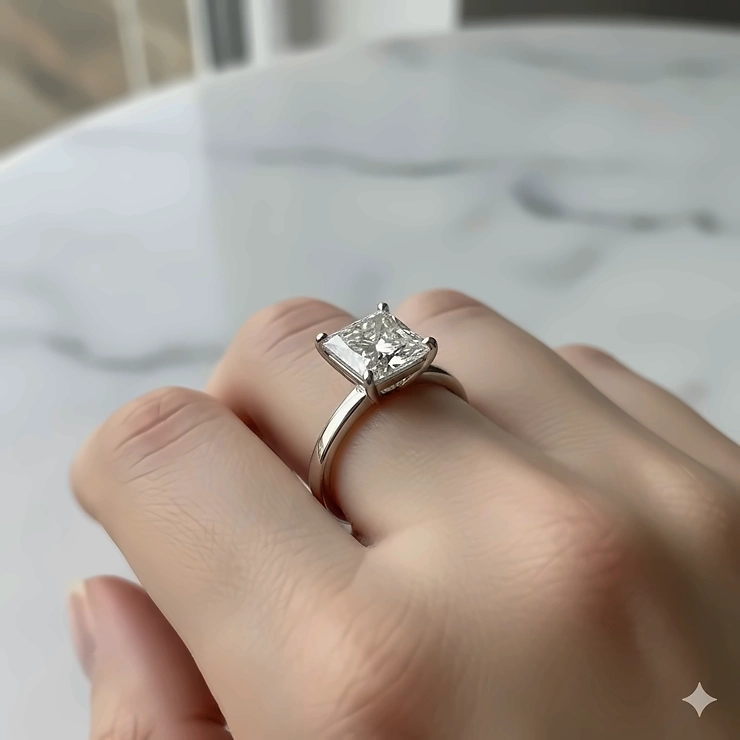
I’ve spent years watching couples agonize over ring choices, and here’s what I’ve learned: the princess cut is having its moment. This square-shaped beauty combines modern edge with timeless sparkle, and at 2 carats, you’re looking at approximately 6.9-7mm of pure brilliance. Unlike the traditional round cut, a princess cut diamond ring offers that contemporary vibe without sacrificing the fire and brilliance everyone craves.
What is a 2 carat princess cut diamond ring? It’s a square-shaped diamond engagement ring weighing 2 carats (400 milligrams), featuring sharp 90-degree angles and exceptional brilliance through its unique facet pattern, typically measuring 6.9-7mm across.
The market’s evolved dramatically since 2024. Lab-grown alternatives have made luxury accessible, while traditional mined diamonds maintain their prestige. Whether you’re eyeing a classic solitaire or a halo setting dripping with accent stones, understanding your options transforms shopping from overwhelming to exhilarating. This guide cuts through the noise with real products, honest pricing, and insider tips that’ll make you feel like a gemologist by the end.
Quick Comparison: Top 7 Options at a Glance
| Product | Type | Setting | Price Range | Best For |
|---|---|---|---|---|
| Kobelli Princess Cut 2CT | Diamond | Halo | $4,500-$6,000 | Luxury seekers |
| Dazzlingrock Collection 2.00 Cttw | Diamond | Multiple styles | $3,200-$4,800 | Traditional buyers |
| BETHZA 2CT Moissanite | Moissanite | Solitaire | $350-$550 | Budget-conscious |
| EAMTI 2CT Sterling Silver | CZ | Halo | $30-$60 | Temporary wear |
| Metal Masters 2CT CZ | CZ | Pavé band | $45-$75 | Travel ring |
| GUIDECUN Princess Set | CZ | Bridal set | $35-$55 | Practice ring |
| Jared Brilliant Moments | Diamond | Complex halo | $5,000-$7,000 | Statement pieces |
💬 Just one click – help others make better buying decisions too! 😊
🎯 What to Consider Before Clicking “Buy”
Before diving into specific products, let me share three non-negotiables: First, understand the difference between diamond, moissanite, and cubic zirconia—they’re not interchangeable. Second, your ring’s setting matters as much as the stone itself (those sharp princess corners need protection!). Third, certification from reputable labs like GIA or IGI adds credibility and resale value.
Top 7 2 Carat Princess Cut Diamond Rings: Expert Analysis
1. Kobelli Princess Cut Diamond Engagement Ring 2 Carat (ctw)
When you’re ready to invest in the real deal, Kobelli Princess Cut Diamond Engagement Ring 2 Carat (ctw) delivers that “stop-the-show” factor. This stunner features a 2-carat total weight configuration with a prominent center princess diamond surrounded by a halo of channel-set diamonds—55 stones total that create an almost blinding brilliance.
Key Specifications:
- Metal: 14K White Gold
- Total Carat Weight: 2.00 ctw
- Setting Style: Three-band halo design
- Stone Count: 55 diamonds total
Price Range: $4,500-$6,000 (varies by exact specifications)
The three-band design gives it substantial weight and presence on the finger. Customers consistently praise its dramatic appearance at events, though some note the bulkier profile isn’t ideal for everyday wear if you’re typing or working with your hands constantly. The channel setting protects those smaller accent stones better than prong settings, reducing maintenance headaches.
Pros:
✅ Exceptional sparkle with 55-stone count
✅ Durable channel-set construction
✅ Makes 2 carats look even larger
Cons:
❌ Bulky profile may snag on clothing
❌ Higher price point
2. Dazzlingrock Collection 2.00 Carat (ctw) 14K Princess Diamond Ring
Dazzlingrock Collection 2.00 Carat (ctw) serves up versatility in spades. Available in multiple configurations—solitaire, three-stone, or halo—this collection lets you customize your vision without starting from scratch. The brand’s reputation for ethical sourcing (conflict-free guarantee) and that generous 30-day money-back policy takes the pressure off.
Key Specifications:
- Metal Options: 14K White, Yellow, or Rose Gold
- Total Weight: 2.00 ctw
- Certification: IGI certified options available
- Customization: Available through Amazon Messages
Price Range: $3,200-$4,800 depending on configuration
What sets Dazzlingrock apart is their 90-day warranty and willingness to customize. Want to tweak the prong height or change the band width? They’ll work with you. Real customer reviews highlight quick shipping and accurate product descriptions, though a few mention stones arriving slightly different than expected (always verify specifications before finalizing).
Pros:
✅ Multiple setting options
✅ Conflict-free certification
✅ 90-day warranty included
Cons:
❌ Some variation in quality control
❌ Limited in-person viewing options
3. BETHZA 2 Carat Princess Cut Moissanite Engagement Ring
Here’s where things get interesting for the budget-savvy. BETHZA 2 Carat Princess Cut Moissanite Engagement Ring offers that eye-catching brilliance at a fraction of traditional diamond costs. The 7mm princess-cut moissanite center stone boasts VVS1 clarity and D color—specs that would cost you $15,000+ in natural diamonds.
Key Specifications:
- Metal: 10K/14K/18K White Gold options
- Main Stone: 2ct (7mm) Princess Cut Moissanite
- Color/Clarity: D color, VVS1 clarity
- Setting: 4-prong with CZ accents
Price Range: $350-$550 (material dependent)
Moissanite’s refractive index (2.65-2.69) actually exceeds diamonds, creating more “fire” or rainbow sparkle. Some love this extra bling; purists find it too flashy. The solid gold construction means you’re not sacrificing quality in the band. Customer feedback reveals most can’t distinguish it from diamond without equipment, though a few mention the stone looking slightly “too perfect” under direct sunlight.
Pros:
✅ 90% less expensive than comparable diamond
✅ More fire and brilliance than diamond
✅ Eco-friendly and conflict-free
Cons:
❌ Rainbow effect may appear too colorful for some
❌ Lower resale value than diamonds
🔥 Ready to Make Your Choice? Click to Compare Prices! 💍
4. EAMTI 2CT 925 Sterling Silver Princess Cut CZ Engagement Ring
EAMTI 2CT 925 Sterling Silver Princess Cut CZ Engagement Ring occupies a unique niche: the affordable luxury category. With its rhodium-plated sterling silver base and AAAA+ cubic zirconia stones, it mimics high-end jewelry without the corresponding price tag.
Key Specifications:
- Metal: 925 Sterling Silver with Rhodium Plating
- Main Stone: 2ct Princess Cut CZ
- Side Stones: Marquise and round CZ accents
- Prong Setting: 14-prong security
Price Range: $30-$60
This ring shines (literally) as a travel companion or temporary wear during weight fluctuations. The 14-prong setting provides surprising security for a CZ ring, and that rhodium plating gives it a white gold appearance. However—and this is crucial—sterling silver requires maintenance. Customer reviews split between “stunning for the price” and “tarnished within weeks,” with care habits making the difference.
Pros:
✅ Incredibly affordable
✅ Great for travel or temporary wear
✅ Looks expensive in photos
Cons:
❌ Requires regular maintenance to prevent tarnishing
❌ CZ stones can cloud over time
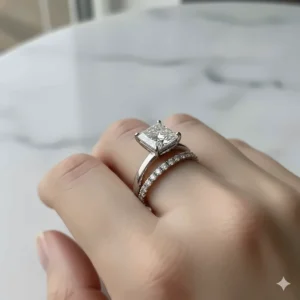
5. Metal Masters 2 Carat Princess Cut CZ Sterling Silver Ring
Metal Masters 2 Carat Princess Cut CZ Sterling Silver Ring steps up the game with its halo design and pavé band. The two-row pavé setting creates that continuous sparkle from every angle, and the halo makes the 2ct center stone appear closer to 2.5 carats.
Key Specifications:
- Metal: .925 Sterling Silver with Rhodium Plating
- Center Stone: 2ct Princess Cut CZ
- Halo: Smaller round CZ stones
- Band: Double-row pavé CZ shoulders
Price Range: $45-$75
The brothers behind Metal Masters bring 20+ years jewelry experience, and it shows in the construction quality. That said, this is still costume jewelry territory. Multiple reviewers use it as an engagement ring placeholder while saving for the “real thing,” and it performs admirably in that role. Just don’t expect it to withstand daily dishwashing or gym sessions without showing wear.
Pros:
✅ Halo design adds perceived size
✅ Double pavé band maximizes sparkle
✅ Comes with elegant jewelry box
Cons:
❌ Not suitable for long-term daily wear
❌ Stones may loosen with extended use
6. GUIDECUN Princess Cut Cubic Zirconia 2 Piece Bridal Ring Set
GUIDECUN Princess Cut Cubic Zirconia 2 Piece Bridal Ring Set solves a common problem: what do you wear while your actual engagement ring gets sized or cleaned? This two-piece set (engagement ring plus wedding band) provides continuity.
Key Specifications:
- Metal: High-quality alloy with multi-layer plating
- Set Includes: Engagement ring + matching band
- Design: Solitaire halo engagement with curved band
- Quality: Lead-free, nickel-free construction
Price Range: $35-$55
GUIDECUN focuses on fashion jewelry that doesn’t trigger allergies, and their lead-free/nickel-free commitment matters for sensitive skin. The matching band curves perfectly to nestle against the engagement ring—a detail often overlooked in budget sets. Customer photos show it photographs beautifully, though long-term durability reviews are mixed (most purchase knowing it’s temporary).
Pros:
✅ Two-piece set provides complete look
✅ Hypoallergenic materials
✅ Great for proposal photoshoots
Cons:
❌ Not precious metal
❌ Limited longevity expectations
7. Jared Brilliant Moments 2 ct tw Princess-Cut Diamond Ring
For those occasions when only the finest will do, Jared Brilliant Moments 2 ct tw Princess-cut Diamond Ring represents the pinnacle of commercial jewelry. This complex design features multiple princess-cut diamonds in a frame of sparkling rounds, with stacked baguettes flanking the center and more rounds lining the band.
Key Specifications:
- Metal: 14K White Gold
- Total Weight: 2.00 ct tw (total weight)
- Stone Mix: Princess cuts, rounds, and baguettes
- Design: Multi-stone complex setting
Price Range: $5,000-$7,000
The Brilliant Moments collection targets customers who want maximum impact. Every surface catches light, creating that red-carpet effect. However, this complexity comes with maintenance considerations—more prongs mean more potential loosening over time. Jared’s exclusive design means you won’t see identical rings everywhere, adding uniqueness value.
Pros:
✅ Exclusive Jared design
✅ Maximum sparkle from multiple stone types
✅ Prestigious brand backing
Cons:
❌ Premium price point
❌ Complex setting requires professional cleaning
Understanding the 4Cs for Princess Cut Diamonds
Cut Quality: The Non-Negotiable Factor
Here’s something most guides won’t tell you: “cut” grade for princess diamonds isn’t standardized like rounds. The Gemological Institute of America doesn’t assign official cut grades to princess shapes, so you’re relying on proportions. Target a depth percentage between 68-75% and a table percentage of 65-75% for optimal brilliance.
The princess cut’s 57-58 facets create what gemologists call “modified brilliant” performance. Those sharp corners aren’t just aesthetic—they concentrate light in ways that can rival or exceed round diamonds. However, those same corners make the stone vulnerable to chipping, which is why four-prong minimum settings are essential (six-prong offers even more security).
Color Considerations: What Actually Matters
With princess cuts, color behaves differently than in rounds. The square shape concentrates color in corners, meaning you might notice warmth in an H-color princess that looks colorless in an H-color round. For 2 carat diamond ring princess cut stones, I recommend staying in the G-I range for near-colorless appearance without the D-F premium.
Lab-grown diamonds changed this calculation entirely. You can snag a D-color lab stone for less than an I-color natural diamond, making the “good enough” color debate almost obsolete if you’re open to lab-grown.
Clarity: Where You Can Save Money
Here’s your budget hack: Princess cuts hide inclusions better than rounds due to their brilliant faceting pattern. An SI1 clarity in princess can look eye-clean (no visible inclusions), whereas the same SI1 round might show obvious flaws. For a diamond ring 2 carat princess cut stone, SI1-SI2 clarity offers the best value-to-appearance ratio.
Watch out for inclusions near corners though—those stress points make them more likely to chip if compromised. Always request detailed photos or videos showing inclusion placement before purchasing online.
Carat Weight Psychology: The 2-Carat Sweet Spot
Two carats hits a psychological threshold. It’s substantial enough to make a statement but not so large that it ventures into “impractical” territory for daily wear. According to The Diamond Pro, 2 carat princess cut diamond prices can range from $7,000-$29,000 for natural stones depending on quality, while lab-grown equivalents might cost $1,870-$2,500.
Here’s the insider move: Buy slightly under benchmark weights. A 1.90-1.99 carat stone costs significantly less per carat than crossing that 2.00 threshold, but the size difference is imperceptible to the naked eye. That $2,000-$3,000 savings can upgrade your setting or honeymoon fund.
Comparing Setting Styles for Maximum Impact
Solitaire: The Timeless Classic
A solitaire setting lets your 2 carat princess cut diamond be the undisputed star. Four or six prongs elevate the stone, allowing light to enter from all angles. This traditional choice works beautifully for those who value simplicity and timeless appeal.
The advantage? Your ring pairs easily with any wedding band style later. The potential drawback? A large solitaire can snag on fabrics and requires careful daily wear habits. For active lifestyles, consider a low-profile four-prong setting that sits closer to the finger.
Halo Settings: Amplifying Presence
Halo settings surround your center stone with a ring of smaller diamonds or gemstones, making a 2ct stone appear closer to 3 carats. This style delivers maximum “wow factor” per dollar spent. Double halos—two concentric rings of accent stones—push the glamour even further.
Modern halo variations include square halos (echoing the princess shape) or cushion halos (softening the geometric lines). The catch? More small stones mean more maintenance, and that vintage-inspired look may date faster than classic solitaires.
Three-Stone Symbolism: Past, Present, Future
Three-stone settings position two smaller stones (often 0.5ct each) flanking your 2ct center diamond. The symbolism resonates: past, present, and future of your relationship. From a practical standpoint, this design balances your center stone’s weight, preventing tilting on the finger.
Side stones can match (three princess cuts) or contrast (princess center with round or trillion sides). This versatility lets you customize while maintaining the design’s inherent meaning.
Vintage-Inspired Details That Elevate Design
Milgrain edges, filigree work, and engraved bands transform simple settings into heirloom-quality pieces. These hand-finished details add perceived value without dramatically increasing cost. Brilliant Earth popularized this approach, proving vintage aesthetics work beautifully with modern princess cuts.
The tradeoff? Intricate details require professional cleaning to prevent dirt buildup in crevices. If you’re drawn to ornate styling, factor in annual professional maintenance costs ($50-$150 per cleaning).
Moissanite vs Diamond vs CZ: Breaking Down Your Options
Diamond: The Traditional Choice
Natural diamonds carry romance, tradition, and investment value. A 2 carat natural princess cut diamond represents approximately 200 tons of ore moved to produce one stone. That rarity translates to enduring value and universal recognition.
Lab-grown diamonds flip the script: identical chemical composition, eco-friendly production, and 40-70% cost savings. The Federal Trade Commission recognizes lab-grown diamonds as “real diamonds,” eliminating any legitimacy concerns. The main downside? Resale value remains uncertain as the market matures.
Moissanite: The Brilliant Alternative
Moissanite outperforms diamonds in brilliance (light return) and fire (rainbow sparkle), with hardness second only to diamonds on the Mohs scale. Originally discovered in meteorite craters, today’s moissanite is lab-created, making it conflict-free by default.
The differences matter to some: Moissanite displays more color dispersion (that rainbow effect), which reads as “extra sparkly” or “fake-looking” depending on your perspective. At 2 carats, the visual difference becomes more noticeable than at smaller sizes. Pricing sits at roughly 10% of comparable diamond costs—a 2ct moissanite princess cut runs $350-$800 depending on quality grade.
Cubic Zirconia: The Budget Stand-In
CZ serves a specific purpose: temporary wear, travel jewelry, or trying out styles before committing to expensive stones. It costs pennies compared to diamonds and can look convincing in photographs. That’s where the advantages end.
CZ ranks 8-8.5 on the Mohs scale (diamonds are 10), meaning it scratches easily. The stones cloud over months, developing an oily appearance that no amount of cleaning removes. For a 2 carat princess cut CZ ring, expect 6-18 months of decent appearance with careful wear, then noticeable degradation.
| Feature | Diamond | Moissanite | Cubic Zirconia |
|---|---|---|---|
| Hardness (Mohs) | 10 | 9.25 | 8-8.5 |
| Brilliance | Excellent | Superior | Good initially |
| Cost (2ct) | $7,000-$29,000 | $350-$800 | $30-$100 |
| Durability | Lifetime | Lifetime | 6-18 months |
| Resale Value | Moderate-High | Low | None |
💬 Just one click – help others make better buying decisions too! 😊
Metal Choices: White Gold, Yellow Gold, or Platinum?
White Gold: The Modern Standard
14K or 18K white gold dominates modern engagement rings, especially for princess cut settings. The bright white color complements colorless diamonds beautifully, and the rhodium plating provides extra durability. However—and this surprises many buyers—white gold isn’t naturally white. It’s yellow gold alloyed with white metals (palladium, nickel) and plated with rhodium.
That rhodium plating wears off over 12-24 months with regular wear, requiring replating ($50-$100) to maintain that bright white finish. If you’re lazy about maintenance (guilty!), platinum might suit you better despite the higher initial cost.
Yellow Gold: The Comeback Kid
Yellow gold engagement rings experienced a resurgence around 2020, and I’m here for it. The warm tone provides gorgeous contrast against princess diamonds, and you’ll never need replating. For warmer diamond colors (J-K range), yellow gold actually makes stones appear whiter by contrast—a clever optical trick.
14K yellow gold offers the best durability-to-cost ratio, while 18K provides richer color but softer metal. Consider your lifestyle: Active hands? Go 14K. Desk job with minimal wear and tear? 18K’s luxurious hue might justify the investment.
Platinum: The Premium Choice
Platinum’s natural white color never needs plating, and its density makes it the most durable option. It’s also hypoallergenic (great for sensitive skin) and develops a patina over time that many find appealing. The weight feels substantial—a platinum ring weights roughly 40% more than 14K gold equivalent.
The catch? Platinum costs 2-3x more than white gold for the same design. For 2 carat princess cut diamond ring settings, expect $2,500-$4,000 in platinum versus $800-$1,500 in 14K white gold. That premium makes sense for heirloom pieces or those who despise maintenance.
Rose Gold: The Romantic Option
Rose gold’s pinkish hue creates a romantic, vintage vibe that pairs surprisingly well with princess cuts’ modern geometry. The copper alloy makes rose gold more durable than yellow gold, and it never requires plating. Instagram loves it, which means you’ll photograph beautifully.
The downside? Rose gold amplifies any warmth in your diamond. Stick with G-color or better to prevent the stone looking yellowish against the pink band. Also, trends evolve—rose gold’s current popularity may wane, potentially dating your ring.
Protecting Those Sharp Corners: Essential Setting Features
Why Corner Protection Isn’t Optional
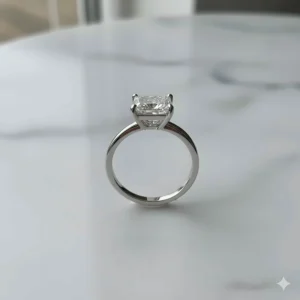
Princess cut diamonds have four sharp corners that naturally concentrate stress. Without proper protection, those corners become chipping magnets when you knock your hand against surfaces (and you will, no matter how careful you think you’ll be). The cutting process leaves tiny weak points at corners called “naturals”—microscopic remnants of the original crystal surface.
Quality settings employ strategic prong placement directly on corners (not sides) to provide maximum coverage. V-shaped prongs wrap around corners offering superior protection compared to round prongs. Bezel settings—where metal wraps entirely around the diamond’s girdle—provide ultimate security but hide more of the stone.
Four-Prong vs Six-Prong Settings
Four-prong settings match the princess cut’s geometry naturally, with each prong securing a corner. This minimalist approach shows more of your diamond but provides adequate (not maximum) security. Six-prong settings add two prongs to sides, increasing security and reducing corner exposure.
For 2 carat stones, I lean toward six-prong or even eight-prong designs. The additional metal coverage is imperceptible to observers but dramatically reduces chipping risk over decades of wear. Your 2 carat investment deserves that extra protection.
Basket Settings vs Cathedral Settings
The undergallery—the setting’s hidden architecture beneath the center stone—matters more than most realize. Basket settings use a simple metal frame, keeping the profile low and minimizing snag potential. Cathedral settings sweep upward from the band, elevating the diamond dramatically.
Cathedral settings create stunning side profiles perfect for photography and provide a visual “neck” that emphasizes the diamond’s size. However, that elevation increases snag risk on clothing and pockets. For practical daily wear, consider a low-basket or modified cathedral that splits the difference.
Budget Breakdown: What to Expect at Each Price Point
Under $100: The Placeholder Category
This tier covers CZ and fashion jewelry exclusively. Products like the EAMTI and GUIDECUN rings occupy this space, serving specific purposes: proposal placeholders, travel jewelry, weight-loss temporary rings, or trying styles before investing. Set realistic expectations—you’re buying months of wear, not years.
Best use case: A surprise proposal where you’ll shop together for the “real” ring afterward. Nothing wrong with a beautiful $50 CZ if it lets you propose spontaneously rather than waiting months to save.
$300-$800: The Moissanite Sweet Spot
This range delivers legitimate gemstones in precious metal settings. The BETHZA moissanite ring exemplifies this category’s value proposition: substantial brilliance, real gold, and reasonable longevity. You’re getting 95% of the look at 10% of the cost.
Perfect for: Young couples prioritizing honeymoon or home down payment over ring cost, those philosophically opposed to diamond industry practices, or simply savvy shoppers who appreciate value. Moissanite’s social acceptance has grown dramatically; very few people will question or judge your choice.
$3,000-$6,000: Natural Diamond Entry Point
Here’s where natural diamonds enter the equation, though you’ll be balancing the 4Cs carefully. The Kobelli and Dazzlingrock pieces sit in this range, typically offering:
- Lab-grown diamonds with excellent specifications
- Natural diamonds with SI1-SI2 clarity in G-I color range
- 14K gold settings with some design complexity
This tier provides legitimate heirloom potential and maintains better resale value than lower categories. If traditional diamond engagement rings matter culturally or personally, this represents the accessible entry point.
$6,000+: Premium Natural Diamonds
Above $6,000, you’re accessing:
- Natural diamonds with VS1-VS2 clarity and D-F color
- Platinum settings or highly intricate gold designs
- Designer brand premium (Tiffany, Harry Winston, Cartier)
- Exceptional cut quality and optimal proportions
The Jared Brilliant Moments ring at $5,000-$7,000 bridges into premium territory with its complex multi-stone design. Whether this tier’s price tag represents “worth it” depends entirely on personal values around tradition, investment, and occasion importance.
How to Choose the Perfect 2 Carat Princess Cut Diamond Ring
Step 1: Define Your Non-Negotiables
Start by listing what matters most in order of priority. Is it stone size? Metal type? Budget ceiling? Ethical sourcing? This hierarchy clarifies decisions when tradeoffs become necessary (and they will). Most buyers can identify their top three must-haves; everything else becomes negotiable.
For example: “Must have: 2ct stone size, ethical sourcing, stays under $2,000. Nice to have: halo setting, white gold band.” This framework immediately points toward moissanite or lab-grown diamonds with simpler settings.
Step 2: Research Certification Requirements
Reputable certification authenticates your diamond’s claimed qualities. GIA (Gemological Institute of America) sets the industry standard for natural diamonds, while IGI (International Gemological Institute) dominates lab-grown certification. Avoid vague “appraised” or “certified” claims without named gemological labs.
Request the actual certificate number before purchasing, then verify it on the certifying organization’s website. This five-minute step prevents costly mistakes and inflated claims about color, clarity, or carat weight.
Step 3: Examine Return Policies and Warranties
A generous return policy signals seller confidence in product quality. Look for:
- Minimum 30-day full refund windows
- Free return shipping
- No restocking fees
- Lifetime warranties against defects
The Dazzlingrock collection’s 90-day warranty and Kobelli’s no-questions-asked 30-day return exemplify customer-friendly policies. Reluctance to offer these protections raises red flags about product quality or deceptive marketing.
Step 4: Request Videos, Not Just Photos
Static photos hide a multitude of sins: poor proportions, color inconsistencies, inclusion placement. Videos—especially 360-degree rotation under controlled lighting—reveal how a diamond performs when moving. Look for consistent brilliance across all angles and color that doesn’t shift dramatically in different lighting.
Many online retailers (James Allen, Brilliant Earth, Blue Nile) offer HD video for every diamond. If your seller can’t provide video, that’s not a deal-breaker for budget pieces, but absolutely expect it for purchases above $3,000.
Step 5: Consider the Setting’s Lifestyle Fit
Be honest about your daily activities. Manual labor jobs? Low-profile settings resist snags. Keyboard-focused office work? That cathedral setting won’t interfere. Gym regular? Silicone band backup lets you work out safely without risking your ring.
I’ve watched too many people buy elaborate halo settings only to store them after realizing they’re impractical for daily life. The most beautiful ring is the one you’ll actually wear comfortably every day.
Step 6: Shop Multiple Retailers
Even if you’re convinced you’ve found “the one,” check 2-3 competitors for similar specs. Price variations can reach 20-30% for virtually identical products. Online giants (Amazon, Blue Nile) compete with brick-and-mortar markups, but local jewelers might negotiate surprisingly on slow-moving inventory.
Never reveal competing prices until you’ve gotten the jeweler’s best offer first—this maximizes your negotiating leverage. “I found this exact ring at X for Y price” becomes your closing argument if their initial price seems inflated.
Step 7: Factor in Lifetime Costs
Purchase price represents only part of true cost. Consider:
- Rhodium replating for white gold: $50-$100 every 1-2 years
- Professional cleanings: $50-$150 annually
- Insurance: 1-2% of ring value annually
- Resizing needs: $50-$300 depending on complexity
Over 20 years, these maintenance costs might add $2,000-$5,000 to your ring’s total expense. Platinum and moissanite reduce these ongoing costs significantly, sometimes justifying their higher initial prices.
Size Matters: Appearance and Comfort Considerations
Visual Impact on Different Hand Sizes
A 2 carat princess cut diamond measures approximately 6.9-7mm square—substantial on any hand, but the visual impact varies dramatically with finger size. On small hands (ring size 4-5), it creates a statement look that dominates the hand. On larger hands (size 8+), it provides impressive presence without looking oversized.
If you’re between ring sizes or have prominent knuckles, remember that princess cuts’ square profile actually measures wider across diagonal points than the stated millimeter measurement suggests. That 7mm princess shows more surface area than a 7mm round due to geometry.
Weight Distribution and Daily Comfort
Two carats of diamond adds noticeable weight, especially in elaborate settings with accent stones. A solitaire setting distributes weight evenly, while halo and multi-stone designs can feel top-heavy, causing the ring to rotate on your finger.
Cathedral settings can interfere with glove fit or cause uncomfortable pressure points when gripping objects. Before committing, wear the ring (or similar weight/profile) for several hours mimicking your daily activities. That minor discomfort in the store might become major annoyance at home.
Proportion Psychology: The Goldilocks Zone
Engagement ring size operates on a bell curve of appropriateness. Too small might signal financial constraint or lack of commitment (unfair, but some cultures carry these associations). Too large can appear gaudy, impractical, or even threatening if it suggests excessive materialism to your partner.
Two carats hits the “just right” sweet spot for most: substantially larger than the 0.9-1.0 carat average, clearly intentional and investment-worthy, but not so large it ventures into “look at me” territory that makes wearers uncomfortable.
Care and Maintenance: Keeping Your Ring Brilliant
Daily Habits That Prevent Damage
Remove your ring before:
- Applying lotions, cosmetics, or hair products (buildup dulls sparkle)
- Cleaning with chemicals (chlorine weakens gold over time)
- Exercising (impact risk, plus sweat corrodes metal)
- Sleeping (catches on bedding, pressure damages settings)
Store your ring in its original box or soft pouch when not wearing it. Those few extra seconds preventing dust accumulation and accidental scratches pay dividends over decades.
Home Cleaning Methods That Work
Weekly home cleaning maintains brilliance between professional services. Mix warm water with gentle dish soap, soak your ring 20-30 minutes, then gently scrub with a soft toothbrush (use one dedicated to jewelry only). Pay special attention to the undergallery where oils accumulate.
Rinse thoroughly under warm running water (plug that drain!) and dry with a lint-free cloth. Avoid ultrasonic cleaners at home unless your setting is verified suitable—the vibrations can loosen prongs or damage certain stones.
When to Seek Professional Service
Schedule professional cleanings every 6-12 months. Jewelers’ ultrasonic cleaners and steam equipment reach areas impossible to clean at home. More importantly, they inspect prong integrity, checking for loosening or wear that could lead to stone loss.
Have prongs re-tipped every 5-10 years depending on wear patterns. This preventive maintenance costs $50-$150 but prevents losing a stone (repair costs: $500-$1,500 plus stone replacement). Think of it like changing your car’s oil—minor recurring expense prevents catastrophic failure.
Insurance: The Boring but Essential Step
Engagement ring insurance costs approximately 1-2% of ring value annually. For a $5,000 ring, that’s $50-$100 yearly for coverage against loss, theft, and damage. Many homeowners or renters insurance policies offer jewelry riders, or specialty insurers like Jewelers Mutual provide dedicated coverage.
Photograph your ring from multiple angles (including serial numbers or unique identifiers) and store documentation in a location separate from the ring itself. If the worst happens, this documentation accelerates claims processing significantly.
Lab-Grown vs Natural: Making the Ethical Choice
The Environmental Equation
Diamond mining moves approximately 250 tons of earth per carat extracted, disrupting ecosystems and consuming vast water resources. Lab-grown diamonds require significant energy (high pressure, high temperature conditions), but their environmental footprint measures roughly 10% of mining’s impact according to various environmental studies.
However—and this matters—”lab-grown = eco-friendly” isn’t universally true. Energy sources matter: diamonds grown using renewable energy carry minimal environmental cost, while those using coal-powered electricity don’t provide much ecological advantage over mining.
The Ethics Conversation
“Conflict-free” certification through the Kimberley Process sounds reassuring, but critics note significant gaps in enforcement. Lab-grown diamonds eliminate blood diamond concerns entirely—no possibility of funding warlords or exploiting workers when your diamond comes from a lab in Florida or Singapore.
Conversely, diamond mining provides employment to millions in developing nations. Eliminating that income stream has socioeconomic consequences that simple “ethical vs unethical” framing ignores. The moral calculation isn’t as straightforward as marketing might suggest.
The Value Perspective
Lab-grown diamonds cost 40-70% less than natural equivalents, but their resale value remains questionable. Natural diamonds, despite industry claims of terrible resale value, typically recover 30-50% of purchase price. Lab-growns might fetch 10-20% or less in resale markets.
If you view your ring as purely symbolic (not investment), this distinction matters less. If you want the option to upgrade, pass down as heirloom, or liquidate in emergencies, natural diamonds maintain more value.
Making Your Decision
Neither choice is “wrong.” Base your decision on:
- Budget constraints: Lab-grown provides more size/quality per dollar
- Values alignment: Which production method aligns with your ethical stance?
- Long-term plans: Do you envision passing this ring through generations?
- Partner preferences: What matters to them symbolically?
The “right” answer differs for each couple. Just be honest about what drives your decision rather than defaulting to clever marketing.
Common Mistakes to Avoid When Shopping
Mistake #1: Fixating on Carat Over Quality
Size obsession leads to poor value. A poorly cut 2.0 carat diamond sparkles less than an excellent cut 1.8 carat stone while costing more. Those missing decimal points redirect hundreds or thousands toward cut quality that dramatically improves appearance.
The worst version of this mistake: Buyers accepting inferior color and clarity to hit 2.0 carats exactly, resulting in a large diamond that looks dull or included to the naked eye. Proportion over perfection every time.
Mistake #2: Ignoring Setting Quality
You found that amazing stone at an incredible price! Congratulations—now what will you mount it in? Cheap settings compromise your investment. Thin prongs wear faster, requiring replacement. Hollow shanks (bands) dent easily. Poor undergallery design makes resizing difficult or impossible.
Budget at least 15-20% of your stone cost toward a quality setting. That $4,000 diamond deserves better than a $150 mass-produced setting that’ll need work within five years.
Mistake #3: Trusting “Appraisals” as Legitimate Grading
That impressive-looking appraisal inflating your diamond’s value 2-3x above purchase price? It’s marketing theater. Legitimate independent appraisals should approximate or slightly exceed purchase price (accounting for retail markup), not double or triple it.
Rely exclusively on certification from recognized gemological labs (GIA, IGI, AGS) for quality verification. Seller-provided appraisals exist to inflate insurance coverage and make you feel good, not provide accurate valuations.
Mistake #4: Assuming Online Means Better Prices
Sometimes yes, sometimes no. Online retailers eliminate showroom overhead, potentially passing savings to customers. But brick-and-mortar stores liquidate old inventory, negotiate on slow movers, and occasionally offer relationship-based discounts that beat online prices.
Check both channels before assuming online wins by default. The ability to inspect rings physically might justify a modest premium for some buyers.
Mistake #5: Forgetting Finger Size Changes
Bodies change. Weight fluctuation, temperature shifts, pregnancy, and aging all affect finger size. Build flexibility into your purchase by:
- Choosing settings that resize easily (simple shanks without continuous patterns)
- Leaving room for seasonal swelling (rings fit tighter in summer heat)
- Considering temporary sizing solutions (ring adjusters) during transition periods
Resizing rings costs $50-$300 depending on complexity. Designs with continuous diamond bands, intricate engraving, or tension settings might not resize at all without destroying the design.
The Resale Reality: What Happens If You Need to Sell
Understanding Diamond Depreciation
Diamonds depreciate immediately upon purchase, similar to driving a car off the lot. That $8,000 retail ring typically wholesales for $2,400-$4,000 (30-50% of retail). This gap represents:
- Retail markup (stores need profit margin)
- Marketing costs
- Showroom overhead
- Sales commissions
Lab-grown diamonds suffer even steeper depreciation (10-30% recovery) because production costs keep dropping as technology improves. That $2,000 lab ring today might cost $800 to produce in three years, crushing resale values.
Best Resale Channels
Avoid: Pawn shops (expect 10-20% of retail value)
Consider:
- Consignment at jewelry stores (30-40% value but months-long process)
- Auction houses for exceptional pieces ($5,000+ value minimum)
- Online marketplaces (Worthy, I Do Now I Don’t) for 20-35% value
Best: Private sales to friends or family eliminate middleman cuts but require honest disclosure and potentially awkward negotiations.
What Holds Value Better
Platinum settings maintain value better than gold. Certified diamonds from prestigious labs (GIA especially) command higher resale prices than uncertified stones. Timeless designs (solitaires, three-stone) sell faster than trendy styles.
Brand names (Tiffany, Cartier) hold value disproportionately—that Tiffany box adds 30-50% to resale value compared to equivalent no-name pieces. If resale matters in your decision calculus, consider this brand premium an investment.
Frequently Asked Questions
❓ Can I negotiate the price on 2 carat princess cut diamond rings?
❓ How long does a 2 carat princess cut diamond ring typically last?
❓ What finger size looks best with a 2 carat princess cut diamond?
❓ Should I choose a 2 carat princess cut or two 1 carat stones?
❓ How often should I have my 2 carat princess cut diamond ring professionally cleaned?
Conclusion: Your Perfect Ring Awaits
Choosing a 2 carat princess cut diamond ring represents one of life’s most meaningful purchases. Whether you’ve fallen for the Kobelli Princess Cut Diamond Engagement Ring with its show-stopping halo design, found perfect value in the BETHZA Moissanite option, or decided the Jared Brilliant Moments collection matches your grand vision, you’re making a decision that balances romance with practicality.
Remember the fundamentals: Princess cuts need corner protection through strategic prong placement or bezel settings. The 4Cs matter, but cut quality trumps color and clarity for visible beauty. Your setting should match both aesthetic preferences and lifestyle realities. Budget not just for purchase price but lifetime maintenance costs that ensure your ring sparkles decades from now.
The most important factor? This ring symbolizes your unique love story. Statistics and specifications matter, but ultimately, you’re choosing the ring that makes your heart skip when you imagine it on your finger (or your partner’s). Trust that instinct once you’ve done the research.
🎁 Time to Take Action: Find Your Dream Ring Today!
The perfect 2 carat princess cut diamond ring is waiting. Click any product link above to check current pricing, read additional reviews, and compare specifications across your top choices. These carefully vetted options represent the best value at every price point, backed by reputable sellers with solid return policies.
Don’t let decision paralysis delay your proposal or anniversary gift. Start with your must-have features, eliminate obvious mismatches, and narrow to your top three. Visit stores to try similar styles, confirming comfort and appearance on actual fingers. Then confidently make your purchase knowing you’ve made an informed, thoughtful choice.
Your future self—and your partner—will thank you for the time invested in getting this decision right. Happy ring shopping! 💍✨
Recommended for You
- 6 Carat Oval Diamond Ring: 7 Stunning Options Worth Your Investment
- 5 Carat Oval Diamond Ring: 7 Best Options Under $3,000 in 2025
- 4 Carat Oval Diamond Ring: 7 Stunning Choices 2025
Disclaimer: This article contains affiliate links. If you purchase products through these links, we may earn a small commission at no additional cost to you.
✨ Found this helpful? Share it with your friends! 💬🤗
