In This Article
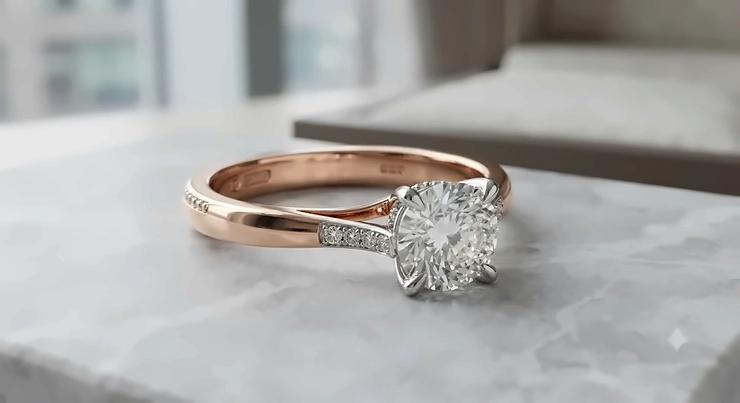
Picking a two tone engagement ring women actually want to wear every single day is trickier than it looks on Pinterest. You’ve got two metals fighting for attention, a center stone that needs to hold its own against both, and about four thousand “which one is more timeless” opinions from well-meaning relatives. I get it. The good news? The two tone engagement ring women have been quietly gravitating toward for the last few years isn’t a trend that’s going to embarrass anyone in a decade — it’s a genuinely smart middle ground for people who can’t (or won’t) pick between warm and cool metals.
This guide breaks down seven real, currently available rings spanning entry-level cubic zirconia to 18K natural diamond builds, so you can see actual specs and actual reviewer sentiment side by side instead of guessing. We’ll also get into the details nobody explains well: why a contrast prong setting matters more than it sounds like it should, how a mixed metal band actually behaves after five years of dishwashing and gym workouts, and where rose and white gold pairings quietly outshine the more obvious white-and-yellow combo. Whether you’re the one shopping or you’re doing recon for someone else, by the end you’ll know exactly which style fits your life, your budget, and your skin tone — not just what looks good in a product photo.
Quick Comparison Table
Before we go deep on each ring, here’s the fast version for anyone in a hurry.
| Ring | Metal Combo | Price Range | Best For |
|---|---|---|---|
| Dazzlingrock Collection Two Tone Split Shank Halo (Sapphire) | 14K Yellow & White Gold | $500–$700 range | Color-lovers wanting a halo with contrast |
| Dazzlingrock Collection 0.95 Cttw Two Tone Diamond Ring | 14K White & Yellow Gold | $1,800–$2,200 range | Natural-diamond shoppers who want real sparkle |
| Wellingsale Two Tone CZ Bridal Set | 14K White & Yellow Gold | $100–$150 range | Budget brides who still want a matching set |
| Ryan Jonathan 18K Two Tone Mounting | 18K White & Yellow Gold | $300–$450 range | Custom shoppers building a bespoke ring |
| Kobelli Floral Filigree Two Tone Ring | 10K Rose & White Gold | $250–$350 range | Romantics who want rose gold without the premium |
| Dazzlingrock Collection Ruby & Diamond Two Tone Halo | 14K Yellow & White Gold | $550–$750 range | Buyers who want a colored stone with classic bones |
| Dazzlingrock Collection Pink Sapphire & Diamond Two Tone Halo | 14K Yellow & White Gold | $550–$750 range | Soft, blush-toned alternative to a white diamond |
Looking at the spread above, the real story is how much range exists inside “two tone” as a category — you’re not choosing between seven similar rings, you’re choosing between three genuinely different price tiers and two genuinely different metal philosophies (white/yellow versus rose/white). The Wellingsale set and the Kobelli filigree ring solve for budget and romance respectively, while the Dazzlingrock pieces and the Ryan Jonathan mounting sit in the “I want this to actually be built well” tier. Notice that none of the price ranges reflect exact current pricing — always check current price before buying, since fine jewelry pricing shifts with gold and diamond markets.
💬 Found a favorite already? Tap through and compare it against the full spec breakdown below before you commit.
💬 Just one click — help others make better buying decisions too!😊
What Is a Two Tone Engagement Ring?
A two tone engagement ring is a ring built from two different gold colors — most often white and yellow, though rose and white pairings are increasingly common — combined in one cohesive design, typically through a contrasting band, halo, or prong-and-shank split. According to a Wikipedia overview of colored gold, the different colors of gold come entirely from what the pure gold is mixed with, not from different “types” of gold at all — any gold alloy with a distinctive hue counts as colored gold, and naturally-occurring pure gold itself is only a slightly reddish yellow before alloying pushes it toward white, rose, or deeper yellow tones. That single fact is why a two tone ring isn’t some novelty hybrid — it’s just two standard alloys, deliberately paired.
What makes this style click for so many buyers is versatility. A two tone engagement ring women wear day to day matches both silver-toned and gold-toned jewelry already in their collection, which sidesteps the classic “does this clash with my other rings” problem entirely. It also tends to photograph beautifully because the contrast catches light differently across the band, drawing the eye toward the center stone from multiple angles rather than one flat plane of color.
Top 7 Two Tone Engagement Rings for Women: Expert Analysis
We researched real listings, specs, and aggregated reviewer sentiment for each of the following. Prices are shown as ranges only, since fine jewelry pricing shifts often — always check current price before buying.
1. Dazzlingrock Collection Two Tone Split Shank Halo (Sapphire) — best colored-stone halo under $700
The standout here is the split shank itself, which literally divides into two visible bands as it approaches the halo, letting both metals show independently instead of blending into a muddy middle tone.
Built in solid 14K yellow and white gold, the Dazzlingrock Collection ring centers a round blue sapphire ringed by a halo of white diamond melee. The split shank isn’t just decorative — it reduces how much metal touches your finger at the base, which matters if you’ve ever found a solid halo ring feels bulky by the end of a long day. Based on the construction, this sits solidly in the “wants color without giving up sparkle” category: sapphire brings the blue, the diamond halo brings the fire, and the two-tone shank ties both back to a neutral palette that works with almost any wardrobe.
Reviewers consistently report that the sapphire’s color reads richer than expected in photos versus in person under warm indoor lighting, and a recurring theme in aggregated feedback is that the halo diamonds catch light well even at modest carat totals. A few buyers note the ring runs slightly narrow at the shank and recommend sizing up if you’re between sizes.
Pros:
- ✅ Split shank shows both metals clearly, not blended
- ✅ Halo adds visible sparkle without a bigger center stone
- ✅ Sapphire offers durability rated highly on the Mohs scale
Cons:
- ❌ Runs slightly narrow — consider sizing up
- ❌ Sapphire color intensity varies by lighting condition
Priced in the $500–$700 range, this is a strong value pick if you want a colored center stone that still reads as a “real” engagement ring rather than a fashion piece.
2. Dazzlingrock Collection 0.95 Cttw Two Tone Diamond Ring — most diamond weight for the price tier
What jumps out immediately is the 0.95 total carat weight spread across a two tone diamond ring setting, which is a meaningfully higher stone count than most rings in this price bracket offer.
This piece pairs 14K white and yellow gold with round white diamonds set throughout the design rather than isolated to a single solitaire, which means the sparkle is distributed instead of concentrated in one point. What most buyers overlook about a build like this is that distributed diamond weight often reads as “bigger” from a few feet away than a single larger stone of the same total weight — a practical trick for anyone chasing visual impact on a set budget. The two-tone setting lets the yellow gold warm up the diamonds’ whiteness slightly, which can be flattering if you’re not going for the coldest possible white.
Aggregated reviews mention that buyers appreciate the density of stones relative to the price point, with a common thread being surprise at how substantial the ring looks on the hand. Some reviewers note the prongs holding the smaller accent stones require gentler handling than a chunkier solitaire setting would.
Pros:
- ✅ 0.95 cttw spread across the design for visual impact
- ✅ Two-tone setting warms up diamond whiteness naturally
- ✅ Reads larger than the carat weight suggests
Cons:
- ❌ Delicate prongs need more careful daily handling
- ❌ Higher price tier than single-solitaire alternatives
Expect this one in the $1,800–$2,200 range — it’s the premium natural-diamond pick of the group, and the price reflects genuine total diamond content rather than a marketing markup.
3. Wellingsale Two Tone CZ Bridal Set — best budget-friendly matching set
The immediate hook is that this is a full bridal set — engagement ring plus wedding band — for less than most single rings on this list cost.
Constructed from solid 14K white and yellow gold with polished round-cut cubic zirconia stones, the Wellingsale set is built for buyers who want the two tone engagement ring women love visually without the natural-diamond price tag. On paper, this means you’re paying almost entirely for metal and craftsmanship rather than stone cost, since lab-created cubic zirconia carries none of the mined-diamond premium. That’s not a downgrade so much as a different value equation — solid gold construction with a lower-cost stone versus a lower-karat setting with a pricier stone.
Reviewers frequently mention that the CZ stones hold their sparkle far longer than expected, and a common note in aggregated feedback is that the matching band fits flush against the engagement ring with no gap. A minority of buyers report the CZ has slightly more visible facet lines than a diamond would under macro photography, which is expected given the stone type.
Pros:
- ✅ Full matching bridal set, not just one ring
- ✅ Solid 14K gold construction, not gold-plated
- ✅ CZ stones hold brilliance well over time
Cons:
- ❌ CZ facets photograph slightly differently than diamond
- ❌ Smaller size range than some higher-end competitors
At $100–$150 range for the set, this is the clear budget champion here — genuinely hard to beat for solid gold at that price.
4. Ryan Jonathan 18K Two Tone Mounting — best for custom-stone shoppers
This one stands apart because it’s sold as a mounting only, meaning the metal build quality is the entire product — no stone is included, which is exactly the point for a specific type of buyer.
The Ryan Jonathan piece is crafted in solid 18K white and yellow gold with a rhodium-plated finish on the white gold sections, designed to accept a center stone the buyer sources separately — whether that’s a family heirloom diamond or a stone purchased elsewhere. Here’s what to weigh: 18K gold contains a higher percentage of pure gold than the 14K options on this list, which means a richer color and better resistance to everyday wear, but also a softer metal that scratches more easily under rough handling. If you already have a diamond you love — maybe an inherited stone — this mounting solves the “how do I reset it into a two tone design” problem cleanly.
Because this is a mounting-only product, review sentiment focuses almost entirely on craftsmanship rather than a finished look, and multiple reviewers highlight the brand’s willingness to resize and service the piece long after purchase.
Pros:
- ✅ 18K gold offers richer color than 14K alternatives
- ✅ Accepts your own stone — ideal for heirlooms
- ✅ Backed by ongoing resizing and service support
Cons:
- ❌ Requires a separate stone purchase or jeweler visit
- ❌ Softer 18K gold scratches more easily than 14K
This mounting runs in the $300–$450 range, making it a smart mid-tier pick for anyone already holding a stone and just needing the right two tone frame for it.
5. Kobelli Floral Filigree Two Tone Ring — most romantic rose-and-white combo
The floral filigree detailing along the rose gold mid-section is the reason to look twice — it’s a level of surface texture most rings at this price point skip entirely.
Built in solid 10K rose and white gold, the Kobelli filigree ring uses leafy, vine-inspired engraving in the rose gold band framed by white gold rims set with natural white diamonds. What the spec sheet won’t tell you, but the design itself makes clear, is that filigree work like this hides everyday micro-scratches far better than a smooth polished band would — the texture visually breaks up light reflection so small surface marks blend in rather than standing out. This is the rose and white gold ring option on our list, and it’s worth calling out specifically: rose gold pairs beautifully with warmer skin tones and tends to read as softer and more vintage-inspired than a white-and-yellow combination.
Reviewers note the ring’s proportions run true to size and that the diamond melee catches light nicely against the rose gold backdrop, with a recurring compliment about the vintage character of the engraving.
Pros:
- ✅ Detailed filigree engraving hides minor scratches well
- ✅ Rose and white combo flatters warm skin tones
- ✅ Natural diamonds included, not simulants
Cons:
- ❌ 10K gold has lower gold purity than 14K options
- ❌ Vintage styling may not suit minimalist preferences
Priced around $250–$350 range, this is the sentimental favorite of the group for anyone who wants rose gold’s warmth without paying premium 18K prices.
✨ Don’t Miss These Exclusive Deals!
🔍 Take your ring search to the next level with these carefully selected picks. Click on any highlighted item to check current pricing and availability, and find the two tone design that feels unmistakably you.
6. Dazzlingrock Collection Ruby & Diamond Two Tone Halo — best for a bold pop of color
The ruby center stone against a diamond halo is the whole story here — it’s the boldest color statement on this list by a wide margin.
This Dazzlingrock Collection ring sets a round ruby inside a white diamond halo, built on a split-shank two tone base in 14K yellow and white gold. Based on the spec comparison against the sapphire version earlier on this list, ruby runs slightly softer than sapphire on the Mohs hardness scale but is still well within the range considered safe for daily-wear jewelry. Rubies also carry a cultural weight around passion and commitment that a lot of buyers specifically seek out over a traditional white diamond.
Aggregated reviewer sentiment consistently mentions the ruby’s saturation looking richer under natural daylight than indoor lighting, and buyers frequently comment that the halo diamonds make the ruby appear larger than its actual carat weight. A smaller number of reviews mention wanting a deeper red than what arrived, which is a common risk with colored gemstone sourcing.
Pros:
- ✅ Bold ruby center stone stands out from typical diamonds
- ✅ Halo diamonds visually enlarge the center stone
- ✅ Two-tone split shank ties color back to a neutral base
Cons:
- ❌ Ruby saturation can vary between individual stones
- ❌ Softer than sapphire — needs slightly gentler care
This one lands in the $550–$750 range, comparable to the sapphire version, so the choice mostly comes down to which color statement you want to make.
7. Dazzlingrock Collection Pink Sapphire & Diamond Two Tone Halo — softest, most blush-toned option
The pink sapphire center is the draw — it’s a softer, blush-toned alternative to both the classic white diamond and the bolder ruby and blue sapphire options above.
Constructed the same way as its ruby and blue sapphire siblings — 14K yellow and white gold, split shank, diamond halo — the pink sapphire version swaps in a stone that reads as romantic without veering into “novelty colored ring” territory. On paper this means buyers get the exact same build quality and setting security as the other two Dazzlingrock halo rings on this list, just with a different emotional tone. Reviewers consistently note that the pink sapphire pairs particularly well with rose gold accents elsewhere in a stack, even though this specific ring uses a white-and-yellow base.
A common complaint in user reviews across this Dazzlingrock halo line is that center stone color can shift subtly under different bulb temperatures, which buyers should factor in if they’re particular about consistent daytime and evening appearance.
Pros:
- ✅ Soft pink sapphire offers a romantic, unique center stone
- ✅ Identical build quality to the brand’s other halo styles
- ✅ Pairs well within a mixed-tone jewelry collection
Cons:
- ❌ Color can shift subtly under different lighting
- ❌ Less traditional than a white diamond for some buyers
Also priced in the $550–$750 range, this rounds out the group as the softest, most understated colored-stone option of the seven.
White and Yellow Gold Engagement Ring: The Classic Combo
The white and yellow gold engagement ring pairing is, hands down, the most requested version of this style, and there’s a straightforward reason why: it’s the combination that matches the widest range of existing jewelry. If someone already owns yellow gold hoops and a white gold watch, a white and yellow gold ring doesn’t force them to choose a lane.
Metallurgically, both metals typically come from the same base — pure yellow gold — alloyed differently. As this gold karat purity reference breaks down, white gold gets its pale color from palladium or nickel alloying plus a rhodium finish, while yellow gold keeps closer to its natural hue with copper and silver alloys. Because both are usually the same karat in a two-tone build, they wear at the same rate and don’t create an uneven-aging look over years of daily use, which is a legitimate concern with mismatched karat combinations. If you’re torn between a warm and cool metal for your setting, this combo genuinely just removes the decision instead of forcing a compromise.
Rose and White Gold Ring: The Romantic Alternative
A rose and white gold ring swaps the yellow for copper-heavy rose gold, and the resulting look reads noticeably softer and more romantic than the classic white-and-yellow build. This is the pairing to consider if you lean toward vintage aesthetics or if warmer skin tones make rose gold especially flattering against your hand.
The trade-off worth knowing about: rose gold’s copper content makes it slightly more durable against scratching than pure white or yellow gold, but that same copper can occasionally cause skin sensitivity in people with metal allergies — something worth testing with a smaller rose gold piece before committing to a full engagement ring. Reviewers of rose-and-white pieces like the Kobelli filigree ring mentioned earlier consistently describe the combination as feeling “warmer” and more personal than a stark white gold solitaire, which tracks with the broader jewelry-industry consensus on rose gold’s emotional appeal.
Two Tone Diamond Ring: When the Stones Take the Lead
Not every two tone ring leans on colored gemstones — a two tone diamond ring keeps the entire design focused on white diamonds while letting the metal do the color work instead. The Dazzlingrock Collection 0.95 Cttw ring from our top seven is the clearest example: every visual “pop” in that design comes from the metal contrast, not the stone.
The advantage here is longevity of style. A pure two tone diamond ring never risks going out of fashion the way a specific colored gemstone trend theoretically could, since white diamonds have held steady bridal-jewelry demand for well over a century. If you want the two-tone visual interest without introducing a second design variable like a colored center stone, this is the more conservative — and arguably safer resale — choice.
Two Tone Halo Engagement Ring: Why Halos Love Contrast
A two tone halo engagement ring pairs particularly well with the halo setting style specifically because a halo already creates a ring-within-a-ring visual effect — adding a second metal tone doubles down on that layered look rather than fighting it. Four of the seven rings on our list use exactly this structure.
Here’s what most buyers overlook: a halo made of small diamonds set in white gold, sitting on a split shank that transitions into yellow or rose gold, creates three distinct visual zones instead of one flat band. That’s a lot of design real estate to work with, which is why halo-plus-two-tone combinations photograph so well for engagement announcements — there’s more light-catching geometry per square millimeter than a plain solitaire offers.
Mixed Metal Band: Building a Bridal Stack That Works
If you’re planning to wear a wedding band alongside your engagement ring — most people do — a mixed metal band strategy needs a little more thought than matching a single-metal ring does.
Step one: decide whether your wedding band should match the engagement ring’s dominant metal tone or intentionally continue the two-tone theme. Both work, but mismatching a plain yellow band against a two-tone white-and-rose engagement ring can look accidental rather than intentional.
Step two: check karat consistency — pairing 14K and 18K pieces side by side is fine, but pairing significantly different karats of the same color (say, 10K yellow next to 18K yellow) can create a visible color mismatch over time as they wear differently.
Step three: if your engagement ring already uses a contrast prong setting, consider a simpler wedding band so the two pieces don’t visually compete when worn together daily.
Contrast Prong Setting: The Small Detail With a Big Job
A contrast prong setting is exactly what it sounds like: prongs finished in a different metal tone than the band beneath them, usually white gold prongs holding a stone above a yellow or rose gold shank. It’s a subtle detail, but it does real structural and visual work.
Visually, white gold prongs make a diamond appear whiter and brighter, since the metal directly touching the stone reflects less warm color onto it than yellow gold prongs would. Structurally, white gold and platinum-family metals tend to be favored for prongs specifically because they hold their shape under tension slightly better over time than softer yellow gold, reducing how often prongs need re-tipping. Several of the halo rings in our top seven quietly use exactly this trick — white gold basket and prongs holding the stone, with the color contrast reserved for the shank — and it’s a detail worth specifically asking about if a listing doesn’t spell it out.
The Bi-Color Jewelry Trend: Why Two Tone Is Having a Moment
The bi-color jewelry trend isn’t new — two tone jewelry has cycled in and out of fashion for decades — but its current resurgence tracks closely with a broader shift toward “your jewelry doesn’t have to match” personal styling advice that’s dominated fashion commentary over the past several years.
Part of the appeal is practical rather than purely aesthetic. As mixing metals in everyday jewelry — stacking a silver watch with gold rings, for instance — became normalized, a bi-color engagement ring stopped looking like an intentional statement and started looking like the obvious choice for anyone who already dresses that way. It’s also worth noting that bi-color designs let jewelers use two lower-cost alloys creatively instead of one larger piece of a single precious metal, which can make sophisticated-looking designs more accessible at a given price point than an equivalent single-metal ring would be.
How to Choose a Two Tone Engagement Ring: 7 Expert Steps
- Identify your dominant existing jewelry tone first. If 80% of what you already own is silver-toned, lean the ring’s dominant color toward white gold even within a two-tone build.
- Decide diamond versus colored stone versus CZ early. This narrows your budget range dramatically before you fall in love with something outside it.
- Check the karat and verify hallmarks. Under the FTC’s Jewelry Guides, quality marks like karat stamps carry specific legal meaning, so a legitimate seller should always disclose them clearly.
- Consider your lifestyle and hand use. Split shanks and delicate prong work need gentler daily handling than a chunky solitaire.
- Try it under multiple lighting conditions if possible. Colored stones especially can shift noticeably between daylight and indoor bulbs.
- Plan your wedding band pairing before buying the engagement ring. This avoids the mismatched-metal problem covered earlier.
- Set aside a maintenance budget, not just a purchase budget. Rhodium replating and prong checks are recurring costs, not one-time expenses.
Working through these steps in order prevents the single most common mistake: falling for a design online and only discovering afterward that it doesn’t fit how you actually live day to day.
Common Mistakes When Buying a Two Tone Engagement Ring
Even careful shoppers trip on a few recurring issues with this style specifically. First, buyers often assume “two tone” automatically means “matches everything,” without checking which metal is dominant — a ring that’s 90% yellow gold with white gold accents still reads as a yellow gold ring from three feet away. Second, people frequently skip verifying whether the white portions are solid white gold or yellow gold with rhodium plating over the top; the latter will show yellow again once the plating wears down, which matters enormously for long-term appearance. Third, shoppers sometimes buy a two-tone engagement ring and then default to a plain single-metal wedding band without thinking through how the two will look stacked together for the next several decades.
Two Tone vs Single Metal Engagement Rings
| Factor | Two Tone Ring | Single Metal Ring |
|---|---|---|
| Wardrobe versatility | Matches both silver and gold jewelry | Matches only one metal tone |
| Visual complexity | Higher — more design “zones” | Lower — cleaner, more minimal |
| Resale simplicity | Slightly more niche buyer pool | Broader, more universal appeal |
| Maintenance | Two finishes to monitor over time | One finish to monitor |
| Best For | Dazzlingrock Collection halo styles, mixed-jewelry wearers | Purists who wear one metal tone exclusively |
The trade-offs here aren’t about one option being objectively better — a two tone engagement ring genuinely wins on everyday versatility, since it never clashes with whatever else is on your hand or wrist that day. A single metal ring wins on simplicity, both in day-to-day maintenance and in the slightly broader resale market for classic solitaire styles. If you already gravitate toward mixed-metal accessories in the rest of your wardrobe, the two-tone route is the more honest choice rather than the trendier one.
Real-World Scenarios: Which Two Tone Ring Fits Your Life?
The budget-conscious planner: if you’re saving for a wedding and honeymoon simultaneously, the Wellingsale Two Tone CZ Bridal Set solves two problems at once — a complete matching set under $150 range frees up budget for the parts of the wedding that actually need cash flow.
The sentimental heirloom-holder: if you inherited a diamond from a grandparent and want it reset without losing family history, the Ryan Jonathan 18K Two Tone Mounting exists specifically for this — you keep the stone’s story and just modernize the setting around it.
The color-curious romantic: if you’ve always wanted something other than a plain white diamond but still want it to look bridal rather than fashion-jewelry casual, both the Dazzlingrock Collection Ruby & Diamond and Pink Sapphire & Diamond halo rings hit that middle ground precisely, giving you color without sacrificing the halo’s classic engagement-ring silhouette.
Caring for Your Two Tone Ring: A Practical Maintenance Guide
Two tone rings need slightly more attentive care than single-metal pieces simply because there are two finishes to track instead of one. In the first 30 days, avoid harsh cleaning chemicals and chlorinated pools, both of which can dull rhodium plating faster than normal wear would. Set a reminder to have prongs checked by a jeweler every six months for the first two years — that’s when initial wear patterns become clear and small issues are cheap to fix before they become loose-stone emergencies.
For ongoing maintenance, clean the ring with warm water and mild dish soap using a soft brush, focusing gently on any filigree or halo detailing where residue tends to collect. As one jewelry-industry rhodium plating guide explains, rhodium plating on white gold is only a few microns thick and wearing thin over time is simply normal use, not a manufacturing defect — budget for replating every one to three years depending on how often the ring is worn. A common first-30-days mistake is assuming a scuff means something is wrong with the ring, when in most cases it’s simply the rhodium layer doing exactly what it’s designed to do.
Long-Term Cost & Maintenance: What Two Tone Really Costs Over Time
| Cost Factor | Typical Range | Frequency |
|---|---|---|
| Rhodium replating (white gold sections) | $50–$100 range | Every 1–3 years |
| Prong inspection / re-tipping | $30–$80 range | Every 1–2 years |
| Professional cleaning | $20–$40 range | Annually |
| Ring resizing (if needed) | $40–$90 range | As needed |
The real total cost of ownership for a two tone ring isn’t the sticker price — it’s the recurring rhodium and prong maintenance layered on top, which single-metal yellow or rose gold rings simply don’t require in the same way, since those metals don’t rely on a wearable plating layer. That said, this maintenance cost is modest relative to the ring’s total value, and skipping it tends to cost more in the long run through avoidable stone loss or a permanently dulled white-gold finish. Buyers who factor this into their budget upfront — rather than treating the purchase price as the final number — tend to report far less frustration with their ring’s appearance five years down the line.
Frequently Asked Questions
❓ Does a two tone engagement ring go out of style?
❓ Can you resize a two tone engagement ring?
❓ Is white and yellow gold or rose and white gold more popular?
❓ Do two tone rings cost more than single metal rings?
❓ How do I know if a two tone ring is solid gold or plated?
Conclusion
A two tone engagement ring women choose today isn’t a compromise between two metals — it’s arguably the more versatile pick over a lifetime of mixed-metal wardrobes and jewelry boxes. Whether you land on the budget-friendly Wellingsale set, the diamond-forward Dazzlingrock Collection 0.95 Cttw ring, or the romantic rose-and-white Kobelli filigree piece, the core decision points stay the same: verify the karat and hallmarks, plan your wedding band pairing early, and budget for the small ongoing maintenance that keeps rhodium-plated sections looking their best.
None of the seven rings covered here are the “objectively best” choice — they’re built for genuinely different buyers, budgets, and stone preferences, which is exactly why comparing real specs side by side matters more than chasing whichever ring shows up first in a search. Take the scenario that matched your situation earlier, revisit the comparison table, and go shopping with actual numbers in hand instead of guesswork.
✨ Ready to find your perfect match?
Check current prices on the pieces above and see which two tone design speaks to you.
Recommended for You
- Platinum Engagement Ring Women: 7 Stunning Picks for 2026
- Rose Gold Engagement Ring Women: 7 Best Picks for 2026
- White Gold Engagement Ring Women: 7 Stunning 2026 Picks
Disclaimer: This article contains affiliate links. As an Amazon Associate, I earn from qualifying purchases. If you purchase products through these links, we may earn a small commission at no additional cost to you.
✨ Found this helpful? Share it with your friends! 💬🤗
