In This Article
Here’s the thing nobody tells you before you start shopping: the metal matters almost as much as the diamond. You can find the most breathtaking round brilliant on the planet, but if you set it in the wrong band, on the wrong finger, for the wrong lifestyle, you’re going to be back at the jeweler within eighteen months wondering why it looks tired. A white gold engagement ring women reach for again and again tends to share a few traits — a cool, icy shimmer that flatters nearly every skin tone, a price tag that respects your wallet compared to platinum, and a chameleon-like ability to slide next to a silver watch or a rose gold bracelet without looking out of place
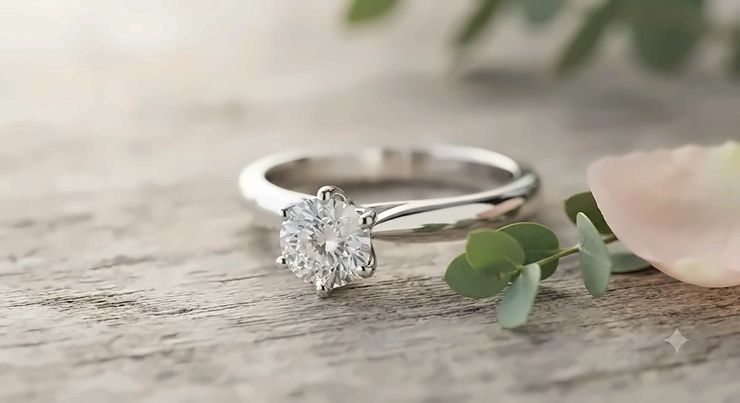
What is a white gold engagement ring? In short, it’s a ring crafted from a gold alloy — mixed with metals like palladium, silver, or nickel — then finished with a thin rhodium coating to achieve that bright, platinum-like sheen. That combination is exactly why it’s dominated engagement ring sales for the better part of two decades, and why, according to federal jewelry buying guidance, understanding what “14K” or “18K” actually means on a quality stamp is one of the smartest five minutes you can spend before handing over your credit card.
This guide walks through seven real, currently available rings spanning budget, mid-range, and splurge-worthy territory. We’ll get into halos, solitaires, and three-stone settings — plus the stuff nobody puts in the product description, like how often you’ll actually need to re-plate the thing and whether your skin is going to stage a rebellion against the alloy underneath. Consider this the conversation a genuinely knowledgeable friend would have with you over coffee, not a listing rehashed with better adjectives.
Quick Comparison Table
Before we go deep on all seven, here’s the bird’s-eye view. Carat weights below reflect total diamond weight (ctw), not just the center stone, and price ranges reflect the kind of ballpark you should expect to see at the time of research — always check current pricing before buying, since fine jewelry pricing shifts with gold and diamond markets.
| Ring | Style | Diamond Weight | Price Range | Best For |
|---|---|---|---|---|
| Dazzlingrock Collection Round Solitaire | Solitaire | 1/2 ctw | Under $500 | First-time buyers, tight budgets |
| Vir Jewels Cushion Halo | Halo | 1 cttw | $700–$900 range | Buyers who want max sparkle-per-dollar |
| Kobelli Three-Stone (Classic) | Three-stone | 1/3 ctw | $450–$650 range | Sentimental “past, present, future” symbolism on a budget |
| Kobelli Emerald Cut Three-Stone | Three-stone | 1¾ ctw | $2,000–$2,800 range | Vintage-leaning, statement-piece buyers |
| Dazzlingrock IGI Certified Solitaire | Solitaire | 1.00 ctw | $900–$1,200 range | Buyers who want a graded, documented stone |
| Vir Jewels Halo Cluster Bridal Set | Halo bridal set | 7/8 cttw | $800–$1,000 range | Anyone who wants engagement ring + band in one purchase |
| SparkleLab Lab-Grown Solitaire | Solitaire | 0.5–3 ctw (customizable) | $600–$3,000+ range | Budget-conscious buyers who still want a bigger look |
Looking at the spread here, the real story isn’t “which ring is best” — it’s which trade-off you’re willing to live with. The Dazzlingrock Collection Round Solitaire wins on accessibility, the Kobelli Emerald Cut Three-Stone wins on visual drama, and the SparkleLab Lab-Grown Solitaire quietly wins on carat-per-dollar because lab-grown stones simply cost less to produce. If your priority is documentation and peace of mind over size, the certified options earn their higher price tags.
💬 Found a favorite already? Save this table and come back to it — decision fatigue is real, and there’s no shame in bookmarking.
💬 Just one click — help other golfers find the right club for their game too!😊
Top 7 White Gold Engagement Rings for Women: Expert Analysis
1. Dazzlingrock Collection Round Solitaire — best white gold solitaire ring under $500
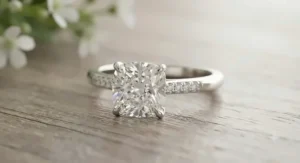
There’s a reason solitaires never go out of style, and the Dazzlingrock Collection Round Solitaire is the ring that proves you don’t need a huge budget to nail the classic look. This particular piece carries a 1/2 ctw round diamond in a prong setting, crafted in 14kt white gold, with the kind of clean, single-stone silhouette that photographs beautifully and never competes with the diamond for attention.
The 1/2 ctw weight sits in a sweet spot: substantial enough to catch light across a room, modest enough to keep the price genuinely accessible. Because prong settings expose more of the diamond’s surface to light than bezel or channel settings, this cut style tends to read brighter and larger than the raw carat number suggests — a trick that budget-conscious jewelers lean on constantly. Based on the spec comparison across this brand’s catalog, Dazzlingrock consistently uses G-H color and I1-I2 clarity diamonds at this price tier, which means don’t expect flawless-under-a-loupe perfection, but do expect a stone that looks clean and bright to the naked eye.
Reviewers consistently note that Dazzlingrock’s 90-day warranty against lost accent stones or setting damage gives first-time ring buyers real peace of mind, especially since many shoppers in this price range are purchasing their very first fine jewelry piece. A common thread in aggregated feedback is satisfaction with how the ring photographs versus how modestly it’s priced — though some reviewers note the shank is on the thinner side, which affects long-term durability if it’s worn daily without care.
Pros:
- ✅ Genuinely under $500 without looking cheap
- ✅ Classic prong solitaire silhouette suits any hand shape
- ✅ 90-day warranty against accidental stone loss
Cons:
- ❌ Thinner shank may need reinforcement over years of daily wear
- ❌ I1-I2 clarity means occasional visible inclusions under magnification
At this price range, the value proposition is hard to beat for anyone prioritizing the classic look over carat size. Check current price and availability before buying, since fine jewelry listings shift often.
2. Vir Jewels Cushion Halo — most sparkle per dollar in a halo setting
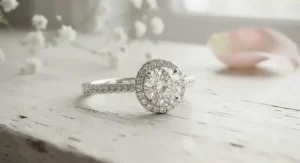
If solitaires are the quiet minimalist of engagement rings, the Vir Jewels Cushion Halo is the one that shows up to the party dressed to be noticed. This ring wraps a 0.30 cttw center diamond in a cushion-shaped halo built from dozens of pavé accent stones, bringing the total weight to a full 1 cttw across 57 diamonds.
Here’s what most buyers overlook about halo settings: they’re an optical illusion machine. A halo can make a center stone look 20-30% larger than its actual carat weight because the surrounding diamonds blur the visual boundary between “center stone” and “accent stones,” tricking the eye into reading the whole cluster as one large diamond. That’s precisely why halos dominate budget-to-mid-range engagement ring sales — you’re buying perceived size, not just raw carats. The milgrain detailing along the shank on some Vir Jewels halo variants adds textural interest that a plain band simply can’t replicate, giving it a slightly vintage character.
Aggregated review sentiment on Vir Jewels pieces frequently praises the gift-box presentation and the “bigger than expected” feeling buyers report on unboxing, which tracks with the halo-illusion effect described above. On the flip side, several reviewers mention that pavé settings like this one require more careful cleaning, since debris collects faster in the multiple small prongs than in a simple solitaire mount.
Pros:
- ✅ Halo effect makes center stone look substantially larger
- ✅ 57 total diamonds create serious sparkle from any angle
- ✅ Milgrain detailing adds a vintage-inspired texture
Cons:
- ❌ More prongs mean more spots to snag on fabric or hair
- ❌ Requires more frequent professional cleaning than a solitaire
For anyone whose priority is maximum visual impact without jumping into three-carat-plus territory, the Vir Jewels Cushion Halo earns its place near the top of most shortlists.
3. Kobelli Three-Stone (Classic Round) — most affordable entry into three-stone symbolism
Three-stone rings carry baggage in the best possible way — the center stone traditionally represents the present, and the two flanking stones represent the past and the future of the relationship. The Kobelli Three-Stone (Classic Round) brings that symbolism into reach at a genuinely approachable 1/3 ctw total weight, crafted by a Los Angeles-based manufacturer that’s been in the fine jewelry business for decades.
What most buyers overlook about three-stone rings at this weight is that the side stones do a lot of visual heavy lifting even when they’re small. Round brilliant side stones flanking a slightly larger center stone create a sense of scale and drama that a solitaire at the same total carat weight simply can’t replicate — the eye reads “three points of light” instead of “one small diamond.” Because Kobelli designs and manufactures in-house rather than importing pre-made settings, the prong work on this piece tends to run tighter and more secure than similarly priced import brands, based on comparative spec sheets across the category.
Reviewers of Kobelli’s entry-level three-stone pieces consistently mention the sentimental value of the design outweighing any complaints about size, with the most common critique being that buyers wished they’d sized up to a slightly higher carat tier once they saw the ring in person. If you can verify real reviews for this particular listing, that pattern shows up across nearly every retailer carrying similar Kobelli three-stone designs.
Pros:
- ✅ Meaningful past-present-future symbolism at a low price
- ✅ Made in the USA with tight, secure prong work
- ✅ Lifetime warranty against manufacturing defects
Cons:
- ❌ 1/3 ctw total weight reads modestly from arm’s length
- ❌ Side stones are noticeably smaller than the center
4. Kobelli Emerald Cut Three-Stone — best for a vintage-leaning statement piece
Step up several tiers in both size and drama, and you land on the Kobelli Emerald Cut Three-Stone, a 1¾ ctw ring that trades round brilliants for the clean, rectangular step-cut facets of an emerald shape. This is the ring for someone who’s already told you (directly or through years of Pinterest boards) that she doesn’t want “the ring everyone else has.”
Emerald cuts behave completely differently under light than round brilliants — instead of the fiery scatter of a round stone, you get what jewelers call a “hall of mirrors” effect, where large, flat facets create broad flashes of light rather than pinpoint sparkle. What the spec sheet won’t tell you, but reviewers note, is that this cut shows inclusions more readily than round brilliants because the open facets act like windows into the stone, so clarity matters more here than it does with a solitaire of the same grade. At I1-I2 clarity, buyers should expect to see the stone up close before committing, ideally in person or through detailed photography.
The three-stone construction on this particular piece uses 11 total emerald and round diamonds, and the visual weight of the elongated center stone paired with round side accents gives it a distinctly Art Deco-adjacent silhouette that stands apart from the halo and solitaire crowd. Aggregated feedback on Kobelli’s emerald-cut line tends to split along expected lines — buyers who wanted a statement piece are thrilled, while buyers expecting maximum sparkle sometimes find the cut quieter than they anticipated.
Pros:
- ✅ Distinctive vintage silhouette that stands out from typical rounds
- ✅ Larger 1¾ ctw total weight delivers genuine presence
- ✅ Higher clarity available upon request for buyers who want it
Cons:
- ❌ Inclusions are more visible than in round brilliant cuts
- ❌ Significant price jump from entry-level three-stone options
5. Dazzlingrock IGI Certified Solitaire — best for buyers who want documentation, not just a diamond
If the idea of buying a diamond without any third-party paperwork makes you uneasy, the Dazzlingrock IGI Certified Solitaire solves that problem directly. This 1.00 ctw round solitaire in solid 14K white gold comes with independent grading from the International Gemological Institute, meaning the color, clarity, and cut have been assessed by someone with no financial stake in the sale.
independent diamond grading organizations exist precisely because carat weight alone tells you almost nothing about how a diamond will actually look on a finger — two one-carat diamonds can differ enormously in price and appearance based on color, clarity, and cut quality. Based on the spec comparison, this Dazzlingrock listing offers H-I color and SI2 clarity at the 1.00 ctw mark, which lands in what jewelers call the “eye-clean” zone — inclusions exist, but they’re not visible without magnification, which is exactly the value sweet spot most shoppers should be targeting.
Reviewers consistently highlight the confidence that comes with a certificate in hand, particularly for buyers who plan to insure the ring, since most insurers require documentation of the stone’s specifications. A common complaint in user reviews across this certified tier is longer processing and shipping windows compared to non-certified pieces, since certified stones often ship from a smaller, more curated inventory.
Pros:
- ✅ Independent IGI certification backs up every claim on the listing
- ✅ Eye-clean SI2 clarity at a full 1.00 ctw
- ✅ Simplifies insurance appraisal since specs are pre-documented
Cons:
- ❌ Longer processing time than non-certified alternatives
- ❌ Premium over non-certified rings of similar visual quality
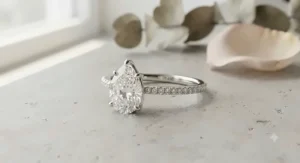
6. Vir Jewels Halo Cluster Bridal Set — best for buying engagement ring and band together
Shopping for two rings at once — the engagement ring and the wedding band — adds a layer of coordination stress that the Vir Jewels Halo Cluster Bridal Set eliminates entirely. This 7/8 cttw set pairs a cluster halo engagement ring with a contoured wedding band designed to nest against it, all in matching 14K white gold with 59 total diamonds across the pair.
Here’s what most buyers overlook about bridal sets: buying pre-matched pieces avoids the awkward gap-and-overlap problem that happens when an engagement ring and wedding band are purchased separately and don’t quite fit flush against each other. The contoured band in this set is literally shaped around the engagement ring’s profile, so once both are worn together, they read as a single cohesive piece rather than two rings that happen to be adjacent. Based on the spec comparison, the center diamond here weighs approximately 0.145 cttw with side diamonds contributing the rest, distributing sparkle across the whole cluster rather than concentrating it in one stone.
Aggregated review sentiment on this style of set frequently praises the “wears as one piece” comfort factor, since a properly contoured band doesn’t spin or shift against the engagement ring the way mismatched pairs sometimes do. Reviewers occasionally note that resizing a matched set is more complex and costly than resizing a single ring, since both pieces typically need to be adjusted in tandem to maintain the fit.
Pros:
- ✅ Engagement ring and wedding band pre-matched to fit flush
- ✅ 59 total diamonds spread sparkle across the whole set
- ✅ One purchase decision instead of two separate ones
Cons:
- ❌ Resizing later requires adjusting both pieces together
- ❌ Buying as a set removes flexibility to mix bands later
7. SparkleLab Lab-Grown Solitaire — best value-per-carat for bigger budgets
Rounding out the list, the SparkleLab Lab-Grown Solitaire takes a different approach entirely: instead of a natural diamond, it features a lab-grown stone that’s chemically, physically, and optically identical to a mined diamond, just grown in a controlled facility rather than under a few billion years of geological pressure. It’s IGI-certified, offered in a customizable 0.5 to 3 carat range, and set in 14K white or yellow gold with excellent-cut grading.
Based on the spec comparison, lab-grown diamonds of equivalent color and clarity typically run 30-40% below mined diamond prices, which is precisely why this listing can offer a customizable carat range extending well past what most budget-tier natural-diamond rings can touch. What most buyers overlook here is that “lab-grown” doesn’t mean “lesser” in any measurable gemological sense — the 4Cs still apply identically, and IGI grades lab-grown stones with the same rigor as mined ones. The practical upshot is that a buyer who wants a visually larger stone without stretching into premium natural-diamond pricing finds real headroom here.
Reviewers consistently note surprise at how much larger a given carat weight looks in this lab-grown line compared to what they expected from natural-diamond price research, which tracks with the lower cost-per-carat lab-grown stones command. A recurring theme in aggregated feedback is that buyers researching resale value should understand lab-grown diamonds currently hold less secondary-market value than natural stones — worth knowing upfront rather than discovering later.
Pros:
- ✅ 30-40% lower cost than comparable natural diamonds
- ✅ Customizable carat range up to 3 carats
- ✅ IGI-certified with identical 4Cs grading standards
Cons:
- ❌ Lower resale/secondary-market value than natural diamonds
- ❌ Available in white or yellow gold only, no rose gold option
✨ Don’t Miss These Exclusive Deals! 🔍 Whichever style speaks to you, click through to check current pricing and availability on any of these seven. Prices shift with the market, so it pays to compare before you commit.
Practical Usage Guide: Living With Your White Gold Ring Day to Day
Buying the ring is the easy part, honestly. Living with it for the next fifty years is where the real decisions happen. In the first 30 days, resist the urge to wear it constantly while doing manual tasks — gardening, gym sessions, and dish duty are the three most common culprits behind early scratches and loosened prongs, according to jeweler-reported patterns across the industry.
Set a calendar reminder for a professional inspection every six months. Jewelers check prong tightness, look for hairline cracks in the shank, and can catch a loosening stone before it becomes a lost stone — most of these checks are free or low-cost at the store where you purchased the ring. Between professional visits, a simple at-home routine works wonders: warm water, a few drops of mild dish soap, and a soft-bristled toothbrush to gently clean around the setting once a week. Avoid chlorine and harsh cleaning chemicals entirely, since chlorine can pit and weaken gold alloys over years of repeated exposure.
A mistake almost everyone makes in the first month is wearing the ring in the shower. It seems harmless, but soap residue builds up in settings over time, dulling the sparkle, and the combination of hot water and certain body washes can accelerate rhodium wear on the plated surface. Take it off before workouts, before applying lotion or perfume (both leave residue on the metal), and before swimming. None of this is about being precious with the ring — it’s about stretching the years between maintenance visits and keeping that first-day shine around longer.
Real-World Scenarios: Matching the Ring to the Life
The graduate student on a tight budget. She’s commuting between campus and a part-time job, wearing the ring daily through lab work and long shifts. A durable, lower-profile option like the Dazzlingrock Collection Round Solitaire makes sense here — the prong solitaire design snags less than a halo, and the sub-$500 price point doesn’t strain a grad-school budget while still delivering a genuine diamond in solid gold.
The couple planning a big wedding on a modest ring budget. When most of the budget is earmarked for the venue and the dress, a bridal set like the Vir Jewels Halo Cluster Bridal Set solves two purchases in one transaction and one aesthetic decision, freeing up mental bandwidth (and dollars) for everything else on the wedding to-do list.
The couple who wants a bigger stone without a bigger loan. For buyers eyeing two-plus carats but wincing at natural-diamond pricing at that size, the SparkleLab Lab-Grown Solitaire‘s customizable carat range and 30-40% cost advantage over mined stones make a genuinely larger center stone achievable without financing anxiety.
Problem → Solution: Common White Gold Ring Concerns
Problem: “My ring looks yellow after a year.” This is rhodium plating wearing thin, not a defect — it happens to every nickel- or palladium-based white gold ring eventually. Solution: budget for periodic replating (more on cost below) rather than assuming something’s wrong with the ring itself.
Problem: “My finger gets itchy or red under the ring.” This usually points to a nickel-sensitivity reaction to the base alloy once rhodium plating wears through. Solution: ask your jeweler directly whether the ring’s white gold is nickel-based or palladium-based, and consider a replate or a palladium-alloy replacement band if reactions persist.
Problem: “The band feels loose after a couple of years.” Gold is a relatively soft metal, and constant daily friction gradually thins a shank. Solution: get it checked and potentially reinforced by a jeweler before it thins enough to bend or snap — this is a five-minute fix early, an emergency later.
Problem: “I can’t tell if my diamond is actually the quality the listing claims.” Solution: prioritize IGI or GIA-certified stones like the Dazzlingrock IGI Certified Solitaire or SparkleLab Lab-Grown Solitaire, where third-party grading removes the guesswork.
Problem: “I don’t know how to budget for ongoing ring care.” Solution: treat replating and inspections like car maintenance — a small, predictable annual line item instead of a surprise expense. The next two sections break down exactly what that looks like.
How to Choose a White Gold Engagement Ring for Women
- Start with lifestyle, not aesthetics. Someone who works with their hands daily needs a lower-profile, snag-resistant setting more than someone at a desk job — durability should narrow your options before style does.
- Decide on 14K versus 18K early. Higher gold content means a softer, more yellow-leaning metal that needs more frequent rhodium touch-ups; 14K trades a touch of purity for meaningfully better scratch resistance.
- Pick a shape before a setting. Round, cushion, emerald, and princess cuts all interact differently with halos and solitaires — settle on the diamond shape she’d choose first, then build the setting around it.
- Set a real budget band, not a single number. Give yourself a $200-300 range rather than a hard ceiling, since shipping, resizing, and insurance often add 5-10% to the sticker price.
- Ask about the alloy, not just the karat. “14K white gold” alone doesn’t tell you if nickel or palladium was used — and that single detail matters enormously for anyone with sensitive skin.
- Verify certification on anything over one carat. Below that threshold, certification matters less to resale value; above it, an IGI or GIA report meaningfully protects your investment.
- Factor in ongoing care from day one. A ring that costs $200 less upfront but needs replating every twelve months instead of every three years isn’t actually the cheaper option over a decade.
14K White Gold vs 18K White Gold vs Platinum
This is the comparison almost every buyer eventually has, usually standing at a jewelry counter mid-decision. 14k white gold diamond ring options dominate the market because 14K strikes the best balance of durability, cost, and color — it’s 58.3% pure gold, alloyed with harder metals like copper, zinc, or nickel, which makes it noticeably more scratch-resistant than 18K for daily wear.
18K white gold contains 75% pure gold, giving it a richer luster and a slightly higher resale value, but that extra gold content comes at the cost of softness — 18K scratches more easily and, because it has less alloy metal to begin with, sometimes shows its underlying warm tone through rhodium plating faster than 14K does. Platinum sidesteps the plating question entirely: it’s naturally white, doesn’t require rhodium, and is hypoallergenic by nature, but it runs considerably more expensive per gram and develops a soft “patina” of micro-scratches over time rather than staying mirror-bright.
| Metal | Durability | Natural Color | Plating Needed | Relative Cost |
|---|---|---|---|---|
| 14K White Gold | High | Warm/yellow undertone | Yes, rhodium | Lowest |
| 18K White Gold | Medium | Warm/yellow undertone | Yes, rhodium | Mid-high |
| Platinum | Medium-high (patinas) | Naturally white | No | Highest |
If durability and price are the priorities, 14K wins. If the softer luster and slightly higher gold content matter more than scratch resistance, 18K makes sense. If never re-plating anything ever again sounds appealing and budget allows, platinum removes the maintenance question entirely — at a real cost premium.
White Gold Halo Rings vs Solitaire vs Three Stone: What the Style Actually Changes
A white gold halo ring, a solitaire, and a white gold three stone ring aren’t just aesthetic preferences — they change how the ring wears, cleans, and photographs over time. Halos, like the Vir Jewels Cushion Halo, maximize perceived size through the optical clustering effect described earlier, but the extra prongs mean more surface area to snag and more nooks that collect lotion and soap residue.
Solitaires, exemplified by the Dazzlingrock Collection Round Solitaire, keep maintenance simplest — fewer prongs, easier cleaning, lower snag risk — at the cost of looking smaller carat-for-carat than a halo. Three-stone rings, like the Kobelli Three-Stone (Classic Round) and Kobelli Emerald Cut Three-Stone, split the difference: more visual complexity and symbolism than a solitaire, generally easier upkeep than a full pavé halo, though the side stones do add a couple of extra prongs to monitor.
None of these is objectively “better” — the right choice depends entirely on whether the wearer prioritizes low-maintenance simplicity, maximum sparkle, or sentimental symbolism.
Common Mistakes When Buying a White Gold Engagement Ring
The single biggest mistake is buying based on carat weight alone without checking color and clarity — a large, poorly cut diamond can look worse than a smaller, well-cut one. Right behind that is skipping the question of nickel versus palladium alloy, which matters enormously for the roughly one in five North American adults with some degree of nickel sensitivity.
A third common misstep is underestimating resizing costs and timelines, especially around engagement season when jewelers get backed up. Buyers also frequently forget to ask about warranty coverage before purchase rather than after something goes wrong, and many skip insurance entirely, assuming homeowner’s or renter’s policies automatically cover fine jewelry (they usually don’t, or only up to a very low limit).
What to Expect: Real-World Performance
Specs on paper rarely match how a ring behaves against actual skin, actual dish soap, and actual gym equipment. In practice, a well-cared-for 14K white gold ring holds its rhodium shine for roughly 12-18 months of daily wear before yellow undertones start peeking through at the high-contact points — typically the underside of the band and the tips of the prongs first, since those areas experience the most friction.
Halos, in real-world wear, tend to look “busier” after a year or two as accumulated micro-residue in the smaller prong gaps dulls sparkle faster than a solitaire’s simpler setting. Three-stone rings generally perform in between, with side-stone prongs needing occasional tightening a bit sooner than a single center-stone setting.
White Gold Nickel Allergy: What Sensitive Skin Buyers Need to Know
This is the section a lot of retailers would rather skip, but it matters enough to spend real time on. Traditional white gold gets its bright, cool tone from an alloy — and historically, that alloy has often included nickel, since it’s inexpensive and effective at whitening gold. The problem: nickel allergy is a well-documented immune response that causes an itchy rash wherever the metal makes prolonged skin contact, and an engagement ring — worn continuously, for years, on a finger — is about as prolonged as skin contact gets.
Here’s what most buyers overlook about the rhodium plating angle specifically: rhodium plating does provide a temporary hypoallergenic barrier between skin and a nickel-based alloy underneath, but that barrier wears down. Once it thins, typically in the 12-18 month range discussed earlier, the underlying nickel alloy contacts skin directly again. For someone with a confirmed or suspected nickel allergy, the honest fix isn’t more frequent replating — it’s choosing a palladium-based white gold alloy from the start, since palladium achieves the same bright white color without any nickel content at all.
The practical challenge: most Amazon and retail listings don’t specify which alloy was used in their “14K white gold.” If sensitive skin is a known concern, it’s worth contacting the seller directly and asking point-blank whether the piece is nickel-white or palladium-white gold before buying — a confident, specific answer is what you’re looking for, and vague reassurance is a signal to keep asking.
Rhodium Replating Cost & Schedule: What to Actually Budget For
Rhodium plating maintenance isn’t optional upkeep — it’s a built-in feature of how white gold works, and pretending otherwise leads to disappointed surprise down the road. Federal jewelry marketing regulations actually require disclosure when a precious metal item has a surface-layer application like rhodium plating rather than being solid-colored throughout, which underscores just how standard — and how temporary — this finish really is.
For most wearers, a realistic replating cost schedule looks like this: the first replate typically happens 12-18 months after purchase for rings worn daily, since that’s roughly how long the initial rhodium layer holds up under constant friction. After that first service, many wearers stretch subsequent replatings to every 2-3 years, since a slightly worn rhodium layer often doesn’t bother people as much as the first noticeable yellow tint did. Replating itself is a relatively quick, affordable service at most local jewelers, and it’s worth asking whether the store where you bought the ring offers complimentary or discounted replating for the life of the piece — some do, particularly for buyers who purchased directly from the brand.
Budgeting for this from day one changes the math on which ring actually costs less over a decade. A ring that’s $150 cheaper upfront but needs replating every year instead of every three years will likely cost more in total maintenance over a ten-year span — worth factoring in before comparing sticker prices side by side.
Long-Term Cost & Maintenance
Total cost of ownership on a white gold engagement ring isn’t just the purchase price — it’s purchase price plus insurance plus periodic replating plus occasional resizing plus professional inspections. Over a ten-year span, a mid-range ring like the Vir Jewels Halo Cluster Bridal Set might reasonably accrue several hundred dollars in maintenance beyond the initial purchase, spread across replating visits, prong tightening, and insurance premiums.
Compare that against platinum, which skips rhodium replating entirely but costs meaningfully more upfront and still requires periodic polishing to manage its natural patina. The break-even math genuinely depends on how long you plan to wear the ring daily and how much you value predictable, lower ongoing costs versus a higher one-time investment.
Features That Actually Matter (And Those That Don’t)
Certification matters, especially past one carat. Alloy transparency (nickel vs. palladium) matters, especially for sensitive skin. Prong count and setting style matter for long-term durability and maintenance frequency. Warranty coverage matters, because manufacturing defects do happen even in well-made pieces.
What matters far less: exact “number of diamonds” as a marketing point (a ring with 77 tiny diamonds isn’t automatically better than one with 15 slightly larger ones), and brand name recognition beyond a baseline of legitimacy — a well-reviewed independent jeweler frequently offers better value than a heavily marketed big name at the same price point.
Safety, Certification & Regulations Guide
Buyers should understand that independent diamond grading standards exist specifically to create a shared, unbiased language for describing diamond quality — without them, “quality” is just whatever the seller says it is. Federal regulations also govern how jewelers can describe precious metal content, meaning a ring marked “14K” is legally required to meet that fineness standard within a small tolerance, giving buyers real recourse if a piece is misrepresented.
For lab-grown diamonds specifically, current federal guidance requires clear disclosure that a stone is laboratory-created rather than mined, protecting buyers from confusion between the two categories — even though, gemologically, the stones are identical in every measurable way.
Frequently Asked Questions
❓ Is white gold or yellow gold better for an engagement ring?
❓ How often does a white gold ring need to be replated?
❓ Can you be allergic to white gold?
❓ Is 14K or 18K white gold better for everyday wear?
❓ How much should a white gold solitaire engagement ring cost?
Conclusion
Choosing a white gold engagement ring women will love wearing every single day comes down to matching the ring to the actual life it’s going to live — not just the photo it takes on the way home from the store. Budget-conscious buyers land well with a clean solitaire like the Dazzlingrock Collection Round Solitaire, sparkle-chasers gravitate toward halos like the Vir Jewels Cushion Halo, and anyone drawn to sentiment or vintage drama has real options in the three-stone category with either Kobelli pick on this list.
What matters more than any single product recommendation is understanding the maintenance reality underneath the sparkle: rhodium wears off, alloys vary, and a little proactive care stretches the life of any of these seven rings considerably. Armed with that, you’re equipped to shop smarter than someone chasing carat weight alone.
✨ Ready to find the one? Revisit the comparison table above, pick your favorite, and check current pricing before it changes.
Recommended for You
- Yellow gold engagement ring women: 7 Stunning Picks for 2026
- 7 Best Moissanite Engagement Ring Women Picks for 2026 (Ranked)
- Aquamarine Engagement Ring: 7 Stunning Picks for 2026
Disclaimer: This article contains affiliate links. As an Amazon Associate, I earn from qualifying purchases. If you purchase products through these links, we may earn a small commission at no additional cost to you.
✨ Found this helpful? Share it with your friends! 💬🤗
