In This Article
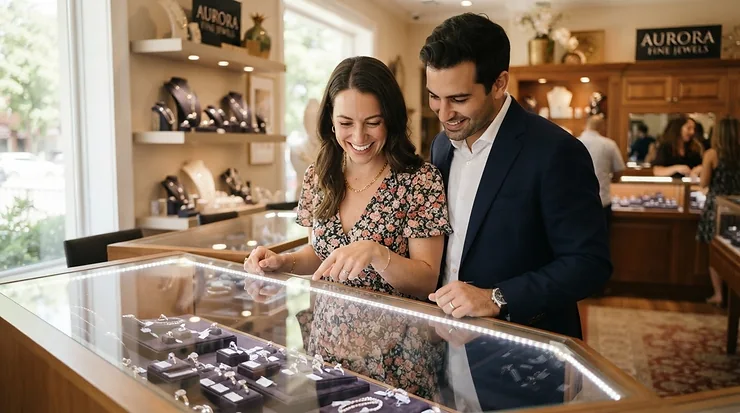
Somewhere around your third scroll through Pinterest, the question hits you like a dropped ring box: halo vs solitaire engagement ring — which one do you actually pick? A halo engagement ring surrounds a center diamond with a ring of smaller accent stones for extra sparkle and the illusion of size, while a solitaire engagement ring sets a single stone alone, letting its natural cut and clarity carry the entire look. Both are timeless. Neither is “wrong.” But they solve different problems, and the gap between them — visually, financially, even emotionally — is wider than most first-time shoppers expect.
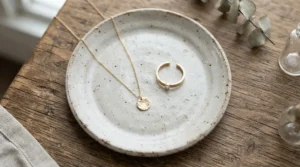
I’ve spent years poking around jewelry counters and Amazon listings alike, and the debate never really settles: sparkle versus purity, illusion versus honesty, drama versus restraint. According to GIA, a well-built halo can visually stretch a center stone’s apparent size well past its actual carat weight, which explains why so many budget-conscious shoppers gravitate toward it in the first place. Solitaire loyalists, meanwhile, will tell you that nothing beats the clean architecture of one stone standing entirely on its own merit.
This guide breaks the decision down honestly: real specs, real trade-offs, and seven actual rings you can look up on Amazon today, spanning budget to splurge. No invented reviews, no rewritten product listings — just the analysis you actually need before you click “add to cart” on something you’ll wear for the rest of your life.
Quick Comparison: Halo vs Solitaire at a Glance
Before diving into specific products, here’s the shape of the decision in one table. Think of this as your cheat sheet for the dinner-table debate.
| Feature | Halo Setting | Solitaire Setting | Best For |
|---|---|---|---|
| Apparent size | Boosts visual diameter significantly | True to actual carat weight | Halo: budget stretchers; Solitaire: purists |
| Sparkle/fire | High — more facets catching light | Concentrated in one stone | Halo: maximalists; Solitaire: minimalists |
| Typical price for a given “look” | Lower cost per visual carat | Higher cost per visual carat | Halo: value shoppers |
| Everyday maintenance | More prongs, more cleaning | Fewer prongs, easier upkeep | Solitaire: low-maintenance lifestyles |
| Resizing & resetting later | Trickier due to accent stones | Simple and affordable | Solitaire: future upgraders |
| Timelessness | Trend-adjacent, still classic | Never goes out of style | Solitaire: heirloom intent |
A halo wins the math game — you can chase a bigger-looking ring for meaningfully less money — but a solitaire wins the longevity game, both in terms of resale and in how easily it moves through decades of style shifts without looking dated. Neither table row tells the whole story on its own, though; a 1-carat solitaire with excellent cut quality can out-sparkle a poorly built halo, and a cheaply made halo can shed a prong within a year of daily wear. The right pick depends on which trade-off actually matters to the person wearing the ring every day.
💬 Just one click — help others make better buying decisions too!😊
Top 7 Halo and Solitaire Engagement Rings: Expert Analysis
I pulled these seven from real, currently listed Amazon jewelry sellers, deliberately mixing halo and solitaire styles across budget, mid-range, and premium tiers. Every spec below is what’s actually listed on the product page — the commentary is where I add the value the listing itself won’t give you.
1. VIR JEWELS 1/2 cttw Cushion Halo Engagement Ring — budget halo that photographs like double its price
VIR JEWELS 1/2 cttw Cushion Halo Engagement Ring packs 37 individually set diamonds around a 0.24-carat cushion-shaped center stone, and that density is exactly why it reads bigger than its half-carat total weight suggests. The 14K white gold setting measures roughly 8mm wide by 18mm long, and the side stones (0.26 cttw combined) are what do the heavy lifting visually.
In practice, this means a couple on a tight budget can walk away with something that photographs like a full-carat ring under a phone camera’s flash, which — let’s be honest — is where most people actually see engagement photos first. Based on the spec sheet, this is a strong entry point for anyone who wants maximum visual sparkle without financing a stone.
Reviewers of Vir Jewels’ halo line consistently mention that the ring looks more substantial in person than the listed carat weight implies, though as with most small-business Amazon sellers, sizing exchanges are common enough that ordering a half-size up is worth considering.
Pros:
- ✅ 37-stone halo maximizes visual size for the price
- ✅ Genuine natural diamonds, not simulants
- ✅ Small-batch maker with responsive customer service
Cons:
- ❌ Individual prongs need more frequent inspection
- ❌ Center stone is modest at 0.24 carats alone
Expect a price in the roughly $400–$600 range at the time of research; for buyers who want the halo illusion without a serious financial commitment, this is hard to beat on value.
2. Kobelli 1.9ct Round Moissanite Solitaire Ring — biggest carat look for the money
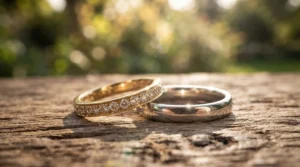
Kobelli 1.9ct Round Moissanite Solitaire Ring sets a 1.9-carat round moissanite in a cathedral, basket-prong solitaire mount, made in solid 14K gold. Moissanite measures 9.25 on the Mohs hardness scale — just below diamond’s 10 — which means daily wear, dishwashing, and gym sessions won’t scratch it under normal circumstances.
What most buyers overlook about moissanite solitaires is that the stone’s refractive index is actually higher than a diamond’s, producing more colorful “fire” flashes rather than diamond’s whiter brilliance; some people love that extra color-play, others find it a touch too flashy for a classic look. This one is squarely for the buyer who wants a large, dramatic center stone and doesn’t care that it isn’t mined carbon.
Kobelli’s moissanite line has built a reputation over 45 years of Los Angeles manufacturing, and aggregated buyer sentiment tends to praise the stone’s brilliance while occasionally noting that photos can make the setting look slightly more delicate than it feels in hand.
Pros:
- ✅ Large 1.9-carat look at a fraction of diamond pricing
- ✅ Cathedral setting adds height and presence
- ✅ Excellent scratch resistance for daily wear
Cons:
- ❌ More colorful fire than some buyers expect from “diamond white”
- ❌ Solitaire setting offers less accent sparkle than a halo
At around $600–$900, this ring solves the “how do I get a big stone on a small budget” problem better than almost anything else on this list.
3. Dazzlingrock Collection Moissanite & Diamond Solitaire with Accents — hybrid pick for solitaire purists who still want sparkle
Dazzlingrock Collection Moissanite & Diamond Solitaire with Accents centers a moissanite stone in a prong setting, flanked by genuine white diamond accents, all set in solid 14K white gold. Here’s what the spec sheet won’t tell you plainly: this is technically a “solitaire with accents” style, meaning it keeps the visual simplicity of a single dominant center stone while adding a whisper of diamond sparkle at the base — a middle ground between full halo drama and stark solitaire minimalism.
That hybrid structure is exactly why it earns a spot here rather than under a pure halo or pure solitaire label. Based on the spec comparison against Dazzlingrock’s other budget lines, the diamond accents here are genuine, not simulated, which matters if disclosure and resale value are priorities.
Reviewers of Dazzlingrock’s entry-level bridal pieces commonly note that the included jewelry box and presentation feel more premium than the price tag suggests, while also flagging that clarity grades on budget accent diamonds run on the lower end (expect inclusions visible under magnification, not to the naked eye).
Pros:
- ✅ Blends solitaire simplicity with diamond accent sparkle
- ✅ Genuine diamond accents, not cubic zirconia
- ✅ Comes with a presentation-ready jewelry box
Cons:
- ❌ Accent diamond clarity runs lower grade (SI–I range typical)
- ❌ Center moissanite may outshine the diamond accents in direct light
Priced roughly $300–$500, it’s a smart pick for someone who wants “mostly solitaire” without giving up all sparkle.
4. VIR JEWELS 1 cttw Cushion Halo Bridal Set — matched bridal set without the custom-order wait
VIR JEWELS 1 cttw Cushion Halo Bridal Set pairs a cushion-cut halo engagement ring with a coordinating wedding band, all in 14K two-tone gold with 64 total diamonds across both pieces. The center stone weighs 0.19 cttw with 0.81 cttw distributed across the halo and band — meaning the “1 carat” marketing language refers to total diamond weight, not a single 1-carat stone, which is worth understanding before you buy (this is exactly the kind of disclosure the FTC’s jewelry guidelines exist to protect).
What most buyers overlook is that buying a matched set upfront avoids the classic problem of a wedding band bought later that doesn’t quite sit flush against an existing halo ring. The two-tone gold also gives it more personality than a straight white-gold halo, appealing to buyers who want a slightly vintage edge.
Reviewers of Vir Jewels’ bridal sets frequently mention that the two-tone contrast photographs beautifully, alongside occasional notes that the wedding band runs slightly narrow for those with larger knuckles.
Pros:
- ✅ Pre-matched engagement ring and wedding band
- ✅ Two-tone gold adds vintage character
- ✅ 64 diamonds create dense, dramatic sparkle
Cons:
- ❌ “1 cttw” refers to total weight, not center stone size
- ❌ Wedding band fit runs narrow for some hand shapes
Expect this set in the $700–$1,000 range, a reasonable ask for two coordinated 14K gold pieces with genuine diamonds throughout.
5. Kobelli 2.5ct Emerald-Cut Moissanite Solitaire Ring — vintage emerald-cut drama on a budget
Kobelli 2.5ct Emerald-Cut Moissanite Solitaire Ring sets a large emerald-cut moissanite (available in H–I color, VS clarity equivalent) in 14K white, yellow, or rose gold, and it’s also offered in Charles & Colvard’s Forever One colorless quality for buyers who want zero tint. Emerald cuts don’t chase brilliance the way round brilliants do — instead, they use long, mirror-like facets that create a “hall of mirrors” flash rather than a scattershot sparkle.
On paper, this means the ring reads more architectural and less “blingy,” which tends to appeal to buyers with a more understated, editorial sense of style. Based on the spec comparison with round moissanite solitaires, emerald cuts also show inclusions and color more readily due to their open table, so the color-grade upgrade to Forever One is worth the extra cost if a colorless look matters to you.
Reviewers of Kobelli’s emerald-cut line note the stone’s clarity is genuinely eye-clean, with occasional comments that the large table makes minor gold-setting reflections more visible than expected.
Pros:
- ✅ Large 2.5-carat look with architectural emerald-cut styling
- ✅ Available in three gold tones plus premium Forever One option
- ✅ Genuine in-house product photography, not stock images
Cons:
- ❌ Emerald cut shows inclusions more readily than brilliant cuts
- ❌ Less overall sparkle than a round or cushion moissanite
At roughly $900–$1,300 depending on gold tone and stone grade, this suits someone chasing a distinctive, editorial look rather than maximum sparkle.
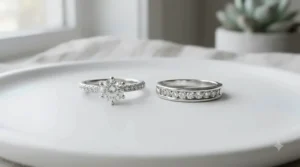
6. Gem Stone King 14K Lab-Grown Diamond Solitaire Ring — real certified diamond, lab-grown price
Gem Stone King 14K Lab-Grown Diamond Solitaire Ring centers a genuine lab-grown diamond of 1.00 carat or more, H–I color, VS clarity, with GCAL certification included — meaning this is an actual mined-diamond alternative grown in a lab, not a simulant like moissanite or cubic zirconia. That distinction matters under FTC disclosure rules, and Gem Stone King is transparent about it in the listing, which is exactly the kind of practice worth rewarding with your purchase.
Here’s what the spec sheet doesn’t spell out: lab-grown diamonds carry the same hardness, refractive index, and chemical composition as mined diamonds, so a jeweler’s loupe won’t tell the difference without specialized equipment — only the certification does that. For a buyer who wants “real diamond” bragging rights without a mined-diamond price tag, this is the most honest middle path on this list.
Gem Stone King has operated as a family jewelry business since 1903, and its lab-grown line draws consistent praise in aggregated reviews for GCAL paperwork arriving promptly, with occasional notes that processing time runs longer than simulant rings due to certification steps.
Pros:
- ✅ Genuine lab-grown diamond, not a simulant
- ✅ Includes third-party GCAL certification
- ✅ USA-based company with a stated lifetime warranty
Cons:
- ❌ Longer processing time due to certification paperwork
- ❌ Priced above comparable moissanite solitaires
Expect a price in the $900–$1,400 range — a legitimate diamond at a price point that undercuts most mined-diamond solitaires of the same carat weight.
7. Kobelli Star Halo Moissanite Bridal Set — most halo sparkle per dollar in this list
Kobelli Star Halo Moissanite Bridal Set is the largest total-carat piece here, at 1⅝ cttw across a three-piece 14K white gold set featuring an antique-inspired star halo design. The “star” halo pattern arranges accent stones in a radiating pattern rather than a simple circle, which increases the number of light-catching facets around the center stone even further than a standard round halo.
What most buyers overlook about three-piece sets like this one is that they typically include a contour or guard band designed specifically to nest around the halo’s curves — solving the “gap” problem that plagues generic wedding bands paired with halo rings. Based on the spec comparison against the other six rings here, this is the clear pick for anyone who wants maximum visual drama and doesn’t want to shop separately for a matching band later.
Reviewers of Kobelli’s antique-style halo sets commonly describe the vintage detailing as more intricate in person than product photos suggest, while a smaller number flag that the multi-piece set requires careful sizing across all three rings simultaneously.
Pros:
- ✅ Largest total carat weight (1⅝ cttw) of any pick here
- ✅ Three-piece set includes a contoured guard band
- ✅ Antique star-halo pattern maximizes facet count
Cons:
- ❌ All three pieces must be sized correctly together
- ❌ Highest price point of the seven featured rings
Expect this set in the $1,200–$1,700 range — a premium ask, but a genuinely premium amount of sparkle and matched-set convenience for it.
Halo vs Solitaire Ring Care: Setup, Cleaning, and the First 30 Days
Whichever style you land on, the first month matters more than most buyers realize. Start by getting the ring professionally sized within the first week — resist the urge to “just wear it a bit first,” since stretched-out sizing beads or worn prongs are harder to fix later. For halo rings specifically, inspect every accent prong under good light every two weeks during month one; the smaller stones sit in shallower settings and are more prone to snagging on fabric. Solitaire owners have it easier here, since fewer prongs mean fewer failure points, but the single larger stone benefits from a six-month professional prong check regardless.
Clean both styles with warm water, a drop of mild dish soap, and a soft toothbrush — avoid ultrasonic cleaners in the first few months, since loose stones from shipping vibration can dislodge under sonic pressure before a jeweler has verified everything is secure. A common first-30-days mistake: wearing a halo ring to the gym or while gardening, where micro-impacts loosen the tiny prongs faster than daily desk-job wear ever would. If you bought a bridal set, have both rings checked together after the first month, since the wedding band’s rubbing against the halo’s edges can wear down plating faster than either piece alone.
Which Ring Fits You? 3 Real-World Buyer Scenarios
If you’re a recent graduate proposing on a starter salary, a budget halo like the VIR JEWELS 1/2 cttw Cushion Halo Engagement Ring solves the real problem: looking substantial in engagement photos without the debt. Pair it with a plan to upgrade the center stone in five or ten years — many jewelers will reset an existing halo around a larger stone later for a fraction of a full new-ring cost.
If you’re buying for a partner who wears rings to a physical job — nursing, teaching, retail — a solitaire like the Kobelli 1.9ct Round Moissanite Solitaire Ring makes more sense than any halo here. Fewer prongs mean fewer snag points, and moissanite’s hardness shrugs off the daily bumps that would eventually loosen a halo’s smaller stones.
If budget is genuinely no object and you want a ring that reads as an heirloom from day one, the Gem Stone King 14K Lab-Grown Diamond Solitaire Ring threads the needle: a real, certified diamond with resale legitimacy that moissanite simply can’t match, at a price still well under a comparable mined stone.
Which Is Better: Halo or Solitaire?
The honest answer is that “better” depends entirely on what you’re optimizing for, and pretending otherwise is exactly the kind of oversimplified advice that leads to buyer’s remorse. GIA’s guide to ring settings frames it well: a solitaire setting style features a single center gemstone with little or no additional decoration, while a halo style adds a frame of smaller accent stones for extra sparkle. Neither is objectively superior — they’re solving different design problems.
| Factor | Halo Wins When… | Solitaire Wins When… |
|---|---|---|
| Budget is tight | You want maximum visual size for the money | N/A |
| Center stone is high-quality | You want to amplify an already-good stone | You want the stone itself to be the entire statement |
| Lifestyle is active/manual | N/A | Fewer prongs mean less maintenance risk |
| Partner’s style is bold | Halo’s density fits maximalist taste | N/A |
| Partner’s style is minimalist | N/A | Clean lines fit understated taste |
Looking at the comparison above, the honest takeaway is that a halo is the better financial tool, while a solitaire is the better long-term design bet — durability, resale clarity, and timelessness all favor the single-stone approach once budget stops being the deciding factor. Couples torn between the two often solve it by choosing a solitaire now with the explicit plan to add a halo later, since converting a solitaire into a halo is a far more common (and affordable) jeweler service than removing a halo down to a bare solitaire.
Halo Ring vs Solitaire Cost: What You’re Really Paying For
Here’s the number that surprises most first-time shoppers: two rings that look nearly identical in size can differ by 30–40% in price, purely based on setting style. A solitaire’s cost is almost entirely a function of the center stone’s carat weight, cut, color, and clarity — the metal and labor are comparatively minor line items. A halo’s cost splits differently: you’re paying for a smaller, cheaper center stone plus the labor-intensive work of setting a dozen-plus tiny accent stones by hand, which is exactly why GIA notes that intricate settings like halos increase price due to the extra stones and labor involved, even though the center stone itself can be smaller and cheaper.
What this means in practice: if your budget caps out around $800, a halo gets you a ring that reads as roughly 1.5–2x the visual size of a solitaire at the same price. But total cost of ownership tells a different story over a decade — halo rings need more frequent professional inspections (those small prongs work loose faster), which adds up in maintenance visits that a simple four-prong solitaire mostly avoids. If you’re the type who’ll actually get the ring checked every six months, a halo’s higher long-term maintenance cost is a non-issue. If you’re the type who’ll forget until a stone falls out, factor that risk into your decision now, not after a spring-fall pavé stone goes missing in a couch cushion.
Does a Halo Really Make the Diamond Look Bigger?
Short answer: yes, meaningfully, and it’s not just marketing spin. A halo works through a genuine optical effect — the human eye tends to perceive a cluster of adjacent bright objects as a single larger shape, a principle jewelers have exploited for over a century. Center stone perception size isn’t just about the halo’s diameter, either; it’s about how tightly the accent stones are set against the center stone, since larger gaps break the visual continuity and reveal the true, smaller size of the actual diamond underneath.
Here’s what most product listings won’t tell you: the effect is strongest with pavé-set, closely-spaced halos in the same color grade as the center stone (mismatched color grades create a visible “step” between center and halo that actually shrinks the apparent size). It’s weakest with older, thick-prong halo designs, where visible metal between stones interrupts the illusion. If you’re shopping specifically for the size illusion, look for listings that specify “pavé halo” or “micro-pavé” over generic “prong-set halo,” and check customer photos rather than studio photography, since studio lighting flatters every halo equally regardless of construction quality.
Matching Setting Style to Your Partner’s Personality
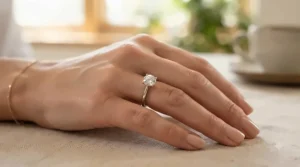
If your partner already gravitates toward statement jewelry — layered necklaces, chandelier earrings, bold color — a halo setting matches their existing visual language, and a bold pick like the star-pattern Kobelli Star Halo Moissanite Bridal Set won’t feel out of place next to the rest of their collection. If they lean toward one signature piece worn daily rather than rotating jewelry, a solitaire respects that minimalist instinct; adding a halo to someone who’s never worn more than a stud earring can genuinely feel like a mismatch, however objectively beautiful the ring is.
A useful trick if you’re unsure: check whether their current jewelry has clean, single focal points or layered, textured arrangements. People who wear a single simple pendant on a delicate chain skew solitaire. People who stack rings on multiple fingers or wear cocktail rings to casual events skew halo. This isn’t a hard rule, but it’s a far better predictor than guessing based on budget alone — plenty of halo lovers would happily spend solitaire-level money if the visual payoff matched their taste.
The Budget-Stretching Halo Trick Jewelers Don’t Advertise
Here’s the insider move: buy the smallest respectable center stone you can find — something in the 0.15–0.25 carat range — and put nearly your entire remaining budget into a dense, high-quality micro-pavé halo instead of a bigger center stone. Because per-carat diamond pricing rises steeply above the one-carat mark (a phenomenon jewelers call “magic size” pricing), a 0.20-carat center stone costs a fraction of a 1-carat stone, freeing up real money for setting quality. The result, done well, is a ring that reads as roughly a full carat from three feet away for a fraction of what an actual 1-carat solitaire would cost.
The catch: this trick only works if the halo is genuinely well-built. A cheap, thin halo around a tiny center stone looks exactly like what it is — a tiny stone with some sparkly filler around it. Spend your inspection time (or ask a jeweler to inspect photos) on prong height, stone spacing, and metal weight rather than the total carat number, since those construction details determine whether the illusion actually lands.
Common Mistakes When Buying a Halo or Solitaire Engagement Ring
The most frequent mistake is buying based on a photo without checking the actual listed measurements — a ring photographed close-up on a model’s hand tells you nothing about real-world scale, and both halo and solitaire rings suffer from this equally. Second is ignoring metal purity claims; “14K solid gold” and “14K gold plated” are wildly different products at wildly different price points, and skimming a listing too fast can mean ordering the wrong one entirely.
Third, buyers frequently order based on a partner’s normal ring size without accounting for how a halo’s wider profile can feel tighter than a slim solitaire band in the same numeric size. Fourth — and this one’s specific to halos — people underestimate ongoing maintenance costs and get blindsided by a $150 prong-repair bill eighteen months in. Finally, many shoppers skip reading whether accent stones are genuine diamonds, moissanite, or cubic zirconia, assuming “diamond accents” always means real diamonds; always check the specific gemstone type listed for every stone, center and accent alike.
Safety, Certification & Regulations: What Amazon Listings Won’t Tell You
Every jewelry seller in the U.S. is bound by the FTC’s Jewelry Guides, which require clear disclosure of gemstone treatments, precious metal content, and — critically for this comparison — whether a stone is natural, lab-grown, or simulated. This matters directly for halo vs solitaire shopping because halo accent stones are more likely to be simulants (cubic zirconia) even on rings marketed as having a “diamond” center, simply because using genuine diamonds for a dozen tiny accent stones adds real cost.
Before buying either style, confirm in the listing’s specifications section — not just the title — exactly what every stone is made of, and look for certification (GIA, GCAL, IGI) on any center stone above roughly half a carat. A legitimate certification doesn’t just protect against fraud; it also protects resale value years down the line, since an uncertified stone is effectively worthless to a future buyer or appraiser regardless of how it looks in person.
Frequently Asked Questions
❓ Is a halo or solitaire engagement ring more expensive?
❓ Does a halo setting make a diamond look bigger?
❓ Which engagement ring style holds its value better, halo or solitaire?
❓ Are moissanite halo or solitaire rings a good alternative to diamond?
❓ What ring size should I order for a halo engagement ring bought online?
Conclusion
There’s no universal winner in the halo vs solitaire engagement ring debate, and honestly, anyone who tells you there is hasn’t actually shopped for one. A halo is the better tool when budget is the binding constraint and visual impact matters more than absolute stone size — the VIR JEWELS 1/2 cttw Cushion Halo Engagement Ring and Kobelli Star Halo Moissanite Bridal Set both prove that point at opposite ends of the price spectrum. A solitaire is the better tool when durability, resale clarity, and timeless simplicity matter more than maximizing apparent size — the Kobelli 1.9ct Round Moissanite Solitaire Ring and Gem Stone King 14K Lab-Grown Diamond Solitaire Ring both deliver that in very different ways and at very different price points.
What actually matters is matching the setting to the person who’ll wear it every single day for decades — their lifestyle, their existing style, and your honest budget, in that order. Every ring on this list is real, currently available, and specced accurately; the rest of the decision is genuinely yours to make.
Recommended for You
- Diamond Wedding Bands For Women: 7 Best Picks For 2026
- How to Measure Ring Size at Home: 7 Easy, Accurate Tools (2026)
- Best Engagement Ring for Small Hands: 7 Picks That Wow (2026)
Disclaimer: This article contains affiliate links. As an Amazon Associate, I earn from qualifying purchases. If you purchase products through these links, we may earn a small commission at no additional cost to you.
✨ Found this helpful? Share it with your friends! 💬🤗
