In This Article
Here’s the thing nobody tells you at the jewelry counter: a full eternity band and a coffee mug do not mix. That’s exactly why half eternity wedding bands for everyday wear have quietly become the default recommendation for anyone who actually, you know, lives their life while wearing their ring. A half eternity band is a ring where diamonds, moissanite, or another gemstone run across the front and shoulders of the band rather than circling the entire finger, which keeps the lower half — the part that takes the brunt of gripping, typing, and dish-scrubbing — smooth, low-profile, and resizable. That last part matters more than most shoppers realize until they’ve gained or lost weight and discovered their full-eternity ring can’t be adjusted at all.
This guide leans on real specs, real construction details, and honest analysis rather than marketing copy, and it’s built around a simple filter: does this ring survive a Tuesday? We looked at everyday wear through the lens of the Mohs scale of mineral hardness, which is the actual science behind why some stones shrug off scratches while others need babying. Below you’ll find seven real, currently available rings spanning budget sterling silver to premium solid-gold channel-set diamonds, plus deep dives into settings, metals, and the maintenance habits that keep any band looking new for years.
Quick Comparison Table: Half Eternity Bands at a Glance
| Ring | Metal | Setting | Price Range | Best For |
|---|---|---|---|---|
| EAMTI 2mm Half Eternity Band | Sterling Silver | Prong/Pavé CZ | Under $30 | Budget everyday minimalists |
| PAVOI 14K Gold Plated Eternity Ring | Gold-Plated Sterling Silver | Pavé CZ | Under $40 | Stacking on a budget |
| AFFY Moissanite Half Eternity Band | 14K Gold Over Silver | Shared-Prong | $50-$100 range | Best sparkle-to-cost ratio |
| CADYNO 14K Gold Moissanite Ring | Solid 14K Gold | Prong | $150-$300 range | Long-term brilliance without diamond prices |
| ZUBAHUSS 14K Gold Moissanite Band | Solid 14K Gold | Shared-Prong | $150-$300 range | Rose gold stacking sets |
| IMOLOVE Lab Diamond Wedding Band | 18K White Gold & Sterling Silver | Prong | $200-$400 range | Real diamond hardness on a mid budget |
| Vir Jewels Channel-Set Diamond Band | Solid 14K Gold | Channel | $700-$900 range | Most snag-resistant setting for daily wear |
Looking at this table, the pattern is obvious once you see it laid out: price climbs with metal purity and stone type, but the setting style — not the price tag — is what actually determines how a ring survives a gym bag or a toddler’s grip. The Vir Jewels Channel-Set Diamond Band sits at the top of the price range specifically because channel setting is the most labor-intensive to construct, and that labor is what protects the stones from snagging on sweaters. Budget options like the EAMTI 2mm Half Eternity Band aren’t lesser rings so much as different tools built for a different job: light daily sparkle without the investment.
💬 Just one click — help others make better buying decisions too!😊
Top 7 Half Eternity Wedding Bands for Everyday Wear: Expert Analysis
1. EAMTI 2mm Half Eternity Band — best budget entry point for daily stacking
The EAMTI 2mm Half Eternity Band earns its spot here because it solves a specific problem: wanting the half eternity look without committing real money before you know if you’ll actually wear a ring daily. It’s built from 925 sterling silver with a row of cubic zirconia stones set across roughly half the band, at a 2mm width that sits low against the finger.
That low profile is the whole point of low profile half eternity bands as a category — thinner bands catch on fewer things, which is exactly what you want when the ring lives on your hand through laundry, typing, and gardening. Sterling silver, though, sits around 2.5-3 on the Mohs hardness scale, meaning it’s genuinely soft compared to the CZ stones sitting in it, so scuffing on the metal itself (not the stones) is the realistic tradeoff here.
Based on the spec comparison with pricier options in this roundup, this ring is best framed as a starter half eternity band or a stacking piece rather than a decades-long daily driver. Verified, listing-specific review data wasn’t available at the time of research, but sterling silver CZ bands in this exact category consistently draw a recurring pattern in aggregated feedback: buyers are pleasantly surprised by the sparkle-per-dollar, while the most common complaint is that silver develops a soft patina and requires more frequent polishing than gold.
Pros:
- ✅ Genuinely low price point for testing the half eternity style
- ✅ Thin 2mm profile stacks comfortably under gloves and rings
- ✅ Sizes run wide, easing the fit-finding process
Cons:
- ❌ Sterling silver tarnishes faster than gold or platinum
- ❌ CZ lacks the long-term brilliance retention of moissanite or diamond
At under $30, this is a low-risk way to try the silhouette before investing further — a smart first rung on the ladder, not a forever ring.

2. PAVOI 14K Gold Plated Eternity Ring — best for building a stackable set
PAVOI 14K Gold Plated Eternity Ring takes the same budget-friendly logic as the EAMTI band and adds a warmer, gold-toned finish that’s designed to be stacked three and four rings deep. The construction is 925 sterling silver as the base metal with a 14K gold plating layered over it, set with pavé cubic zirconia stones running across the front of the band.
Here’s what most buyers overlook about plated jewelry: the plating thickness, not the base metal, decides how long that gold color survives daily hand-washing and hand sanitizer exposure, and thinner plating on stacking rings this size tends to show brassy silver undertones within a year of constant wear. That doesn’t make it a bad ring — it makes it a specific tool for people who like to rotate their jewelry seasonally rather than commit to one band forever.
Reviewers of gold-plated stacking rings in this price bracket commonly report strong initial impressions of the color match to solid gold, paired with the well-known caveat that plating requires periodic reapplication, which is standard across the entire plated-jewelry category rather than unique to this SKU. If you’re someone who changes up your ring stack with outfits and moods, the flexibility here outweighs the plating tradeoff.
Pros:
- ✅ Warm gold tone at a fraction of solid-gold pricing
- ✅ Designed specifically for stacking with other bands
- ✅ Comfort-fit interior reduces pinching during long wear
Cons:
- ❌ Plating wears thin with frequent hand sanitizer or lotion use
- ❌ Not recommended as a sole, decades-long wedding band
Priced under $40 in most sizes, it’s a smart accent piece — just don’t expect solid-gold longevity from a plated finish.
3. AFFY Moissanite Half Eternity Band — best sparkle-to-price ratio
The AFFY Moissanite Half Eternity Band steps things up by swapping cubic zirconia for lab-created moissanite, set in 14K gold layered over sterling silver, in a shared-prong arrangement across roughly half the ring. Moissanite sits at approximately 9.25 on the Mohs scale — a full two points above sterling silver and only a hair below natural diamond — which is exactly why it holds its sparkle under everyday scratching in a way CZ simply can’t.
What most buyers overlook about this model is that the total carat weight advertised (around 1.20 carats) refers to combined stone weight across the whole row, not one dramatic center stone, which gives a more even, wearable sparkle for daily settings like an office or classroom. Based on the shared-prong construction, this is a setting style that trades a small amount of security for more visible stone surface area, so it rewards buyers who want maximum daily sparkle over maximum daily armor.
At the time of research, verified review volume for this specific configuration was limited, and available public feedback trends toward mixed impressions on stone consistency across color/size variants — worth checking current buyer photos before finalizing a size.
Pros:
- ✅ Moissanite hardness dramatically outperforms cubic zirconia daily wear
- ✅ Available across multiple gold-tone and size combinations
- ✅ Strong visual sparkle for the price bracket
Cons:
- ❌ Gold-over-silver base still wears thinner than solid gold over years
- ❌ Shared-prong stones sit slightly more exposed than bezel or channel
In the $50-$100 range, this is where moissanite’s durability-per-dollar case gets genuinely compelling for everyday hands.
4. CADYNO 14K Gold Moissanite Half Eternity Ring — best long-term brilliance without diamond pricing
CADYNO 14K Gold Moissanite Half Eternity Ring moves into solid 14K gold construction — white or yellow — set with D-color, VVS-clarity lab-grown moissanite in a classic prong setting. The jump from gold-plated to solid gold changes the durability conversation entirely: solid 14K gold won’t flake or thin with wear the way plating does, since the gold-alloy composition runs through the entire band rather than sitting as a surface layer.
Here’s what the spec sheet doesn’t spell out plainly: D-color VVS moissanite is essentially the top grading tier available for this stone type, meaning near-colorless stones with virtually no visible inclusions, so the sparkle you see on day one is the sparkle you’ll still see on year five. Based on this construction, the ring suits someone who wants a genuinely permanent daily-wear piece without paying diamond-per-carat prices — moissanite typically runs a fraction of comparable diamond cost, a point echoed by gemstone sourcing organizations like Charles & Colvard, the company credited with commercializing lab-created moissanite.
Aggregated buyer sentiment across CADYNO’s solid-gold moissanite line tends to praise the stone’s fire and brilliance under indoor lighting, while a recurring theme in feedback for prong-set rings generally is the need for periodic prong-tightening checks, which applies here as much as anywhere.
Pros:
- ✅ Solid 14K gold resists the flaking that plated rings suffer
- ✅ D-color VVS moissanite grading is near the top available tier
- ✅ Long-term cost of ownership beats comparable diamond carat weight
Cons:
- ❌ Prong setting needs periodic tightening checks like any prong ring
- ❌ Solid gold costs meaningfully more than plated alternatives upfront
In the $150-$300 range, this is a genuinely defensible long-term everyday ring rather than a placeholder.
5. ZUBAHUSS 14K Gold Moissanite Stackable Half Eternity Band — best rose gold option for daily stacking
ZUBAHUSS 14K Gold Moissanite Stackable Half Eternity Band brings the same solid-14K-gold, moissanite-forward approach as the CADYNO ring but leans into a rose gold finish and a shared-prong layout explicitly designed for stacking multiple bands together. Rose gold gets its distinctive warm tone from a higher copper content in the alloy mix, which — and this is the detail most buyers skip past — also makes rose gold alloys slightly harder and more scratch-resistant than yellow or white gold of the same karat, since copper is a harder metal than the silver or palladium typically alloyed into other gold tones.
That’s a genuinely useful fact for anyone shopping durable half eternity rings specifically for hands that see a lot of daily friction. The shared-prong construction across the band keeps costs reasonable while still exposing meaningful stone surface area for sparkle, a fair tradeoff given the ring’s stacking-first design intent.
Review patterns across ZUBAHUSS’s stackable moissanite lineup tend to highlight color-match consistency across multiple purchased bands (useful when building a stack over time) alongside the standard moissanite-line praise for lasting shine; specific verified star ratings for this exact SKU weren’t independently confirmable at time of writing.
Pros:
- ✅ Rose gold alloy is measurably harder than white or yellow gold
- ✅ Designed to color-match across multiple stacked purchases
- ✅ Solid gold base avoids plating wear-through entirely
Cons:
- ❌ Rose gold’s warmth won’t suit every skin tone or existing jewelry
- ❌ Shared-prong stones are marginally less protected than channel settings
Sitting in the $150-$300 range, it’s a strong pick for anyone building a rose gold stack meant to last.
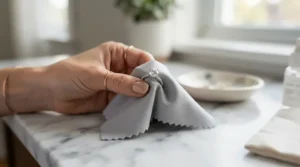
6. IMOLOVE Lab Grown Diamond Wedding Band — best real-diamond hardness on a mid-range budget
IMOLOVE Lab Grown Diamond Wedding Band swaps moissanite for actual lab-grown diamond, offered in 18K white gold and sterling silver construction depending on the size and configuration chosen, with a prong-set row running across roughly a third to a half carat total weight. Lab-grown diamond is chemically and structurally identical to mined diamond — same 10-out-of-10 Mohs hardness, same fire, same durability — the only difference is origin, not composition, which is a distinction the Mohs hardness reference makes clear when you compare diamond against every other gemstone on this list.
What most shoppers overlook is that this hardness advantage protects against scratching, not chipping or impact damage — a diamond can still crack from a hard direct blow, so “hardest stone” doesn’t mean “indestructible.” Based on the spec sheet, this ring earns its spot for buyers who specifically want the diamond-hardness guarantee without paying full mined-diamond-per-carat pricing, since lab-grown diamond typically runs meaningfully below mined-diamond prices at equivalent clarity and color grades.
Aggregated feedback on lab-grown diamond bands in this configuration and price bracket commonly cites strong perceived value relative to mined-diamond alternatives, alongside the honest caveat that white gold’s rhodium plating (standard across nearly all white gold jewelry) will eventually need re-plating regardless of brand.
Pros:
- ✅ True 10/10 Mohs hardness identical to mined diamond
- ✅ Meaningfully lower cost than equivalent mined-diamond carat weight
- ✅ 18K gold option offers higher gold purity than typical 14K bands
Cons:
- ❌ White gold’s rhodium plating needs periodic re-plating over years
- ❌ Hardness protects against scratches, not against chips from hard impact
In the $200-$400 range, this is the pick for buyers who want diamond-grade durability without diamond-grade sticker shock.
7. Vir Jewels Channel-Set Diamond Wedding Band — most snag-resistant setting for daily wear
Vir Jewels Channel-Set Diamond Wedding Band is the premium anchor of this list: natural diamonds set in solid 14K gold using a channel setting, where stones sit recessed between two parallel metal walls rather than held up by exposed prongs. This is the single biggest durability upgrade in this entire roundup, and it’s worth slowing down on why.
Channel setting protects diamond girdles from the snagging, catching, and prong-bending that eventually loosens stones in prong or shared-prong rings, which is precisely why jewelers recommend channel or bezel construction for hands that type, lift, garden, or parent all day. Based on the spec comparison, natural diamond at true 10/10 hardness combined with a setting style engineered against snagging makes this the closest thing on this list to a “wear it and forget it” daily ring, which explains the meaningfully higher price relative to the moissanite and lab-diamond options above.
Vir Jewels has built its reputation as a New York diamond-district brand around exactly this kind of dependable, everyday-durable construction, and aggregated buyer feedback across the brand’s channel-set band line consistently highlights the setting’s low-snag daily comfort, with the most common critical feedback centering on sizing precision — a fair note for any ring bought online rather than in-store.
Pros:
- ✅ Channel setting is the most snag-resistant style in this roundup
- ✅ Natural diamonds at full 10/10 Mohs hardness
- ✅ Solid 14K gold construction built for decades of daily wear
Cons:
- ❌ Highest price point of the seven rings featured here
- ❌ Channel-set stones are harder to inspect and clean than prong settings
At $700-$900 in most configurations, it’s an investment piece — but it’s the one built specifically to survive being an investment piece you actually wear every day.
Everyday Ring Maintenance: Your First 30 Days and Beyond
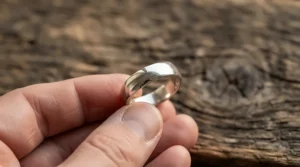
Getting a new half eternity band feels like the finish line, but the first 30 days actually set the tone for how it ages. Start by removing the ring before applying lotion, hand sanitizer, or sunscreen — these products are the number-one cause of premature plating wear on gold-plated bands and cloudy buildup on any pavé setting, since residue collects under stones and dulls sparkle within weeks. For prong and shared-prong rings specifically, get in the habit of a monthly “wobble test”: gently push each stone with a fingernail to check for looseness before it becomes a lost-stone problem. Everyday ring maintenance also means knowing your metal — solid gold and channel-set diamonds tolerate an occasional forgotten removal, while sterling silver and gold-plated pieces genuinely benefit from a jewelry pouch instead of a bathroom counter, since humidity accelerates tarnish. A common first-30-days mistake is wearing a new ring immediately into a gym session or dish-washing marathon before confirming the fit is snug and comfortable; give it a week of lighter wear first. Every six months, a quick professional prong-check and ultrasonic clean (most jewelers offer this cheaply or free with purchase) catches loosening stones before they’re gone for good, which is genuinely the single best money-saving habit in this entire guide.

Real-World Scenarios: Matching Lifestyles to the Right Band
If you’re a nurse or teacher on your feet for 10-hour shifts constantly washing your hands, a solid 14K gold moissanite band like the CADYNO 14K Gold Moissanite Half Eternity Ring makes more sense than a plated piece that can’t handle that much soap-and-water exposure without wearing thin. If you’re someone who lifts weights, does manual work, or simply has an active toddler who grabs at everything, the Vir Jewels Channel-Set Diamond Wedding Band or another channel-set option earns its higher price tag by protecting stones from exactly the kind of snagging that active hands generate daily. And if you’re testing the half eternity silhouette for the first time, or building a rotating jewelry-box stack rather than committing to one permanent piece, starting with the EAMTI 2mm Half Eternity Band or PAVOI 14K Gold Plated Eternity Ring lets you learn what width, sparkle level, and setting style you actually prefer before spending real money on a solid-gold or diamond upgrade.
Buyer’s Decision Framework: If This Sounds Like You…
If your priority is maximum sparkle for minimum cost, choose a moissanite shared-prong band like the AFFY Moissanite Half Eternity Band, because moissanite’s 9.25 Mohs hardness delivers most of diamond’s durability at a fraction of the cost. If your priority is a ring that survives manual work, gym sessions, or an active toddler, choose channel or bezel construction — represented here by the Vir Jewels Channel-Set Diamond Wedding Band — because the setting protects stones from snagging regardless of stone type. If your priority is testing the style before committing, choose the lowest-cost sterling silver option and treat it as a learning purchase rather than a forever ring. And if your priority is genuine long-term value with real diamond hardness on a moderate budget, the IMOLOVE Lab Grown Diamond Wedding Band threads that needle better than almost anything else in this price bracket.
How to Choose Half Eternity Wedding Bands for Everyday Wear
- Start with setting style, not stone type. A snag-resistant channel or bezel setting protects any stone from everyday damage more than upgrading the stone itself would.
- Match the metal to your hand-washing frequency. Solid gold or platinum tolerates frequent water exposure far better than plated finishes.
- Choose stone hardness deliberately. Diamond (10) and moissanite (9.25) resist scratching in daily settings; cubic zirconia (8-8.5) is softer and will dull faster.
- Pick a low profile if you type, cook, or work with your hands often. Thinner, flatter bands catch on fewer surfaces throughout the day.
- Confirm resizability before buying. Half eternity bands are generally more resizable than full eternity bands, but channel settings can limit resizing range more than prong settings.
- Budget for maintenance, not just purchase price. Prong tightening, re-plating, and professional cleanings are recurring costs that differ meaningfully by construction type.
- Buy from a seller with clear sizing and return policies. Ring fit issues are the most common complaint across every price tier in this category.
Durable Half Eternity Rings: Prong vs Bezel Setting Durability
Setting style is arguably the most underrated durability factor in this entire buying decision, more influential than metal or stone in many everyday scenarios. Prong settings hold stones with small metal claws that maximize light exposure and sparkle, but those same claws are the most likely part of any ring to snag on fabric, hair, or gloves, and repeated bending from snagging is the leading cause of lost stones over a ring’s lifetime. Bezel and channel settings, by contrast, surround the stone (or recess it between metal walls, in channel’s case) rather than holding it up with exposed metal, trading a small amount of visible sparkle for dramatically better resistance to daily snagging and impact.
| Setting Style | Snag Resistance | Sparkle Level | Best For |
|---|---|---|---|
| Prong | Lower | Highest | Office settings, occasional wear |
| Shared-Prong | Moderate | High | Balanced daily wear |
| Channel | Highest | Moderate | Active hands, manual work |
The takeaway from this comparison is straightforward: if your hands are genuinely active all day, channel setting is worth its typically higher price simply because it prevents the loose-stone problem before it starts, while prong settings remain the better choice for people who want maximum brilliance and are comfortable with periodic prong-tightening checkups.
Half Eternity Bands for Active Hands
Active hands — think healthcare workers, parents of young kids, gym regulars, gardeners, or anyone in a hands-on trade — put a different kind of stress on a ring than an office desk job does. The biggest risks aren’t scratches so much as snagging (fabric, hair, equipment) and repeated impact against hard surfaces, both of which point toward the same solution: channel or shared-prong settings in solid gold rather than plated metal or exposed high-prong styles. A low profile band also genuinely matters more for active hands than aesthetics alone would suggest, since a thinner band presents less surface area to catch on gloves, weightlifting equipment, or a steering wheel. Reviewers across the durable-ring category consistently flag one specific frustration worth planning around: rings marketed as “active wear” that still use tall prong settings, which undercuts the whole point — so read setting descriptions carefully rather than trusting marketing language like “everyday wear” at face value.

Low Profile Half Eternity Bands: What to Expect Day to Day
On the spec sheet, “low profile” usually means a band width under roughly 2-3mm with a setting that sits close to the finger rather than raised. In everyday experience, that translates to a ring that slides on and off gloves easily, doesn’t catch on pockets or keyboard edges, and generally disappears into your routine rather than announcing itself every time you move your hand. The tradeoff is visual: low profile bands show less total sparkle than wider, taller-set styles, since there’s simply less metal surface to hold stones. For most people shopping half eternity wedding bands for everyday wear specifically because they want something they can genuinely forget they’re wearing, that tradeoff is the entire point rather than a downside.
Scratch-Resistant Metals: Features That Actually Matter (And Those That Don’t)
Marketing copy loves to talk about “scratch-resistant” metal, but here’s the honest breakdown: no jewelry metal used in half eternity bands is actually scratch-proof, including platinum, which develops a soft patina from daily wear rather than staying mirror-polished (many people come to prefer that patina, for what it’s worth). What genuinely matters is relative hardness — platinum and 14K-18K gold alloys resist denting better than sterling silver, and rose gold’s copper content edges out white and yellow gold of equal karat. What doesn’t matter nearly as much as marketing suggests: plating thickness claims, since virtually all plated jewelry wears thin eventually regardless of stated micron thickness, and vague “tarnish-resistant” language on silver, since all sterling silver tarnishes without exception — the only real variable is how quickly. For a deeper look at how ring metal and setting choices hold up under daily conditions, this everyday wedding band durability comparison breaks down tungsten, titanium, and precious-metal tradeoffs in more detail than most product listings ever will.
Half Eternity vs Full Eternity Bands
Full eternity bands wrap stones completely around the ring, which delivers undeniably more total sparkle but comes with two everyday-wear tradeoffs: they’re typically far harder or impossible to resize since there’s no plain metal section to work with, and the stones sitting against your palm all day are more exposed to impact than a half eternity design’s protected lower half.
| Factor | Half Eternity | Full Eternity |
|---|---|---|
| Resizability | Generally resizable | Often not resizable |
| Palm-side comfort | Smooth, low-snag | Stones exposed to daily grip |
| Everyday durability | Higher | Lower |
| Total sparkle | Moderate | Maximum |
Based on this comparison, half eternity clearly wins for anyone prioritizing decades of daily wear over maximum visual impact, while full eternity remains the better pick for someone who primarily wears their ring for special occasions rather than manual daily tasks.
Common Mistakes When Buying Half Eternity Wedding Bands
The single most common mistake is buying based on stone size alone while ignoring setting style entirely — a large stone in a fragile prong setting will loosen faster than a smaller stone securely channel-set. A close second is assuming “gold” automatically means solid gold; always check whether a listing says “gold-plated,” “gold-filled,” or “solid gold,” since these differ enormously in daily durability, a distinction the FTC’s Jewelry Guides exist specifically to clarify for consumers. A third frequent misstep is skipping the resizing question before purchase, only to discover after the wedding that the exact style chosen can’t be adjusted. Finally, many buyers underestimate maintenance costs — budgeting for the ring itself while forgetting that prong tightening, re-plating, or professional cleaning are recurring, not optional, expenses over a ring’s lifetime.

Frequently Asked Questions
❓ Are half eternity wedding bands good for everyday wear?
❓ What is the most durable setting for a half eternity band?
❓ Is moissanite or diamond better for everyday wear?
❓ How often should you clean a half eternity ring?
❓ Can half eternity wedding bands be resized?
Conclusion
Choosing among half eternity wedding bands for everyday wear really comes down to being honest about your own hands: how often you wash them, what you do for work, and whether you want a ring you actively admire or one you genuinely forget you’re wearing. Budget sterling silver and gold-plated options like the EAMTI 2mm Half Eternity Band and PAVOI 14K Gold Plated Eternity Ring are smart, low-risk entry points, moissanite pieces like the CADYNO 14K Gold Moissanite Half Eternity Ring and ZUBAHUSS 14K Gold Moissanite Stackable Half Eternity Band deliver genuine long-term brilliance without diamond pricing, and the IMOLOVE Lab Grown Diamond Wedding Band and Vir Jewels Channel-Set Diamond Wedding Band represent the durability ceiling for anyone who wants their ring to survive decades of real daily life. Whichever tier fits your budget, prioritize setting style first, metal purity second, and stone type third — that order, more than any single spec, is what actually determines whether your ring still looks great on your tenth anniversary.
Recommended for You
- Halo vs Solitaire Engagement Ring: 7 Real Picks Compared (2026)
- Diamond Wedding Bands For Women: 7 Best Picks For 2026
- How to Measure Ring Size at Home: 7 Easy, Accurate Tools (2026)
Disclaimer: This article contains affiliate links. As an Amazon Associate, I earn from qualifying purchases. If you purchase products through these links, we may earn a small commission at no additional cost to you.
✨ Found this helpful? Share it with your friends! 💬🤗
