
In This Article
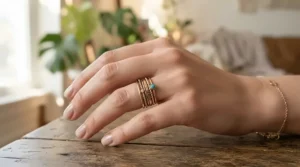
If you’ve ever slid a “one-size-fits-most” wedding band onto a size 4 finger and watched it spin around like a hula hoop on a broomstick, you already know the problem. Most bridal jewelry is designed for an “average” hand that doesn’t actually exist for a huge chunk of brides. Stackable wedding bands for petite fingers solve a real, physical problem: standard bands are often too thick, too heavy, or too wide to sit comfortably — or even fit at all — on smaller hands. In short, what is a stackable wedding band for petite fingers? It’s a slim-profile ring (typically 1.5mm–3mm wide) designed to sit flush against similarly narrow bands, layering multiple rings without overwhelming a small finger or crowding the knuckle.
Getting this right matters more than most people expect. A band that’s technically “your size” but built at a standard 5mm–6mm width can still feel clunky, dig into the side of your finger, or make your hand look smaller instead of more elegant. According to the Federal Trade Commission’s Jewelry Guides, which have existed in some form since 1918 and are widely used by the industry to provide accurate, truthful information to consumers about their purchases, there’s a real regulatory backbone behind honest metal and gemstone descriptions — which matters a lot when you’re trying to compare a $20 CZ band to a $300 solid gold one and actually know what you’re paying for.
This guide walks through seven real, currently available stacking bands — from $15 silicone starter rings to solid 10K gold pieces with genuine diamonds — plus the sizing science, stacking order logic, and buying mistakes that actually matter for small hands. No fluff, no invented reviews — just what the specs mean and what real buyers report.
Quick Comparison Table: 7 Stackable Wedding Bands for Petite Fingers at a Glance
| # | Product | Band Width | Material | Price Range | Best For |
|---|---|---|---|---|---|
| 1 | ThunderFit Thin and Stackable Silicone Rings | 2.5mm | Silicone | Under $20 (multipack) | Budget & active lifestyles |
| 2 | PAVOI Stackable CZ Ring | 1.8mm | Sterling silver, gold plated | $15–$30 | Everyday minimalist stacking |
| 3 | JewelryPalace Half Eternity Stackable Ring | ~2mm | Sterling silver, gold plated | $25–$45 | First-time stackers |
| 4 | EAMTI 2mm Wedding Bands | 2mm | Sterling silver | $12–$20 | Very small finger sizes |
| 5 | BORUO Sterling Silver Eternity Ring | 1.5mm–3mm | Sterling silver | $15–$25 | Layering with fitness/Oura rings |
| 6 | IMOLOVE Moissanite Wedding Band | 3mm | Sterling silver, 18K plated | $50–$90 | Mid-range sparkle upgrade |
| 7 | Dazzlingrock Collection Solid Gold Band | Varies | 10K solid gold, real diamonds | $150–$450+ | Permanent, heirloom-quality stack |
Looking at the lineup, the pattern that jumps out is width discipline — every single one of these bands stays at or under 3mm, which is the real dividing line between “petite-friendly” and “will look like a napkin ring on a size 5 finger.” The ThunderFit and EAMTI options anchor the budget end and are ideal for testing a stacking arrangement before committing to metal, while the Dazzlingrock Collection band sits at the opposite end for buyers who want a permanent, solid-gold piece with real stones. Price and material track together fairly predictably here: plated sterling silver dominates the middle of the market, and solid gold only shows up once you’re willing to pay for it.
Ready to build your stack? Scroll down to see which combination fits your hand — and your budget.
Top 7 Stackable Wedding Bands for Petite Fingers: Expert Analysis
1. ThunderFit Thin and Stackable Silicone Rings — best budget starter set for testing your stack
At 2.5mm wide and just 2mm thick, this silicone multipack is the cheapest, lowest-risk way to figure out your ideal stacking arrangement before spending real money on metal. The set ships in a 4-to-16-ring variety pack, and the rings feature a patented airflow design that enhances breathability, reduces moisture, and improves comfort by allowing air to circulate around the finger — genuinely useful for petite fingers, which tend to swell and shrink more noticeably with temperature than average-sized ones. Based on the spec comparison, this is less “wedding jewelry” and more “wedding band stand-in” — it’s marketed for gym sessions, manual labor, and travel, not the altar.
Reviewers consistently report that the silicone runs true to size and holds its shape well, though the trade-off is obvious: no shine, no stone, no permanence. ThunderFit works best as a placeholder while you plan your real stack, or as a beater ring you swap in before a workout so your actual bands stay scratch-free. The company notes the rings are designed to break away at 43 pounds of pressure, a genuine safety feature for anyone worried about ring avulsion injuries during physical activity.
Pros:
- ✅ Extremely affordable multipack for testing stack combos
- ✅ Breathable design reduces moisture buildup on small hands
- ✅ Safety break-away design for gym and manual work
Cons:
- ❌ No metal shine or stone detail for formal wear
- ❌ Not a long-term substitute for a real wedding band
Priced under $20 for a full multipack, this is the easiest low-risk entry point in the whole roundup — genuinely excellent value if you just want to experiment with widths before buying anything permanent.
2. PAVOI Stackable CZ Ring — thinnest true metal option in this roundup
This is where things get serious about width. At 1.8mm, this delicate thin wedding band for women pairs beautifully with engagement rings, statement pieces, or fitness rings for a seamless, stylish stack, and it’s genuinely one of the narrowest metal bands you’ll find in mainstream stacking jewelry. What most buyers overlook about a band this thin is that it reads as “layered detail” rather than “second wedding ring,” which is exactly the effect most petite-finger brides are chasing — depth without bulk. It’s crafted with 14K rose gold plating over 925 sterling silver and premium cubic zirconia stones, and is hypoallergenic, nickel-safe, lead-safe, and cadmium-compliant, which matters enormously if your skin has ever reacted to costume jewelry before.
According to aggregated Amazon customer feedback, this line is a genuine bestseller — it’s ranked number one on Amazon’s list of bestsellers in women’s eternity rings, with over 17,000 five-star ratings, and reviewers note it doesn’t look cheap despite the accessible price. Sizing runs 4 through 10 and fits true to size, with a recommendation to size up if you’re between sizes — solid advice for petite hands, where even a quarter-size difference on a 1.8mm band is noticeable.
Pros:
- ✅ One of the thinnest true-metal stacking bands available
- ✅ Hypoallergenic and nickel-safe for sensitive skin
- ✅ Backed by a massive base of verified five-star reviews
Cons:
- ❌ Gold plating will eventually wear with heavy daily use
- ❌ CZ stones lack the fire of natural or lab diamonds
At $15–$30, this sits comfortably as the value pick for anyone who wants a genuinely thin metal band without gambling on quality.
3. JewelryPalace Half Eternity Stackable Wedding Ring — most beginner-friendly fit system
JewelryPalace built this line with first-time stackers specifically in mind, and it shows. Each purchase includes a free ring size adjuster to help you find your most comfortable fit — a small but meaningful detail, because petite-finger buyers are disproportionately likely to land “between sizes” on standard charts. Here’s what the spec sheet won’t tell you, but the design implies: a half-eternity layout (stones across the top half only, plain band underneath) keeps the ring lighter and less likely to spin than a full eternity band, which matters more the smaller your finger circumference gets.
Constructed from 14K white gold-plated 925 sterling silver with cubic zirconia accents, this band slots naturally between a plain metal stacker and a full statement piece. Reviewers frequently mention the responsive customer service team for sizing questions, which is a genuinely useful signal for anyone nervous about ordering jewelry online without trying it on first.
Pros:
- ✅ Free ring size adjuster included for a snugger fit
- ✅ Half-eternity design keeps weight and bulk down
- ✅ Strong aftersales support for sizing troubleshooting
Cons:
- ❌ Half-eternity styling limits the “wraps all the way around” sparkle
- ❌ Plating requires occasional care to preserve shine
Expect to pay in the $25–$45 range, which lands this squarely as a mid-tier pick for anyone who wants some hand-holding on the sizing process.
4. EAMTI 2mm Wedding Bands — widest size range for genuinely small fingers
If you’ve ever hunted for a ring in a size 3 or 3.5 and come up empty, this is the band that solves that specific headache. EAMTI‘s 2mm cubic zirconia eternity band spans an unusually wide size range, reaching down into sizes that most competitors simply don’t stock. Reviewers consistently note that the 2mm width is genuinely thin rather than “marketing thin,” and that it layers cleanly next to engagement rings without adding visible bulk at the base of the finger.
Based on the spec comparison, the appeal here isn’t flash — it’s fit accessibility. A petite-fingered buyer who’s been sized out of five other listings is the exact person this band is built for. The half-eternity CZ layout keeps the price down while still delivering sparkle across the visible top of the finger, which is the part people actually notice in a stack.
Pros:
- ✅ Unusually wide size range down to very small fingers
- ✅ Genuinely thin 2mm profile confirmed by reviewers
- ✅ Affordable enough to buy in multiple metal tones
Cons:
- ❌ Half-eternity design means less coverage than full bands
- ❌ Sterling silver plating needs periodic polishing
At roughly $12–$20, this is arguably the smartest first purchase for anyone whose finger size alone has been the obstacle.
5. BORUO Sterling Silver Eternity Ring — best for tech-stacking with a fitness ring
Here’s an angle most stacking guides miss entirely: BORUO explicitly markets sizing compatible with the Oura Ring Gen3 and Gen4 in 1.5mm and 3mm widths, which makes it the obvious pick for anyone who already wears a smart ring and wants a wedding band that won’t clash with it in width or thickness. What most buyers overlook about pairing jewelry with wearable tech is that mismatched band widths make a stack look accidental rather than intentional — a 1.5mm CZ band next to a chunky Oura ring reads as clutter, not style.
Reviewers describe the sterling silver base as solid rather than flimsy, and the cubic zirconia stones as bright without looking obviously synthetic in casual lighting. The size range spans 4 to 12, comfortably covering most petite-to-average hands, and the eternity-style stone placement gives a continuous sparkle line that pairs well against a plain metal band on the opposite side.
Pros:
- ✅ Purpose-built width options for pairing with smart rings
- ✅ Solid sterling silver base feels sturdier than average
- ✅ Size range comfortably covers petite finger sizes
Cons:
- ❌ Less brand recognition than bigger stacking labels
- ❌ CZ brightness varies slightly by lighting, per reviewers
Priced around $15–$25, this is a smart, slightly under-the-radar pick for the tech-and-jewelry crowd.
6. IMOLOVE Moissanite Wedding Band — best sparkle upgrade without solid gold pricing
This is the jump from “convincing simulated stone” to “genuine gem-quality sparkle.” This band pairs 925 sterling silver with 18K white gold plating and features moissanite stones rated D color and VVS1 clarity — for context, that’s a colorless grade with virtually no visible inclusions, the kind of clarity language usually reserved for high-end diamond grading. At 3mm wide, it’s slightly thicker than the ultra-thin options above, but still stays well within petite-friendly territory, especially as a statement band paired with two thinner plain bands on either side.
On paper, this means you’re getting genuine gemstone-level brilliance without the four-figure price tag of natural diamonds. Reviewers of moissanite jewelry broadly report that the stone’s refractive quality actually reads brighter than diamond in direct light, a well-documented optical property of moissanite as a gem material rather than a marketing claim specific to this brand. For petite fingers, a single 3mm sparkle band like this one often works better as the visual “anchor” of a three-ring stack than trying to force sparkle across every band.
Pros:
- ✅ Genuine moissanite offers real gemstone-level brilliance
- ✅ D color, VVS1 clarity rating is genuinely high-grade
- ✅ Works as a standalone anchor piece in a multi-band stack
Cons:
- ❌ 3mm width reads bolder than the thinnest bands here
- ❌ Sterling silver base still requires anti-tarnish care
Expect $50–$90 depending on size and finish, positioning this as the clear “step-up” pick before jumping to solid gold.
7. Dazzlingrock Collection Solid Gold Stackable Band — the permanent, heirloom-grade pick
For buyers who want to stop shopping and start wearing a piece for life, Dazzlingrock Collection offers something the rest of this list doesn’t: solid 10K gold construction with genuine diamonds or gemstones, not plating and not simulants. The line spans styles from round diamond swirl bands to princess-and-baguette combinations and millgrain-detailed eternity rows, giving petite-finger buyers real design choice within a durable metal that won’t wear thin or discolor over years of daily stacking.
What the spec sheet won’t tell you, but the metal composition implies: solid gold at 10K karat fineness is intentionally alloyed harder than 18K or 24K gold specifically because it holds up better to the daily abrasion of stacking multiple rings against each other — a genuinely practical engineering choice, not just a budget one. Some designs also allow custom size or design adjustments upon request through Amazon Messages, subject to product eligibility, which is a meaningful perk for petite sizing since standard stock sizes sometimes stop at a 4 or 4.5.
Pros:
- ✅ Solid 10K gold with genuine diamonds, not plating
- ✅ Multiple stone and metal-color styles to mix in a stack
- ✅ Custom sizing requests available on eligible listings
Cons:
- ❌ Meaningfully more expensive than every other pick here
- ❌ Real gold requires more careful long-term insurance/care
Price ranges run from around $150 up to $450 or more depending on carat weight and metal color — a genuine investment piece, but one built to actually last.
Practical Usage Guide: Sizing, Setup, and Maintenance for Petite Hands
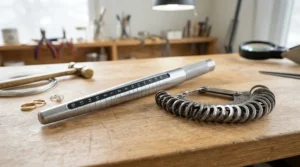
Getting a stack right on a petite finger is less about buying the “right” ring and more about sequencing the decisions correctly. Start with sizing before anything else: measure at the end of the day, when fingers are at their largest, and always measure the actual finger the stack will live on — sizes can differ by half a size or more between hands. Wrap a strip of paper or string around the base of your finger, mark where it overlaps, and measure the length in millimeters against a standard US ring size chart, and repeat the measurement twice to confirm consistency before ordering anything.
Once your bands arrive, put them on together before deciding on a final order — width and stone placement change how a stack sits far more than looks alone would suggest. For maintenance, plated sterling silver bands (like most on this list) benefit from a soft polishing cloth every few weeks and should come off before swimming, showering, or applying lotion, since chemical exposure accelerates plating wear. A common first-30-days mistake is wearing a brand-new stack to bed — the friction between bands overnight is a leading cause of premature scratching on softer plated metals.
Real-World Scenarios: Which Stack Fits Your Life
The daily-wear professional with a size 4.5–5 finger and an office job should prioritize the PAVOI or EAMTI thin bands paired with a plain metal spacer — low profile, minimal snag risk on keyboards, and easily layered under gloves in colder months. The active bride who hikes, lifts, or works with her hands is better served starting with ThunderFit silicone as an everyday placeholder, reserving her real metal stack for evenings and special occasions to avoid scratching softer plated finishes.
The milestone collector who wants to add a band per anniversary should invest early in the Dazzlingrock Collection solid gold piece as an anchor, since solid gold ages far better across a decade of additions than plated alternatives. Each of these profiles points to a different starting band, but the underlying logic is the same: match the ring’s durability and width to how — and how often — you’ll actually wear it.
Buyer’s Decision Framework: If This, Choose That
If your top priority is testing widths risk-free before spending real money, choose the ThunderFit silicone multipack, because it removes the financial stakes from experimentation entirely. If your finger sizes below a standard 4, choose EAMTI, because its size range specifically accommodates smaller measurements that other brands stop short of. If you already wear a smart ring, choose BORUO, because its width options are built to complement wearable tech rather than compete with it visually. If sparkle is the priority but natural diamond pricing isn’t in the budget, choose IMOLOVE moissanite for genuine gem-level brilliance at a fraction of the cost. And if you want one permanent piece that never needs replacing, choose the Dazzlingrock Collection solid gold band and build the rest of your stack around it over time.
How to Choose Stackable Wedding Bands for Petite Fingers
- Start with width, not style. Anything above 3mm starts to overwhelm a petite finger visually, regardless of how attractive the design looks on a model shot.
- Measure at the correct time of day. Fingers are smallest in the morning and largest in the evening, so measuring only once risks an inaccurate size.
- Decide metal before stone. Sterling silver, gold plating, and solid gold all wear differently over years of daily stacking friction.
- Check the actual size range stocked. Several popular listings don’t stock below a size 4 or 4.5, which quietly excludes a lot of petite buyers.
- Plan your stack order before buying each piece separately. Buying bands one at a time without a plan often results in mismatched widths that don’t sit flush together.
- Factor in skin sensitivity. Hypoallergenic, nickel-free construction matters more the longer you intend to wear a band daily.
- Budget for maintenance, not just purchase price. Plated metals need more upkeep than solid gold, which affects total cost of ownership over several years.
Petite Finger Ring Sizing and Ring Sizing for Small Hands: Getting the Fit Right
Petite finger ring sizing has its own quirks that standard size charts don’t always address. Small hands tend to show more dramatic swelling and shrinking with temperature and hydration than larger hands do proportionally, which means a ring that fits perfectly in an air-conditioned store can feel tight on a humid afternoon. Wrapping too tightly, measuring with cold fingers, and ignoring band width are three of the most common mistakes that can throw off a measurement by half a size or more — all three are especially relevant for smaller fingers, where even a small error has an outsized effect on comfort.
For ring sizing for small hands specifically, it’s worth requesting a size below what a generic chart suggests if you’re ordering a wider stacking band, since a ring that falls between two sizes should generally round up for wider styles, but petite fingers wearing genuinely thin 1.5mm–2mm bands often do better sizing to the snugger end instead, since thin bands don’t grip the same way thicker ones do. If in doubt, order a size adjuster or ask the seller — several brands on this list, including JewelryPalace, include one at no extra cost specifically because sizing mismatches are so common.
Narrow Stackable Wedding Bands vs. Standard-Width Bands
Narrow stackable wedding bands and standard-width bands solve genuinely different problems, and the difference isn’t just cosmetic. A standard 5mm–6mm band worn alone reads as a traditional, singular wedding ring — solid, classic, unmistakable. Narrow bands under 3mm are built specifically to be worn in multiples, where the combined visual weight of three or four thin rings replaces the presence of one thick band, without any single piece overwhelming a small finger.
The practical trade-off is durability versus flexibility. A single standard-width band tends to hold up to daily wear slightly better because there’s simply more metal absorbing scratches and impact. A narrow stack offers more styling flexibility — you can swap, add, or remove individual bands over the years — but each thin piece is more vulnerable to bending or wear on its own. For petite fingers specifically, narrow bands almost always win on comfort, since standard widths tend to sit uncomfortably close to the knuckle joint on smaller finger lengths.
Band Width Guide: Millimeters That Matter
Band width is the single most important spec on this entire list, more important than metal type or stone quality for how a ring actually feels on a petite hand. As a rough guide: 1.5mm–2mm reads as genuinely delicate and works best layered three or four bands deep; 2mm–2.5mm is the sweet spot for a single “main” stacking band that still looks substantial without bulk; and 3mm is generally the practical ceiling before a band starts to feel heavy on a size 4–6 finger. Products like PAVOI and EAMTI anchor the thin end of that range, while IMOLOVE and Dazzlingrock Collection sit at the thicker, statement end.
| Width | Feel on Petite Fingers | Best Use in a Stack |
|---|---|---|
| 1.5mm–2mm | Delicate, nearly weightless | Layer 2–4 bands together |
| 2mm–2.5mm | Balanced, noticeable but light | Primary daily-wear band |
| 3mm+ | Substantial, statement-level | Single anchor piece |
The data here reinforces a simple rule: the thinner the band, the more of them you can comfortably wear at once. Buyers who try to stack multiple 3mm+ bands on a petite finger frequently report discomfort and reduced hand mobility, while several thinner 1.5mm–2mm bands worn together tend to distribute more comfortably across the same finger width.
Stacking Ring Order: What Goes Where
Stacking ring order matters more than most first-time buyers expect, and getting it wrong is one of the more common regrets reported after the fact. Traditionally, a wedding ring is worn on the left ring finger, and when an engagement ring is also worn, the wedding ring goes on first, closest to the hand, with the engagement ring layered on top — though as with most jewelry traditions, there’s no strict rule beyond personal comfort and preference. For a multi-band stack, the same underlying logic tends to hold: the plainest or most durable band typically sits closest to the palm, with more delicate or decorative pieces layered outward where they’re less exposed to friction from daily hand use.
A practical order for petite-finger stacks built from this list might run: a plain, durable band like the Dazzlingrock Collection solid gold piece closest to the hand, a thin CZ or moissanite band like IMOLOVE or PAVOI in the middle for sparkle, and the most delicate accent band on the outer edge. This order protects the more expensive or sentimental piece from the majority of daily wear and impact.
Comfortable Stackable Bands: Why Comfort-Fit Matters More on Small Fingers
Comfortable stackable bands rely on more than just correct sizing — the interior profile of the band matters just as much. A “comfort fit” interior is subtly rounded rather than flat, which reduces friction against the finger and allows for slightly easier on-and-off movement, a detail that matters disproportionately on petite fingers where knuckles are often proportionally larger relative to the finger’s base circumference. Reviewers across multiple listings in this roundup note that bands advertising a rounded or comfort-fit interior tend to feel noticeably less restrictive during long wear, even at an identical numeric size to a flat-interior band.
Weight also plays a bigger role in comfort than people expect. Solid gold bands like the Dazzlingrock Collection pieces carry noticeably more physical weight than plated sterling silver alternatives, which some petite-finger wearers find reassuring and others find fatiguing over a full day. If you’ve never worn multiple rings stacked together before, it’s worth trying a lighter combination first — silicone or thin plated silver — before committing to a heavier, permanent solid-gold anchor piece.
Common Mistakes When Buying Stackable Wedding Bands for Petite Fingers
The single most common mistake is buying based on a generic size chart without accounting for band width — a size 6 in a 6mm band and a size 6 in a 2mm band do not sit identically on the same finger. A close second is buying an entire stack at once from a single listing without trying the width combination in person first, which often results in a full return. Buyers also frequently underestimate plating wear timelines, expecting gold-plated pieces to look brand-new indefinitely rather than needing periodic re-polishing. Finally, skipping metal-sensitivity research before buying is a mistake that only becomes obvious after weeks of irritation — worth avoiding by checking hypoallergenic claims upfront rather than after a reaction starts.
Long-Term Cost & Maintenance for Stacked Bands
Total cost of ownership varies dramatically across this list, and sticker price alone is a misleading guide. A $20 plated silver band might need re-plating or replacement within two to three years of daily wear, while a $300 solid gold band from Dazzlingrock Collection can realistically last a lifetime with only occasional professional cleaning. Silicone options like ThunderFit carry essentially zero maintenance cost but also zero resale or heirloom value, making them a pure convenience purchase rather than an investment.
Cost-per-year of ownership, then, often favors solid gold for buyers planning to wear a stack for decades, even though the upfront price is many times higher than a plated alternative. For buyers still building their stack or experimenting with combinations, the lower upfront cost of plated pieces remains the more sensible starting point.
Metal Safety and Allergies: What Petite-Finger Wearers Should Know
Skin sensitivity is worth taking seriously before buying any daily-wear band. Nickel allergy is a common cause of allergic contact dermatitis — an itchy rash that appears where skin touches a usually harmless substance — and it’s often associated with rings and other jewelry. Nickel allergy is often caused by nickel in jewelry, and things such as coins and zippers also may provoke the same reaction, which is why hypoallergenic construction matters more the longer a piece stays in daily contact with skin — exactly the situation with a stacked wedding band worn continuously. Several products in this roundup, including PAVOI, are explicitly marketed as nickel-safe, lead-safe, and cadmium-compliant, which is worth prioritizing if you’ve had any reaction to costume jewelry in the past.
A note on health information: if you’re currently experiencing a skin reaction to jewelry, a dermatologist or allergist can run a patch test to confirm the specific cause rather than guessing.

Frequently Asked Questions
❓ What size band width is best for petite fingers?
❓ How many rings can I comfortably stack on a small finger?
❓ Do stackable bands need to match metal color?
❓ Can I resize a stackable wedding band later?
❓ Is sterling silver a good choice for daily stacking?
Conclusion
Building a stackable wedding band collection for a petite finger comes down to two decisions that matter more than any brand name: getting the width right and getting the sizing right. Everything else — metal choice, stone type, stacking order — is genuinely a matter of personal taste once those two fundamentals are locked in. Whether you start with a $15 silicone placeholder like ThunderFit while you figure out your ideal combination, or go straight for a permanent solid-gold anchor piece from Dazzlingrock Collection, the seven options covered here span enough of the market to fit almost any budget and finger size.
The best approach for most petite-finger buyers is to start thin, start affordable, and add pieces gradually as you confirm what actually feels comfortable on your specific hand — because no size chart, however detailed, replaces the information you get from actually wearing a stack for a full day.
Recommended for You
- 7 Vintage Style Wedding Bands For Women That Feel Timeless (2026)
- 7 Full Eternity Bands For Anniversary Gifts That Wow In 2026
- Half Eternity Wedding Bands For Everyday Wear: 7 Tough Picks 2026
Disclaimer: This article contains affiliate links. As an Amazon Associate, I earn from qualifying purchases. If you purchase products through these links, we may earn a small commission at no additional cost to you.
✨ Found this helpful? Share it with your friends! 💬🤗
