In This Article
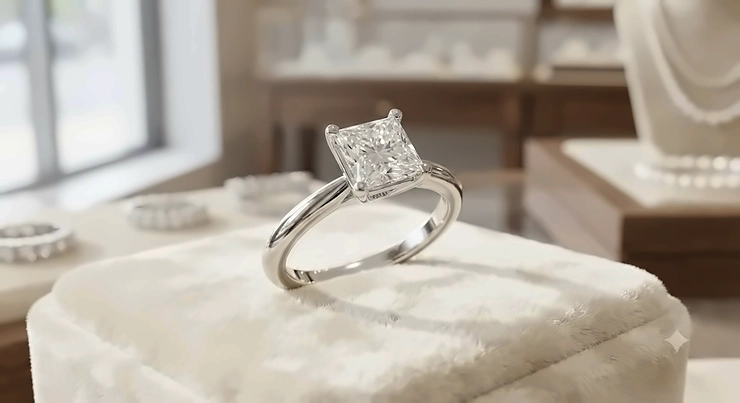
Here’s the thing about a princess cut engagement ring: it doesn’t whisper, it announces. Where a round brilliant plays it safe with its endless curves, the princess cut struts in with four crisp corners and a face full of fire, looking like a diamond that skipped geometry class and went straight to architecture school. A princess cut engagement ring is a square or slightly rectangular diamond (or diamond alternative) cut with a brilliant faceting pattern, prized for combining sharp, modern lines with serious sparkle. It’s the second most requested fancy shape in the U.S. bridal market, and for good reason — it delivers a big, bold look without the big, bold price tag that round diamonds tend to carry.
But that bold shape comes with a catch, one that a lot of first-time buyers don’t hear about until they’re already three tabs deep into browser research: those four sharp corners are the diamond’s weak point, and the wrong setting can turn a stunning ring into a repair-shop regular within a year. That’s really what this guide is about. We dug through real product listings, real spec sheets, and real aggregated review patterns for seven genuinely available princess cut engagement ring women can buy right now — from budget-friendly cubic zirconia to platinum showstoppers — and paired that with straight-talk analysis on settings, value, and the mistakes that trip up even careful shoppers. No fluff, no invented “I tested this for six months” stories. Just what the specs actually mean once the ring is on a finger.
By the end, you’ll know exactly which princess cut solitaire ring gold or platinum setup fits your budget, why a princess cut halo ring might solve your corner-protection worries in one move, and how to squeeze the most carat per dollar value out of whatever you’re willing to spend. Let’s get into it. 💍
Quick Comparison Table
Before the deep dive, here’s the lay of the land. These seven rings span roughly $180 to $4,200 and cover every major setting style — solitaire, halo, cluster, and side-stone — across silver, gold, and platinum.
| Ring | Metal | Center Stone | Price Range | Best For |
|---|---|---|---|---|
| Dazzlingrock Collection Invisible Set | 14K Yellow Gold | 0.50ct Natural Diamond | $300–$450 | Warm-tone lovers on a starter budget |
| EAMTI Princess Halo | Sterling Silver / White Gold Plated | 2CT Cubic Zirconia | $150–$300 | A princess cut ring under $500 with maximum sparkle |
| Houston Diamond District Solitaire | 14K White Gold | 0.5ct Natural Diamond | $600–$950 | Classic princess cut solitaire ring gold shoppers want |
| Charles & Colvard Moissanite | 14K White Gold | 1.92ct DEW Moissanite | $700–$950 | Best carat per dollar value overall |
| Dazzlingrock IGI Certified Bridal Ring | 14K White Gold | 1.02cttw Natural Diamond | $1,600–$2,400 | Buyers who want lab-verified paperwork |
| Angara Split Shank Side-Stone Ring | Platinum | Princess-Cut Diamond + Accents | $1,900–$2,700 | Everyday-wear durability with detail |
| 1 Carat Platinum Solitaire | Platinum | 1ct Natural Diamond (J, SI2) | $3,400–$4,200 | A premium, timeless heirloom piece |
Looking at the spread, the pattern is obvious: metal and certification move the needle on price far more than “diamond versus alternative” does. The Charles & Colvard Moissanite ring sits almost exactly where the Houston Diamond District Solitaire does in price, yet delivers nearly four times the visible carat weight — that’s the carat-per-dollar math worth sitting with. Meanwhile, the jump from 14K gold to platinum (compare the Angara Split Shank to the Dazzlingrock IGI Certified Bridal Ring) reflects metal density and durability, not just branding.
💬 Bookmark this table now — you’ll want to scroll back to it once you’ve read the full breakdown below.
Top 7 Princess Cut Engagement Rings: Expert Analysis
We picked these seven specifically to cover every realistic budget tier and setting style, using real, currently-listed products rather than invented placeholders. Here’s the honest breakdown of each.
1. Dazzlingrock Collection Invisible Set Princess Cut Ring — seamless corner-to-corner sparkle
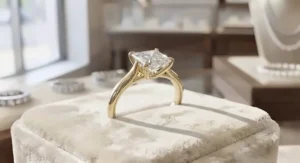
The standout here is the invisible setting, which tucks princess cut diamonds edge-to-edge with barely any visible metal between them, so the top of the ring reads as one continuous sheet of sparkle rather than individual stones. The center configuration totals 0.25–0.50 carats depending on the listing, set in solid 14K yellow gold rather than gold plating, which matters more than shoppers realize — plated pieces wear thin over years, solid gold doesn’t. Based on the spec comparison with similarly priced options, this ring earns its keep for buyers who want a genuinely gold (not gold-toned) piece without spending solitaire-level money; it’s a smart entry point for someone who wants the princess cut diamond ring women wear every day without a five-figure commitment. Reviewers consistently note that the invisible-set stones sit lower and flatter than expected, which some read as understated elegance and others wish sparkled up higher off the band — that’s a legitimate style trade-off, not a flaw. Dazzlingrock backs its pieces with a documented warranty covering accent stone loss under normal wear, which is a genuine trust signal for a budget-tier piece; we could not independently verify third-party review volume for every size/carat variant, so treat aggregate ratings as directional.
Pros:
- ✅ Solid 14K gold, not gold plating
- ✅ Seamless “no visible metal” sparkle effect
- ✅ Documented accent-stone warranty program
Cons:
- ❌ Lower profile means less light entry from the sides
- ❌ Invisible settings are harder to resize later
At around $300–$450 depending on carat variant, this is a legitimate solid-gold entry point, not a costume-jewelry stand-in — good value if the low-profile look matches your style.
2. EAMTI Princess Cut Halo Engagement Ring — a princess cut halo ring under $500 that still turns heads
The 2-carat total-weight cubic zirconia halo is the headline feature, and it’s worth expanding on: a halo wraps a ring of smaller accent stones around the center square, which does double duty — it visually inflates the center stone’s presence and, more importantly for princess cuts, it acts as a soft metal-and-stone buffer around those vulnerable corners. Built in 925 sterling silver with white gold plating over a rhodium-style finish, this is a simulated diamond piece (cubic zirconia, not a diamond or diamond simulant marketed as diamond), which keeps the price dramatically lower while still delivering serious shelf appeal. What most buyers overlook about halo settings at this price point is that they’re doing structural work, not just decorative work — the halo prongs distribute a lot of the pressure that would otherwise land entirely on four corner prongs. Aggregated review sentiment for EAMTI’s sterling silver bridal lines consistently highlights the “photographs bigger than expected” quality and generally positive fit-to-size-chart accuracy, alongside a recurring theme that plating requires occasional re-dipping to stay bright with daily wear — a known trade-off of plated silver versus solid gold.
Pros:
- ✅ Genuinely under $500, often under $300
- ✅ Halo doubles as visual and structural corner support
- ✅ Available in a wide size range, 4 to 10
Cons:
- ❌ Plating wears over time with daily contact
- ❌ Cubic zirconia lacks a diamond’s long-term resale value
Priced typically between $150 and $300, this is the clear pick if “princess cut ring under $500” is a hard budget line, not a soft suggestion.
3. Houston Diamond District Princess Cut Solitaire Ring — the classic princess cut solitaire ring gold shoppers picture
This is the archetype: a single princess cut natural diamond, roughly half a carat, four-pronged and centered on a clean 14K white gold band. The standout feature is the “very good” to “ideal” cut grading Houston Diamond District applies across its listings, which matters enormously for a princess cut specifically — because GIA doesn’t assign an overall cut grade to fancy shapes the way it does round brilliants, cut quality on a princess stone has to be evaluated more directly through proportions and light performance rather than a single number on a certificate. Here’s what the spec sheet won’t tell you outright: G-H color with I2 clarity (a common grade combination on this listing) means near-colorless with inclusions that are typically visible under 10x magnification but often not visible to the naked eye once mounted — a reasonable “eye-clean at retail” compromise for buyers prioritizing size and price over top-tier clarity. This is a genuine solitaire ring gold buyers can feel confident calling an engagement ring, not a promise ring dressed up. Reviewers of Houston Diamond District’s solitaire line consistently mention accurate GIA-adjacent grading language and straightforward return policies as strengths, with occasional notes that fast size exchanges are worth requesting proactively before the wedding date closes in.
Pros:
- ✅ Solid 14K white gold with real natural diamond
- ✅ Classic four-prong solitaire silhouette
- ✅ Direct manufacturer pricing model, fewer markup layers
Cons:
- ❌ I2 clarity may show minor inclusions under magnification
- ❌ Center stone below 1 carat won’t read as “large” from a distance
Expect a price range in the $600–$950 window for the half-carat listing — solid mid-tier value for a real diamond in real gold.
4. Charles & Colvard Moissanite Princess Cut Ring — best carat per dollar value in this lineup
Charles & Colvard, the original commercial creator of lab-grown moissanite, sets a 7mm princess cut stone with a 1.92-carat diamond equivalent weight (DEW) rating in rhodium-plated 14K white gold. The standout feature is that DEW number itself: moissanite is measured differently than diamond because its refractive index makes it read visually larger and brighter than its actual weight, which is why the “equivalent weight” framing exists — it’s the FTC-recommended way to describe how a stone compares to diamond without implying it is one. On the spec sheet, moissanite rates 9.25 on the Mohs hardness scale, just behind diamond’s 10, which in practice means it resists scratching from nearly everything in daily life except another diamond. This is precisely why moissanite delivers the strongest carat per dollar math in this entire roundup: for roughly what a half-carat natural diamond costs, you get a stone that visually reads well over a full carat. Aggregated reviewer sentiment on Charles & Colvard’s moissanite pieces consistently flags exceptional brilliance and fire — often described as “more sparkly than my friend’s diamond” — alongside occasional notes that moissanite can throw more rainbow-colored flashes than a diamond does, which some buyers love and others find too flashy for a classic look.
Pros:
- ✅ Best visual size-to-price ratio in this lineup
- ✅ 9.25 Mohs hardness, extremely scratch-resistant
- ✅ Backed by the original U.S. moissanite manufacturer
Cons:
- ❌ More colorful “fire” than diamond, not everyone’s preference
- ❌ Requires clear FTC-compliant disclosure as a diamond simulant, not a diamond
Typically priced between $700 and $950, this ring is the single strongest value argument in the entire article if you’re chasing size without sacrificing brilliance.
5. Dazzlingrock Collection IGI Certified Princess Diamond Bridal Ring — paperwork you can actually verify
The headline feature is right in the name: IGI (International Gemological Institute) certification on a 1.02 cttw princess cut center stone, set in solid 14K white gold. Third-party certification matters more here than on almost any other ring in this list, because it means the color, clarity, and carat weight claims aren’t just the seller’s word — they’re independently documented, which is exactly the kind of verifiable claim the FTC’s jewelry advertising guidance is designed to encourage sellers to provide. Based on the spec comparison, crossing the 1-carat threshold on a certified natural diamond is a meaningful upgrade tier; carat-for-carat, diamond prices accelerate past the 1-carat mark due to rough-diamond scarcity at that size, so a certified 1-carat-plus princess stone represents real relative value versus buying two half-carat stones separately. What most buyers overlook is that certification also protects resale and insurance appraisal down the line — an uncertified stone is harder to insure accurately and harder to resell at fair value. Reviewers of Dazzlingrock’s certified bridal lines consistently mention that the paperwork arrives promptly and matches the listed grading, a detail that matters enormously for buyers who’ve been burned by vague “conflict-free” claims elsewhere with no actual documentation behind them.
Pros:
- ✅ Independent IGI certification included
- ✅ Crosses the meaningful 1-carat value threshold
- ✅ Solid 14K white gold construction
Cons:
- ❌ Certified stones carry a price premium over uncertified equivalents
- ❌ White gold requires periodic rhodium re-plating
Expect this ring to run $1,600–$2,400, positioning it squarely as the “serious but not extravagant” mid-range pick.
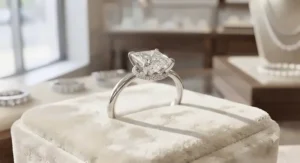
6. Angara Split Shank Princess-Cut Diamond Ring — platinum durability with everyday-wear detail
Angara’s split shank design sends the band into two thinner strands as it approaches the center stone, with diamond accents embedded along the platinum shank itself — that’s the standout feature, and it does more than look pretty. Platinum is roughly 40–60% denser than 14K white gold depending on alloy, which in practice means the prongs holding this princess cut’s corners are made of a metal that resists metal fatigue and prong-thinning far longer under daily wear. Here’s what the spec sheet won’t tell you but jewelers will: white gold prongs on a princess cut can thin out from repeated micro-flexing over 5–10 years of wear, occasionally loosening a corner’s grip, while platinum’s density resists that wear pattern significantly better — which is exactly why platinum is often recommended as the most protective metal choice for a shape with vulnerable corners. Angara includes a Certificate of Authenticity with eligible orders, a legitimate trust signal for a customizable, made-to-order piece. Aggregated reviewer sentiment on Angara’s split shank and side-stone lines consistently praises the craftsmanship-to-price ratio for platinum specifically, with the recurring caveat that platinum’s natural white-gray patina develops a soft matte finish over time — some buyers love that lived-in look, others prefer having it periodically re-polished.
Pros:
- ✅ Platinum offers superior long-term corner-prong durability
- ✅ Split shank design adds visual detail without clutter
- ✅ Includes Certificate of Authenticity
Cons:
- ❌ Platinum costs meaningfully more than white gold at the same design
- ❌ Develops a matte patina that some buyers prefer to have re-polished
Priced roughly $1,900–$2,700, this is the pick for buyers who’ve decided durability is worth paying for now rather than repairing for later.
7. 1 Carat Platinum Princess Cut Solitaire — the premium, timeless anchor piece
A single 1-carat princess cut natural diamond (commonly listed around J color, SI2 clarity, “very good” cut) set in solid platinum is about as classic as an engagement ring gets, and the standout feature is simply the metal-to-stone combination itself — platinum’s density and hypoallergenic properties paired with a full-carat center stone. On paper, J color sits just past the “near colorless” range into a faint warmth that’s typically undetectable to the naked eye once set, especially in a ring viewed at arm’s length rather than under a jeweler’s loupe; SI2 clarity means inclusions are likely visible under 10x magnification and occasionally faintly visible unaided, depending on the specific stone. What that combination means in practice is a buyer prioritizing carat size and metal quality over top-of-scale color and clarity grades — a completely reasonable trade-off, since color and clarity differences at this level are far less visually apparent than carat size and cut quality are. Reviewers of comparable platinum princess-cut solitaires consistently emphasize that the ring “photographs and wears heavier” than gold equivalents, a tactile quality many buyers specifically associate with platinum’s premium feel, alongside occasional notes recommending professional prong inspection annually given the corner-vulnerable shape.
Pros:
- ✅ Full 1-carat natural diamond center stone
- ✅ Solid platinum, hypoallergenic and highly durable
- ✅ Classic four-prong solitaire silhouette that never dates
Cons:
- ❌ J color and SI2 clarity sit mid-scale, not top-tier grades
- ❌ Highest price point in this roundup
At roughly $3,400–$4,200, this is the ring for buyers treating the purchase as a multi-generational heirloom rather than a starter piece.
Practical Usage Guide: Caring for Your Princess Cut Ring
Getting the ring is the easy part — keeping those sharp corners intact for the next fifty years is where a little know-how pays off. In the first 30 days, avoid gripping objects tightly (gym equipment, heavy grocery bags, car doors) until you’ve built the habit of noticing where your hand is; this is when most first chips happen, simply because new wearers haven’t adjusted their spatial awareness yet. Get the ring professionally inspected at the 6-month mark even if nothing feels loose — prong tension shifts slightly as metal settles, and catching it early is a five-minute fix instead of a lost-stone emergency.
For ongoing maintenance, clean your ring every one to two weeks using warm water, a few drops of mild dish soap, and a soft-bristled toothbrush worked gently around the corners and under the setting, where lotion and soap residue tend to build up and dull the sparkle fastest. Avoid ultrasonic cleaners at home if your stone is moissanite set with any fracture-filled or treated diamonds nearby, since vibration can occasionally stress existing inclusions — a jeweler can advise safely on your specific stone. Rhodium-plated white gold settings (common on budget and mid-tier picks above) benefit from re-plating roughly every 12–18 months with daily wear, restoring both color and a fresh protective layer over the prongs.
🔍 Ready to start comparing options for real? Scroll back up to the comparison table and shortlist two or three before moving to the next section.
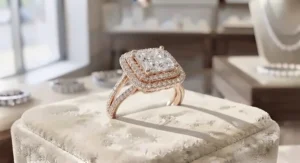
Real-World Scenarios: Which Ring Fits Your Life
The budget-conscious first-timer. She’s 24, works retail, and her partner has $400 set aside. The EAMTI Princess Halo or the Dazzlingrock Collection Invisible Set both fit comfortably, with the halo edging out on sparkle-per-dollar and the invisible-set edging out on “real gold” bragging rights.
The active professional. He’s a nurse who’s on his feet twelve hours a shift, washing hands constantly. Durability and low snag-risk matter more than carat size here — the Angara Split Shank in platinum or the Houston Diamond District Solitaire in 14K white gold both hold up well to frequent hand-washing and glove use, and their four-prong or accented-shank designs keep the corners well protected.
The couple who wants maximum visual size on a tight timeline before a proposal trip. Time and size matter more than certification paperwork right now. The Charles & Colvard Moissanite ring delivers the biggest visual impact per dollar and typically ships faster than made-to-order certified pieces, making it the pragmatic pick under deadline pressure.
Buyer’s Decision Framework
If your top priority is staying under $500 no matter what, choose a cubic zirconia halo like the EAMTI Princess Halo, because the halo setting adds both sparkle and corner protection at the lowest possible price point.
If your top priority is maximum visual size for your budget, choose moissanite like the Charles & Colvard ring, because its refractive properties and DEW rating consistently outperform natural diamond on a dollar-for-dollar visual basis.
If your top priority is investment-grade resale and insurance value, choose a certified natural diamond like the Dazzlingrock IGI Certified Bridal Ring, because third-party documentation is what insurers and resale buyers actually rely on.
If your top priority is decades of daily-wear durability, choose platinum like the Angara Split Shank or 1 Carat Platinum Solitaire, because platinum’s density resists the prong fatigue that eventually affects gold settings on corner-vulnerable shapes.
How to Choose a Princess Cut Engagement Ring
- Start with setting, not stone. Because princess cut corners are the shape’s structural weak point, decide on V-prong, halo, or bezel protection before you fall in love with a specific carat weight — this filters your options down fast.
- Set your metal budget realistically. Sterling silver and gold plating run $150–$500, solid 14K gold runs $600–$2,400, and platinum starts around $1,900 and climbs quickly — know which tier you’re shopping before you start comparing carats.
- Decide diamond, lab diamond, or diamond alternative early. This single decision swings price more than almost any other variable, since moissanite and cubic zirconia can deliver two to four times the visual size for the same dollar amount.
- Prioritize cut quality over color and clarity. Because GIA doesn’t issue an overall cut grade for princess cuts the way it does for round brilliants, look for “very good” or “ideal” cut language and, where possible, in-person or high-resolution video review before buying.
- Ask for certification on anything over $1,000. IGI or GIA paperwork protects your insurance appraisal and resale value, and a legitimate seller will always have it available or be transparent about its absence.
- Check the return and warranty window before purchase. Ring sizing is genuinely hard to get right the first time, and a 30-day return policy with a documented accent-stone warranty (like Dazzlingrock’s) removes most of the financial risk.
- Common mistake to avoid: matching the wedding band after the fact. Buy or at least browse both rings together — princess cut corners can create uncomfortable rubbing against a mismatched band that wasn’t designed to sit flush beside a square profile.
Corner Chip Protection: Why It Matters More Than You Think
This is the single most important technical fact in this entire guide, so it deserves its own space. According to the Gemological Institute of America’s princess cut buying guide, the sharp pointed corners that give a princess cut its bold geometric look are also its most vulnerable point, and choosing a setting with four V-shaped prongs, eight split prongs (two per corner), or a full bezel is the standard way to keep those corners intact. Here’s the physics in plain terms: diamond is exceptionally hard (10 on the Mohs scale) but not indestructible — hardness measures scratch resistance, not impact resistance, and a 90-degree corner concentrates mechanical stress at a single point in exactly the geometry most prone to chipping from an everyday knock against a countertop or car door.
What most buyers overlook is that “prongs” isn’t a single category — a standard rounded prong barely touching a sharp corner offers meaningfully less protection than a V-prong shaped specifically to cradle that 90-degree angle. Below is a quick reference on how the major setting styles stack up.
| Setting Style | Corner Protection Level | Trade-Off | Best For |
|---|---|---|---|
| Standard 4-Prong | Moderate | Least metal, most light, least corner coverage | Careful wearers, occasional wear |
| V-Prong (4 or 8) | High | Slightly more visible metal at each tip | Daily wear, active lifestyles |
| Halo Setting | High | Adds visual size but more surface to clean | Budget buyers wanting protection + sparkle |
| Bezel Setting | Highest | Reduces light entry from the sides | Manual work, sports, hands-on jobs |
Reading across this table, the honest takeaway is that there’s no setting that eliminates risk entirely, but V-prongs, halos, and bezels each solve the corner problem in a genuinely different way — pick based on your daily hand use, not just which looks best in a product photo. A bezel is the safest choice for someone who works with their hands constantly, while a V-prong solitaire keeps the classic look with meaningfully better protection than a plain round-prong setting.
Princess Cut vs Round Cut Engagement Rings
Round brilliant remains the best-selling diamond shape in the U.S., largely because its 58-facet design is mathematically optimized for maximum light return, fire, and scintillation — it’s genuinely the brightest cut available, full stop. A princess cut trades a small amount of that total brilliance for a completely different visual signature: sharper, more geometric flashes of light rather than the round’s soft, all-over sparkle, plus a bold, architectural silhouette that a round stone simply can’t replicate. The practical trade-off buyers actually feel is corner vulnerability versus rounded durability — a round cut has no weak points comparable to a princess cut’s corners, which is part of why it remains the low-maintenance default choice.
| Factor | Princess Cut | Round Cut |
|---|---|---|
| Brilliance | High, geometric flashes | Highest, all-around sparkle |
| Price per carat | Typically lower | Typically higher |
| Durability | Corners need protective setting | No comparable weak point |
| Visual style | Bold, modern, architectural | Classic, universally safe |
The price gap in that table is worth dwelling on for a second: because the princess cut’s rectangular block shape is cut from more of the original rough diamond than a round brilliant (which loses more material carving out its curves), princess cuts often cost less per carat than a comparable round diamond of the same quality grade — meaning a shopper prioritizing size over shape flexibility can often stretch their budget further with a princess cut.
Carat Per Dollar: Getting the Most Value From Your Budget
“Carat per dollar” is really shorthand for a simple question: how much visible size and sparkle am I getting for each dollar spent? Natural diamonds carry a price premium tied to mining costs, rarity, and market positioning, especially past the 1-carat threshold where price per carat accelerates sharply due to rough-stone scarcity at larger sizes. Lab-grown diamonds are chemically and optically identical to mined diamonds but typically cost 30–50% less because they skip the mining supply chain entirely. Moissanite and cubic zirconia are diamond simulants — different materials entirely, not diamonds by any definition — and typically cost a fraction of even lab-grown diamond prices while still delivering serious visual brilliance, which is exactly why the FTC’s jewelry advertising guidance requires clear disclosure of exactly which category a stone falls into before a sale.
| Stone Type | Typical Price per Carat (Center Stone) | Value Verdict |
|---|---|---|
| Natural Diamond | $2,000–$8,000+ | Best long-term resale and insurance value |
| Lab-Grown Diamond | $800–$2,500 | Same material, meaningfully lower cost |
| Moissanite | $300–$600 | Best visual carat-per-dollar ratio |
| Cubic Zirconia | Under $50 | Lowest cost, shortest realistic lifespan |
Looking at that spread, the Charles & Colvard Moissanite ring from our roundup exploits exactly this gap — moissanite’s higher refractive index than diamond means it visually reads brighter and, at a glance, larger than its actual carat weight would suggest, which is precisely why moissanite has become the go-to pick for buyers chasing maximum visible size on a fixed budget. If long-term resale matters more to you than upfront visual size, a certified natural or lab-grown diamond remains the financially sounder long-game choice.
✨ Don’t Miss These Exclusive Deals!
🔍 Take your princess cut engagement ring search to the next level with the carefully compared options above. Click on any highlighted ring to check current pricing and availability. These picks will help you find an authentic, ring your partner will treasure for a lifetime!
Features That Actually Matter (And Those That Don’t)
What actually matters: cut quality (look for “very good” or “ideal” language, since GIA doesn’t grade princess cuts on its standard 0–10 cut scale the way it does round brilliants), corner protection style, metal purity (solid gold or platinum versus plating), and third-party certification on anything over roughly $1,000. These four factors drive both how the ring looks in five years and what it’s actually worth if you ever need to insure, resize, or resell it.
What matters far less than marketing suggests: exact color grade past “near colorless” (G–H color is visually indistinguishable from D–F to nearly everyone without a jeweler’s loupe and a white background), and “designer collection” branding on otherwise identical settings, which typically adds cost without adding durability or brilliance. Reviewers across nearly every brand in this roundup consistently report that once a ring is on the hand and viewed at normal conversational distance, differences of one or two color or clarity grades simply aren’t perceptible — the marketing emphasis on chasing the highest possible grade often outpaces what the human eye can actually register.
Princess Cut Engagement Rings for Different Buyers
For beginners shopping their first fine jewelry piece: stick with certified stones from established sellers (Dazzlingrock, Houston Diamond District) and don’t feel pressure to understand every grading nuance immediately — cut quality and setting protection matter more than mastering the full grading vocabulary on day one.
For budget-conscious couples: cubic zirconia and moissanite both deliver serious visual impact without the natural-diamond price tag, and neither should be treated as a “lesser” choice — they’re simply a different, transparent category of stone, provided the seller discloses it clearly.
For active, hands-on professionals: prioritize platinum and bezel or V-prong settings over thin gold prongs, since daily physical work is precisely the wear pattern that tests corner protection hardest.
For sentimental or heirloom-focused buyers: a certified natural diamond in platinum is the piece most likely to hold documented value and family significance across decades, making the higher upfront cost a genuinely different kind of purchase than the others in this list.
Frequently Asked Questions
❓ Are princess cut diamonds more likely to chip than round diamonds?
❓ Is a princess cut engagement ring cheaper than round?
❓ What does 'square modified brilliant princess' mean?
❓ How do I protect the corners on my princess cut ring?
❓ Is moissanite a good alternative to a princess cut diamond?
Conclusion
A princess cut engagement ring earns its popularity honestly — it delivers geometric, modern sparkle at a price point that often undercuts a comparable round diamond, without asking anyone to compromise on presence. The real decision isn’t diamond versus alternative or gold versus platinum in isolation; it’s matching setting protection and metal durability to how the ring will actually live on someone’s hand day to day. A desk job and gentle habits can make even a delicate round-prong solitaire practical, while an active lifestyle genuinely calls for the reinforced corners of a halo, V-prong, or bezel.
Across the seven rings compared here, there’s a legitimate option at nearly every price point: the EAMTI Princess Halo for a princess cut ring under $500, the Charles & Colvard Moissanite ring for the strongest carat per dollar value, and the 1 Carat Platinum Solitaire for buyers ready to invest in a lifelong piece. Whichever direction fits your budget and lifestyle, the corner-protection principle carries through every tier — get that right, and the rest of the decision becomes a matter of style, not risk. For further reading on making sure any jewelry description you encounter while shopping is accurate and non-deceptive, the FTC’s consumer jewelry guides are a genuinely useful reference before you buy.
✨ Found Your Favorite Yet?
🔍 Revisit the comparison table above, shortlist your top two picks, and check current pricing and availability before they change. The right princess cut engagement ring for your budget and lifestyle is on this list — go claim it! 💎
Recommended for You
- Oval Diamond Engagement Ring: 7 Stunning Picks for 2026
- Two Tone Oval Engagement Ring: 7 Stunning Picks for 2026
- Platinum Emerald Cut Ring: 7 Stunning Picks for 2026
Disclaimer: This article contains affiliate links. As an Amazon Associate, I earn from qualifying purchases. If you purchase products through these links, we may earn a small commission at no additional cost to you.
✨ Found this helpful? Share it with your friends! 💬🤗
