In This Article
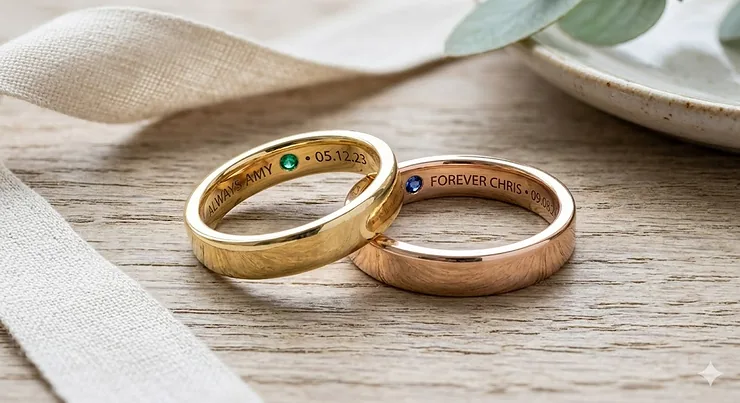
Jewelry has always spoken volumes without saying a word, but secret birthstone band designs take this concept to an entirely different level. Unlike traditional birthstone rings where gems announce themselves to the world, these specialized bands conceal meaningful stones on the interior of the ring—touching your skin while remaining invisible to everyone else. It’s an intimate form of personalization that’s gained serious traction in 2026, particularly among couples seeking alternative engagement rings and parents wanting to carry their children close.
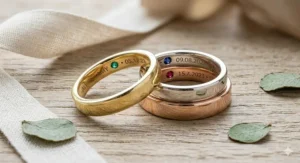
What most buyers overlook about secret birthstone bands is how they solve a common jewelry dilemma: you want something deeply personal, but you don’t necessarily want to advertise that sentiment to every person you shake hands with. The concept originated from traditional “surprise stones” that high-end jewelers have been setting inside wedding bands for decades, but it’s now accessible across every price point. According to the Gemological Institute of America, birthstone jewelry has surged 34% in the custom jewelry market since 2024, with hidden placements representing the fastest-growing segment.
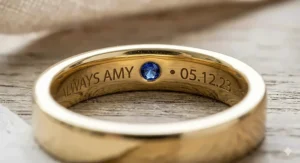
The mechanics are straightforward—a small birthstone (typically 1.5mm to 3mm) gets flush-set into the inside of a band, either beneath the center stone if there’s structural room, or along the interior wall. The stone sits against your skin, creating a physical connection that visible stones can’t replicate. For anyone who’s ever felt that standard birthstone jewelry reads as too sentimental or matchy-matchy for their style, this is your category.
Quick Comparison Table: Top Secret Birthstone Band Features
| Feature | Budget Range ($30-$80) | Mid-Range ($80-$200) | Premium ($200-$500+) |
|---|---|---|---|
| Material | Gold-plated brass, stainless steel | 925 sterling silver | 14K-18K gold, platinum |
| Stone Quality | Cubic zirconia | Lab-created gemstones, CZ | Natural gemstones, lab diamonds |
| Customization | Limited (pre-set colors) | Moderate (name engraving, stone selection) | Extensive (full custom placement, multiple stones) |
| Stone Placement | Interior band only | Interior + exterior options | Any location, flush-set or prong |
| Durability | 1-2 years regular wear | 3-5 years | Lifetime with maintenance |
| Best For | First-time buyers, gift testing | Daily wear, meaningful gifts | Heirloom pieces, wedding sets |
Looking at the comparison above, the mid-range sterling silver category delivers the best value-per-sentiment ratio in 2026. Budget options from brands like Bosvision handle casual wear beautifully, but if you’re planning to wear this daily for years, the jump to sterling silver is worth it—the plating on brass rings will eventually wear through where the stone sits, potentially loosening the setting. Premium options make sense if you’re incorporating this into a wedding set or want natural birthstones with verifiable hardness ratings for long-term durability.
💬 Just one click—help others make better buying decisions too! 😊
Top 7 Secret Birthstone Bands: Expert Analysis
1. SHEAISRS 3 Birthstone Custom Name Eternity Engagement Wedding Band
The SHEAISRS band stands out because it doesn’t force you to choose between visibility and personalization—you get both. This sterling silver ring features up to three birthstones that you select, with engraved names running along the interior band. The 18K gold plating over 925 sterling silver gives it a warm finish that doesn’t look budget, while the hypoallergenic, nickel-free construction means it won’t turn your finger green during summer humidity spikes.
What the spec sheet won’t tell you: the infinity design actually serves a structural purpose beyond aesthetics. That continuous loop reinforces the band where the stones sit, reducing the risk of loosening over time compared to simple flat bands. Each birthstone measures approximately 2.5mm, which is large enough to feel against your skin but small enough to avoid snagging on clothing when you remove the ring. The customization process requires you to specify exact birthstone months and names during checkout—there’s no default to fall back on, so plan accordingly.
This ring works best for couples who want a non-traditional engagement or promise ring that references their relationship privately. The three-stone setup typically represents “past, present, future” or can honor two partners plus a child. Customer feedback consistently mentions the engraving quality—it’s crisp and doesn’t fade, even after months of daily wear.
Pros:
✅ Full customization with multiple birthstones
✅ Quality sterling silver holds up to daily wear
✅ Thoughtful infinity design with structural benefits
Cons:
❌ Cannot be resized after customization
❌ Three-stone placement limits flexibility
Price Range: Around $60-$90 depending on gold choice | Best For: Couples seeking meaningful engagement alternatives
2. Muses Art Design Birthstone Eternity Band Ring (18K Gold Plated, Channel Set)
Muses Art Design built their reputation on stackable eternity bands, and this 18K gold-plated version delivers exactly what the price point promises: sparkle without the investment-level commitment. The channel-set crystal birthstones run continuously around the band—no gaps, no weak points. While these aren’t “secret” in the hidden-inside sense, many buyers customize these with birthstones and stack them with plain bands to partially conceal the gems, creating a semi-secret effect.
The channel setting deserves specific attention. Unlike prong settings where each stone sits in its own little metal cage, channel settings embed the stones into a continuous groove with metal walls on both sides. This protects the stones from accidental knocks—you’d have to genuinely try to dislodge one. The 18K gold plating over a base metal gives you that warm yellow-gold look, though expect the plating to thin slightly at high-contact points (inside palm area, where you remove rings) after 12-18 months of constant wear.
For anyone who rotates jewelry or saves special pieces for weekends and events, this is your entry point. The stackability means you can build a birthstone collection over time—add your partner’s stone this year, a child’s next year. Customer reviews highlight that the “luckiness” marketing around birthstones actually resonates with gift recipients, making this an unexpectedly popular Mother’s Day choice.
Pros:
✅ Secure channel setting protects stones
✅ Stackable design builds a collection
✅ Full eternity = consistent sparkle
Cons:
❌ Base metal limits long-term durability
❌ Plating requires eventual re-plating
Price Range: In the $30-$50 range | Best For: Stackers building a birthstone collection
3. Bosvision Muses Art Design Birthstone Eternity Band (Rhodium Plated, Sterling Silver Base)
This is the upgraded version of #2—same channel-set design, but built on a 925 sterling silver foundation with rhodium plating instead of basic gold plating over brass. Rhodium is worth understanding: it’s a platinum-group metal that jewelers plate over silver to prevent tarnish and add a bright, almost mirror-like finish. It won’t give you that yellow-gold warmth, but it also won’t tarnish in the back of your jewelry box for six months.
The sterling silver base changes the durability equation significantly. Where gold-plated brass might bend slightly if you catch it on a car door, sterling silver holds its shape. The channel-set birthstones sit more securely because the metal walls won’t compress as easily. Expect 3-5 years of regular wear before the rhodium plating thins enough to expose the silver underneath—at which point you can get it re-plated for around $30-$40, or just let it develop a softer matte silver finish.
The trade-off is weight. Sterling silver rings feel more substantial on your finger, which some people love (it’s a constant reminder it’s there) and others find distracting during the first week of wear. Customer feedback splits evenly on this—half mention the “quality feel,” half mention “getting used to the weight.”
Pros:
✅ Sterling silver durability for daily wear
✅ Rhodium plating resists tarnish long-term
✅ Re-plating option extends life indefinitely
Cons:
❌ Heavier feel takes adjustment
❌ Higher price than gold-plated alternatives
Price Range: Around $40-$70 | Best For: Daily wearers who want longevity without premium pricing
4. AIBAO Opal Eternity Rings for Women (October Birthstone Specialist)
If October is your birth month or you’re drawn to opal’s color-shifting properties, AIBAO built this ring specifically for that stone. The 7-stone eternity band uses created fire opal, which delivers the signature blue-green flash without the fragility issues that plague natural opal. Natural opal rates 5.5-6.5 on the Mohs hardness scale—softer than quartz, meaning it scratches easily. Created opal gets stabilized during the lab process, making it more suitable for rings you’ll actually wear.
The ring arrives in sizes 6-10, and the band width sits at 2.5mm—thin enough to stack, substantial enough to stand alone. What most buyers miss during purchase: opal requires different care than diamond or sapphire. It’s porous, meaning it can absorb lotions, soaps, and pool chlorine, which dull the play-of-color over time. Remove this before swimming, showering, or applying hand cream.
The “eternity band rings for women comes with an elegant jewelry box” detail matters more than it sounds—these ship ready to gift, no additional packaging needed. Customer reviews frequently mention using this as a “push present” or anniversary gift when October holds significance.
Pros:
✅ Specialized for opal birthstone lovers
✅ Created opal offers better durability
✅ Gift-ready packaging included
Cons:
❌ Opal requires more careful maintenance
❌ Limited to October birthstone specifically
Price Range: In the $50-$80 range | Best For: October birthdays or opal enthusiasts wanting durability
5. Daysilia 925 Sterling Silver Personalized Mothers Ring (1-6 Birthstones)
The Daysilia mothers ring solves the “too many birthstones” problem that traditional designs can’t handle. With capacity for up to six birthstones plus six engraved names, this accommodates larger families without looking like a kindergarten craft project. The heart-shaped design frames the stones, and the sterling silver construction means it holds up to the constant-on reality of mother’s jewelry.
Here’s what separates this from cheaper mother’s rings: the birthstones sit in individual prong settings within the heart, not glued into a pre-molded channel. That means if you lose a stone three years from now (it happens—prongs wear), a jeweler can replace just that stone without disturbing the others. The interior engraving goes on the inner band, maintaining the “secret” element since only the wearer sees the names.
The customization process requires specific attention. You select ring size (5-10), birthstone colors, and up to six names during checkout. Daysilia’s system doesn’t allow changes after order confirmation, so double-check spelling and birthstone months before clicking submit. Customer feedback consistently praises the “meticulous craftsmanship”—the engraving depth is uniform, stone settings align properly, and the polish doesn’t show buffing marks.
Pros:
✅ Handles up to 6 family members elegantly
✅ Individual stone settings allow future repairs
✅ Interior engraving keeps names private
Cons:
❌ No changes allowed after order submission
❌ Heart design may not suit minimalist styles
Price Range: Around $70-$120 depending on stone count | Best For: Mothers of multiple children wanting all birthstones present
6. CTIEIP Sterling Silver Personalized Birthstone Ring (10K-18K Gold Options)
CTIEIP offers what most brands in this price range avoid: genuine 10K, 14K, and 18K solid gold options alongside sterling silver. The price jump is substantial—sterling runs around $80, while 14K yellow gold pushes $300-$400—but you’re buying material that appreciates or holds value rather than plated metal that depreciates. The customization includes birthstone selection and name engraving in your choice of font.
The material choice changes how you think about this purchase. Sterling silver is jewelry; 14K gold is jewelry-as-investment. If you’re buying this for a milestone (25th anniversary, major birthday, retirement) where the piece should last decades, the gold option makes sense. The nickel-free, lead-free, hypoallergenic certification applies across all metal types, addressing the skin sensitivity concern that affects roughly 10-15% of jewelry wearers.
What the product page undersells: the “exquisite polishing process makes every detail smooth” actually refers to a specific finishing technique that rounds edges and prevents the sharp-corner feel that cheaper custom rings sometimes have where the engraving meets the band. Customer reviews from buyers who chose gold options mention that the weight difference is immediately noticeable—14K gold rings feel serious in a way that plated alternatives don’t.
Pros:
✅ Real gold options for long-term value
✅ Advanced polishing eliminates rough edges
✅ Hypoallergenic certification across all metals
Cons:
❌ Significant price variation between materials
❌ Gold options may exceed budget for many buyers
Price Range: $80 (sterling) to $300-$450 (14K gold) | Best For: Milestone gifts where material quality matters long-term
7. EVE’S ADDICTION Sterling Silver 3 Stone Infinity Simulated Birthstone Mother’s Ring
EVE’S ADDICTION built their business on customization infrastructure—they’ve been doing personalized birthstone jewelry since before it was a mainstream category. The 3-stone infinity swirl design positions a center 0.84-carat cubic zirconia birthstone flanked by two smaller 0.25-carat stones, for a total carat weight of 4.49. The infinity symbol wraps around all three stones, creating visual continuity that cheaper three-stone designs lack.
The simulated birthstones use cubic zirconia, which gets a bad reputation it doesn’t entirely deserve. CZ rates 8.25 on the Mohs scale—harder than actual topaz or emerald—and refracts light beautifully. The issue isn’t quality, it’s the “simulated” label triggering status anxiety in some buyers. If you care more about what the birthstone represents than its geological authenticity, CZ delivers 90% of the visual impact at 5% of the cost.
EVE’S ADDICTION includes dedicated customer service backed by 15 years of operation. That longevity matters in the custom jewelry space, where smaller operations sometimes vanish after a year or two, making warranty claims impossible. The gift box packaging is a step above standard—it’s an actual presentation box, not a white cardboard square with foam insert.
Pros:
✅ Established company with customer service history
✅ Infinity design provides structural reinforcement
✅ Presentation-quality gift packaging included
Cons:
❌ CZ stones may not satisfy natural-gem preferences
❌ Three-stone limit doesn’t work for larger families
Price Range: Around $70-$110 | Best For: Buyers prioritizing design and service over gem authenticity
How to Choose Your Secret Birthstone Band: A Decision Framework
The spectrum of secret birthstone band options creates choice paralysis for many buyers. Start by identifying your primary motivation—are you buying this because you want the emotional connection of having someone’s birthstone touch your skin, or because you like the aesthetic of a birthstone ring but want subtlety? That distinction determines everything else.
If emotional connection drives the purchase, prioritize placement over material. The inside-of-band setting puts the stone against your skin constantly, creating that physical reminder you’re after. In this case, even a budget gold-plated option delivers the core experience. The material upgrade to sterling silver or gold becomes about how long you want that connection to last without replacement.
For aesthetic buyers who want birthstone jewelry without the traditional “announcement” vibe, consider semi-secret designs where birthstones sit on the band but get partially concealed by stacking with plain bands. The Muses Art Design eternity rings work brilliantly for this—wear the birthstone band solo when you want it visible, stack it between plain bands when you want it subtle.
Material selection follows a simple hierarchy: if you’re trying the concept for the first time or buying for someone whose style you’re not 100% certain about, start with gold-plated options in the $30-$50 range. If this will be your only ring or you’re incorporating it into a wedding set, jump straight to sterling silver or solid gold. The middle ground—rhodium-plated sterling—hits the sweet spot for daily wear without premium investment.
Stone count matters differently for different relationships. Two birthstones = you and a partner. Three stones = couple plus a child, or past/present/future symbolism. Four to six stones = multiple children or extended family. The Daysilia mothers ring accommodates up to six without looking cluttered, while simpler two-stone designs like the SHEAISRS band keep the focus tight.
Size and fit become critical with non-resizable custom rings. Most brands in this category don’t resize after personalization because the engraving and stone placement get disrupted. Measure your current ring size using a jeweler’s sizing tool (the plastic ones on Amazon for $6 work fine), or visit a jewelry counter for professional measurement. If you’re between sizes, order up—adding a ring guard or sizing adjuster is easier than dealing with a too-small custom ring.
Real-World Scenario Guide: Matching Rings to Situations
The New Parent: You want to carry your baby’s birthstone but can’t handle anything that snags on onesies during 3 AM diaper changes. Choose the Bosvision rhodium-plated eternity band. The flush channel setting means zero snag risk, sterling silver won’t bend if you accidentally close the nursery door on your hand (it happens), and rhodium plating resists the constant hand-washing that new parents do. Budget: $40-$70.
The Anniversary Gift Giver: Your partner mentioned wanting something meaningful but “not too obvious” for your 10th anniversary. The CTIEIP personalized ring in 14K gold delivers milestone-appropriate material quality with inside engraving that keeps the sentiment private. Spring for the 14K over sterling—at 10 years, you’re buying something meant to last another 10+. Budget: $300-$450.
The Grandmother of Four: You want all grandchildren’s birthstones present without looking like you’re wearing a rainbow. The Daysilia 6-birthstone mothers ring frames all stones within a single heart design, and the interior engraving lists all names where only you see them. The sterling silver construction handles constant wear, and the individual prong settings mean you can replace a stone if one comes loose years from now. Budget: $100-$120.
The Minimalist Couple: Traditional engagement rings feel too performative, but you want some marker of commitment. Two SHEAISRS infinity bands with each other’s birthstones—you wear theirs, they wear yours. The infinity design reads as fashion jewelry to casual observers, but you both know the significance. Stack with plain bands if you want even more subtlety. Budget per person: $60-$90.
The First-Time Birthstone Buyer: You like the idea but aren’t sure if you’ll actually wear it beyond the initial novelty. Start with the Muses Art Design gold-plated eternity band at $30-$50. If you wear it constantly for six months, upgrade to the sterling silver version. If it sits in your jewelry box, you’re only out $40 and you learned something about your preferences.
Common Mistakes When Buying Secret Birthstone Bands
The biggest error buyers make is assuming “customizable” means “changeable.” Once you submit your birthstone selections and engraving text, most manufacturers start production immediately—there’s no 24-hour grace period to reconsider. The SHEAISRS, Daysilia, and CTIEIP rings all operate this way. Before clicking “order,” verify birthstone months (January = Garnet, February = Amethyst, etc.) using Wikipedia’s birthstone chart as a cross-reference. Confusing your partner’s birth month sounds absurd until you realize how easy it is to mix up August and October when you’re ordering in March.
Material misconceptions rank second. “Sterling silver” isn’t one single thing—925 sterling silver (92.5% pure silver, 7.5% copper alloy) is the quality standard, but some budget manufacturers use “sterling silver plated” over base metal, which is not the same. Look for “925 sterling silver” or the “S925” stamp confirmation in product descriptions. The Daysilia and CTIEIP rings explicitly state S925 stamping; Muses Art Design gold-plated versions use base metal, not sterling.
Ring size guessing destroys more custom orders than any other factor. The “I’m usually a 7” approach fails because ring size varies by ring width—a 7 in a thin 2mm band will feel tight in a wide 5mm band. The AIBAO opal ring at 2.5mm width and the Daysilia mothers ring at roughly 3mm will fit differently even if you order the same numerical size. Order a ring sizer or get professionally measured before customizing.
Ignoring stone hardness causes maintenance problems down the road. The Mohs hardness scale runs 1-10, with diamond at 10 and talc at 1. Daily-wear rings should use stones rated 7+ (sapphire, ruby, diamond, cubic zirconia) because they resist scratching from incidental contact. Softer stones like opal (5.5-6.5), pearl (2.5-4.5), or turquoise (5-6) will show wear patterns within months of regular use. The AIBAO opal ring addresses this with created opal that’s been stabilized, but it still requires more care than a sapphire band would.
Plating expectations need reality-checking. All plated rings (gold-plated brass, rhodium-plated silver) will eventually show wear at high-contact points. The inside of the ring where it slides over your knuckle, the area where your fingers touch when making a fist, and the palm-side bottom all experience friction that wears through plating. This isn’t a defect—it’s physics. Budget 12-18 months before replating becomes necessary for gold-plated options, 3-4 years for rhodium-plated sterling. Or accept the worn look as patina and character.
Secret Birthstone Bands vs Traditional Birthstone Rings
Traditional birthstone rings position gems on the exterior of the band, creating immediate visual recognition. The advantage is obvious: people see the stone, they understand the significance, and it starts conversations. The disadvantage is equally obvious: that visibility forces design compromises. A large birthstone on top of a ring impacts how you use your hand—it catches on clothing, bumps against objects, and creates a focal point that may not suit minimalist wardrobes.
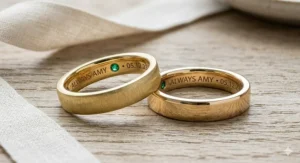
Secret birthstone bands invert the entire equation. By placing stones on the interior, you eliminate snag risk entirely—the stone never extends beyond the band’s profile. This makes them practical for people whose work involves their hands: healthcare workers, mechanics, artists, athletes, anyone who removes jewelry frequently. The trade-off is that the sentiment becomes purely private. Only you (and your jeweler) know it’s there.
The emotional register differs substantially. Traditional birthstone rings feel celebratory and public—this is the ring you give someone for their birthday and expect them to show their friends. Secret birthstone bands feel intimate and encoded—this is the ring that references something only you and the recipient understand. Neither approach is inherently better; they serve different relationship contexts.
Durability considerations shift depending on placement. Exterior stones require prong settings that can catch and bend; interior stones typically use flush settings that sit level with the metal surface. Flush settings are more secure long-term but require more metalwork skill to execute properly, which is why budget secret birthstone options ($30-$50 range) sometimes show quality variation in how smoothly the stone sits.
Price comparison gets complicated by customization variables. A traditional birthstone ring with a natural 6mm sapphire might run $400-$800, while a secret birthstone band with a 2mm lab-created sapphire costs $60-$150. But you’re comparing different purchase motivations—one is about displaying a quality gemstone, the other is about carrying a symbol privately. The value proposition isn’t equivalent.
Understanding Stone Placement Options and Limitations
Interior placement beneath the center stone works beautifully on engagement rings with adequate gallery height (the space between the center stone and your finger). A solitaire engagement ring with a 5mm+ gallery provides room for a 1.5-2mm birthstone without creating a gap that makes the main stone sit awkwardly high. Most jewelers position the secret stone slightly off-center toward the palm side, where it presses against your finger when you close your hand.
Side-of-band placement becomes necessary when structural components block the underside option. Pave bridges, hidden halos, or cathedral settings all occupy the space where a secret stone would otherwise sit. In these cases, the birthstone moves to the interior band wall, either at 3 o’clock and 9 o’clock positions (dual stones) or at 6 o’clock (single stone toward palm). The SHEAISRS infinity band uses this approach—stones sit along the interior wall within the infinity curve.
Multiple stone configurations require mathematical planning that most buyers skip. If you want four birthstones spaced evenly around the interior of a size 7 ring, each stone needs roughly 13-14mm of space between them to maintain balance. Exceed that stone count and they start crowding, creating bulges that make the ring uncomfortable. The Daysilia 6-birthstone ring solves this by grouping stones within a heart frame rather than distributing them around the entire circumference.
Flush-set versus prong-set represents a technical choice with practical consequences. Flush settings embed the stone into the metal with only the top surface visible—this is what creates that smooth, no-snag interior feel. Prong settings use small metal claws to hold the stone, which sit slightly proud of the surface. Flush is more secure and comfortable; prong is easier to repair if a stone comes loose. Most secret birthstone bands use flush settings for comfort.
Setting limitations exist based on band width. You cannot flush-set a 3mm stone into a 2mm band—the math doesn’t work. Minimum band width typically runs 1mm wider than stone diameter, so a 2mm stone needs a 3mm band, a 3mm stone needs a 4mm band. The AIBAO opal ring at 2.5mm band width uses smaller stones accordingly. Attempting to force oversized stones into thin bands creates structural weak points where the metal can crack.
Price Range Analysis: What You’re Actually Paying For
The $30-$50 tier buys you the concept and appearance, not longevity. Gold-plated brass or stainless steel construction with cubic zirconia birthstones delivers visual impact for 12-24 months of regular wear before plating shows significant wear or stones loosen. This is your testing ground—if you wear it constantly and love it, upgrade later. If it sits in your drawer, you invested minimally in learning your preferences. The Muses Art Design gold-plated eternity band lives here.
The $50-$120 tier represents the value sweet spot for most buyers. Sterling silver construction with rhodium or gold plating, lab-created birthstones, and professional customization services. You’re paying for material that maintains appearance for 3-5 years, settings that hold stones securely, and engraving that won’t fade. The Bosvision rhodium-plated band, Daysilia mothers ring, and EVE’S ADDICTION infinity ring all occupy this range. This is where you should land if this ring will be daily wear.
The $120-$300 tier introduces either higher-grade sterling silver with intricate design work, or entry-level solid gold options (10K). The CTIEIP sterling option at the lower end ($80-$120) competes with basic 10K gold bands at the higher end ($250-$300). Your choice depends on whether you prioritize design complexity or base material value. Sterling with intricate engraving looks more impressive initially; 10K gold holds value better over decades.
The $300-$500+ tier is solid gold territory (14K-18K) with natural gemstone options. You’re paying for material that appreciates or holds value, gemstones with verifiable authenticity, and craftsmanship that supports resizing or stone replacement decades later. The CTIEIP 14K gold option sits here. This tier makes sense for heirloom pieces, wedding sets, or milestone anniversaries where the jewelry should outlive you.
Hidden costs appear in maintenance and customization. Most bands in the under-$120 range cannot be resized after production—the engraving and stone placement get disrupted. If your ring size changes (pregnancy, weight fluctuation, aging), you’re looking at a new ring, not a $30 resize job. Budget sterling options might require rhodium replating every 3-4 years at $30-$50 per service. Gold plating over brass needs more frequent attention at similar cost.
Long-Term Care and Maintenance Requirements
Sterling silver birthstone bands require more active maintenance than gold alternatives. Silver tarnishes when exposed to sulfur compounds in air pollution, rubber, wool, and certain foods (eggs, onions, mayonnaise). Store your ring in an anti-tarnish cloth or sealed bag when not wearing it. When tarnish appears, use a silver polishing cloth rather than liquid dips—the liquid can seep behind flush-set stones and loosen the adhesive or setting.
Rhodium plating on sterling silver creates a protective barrier that delays tarnish for years, but it wears away at friction points. When you start seeing yellowish or grayish areas where the white rhodium has worn through to expose the silver underneath, you have two options: live with the two-tone look (many people like this), or get it replated. Any jeweler offering rhodium plating can handle this; it’s a standard service. Expect 3-5 days turnaround and $30-$50 cost depending on your location.
Gold-plated brass or base metal rings need gentler handling. The plating is thinner than rhodium plating on sterling (typically 0.5 microns versus 1-2 microns), so it wears faster. Remove these rings before washing dishes, showering, swimming, or applying lotion. The chemicals in soaps and pool chlorine accelerate plating breakdown. When the brass shows through, replating is possible but often costs nearly as much as buying a new ring in this price tier.
Birthstone-specific care varies by gem type. Cubic zirconia and lab-created sapphire/ruby handle everything—they’re durable enough for daily wear without special precautions. Natural softer stones like opal, pearl, or turquoise require removal before any activity involving water or chemicals. The AIBAO opal ring’s created opal is more stable than natural, but still benefits from removal during handwashing or showering.
Prong settings (like the Daysilia mothers ring) need annual inspections to ensure prongs haven’t bent or loosened. Any local jeweler can check this in 30 seconds—they look at the prongs under magnification and test whether they’re holding the stone securely. If a prong is loose, retipping costs $20-$40 per stone. Flush settings are more secure overall but harder to repair if the stone does come loose, since the entire setting area needs rework.
Sizing and Fit Considerations for Non-Resizable Rings
Most secret birthstone bands cannot be resized after customization without disturbing the interior engraving or birthstone placement. This makes accurate sizing critical before ordering. Professional measurement at a jewelry counter remains the gold standard—they use metal sizers in half-size increments and can account for knuckle size versus base-of-finger size (these often differ by a full size).
The knuckle-versus-base consideration matters especially for people with prominent knuckles. The ring needs to clear your knuckle to get on, but shouldn’t spin loosely once it’s past the knuckle and sitting at the base of your finger. If there’s a full size difference, order for your knuckle size and plan to wear sizing adjusters (small plastic or metal inserts) to prevent spinning. The alternative is living with a ring that won’t come off easily.
Temperature affects ring fit more than most buyers anticipate. Your fingers swell in heat and shrink in cold. A ring that fits perfectly at room temperature might feel tight during summer outdoor activities or loose during winter walks. If you live in a climate with significant seasonal variation, try sizing mid-range—order when outdoor temps are 60-70°F, not during peak summer or winter.
Band width influences how a ring fits even at the same numerical size. A 5mm wide band covers more finger real estate than a 2mm thin band, creating more friction and a tighter feel. If you’re ordering a mothers ring (typically 3-4mm width) and usually wear thin stackable bands (2mm), you might need to size up a quarter or half size despite being the same “ring size” numerically.
The between-sizes dilemma happens frequently. If you measure at exactly 6.75 using a sizing tool, do you order size 6.5 or 7? General guidance: if the ring will be daily wear and you tend toward warmer environments, size up (order 7). If it’s occasional wear and you prefer snug fits, size down (order 6.5). Most manufacturers offer half sizes; verify this before assuming 6.5 exists for your chosen model.
❓ Frequently Asked Questions About Secret Birthstone Bands
❓ Can I resize a secret birthstone band later if my finger size changes?
❓ How long do gold-plated secret birthstone bands maintain their finish before showing wear?
❓ What birthstone colors represent each month, and can I choose alternative stones?
❓ Are lab-created birthstones as durable as natural stones in daily-wear rings?
❓ Can I add more birthstones to my ring years later if I have additional children?
Conclusion: Finding Your Perfect Secret Birthstone Band
The secret birthstone band category has evolved from a niche custom jewelry option into a mainstream alternative for people who want meaningful personalization without external display. The emotional appeal is straightforward: carrying someone’s birthstone against your skin creates a tangible connection that visible jewelry can’t replicate, while the hidden placement keeps that sentiment private and protected from the inevitable “what does your ring mean” small talk.
Your decision path should start with relationship context, not metal type. Are you marking a romantic relationship (SHEAISRS two-stone infinity band), honoring multiple children (Daysilia 6-birthstone mothers ring), or testing the concept before committing to premium materials (Muses Art Design gold-plated eternity band)? The relationship determines appropriate stone count and placement, which then dictates which specific models work structurally.
Material selection follows relationship timeframe. If this ring represents something you expect to wear for decades—a marriage, a family bond, a memorial tribute—invest in sterling silver minimum, solid gold ideally. The CTIEIP 14K gold option or Bosvision rhodium-plated sterling deliver longevity that justifies their higher price points. If you’re unsure whether you’ll wear this long-term, or buying for someone whose style you’re guessing at, budget options provide a low-risk entry point.
The intimacy of secret birthstone bands makes them particularly powerful for situations where visible sentiment jewelry would feel performative or inappropriate. Healthcare workers who can’t wear prominent rings during patient care, minimalists who avoid statement jewelry, couples in non-traditional relationships who want private rather than public markers—these are the contexts where hidden birthstone placement solves a real problem rather than just offering an aesthetic alternative.
Consider this purchase a long-term emotional investment rather than a fashion accessory. The value isn’t in resale potential or gemstone authenticity—it’s in the daily physical reminder that a specific person or relationship exists. That’s worth getting right the first time, which means measuring accurately, selecting materials appropriate to your wear patterns, and choosing stone count that accommodates current reality rather than aspirational scenarios.
Recommended for You
- 7 Best Hidden Inscription Rings That Keep Secrets Close 2026
- 7 Best Geometric Pattern Rings That Transform Your Style (2026)
- Hand Carved Wedding Band: 7 Best Artisan Rings 2026 💍
Disclaimer: This article contains affiliate links. As an Amazon Associate, I earn from qualifying purchases. If you purchase products through these links, we may earn a small commission at no additional cost to you.
✨ Found this helpful? Share it with your friends! 💬🤗
