In This Article
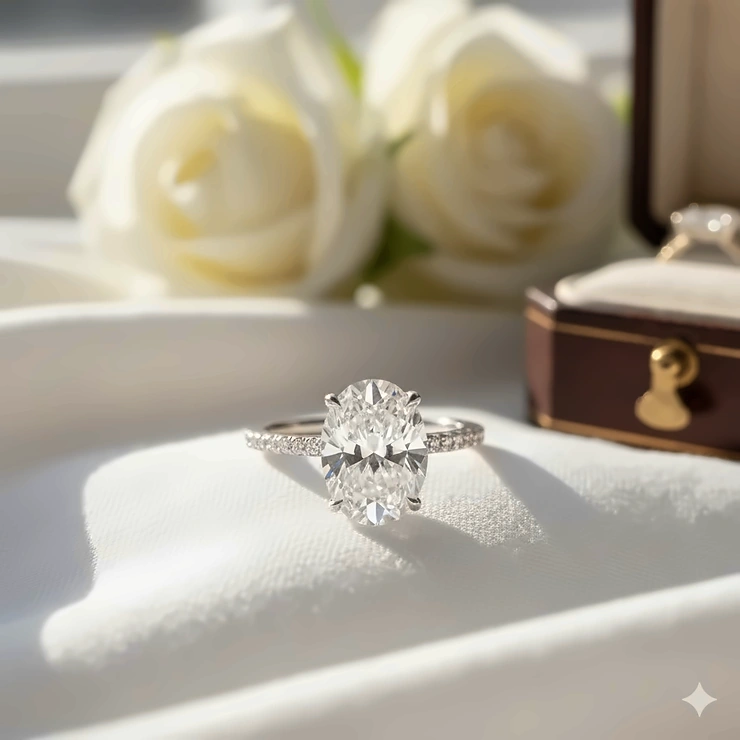
A 5 carat oval diamond ring is an engagement or statement ring built around a single oval-cut center stone weighing roughly five carats. The elongated outline makes the diamond look larger than a round of equal weight, and it visually lengthens the finger. It is one of the biggest looks in fine jewelry.
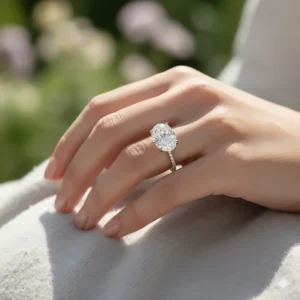
Here’s the thing about five carats: it’s less a purchase than a decision with consequences. The stone is big enough to be noticed across a dinner table, and the price curve around it is steep enough to rattle a spreadsheet. That’s exactly why the 5 carat oval diamond ring deserves more than a quick scroll through product grids.
This guide cuts through the noise. We’ll look at seven real rings, from lab-grown solitaires to a natural GIA-certified stone, and explain what each spec means once the ring is on an actual hand. We’ll also cover where the 5 carat oval diamond ring price lands in 2026, why lab-grown has changed the math, and how to dodge the bow-tie trap that catches first-time oval buyers.
One quick framing note. Oval diamonds are fancy shapes, and GIA’s oval diamond guide points out that many buyers favor a length-to-width ratio between 1.30 and 1.50. Keep that range in your back pocket, because it will matter in nearly every section below.
Everything here is based on spec sheets, retailer listings and published market data, not hands-on testing. Prices appear as ranges only, so check current pricing before you buy.
Quick Comparison: 5 Carat Oval Diamond Ring Options at a Glance
| Ring | Center Stone | Setting | Price Range (check current price) | Best For |
|---|---|---|---|---|
| Mayors Lab Grown 5.00cttw Oval Solitaire (Platinum) | 5.00 ct lab-grown, IGI report, D-F, VS | Platinum solitaire | Premium lab-grown tier | Purists who want a true solitaire |
| Grown Brilliance Paso Twist | 5 ct lab-grown oval, IGI, E VS1 or D VVS | 14K gold, twisted marquise accents | Roughly $5,500-$8,000 | Value-focused buyers wanting extra sparkle |
| Grown Brilliance Miranda | 5 ct lab-grown oval, IGI, E VS1 or D VVS | 14K gold, pear and baguette accents | Roughly $6,000-$8,500 | Vintage-leaning, art-deco fans |
| Grown Brilliance Anthem | 5 ct lab-grown oval, IGI, D VVS | 14K gold, floral side stones | Around $7,000-$7,500 | Romantics who like botanical designs |
| Friendly Diamonds Lauren Three-Stone | 5 ct lab-grown oval, IGI, FG VS1-VS2 | 14K white gold, emerald-cut sides | Check current price | Three-stone symbolism on a budget |
| Filigree Jewelers 5.03 ct Natural Oval | 5.03 ct natural, GIA, L SI2 | 14K yellow gold collet | $50,000-$60,000 range | Natural-diamond buyers who like warm gold |
| 1stDibs 5 Carat Oval J/VS1 Hidden Halo Pavé | 5 ct oval, J, VS1 | Hidden halo pavé | Price on request / varies by seller | Buyers wanting a halo-style natural look |
The table splits cleanly into two camps. The lab-grown rings sit at a small fraction of the natural option’s cost, while the Filigree Jewelers 5.03 ct Natural Oval commands a price tier of its own, partly because natural stones above five carats carry a rarity premium. If you’re weighing the Grown Brilliance Paso Twist against the Grown Brilliance Miranda, the real difference is design personality rather than stone quality, since both list a five-carat IGI-certified oval center.
Budget buyers should note that the Friendly Diamonds Lauren Three-Stone lists a lower color and clarity band (FG, VS1-VS2), which is usually a smart trade at this size, because the stone is large enough to hide small inclusions.
💬 Just one click — help others make better buying decisions too!😊
Top 7 5 Carat Oval Diamond Rings: Expert Analysis
1. Mayors Lab Grown 5.00cttw Oval Solitaire Engagement Ring — the purist’s platinum solitaire
This is the cleanest expression of a 5 carat oval solitaire diamond ring on our list. The retailer lists a 5.00 carat lab-grown oval with an IGI report, D-F color and VS clarity, offered in platinum and 18K yellow gold (model numbers MLR13071P and MLR13071WY).
Those specs translate neatly. D-F color sits in the colorless range, meaning no visible warmth even in a platinum setting that reflects every hint of tint. VS clarity means any inclusions are minor under magnification, which is more than adequate at this size. Platinum matters too: it’s dense and holds heavy stones securely, which is reassuring for a diamond this big.
On the analytical side, a solitaire puts all the pressure on the diamond’s proportions. There’s no halo to disguise a shallow bow-tie or a lopsided outline. Request the stone’s length-to-width measurements and a video before committing. Based on the spec comparison, this ring suits someone who values restraint and wants a 5 carat solitaire oval diamond ring to look effortless.
I couldn’t verify a meaningful pool of independent customer reviews for these exact model numbers, so I won’t characterize buyer sentiment.
Pros:
- ✅ Platinum option handles heavy center stones securely
- ✅ Colorless D-F range with VS clarity
- ✅ True solitaire keeps the focus on the diamond
Cons:
- ❌ Bow-tie has nowhere to hide in this design
- ❌ Luxury-retailer pricing sits above other lab-grown options
Price: check current price; expect the premium end of the lab-grown market. Value verdict: strong for solitaire purists, less so if you want maximum stone for the money.
2. Grown Brilliance Paso Twist — twisted marquise accents for extra sparkle
The Grown Brilliance Paso Twist pairs a 5 carat oval lab-grown center (IGI certified, offered as E VS1 or D VVS) with six marquise side stones totaling about 0.48 carats. The band is 2.2 mm wide, and the ring sits roughly 7.9 mm above the finger. It comes in 14K white, yellow and rose gold, made to order.
Those numbers have real consequences. A 7.9 mm ring height is on the taller side, which suits a ring you’ll wear as a showpiece but may snag on sleeves or gloves during daily wear. The twisted band with marquise accents echoes the oval’s elongated shape, so the ring reads as one cohesive design.
Be clear on what this is: a side-stone ring, not a pure solitaire. If you searched for a 5 carat oval diamond ring solitaire, this will add visual bulk beyond the center stone. For many buyers that’s a feature, because accents catch light from the side and mask a slight bow-tie.
What the spec sheet won’t tell you is how the pricing tiers work. The E VS1 version sits meaningfully below the D VVS version, and at five carats the visual difference between them is minimal.
Pros:
- ✅ E VS1 option delivers excellent value at this size
- ✅ Accent stones add sparkle and soften the bow-tie
- ✅ Available in white, yellow and rose gold
Cons:
- ❌ Taller profile may catch on clothing
- ❌ Made-to-order timelines delay delivery
Price: roughly $5,500-$8,000 depending on grade and metal. Value verdict: one of the strongest values here if you want a lab-grown stone with design interest.
3. Grown Brilliance Miranda — pear and baguette accents with vintage flair
The Grown Brilliance Miranda takes the same five carat IGI-certified lab-grown oval center and flanks it with pear and baguette side stones totaling roughly 0.50 carats, for a total weight near 5.5 carats. At about 7.6 mm above the finger, it sits slightly lower than its siblings.
That slightly lower profile is worth noting. A few tenths of a millimeter can separate a ring that tolerates daily errands from one that demands careful handling. The baguettes give the shoulders a tailored, art-deco feel that contrasts with the oval’s soft curves.
On analysis, this is the right pick for someone who loves vintage jewelry but wants modern lab-grown pricing. Because baguette accents are straight-edged, they also frame the oval with a crisp geometry that makes the center look especially soft by contrast, an optical trick that flatters larger stones.
Reviewer data was thin: I couldn’t verify a robust set of independent reviews for this specific listing, so I’m leaving customer sentiment out rather than guessing.
Pros:
- ✅ Art-deco accents frame the oval distinctively
- ✅ Slightly lower profile than comparable side-stone rings
- ✅ Choice of E VS1 or D VVS center grades
Cons:
- ❌ Baguettes are more prone to chipping than rounds
- ❌ Busier look than a classic solitaire
Price: about $6,000-$8,500 range. Value verdict: good for vintage-minded buyers; skip it if you want a minimalist look.
4. Grown Brilliance Anthem — a floral design for romantics
The Grown Brilliance Anthem is the most decorative ring here. A 5 carat D VVS lab-grown oval (IGI certified) is set among round and marquise side stones that form a petal-like arrangement, for roughly 5.4 carats total. It’s the tallest of the three Grown Brilliance designs, at about 8.4 mm above the finger.
That height has trade-offs. It gives the ring dramatic presence and lets light enter the pavilion from more angles, but it also raises the stone’s center of gravity, which can make it spin on a loose-fitting finger. Pay extra attention to sizing, especially in warm weather when fingers swell.
My read: this ring suits someone who finds a plain solitaire a bit austere. The side stones create the impression of a larger, more elaborate ring without changing the center diamond. If you’re comparing it against the Grown Brilliance Paso Twist, the Anthem is the more ornamental choice while the Paso is the more streamlined one.
Customer-review sentiment for this specific model wasn’t verifiable in my research, so I’m sticking to specs.
Pros:
- ✅ D VVS grade center for maximum color purity
- ✅ Floral side stones add visual width
- ✅ Distinctive design stands apart from standard halos
Cons:
- ❌ Tall profile can spin on a loose fit
- ❌ Intricate detailing needs more careful cleaning
Price: around the $7,000-$7,500 range. Value verdict: fair for the design, but the D VVS grade is more than most eyes can distinguish.
5. Friendly Diamonds Lauren Three-Stone — three-stone symbolism at a gentler cost
The Friendly Diamonds Lauren Three-Stone is listed as an IGI-certified 5 carat oval lab-grown diamond in 14K white gold, flanked by emerald-shaped side stones, with a stated quality band of FG color and VS1-VS2 clarity.
The grading band is the interesting part. FG color is still colorless to near-colorless for practical purposes, and VS1-VS2 is the range Whiteflash itself recommends for five-carat diamonds, because inclusions at this level are rarely visible without magnification. In other words, this ring aims for the sweet spot instead of chasing the top of the grading scale.
Emerald-cut side stones are a smart pairing. Their long, flat facets create a “hall of mirrors” effect that contrasts with the oval’s brilliant sparkle, so the three stones read as a distinct trio instead of one blurry cluster.
The retailer listing showed no customer ratings yet, so there’s no review data to summarize. That’s a reason to confirm the return policy before buying.
Pros:
- ✅ FG VS1-VS2 band is a practical value zone
- ✅ Emerald-cut sides contrast nicely with the oval
- ✅ Three-stone design carries symbolic meaning
Cons:
- ❌ No customer ratings were available at research time
- ❌ Exact grade can vary within the listed band
Price: check current price. Value verdict: promising for budget-minded shoppers, with the caveat of limited review history.
6. Filigree Jewelers 5.03 ct Natural Oval Solitaire — the natural-diamond benchmark
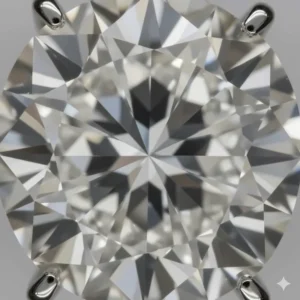
This is our natural-diamond reference point. The listing describes a 5.03 carat GIA-certified natural oval, L color, SI2 clarity, in a 14K yellow gold collet setting with a 2.4 mm band. Measurements are listed as 14.27 x 9.76 x 5.89 mm.
Run the math and the stone’s character emerges. Dividing 14.27 by 9.76 gives a length-to-width ratio of roughly 1.46, right inside the popular 1.30-1.50 range, and the depth works out to about 60 percent. That’s a well-proportioned oval on paper. The L color is noticeably warm, but pairing it with yellow gold is a smart move: the metal blends with the stone’s tint instead of exposing it.
This is where the 5 carat diamond ring oval conversation gets real. Natural stones at this weight carry a premium that lab-grown alternatives simply don’t. You’re paying for geological rarity, not just appearance. The seller lists a 7-day return policy and complimentary first resizing, but the page showed the item as sold out, so treat it as a benchmark rather than guaranteed inventory.
Pros:
- ✅ GIA-certified natural stone with listed measurements
- ✅ Ratio near 1.46 sits in the popular range
- ✅ Yellow gold complements the L color
Cons:
- ❌ SI2 clarity may show inclusions to careful eyes
- ❌ Listing showed sold out at research time
Price: roughly the $50,000-$60,000 range. Value verdict: reasonable for natural, but the price gap versus lab-grown is hard to ignore.
7. 1stDibs 5 Carat Oval J/VS1 Hidden Halo Pavé Engagement Ring — natural stone, quiet halo
This listing pairs a five carat oval diamond graded J color and VS1 clarity with a hidden halo of pavé diamonds beneath the center stone. The seller sits on the 1stDibs marketplace, so exact details can vary by dealer.
A hidden halo is a clever design choice. Seen from the top, the ring looks like a classic solitaire. From the side, a thin line of pavé sparkle appears beneath the center stone. It adds glitter without competing with the oval’s face-up view. J color is near-colorless, and VS1 clarity is a very safe grade at five carats.
Analysis-wise, this is the natural-stone option for buyers who want something close to the Filigree Jewelers 5.03 ct Natural Oval Solitaire but with a bit more shimmer. Because the listing didn’t show a price or measurements in the data I reviewed, confirm the length-to-width ratio and request a certificate before buying.
I couldn’t verify marketplace reviews tied to this specific listing, so there is no sentiment to report.
Pros:
- ✅ J/VS1 grading is a balanced, safe pairing
- ✅ Hidden halo adds sparkle without clutter
- ✅ Marketplace sellers often offer negotiable terms
Cons:
- ❌ Price and measurements require direct inquiry
- ❌ Details vary by seller, so verify everything
Price: varies by seller; natural five-carat ovals commonly fall in the tens of thousands. Value verdict: promising, but only after you confirm the numbers.
How to Choose a 5 Carat Oval Diamond Ring
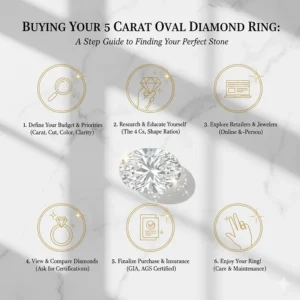
Choosing an oval 5 carat diamond ring is easier with a clear sequence. Work through these steps in order.
- Decide lab-grown or natural first. This single choice changes the budget by tens of thousands of dollars, so settle it before comparing anything else.
- Pick a length-to-width ratio. GIA notes many buyers prefer 1.30 to 1.50. Lower ratios look rounder; higher ratios look slimmer and more dramatic.
- Examine the bow-tie. The dark shadow across the center is unavoidable to some degree, so choose a stone where it stays faint. Ask for a video in daylight.
- Balance color and clarity. For lab-grown, E-G color with VS1-VS2 clarity is a strong target. For natural, J-K can work in yellow gold.
- Check the certificate. Prefer GIA or IGI reports, and confirm the report number matches the stone.
- Match the setting to the stone. A five-carat oval needs strong prongs or a secure collet, which matters more than ornamentation.
- Confirm return and resizing terms. At this price, a short return window is a risk you shouldn’t accept casually.
5 Carat Oval Diamond Ring Price: What It Really Costs in 2026
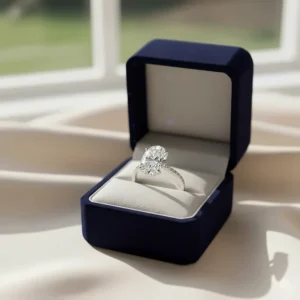
The 5 carat oval diamond ring price depends on three things more than any others: natural or lab-grown, the grading, and the setting.
For context on the natural side, Brilliant Earth’s 2026 price guide estimates a five carat natural diamond ring may run from about $29,000 to over $215,000, while a lab-grown version may run from about $4,000 to $72,000. Those wide gaps are real. Market tracker CaratRadar showed five carat natural ovals ranging from low four figures to over $200,000 in early 2026, and its averages shifted from roughly $54,000 to over $110,000 depending on the snapshot and which listings were included. Treat averages cautiously.
On the lab-grown side, the picture is more stable but declining. One price index showed lab-grown oval prices falling about 21 percent over the past year, which is good news for buyers and a reminder not to treat lab-grown stones as long-term stores of value.
The five-carat mark itself matters, too. Whiteflash notes that 5.00 carats is a “magic number” where price per carat jumps. That’s why shopping a 4.9-carat oval can save real money with almost no visible difference. Oval stones are also forgiving because their elongated shape spreads weight across a larger surface area.
In plain terms: for a typical lab-grown 5 carat oval diamond ring price, expect roughly $5,000-$10,000 for well-graded stones in gold settings, and tens of thousands for natural. Always check current price before you commit.
Lab-Grown vs. Natural: Which 5 Carat Diamond Ring Oval Wins?
Let’s be direct. A lab-grown diamond is chemically the same as a natural one. The FTC removed the word “natural” from its definition of diamond in 2018, and JCK’s explainer on the FTC Jewelry Guides notes that lab-grown stones have essentially the same optical, physical and chemical properties as mined diamonds. The difference is origin, rarity and resale.
Where lab-grown wins: price, availability of high grades, and the ability to buy a 5 carat diamond ring oval in D-E color without a five-figure premium. A buyer with a fixed budget can often get a bigger, better-graded stone.
Where natural wins: rarity, tradition and, for some buyers, emotional meaning. Natural stones in this size are geological outliers, and that rarity is what the price reflects.
What about resale? Neither option is a guaranteed investment. Lab-grown prices have been falling, and natural stones typically resell below retail. If you’re buying for the ring itself rather than the asset, lab-grown is the more logical choice.
A practical compromise: some buyers choose lab-grown to maximize size and grade, then spend the savings on a better setting and insurance. Only you can decide which story matters more.
5 Carat Oval Solitaire Diamond Ring: Why Simplicity Is Hard
A 5 carat oval solitaire diamond ring looks effortless, but it’s the most demanding design to get right. With no accent stones, the center diamond carries the whole performance.
Prong choice. Four prongs show more of the stone and make it look larger, while six prongs offer extra security. For oval stones, prongs at the narrow ends are the most vulnerable, so consider V-tip or reinforced ends.
Setting height. A lower setting is more practical for daily wear. The Filigree Jewelers 5.03 ct Natural Oval Solitaire listing shows a height of about 6.2 mm above the finger, which is modest for a stone this size.
Metal. Platinum is dense and holds its shape under load. Yellow gold flatters warmer stones, and white gold suits colorless ones.
Bezel or collet. A collet setting, like the one on the Filigree ring, wraps the stone in metal for added protection, at the cost of hiding some of the diamond’s edge.
For anyone searching for a 5 carat solitaire oval diamond ring, the honest advice is this: choose proportions first and style second. A well-cut oval in a plain setting beats a mediocre oval in an elaborate one every time.
Features That Actually Matter (And Those That Don’t)
What matters:
- Length-to-width ratio. It defines the silhouette more than any single spec. GIA lists 1.33 to 1.66 as an optimal range for ovals in its fancy shape guidance, though personal taste decides.
- Bow-tie intensity. GIA notes that you should see some bow-tie in any oval, but a well-cut stone keeps it minimal. Critically, GIA doesn’t grade it on the report, so you must judge it with your own eyes.
- Symmetry and shoulders. Look for even, rounded shoulders so the outline doesn’t appear lopsided.
- Prong condition and setting security. At five carats, a loose stone is an expensive mistake.
What matters less:
- Top-tier clarity. At five carats, VS1-VS2 is usually enough. Paying for VVS or IF buys prestige more than visible improvement.
- D color over E or F. The difference is nearly impossible to see once the stone is mounted.
- Brand name alone. A certificate and strong return policy beat a logo.
Here’s a simple rule for oval 5 carat diamond ring shopping: spend on proportions and the setting, and save on clarity and color grades you can’t see.
Common Mistakes When Buying a 5 Carat Oval Diamond Ring
Even careful shoppers stumble in predictable ways.
Ignoring the bow-tie. Many buyers rely on a certificate, but certificates don’t mention bow-tie. Studio photos can also hide it. Request a daylight video.
Chasing the wrong ratio. A very elongated oval can look stunning on a slender hand and awkward on a smaller one. Try a similar shape before you commit.
Overpaying for clarity. Inclusions graded VS are essentially invisible at normal viewing distance, so extra spending on VVS grades rarely pays off visually.
Skipping the carat sweet spot. As Whiteflash highlights, prices jump sharply at exactly 5.00 carats. A 4.9 carat stone can look nearly identical for noticeably less.
Neglecting insurance and resizing. A ring like this needs a rider on your policy, and resizing a five-carat setting can be fiddly. The Filigree Jewelers 5.03 ct Natural Oval Solitaire listing mentions a complimentary first resizing, which is a useful perk.
Confusing total carat weight with center stone weight. For example, the Grown Brilliance Miranda carries a 5 carat center within a ring totaling about 5.5 carats. Read listings carefully.
5 Carat Oval vs. Round: A Written Comparison
A five carat round diamond measures roughly 11 mm across. By comparison, the oval in the Filigree Jewelers 5.03 ct Natural Oval Solitaire listing runs about 14.3 by 9.8 mm. The oval’s greater length creates a larger visual footprint, which is why many buyers say ovals look bigger than rounds of the same weight.
Round brilliants generally show more consistent sparkle, because their symmetry returns light evenly. Ovals trade a little of that uniformity for a longer, more flattering line and, typically, a lower price per carat. The exchange is the bow-tie risk: rounds don’t have one, and ovals always do.
For a hand-shape perspective, the oval’s long axis extends along the finger, which tends to make fingers look slimmer. That’s one of the reasons it has stayed popular. If you love a classic, crisp look and don’t want to evaluate bow-tie at all, a round is simpler. If you want maximum presence for the money, the oval wins.
Next to a cushion or an emerald cut, the oval sits in the middle: more sparkle than an emerald, more elegance than a cushion. That versatility is why a 5 carat diamond ring oval remains such a popular pick.
Real-World Scenarios: Matching the Ring to the Buyer
Scenario 1: The budget-conscious proposer. Imagine a buyer with a firm ceiling in the low five figures who wants maximum visual impact. The Grown Brilliance Paso Twist in E VS1 delivers a five-carat center plus accents within that window. The savings could fund a custom ring box, insurance and an anniversary trip.
Scenario 2: The minimalist who hates fuss. For someone who wears simple jewelry daily, the Mayors Lab Grown 5.00cttw Oval Solitaire Engagement Ring in platinum is the logical match. The plain band keeps the look clean, and platinum handles daily wear with confidence.
Scenario 3: The natural-stone traditionalist. A buyer who wants a mined diamond and a warm aesthetic should study the Filigree Jewelers 5.03 ct Natural Oval Solitaire, using its measurements as a benchmark. The yellow gold complements its L color. The budget, though, needs to sit well into five figures.
Scenario 4: The vintage lover. Someone who adores art-deco jewelry should lean toward the Grown Brilliance Miranda, whose baguette accents echo that era.
In every scenario, the matching logic is the same: define your budget, your daily wear habits and your stance on origin, and let those drive the shortlist.
Practical Care Guide: Keeping a 5 Carat Oval Diamond Ring Sparkling
A five-carat ring is both durable and delicate, so a simple routine goes a long way.
Weekly cleaning. Soak the ring in warm water with a drop of mild dish soap for about 20 minutes. Brush gently under the stone with a soft toothbrush, since that’s where lotion and grime collect. Rinse in a bowl, not under an open drain.
Prong checks. Every six months, have a jeweler inspect the prongs. The narrow ends of an oval are the usual weak points. A quick tap test for rattling can catch a loose stone early.
Daily habits. Remove the ring for gym sessions, gardening and heavy cleaning. Taller settings like the Grown Brilliance Anthem are more exposed to knocks.
Storage. Keep it in a fabric-lined box away from harder gems so it doesn’t scratch other jewelry.
Insurance and paperwork. Keep the certificate, receipts and clear photos, and schedule the ring on a dedicated policy. Update the appraisal every few years, especially as lab-grown pricing keeps shifting.
First 30 days. Check the fit in different temperatures, and confirm how the ring sits when you type, drive and sleep. If it spins, resize early while return and adjustment policies still apply.
Long-Term Cost & Maintenance
The sticker price is only the first chapter. Over a decade, a 5 carat oval diamond ring costs more than its purchase price suggests.
Insurance. Annual premiums for high-value jewelry are commonly a percentage of the appraised value, so a $50,000 natural stone costs far more to insure than a lab-grown ring in the mid-$5,000s.
Maintenance. Professional cleaning and prong inspection are modest costs, but retipping worn prongs adds up over time. Platinum often needs less frequent attention than softer metals, though it develops a patina.
Resale and trade-in. Natural stones generally retain more resale appeal than lab-grown, though both usually sell for less than retail. Given the lab-grown price declines noted earlier, treat a lab-grown purchase as a spending decision, not an investment.
Cost per wear. If you wear the ring daily for twenty years, even a premium price spreads thin. A $7,000 lab-grown ring worn about 7,300 days works out to under a dollar per day, a framing that often helps buyers feel confident rather than guilty.
The upshot: lab-grown rings like the Grown Brilliance Paso Twist keep both upfront and ongoing costs low, while a natural stone demands a budget that includes insurance and upkeep.
Safety, Regulations and Disclosure Guide
Buying a diamond means knowing the rules that protect you.
FTC disclosure. Under the FTC’s Jewelry Guides, a lab-grown diamond is a diamond, but sellers must clearly disclose its origin. Rapaport’s coverage of the FTC change explains that the commission removed “natural” from the definition because lab-grown stones share the same optical, physical and chemical properties as mined ones.
Watch the language. Terms like “real” or “genuine” can be misleading when used to imply a lab-grown stone isn’t an actual diamond, and equally can mislead when applied to the wrong origin. Look for plain wording such as “lab-grown diamond” near the product name.
Certification. GIA and IGI reports identify the stone, grade and measurements. Verify the report number against the diamond’s laser inscription where available.
Pricing claims. Treat “sale” and “limited-time” labels with healthy skepticism. Prices on made-to-order rings can change, and availability, like the sold-out status on the Filigree Jewelers 5.03 ct Natural Oval Solitaire listing, can shift in a day.
Return policies. Confirm the window, restocking fees and who pays shipping, particularly for custom or made-to-order items.
Informed buyers make better choices, and sellers who welcome those questions are usually the ones worth trusting.
FAQ
❓ How much does a 5 carat oval diamond ring cost in 2026?
❓ Is a 5 carat oval diamond bigger than a round?
❓ What length-to-width ratio is best for an oval diamond?
❓ Can I avoid the bow-tie effect completely?
❓ Is a lab-grown 5 carat oval a real diamond?
Conclusion
A 5 carat oval diamond ring is a rare combination of drama and elegance. The oval cut stretches a five-carat stone into a long, flattering line, and in 2026 lab-grown options make that look reachable for far more buyers than ever before.
To recap the picks: the Mayors Lab Grown 5.00cttw Oval Solitaire Engagement Ring suits solitaire purists. The Grown Brilliance Paso Twist, Grown Brilliance Miranda and Grown Brilliance Anthem offer accent-stone variety at friendly pricing. The Friendly Diamonds Lauren Three-Stone delivers symbolic design on a practical grade band. And for natural-diamond shoppers, the Filigree Jewelers 5.03 ct Natural Oval Solitaire and the 1stDibs 5 Carat Oval J/VS1 Hidden Halo Pavé Engagement Ring show what the mined route looks like.
Whatever you choose, remember the essentials: aim for a length-to-width ratio in the 1.30-1.50 neighborhood, judge the bow-tie with your own eyes, spend on proportions rather than unseen clarity, and confirm return terms before you commit. Do that, and your ring will look as good on an ordinary Tuesday as it does on the day you first slip it on.
✨ Ready to find your perfect stone? 🔍 Click any highlighted ring above to check current pricing and availability, and take your 5 carat oval diamond ring search from daydream to done. 💍
Recommended for You
- 4 Carat Oval Diamond Ring: 7 Stunning Picks for 2026
- 3 Carat Oval Diamond Ring: 7 Stunning Picks Ranked (2026)
- 2 Carat Oval Engagement Ring: 7 Stunning Picks for 2026
Disclaimer: This article contains affiliate links. As an Amazon Associate, I earn from qualifying purchases. If you purchase products through these links, we may earn a small commission at no additional cost to you.
✨ Found this helpful? Share it with your friends! 💬🤗
