In This Article
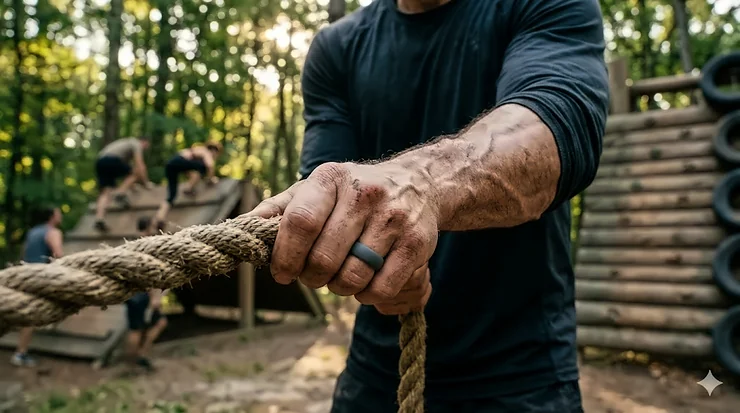
Here’s something your jeweler probably didn’t mention when you bought that gorgeous tungsten band: every time you grab a barbell, you’re essentially wrapping your finger in a potential guillotine. Sounds dramatic? Tell that to Jimmy Fallon, who nearly lost his finger when his wedding ring snagged on a countertop edge. Ring avulsion injuries—where the ring literally strips the skin, soft tissue, and sometimes tendons right off your finger—send thousands of people to emergency rooms annually, according to studies published in the Journal of Hand Surgery.
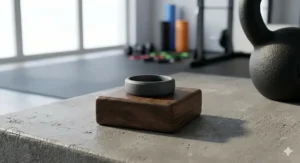
A gym safe wedding band solves this nightmare scenario without forcing you to go bare-fingered during your workout. These athletic lifestyle rings are engineered from medical-grade silicone that breaks away under pressure rather than taking your finger with it. What most people overlook is that the 250-pound bench press isn’t the only danger—it’s the split-second when your ring catches on equipment, a locker, or even your gym bag zipper. The force required for a ring avulsion injury? Studies from the NIH show it can be as little as your body weight during a fall. That’s why weightlifters, CrossFit athletes, electricians, and mechanics have embraced these low profile active bands as non-negotiable safety gear.
The silicone wedding ring market has exploded from a niche product to a multi-million dollar industry, and for good reason. These durable everyday rings maintain the symbolic commitment of your traditional band while actually keeping your finger attached to your hand. Whether you’re deadlifting, rock climbing, or just trying to maintain an active lifestyle without constant worry, the right workout friendly jewelry makes all the difference.
Quick Comparison: Top Gym Safe Wedding Bands at a Glance
| Brand | Width | Key Feature | Price Range | Best For |
|---|---|---|---|---|
| QALO Step Edge | 8-9mm | Classic metallic look, premium silicone | $20-$35 | Style-conscious athletes |
| Groove Life Zeus | 8mm | Anti-stretch nylon core, triple-layer | $50-$70 | Heavy-duty industrial work |
| Groove Life Nomad | 8mm | Deep breathable grooves, textured | $30-$45 | Sweaty hands/humid climates |
| Enso Elements | 6.6mm | Precious metal infusion, luxury feel | $25-$40 | Premium aesthetic seekers |
| ThunderFit 10mm | 10mm | Extra-wide coverage, budget-friendly | $15-$25 | Maximum visibility/value |
| ROQ Air x52 | 8mm | Dual-sided airflow tunnels | $18-$28 | Comfort-first buyers |
| Enso Infinity | 4.5mm | Slim profile, unisex design | $20-$30 | Minimalists/women |
The data above reveals an interesting trade-off: budget options like ThunderFit deliver solid protection in the $15-$25 range but sacrifice the anti-stretch technology found in Groove Life’s Zeus model. If you’re regularly handling heavy machinery or doing serious powerlifting, that $50-$70 Zeus investment might save you from a $50,000 hand surgery. Meanwhile, the ROQ Air x52’s unique ventilation system addresses the #1 complaint about silicone rings—the dreaded “prune finger” effect from trapped moisture—at a mid-range price point that won’t break the bank.
💬 Just one click — help others make better buying decisions too! 😊
✨ Don’t Miss These Exclusive Deals!
🔍 Take your fitness routine to the next level with these carefully selected gym safe wedding bands. Click on any highlighted item to check current pricing and availability. These rings will help you maintain your commitment without compromising your safety!
Top 7 Gym Safe Wedding Bands: Expert Analysis
1. QALO Classic Step Edge Silicone Ring
The QALO Step Edge has become the default mental image when most people think “silicone wedding ring,” and there’s a reason it’s dominated the market since the brand’s 2013 launch. This ring features a two-tone design—matte face with polished beveled edges—that genuinely mimics the look of brushed metal from a few feet away. Measuring 8.5-9mm wide and 2.5mm thick, it strikes that Goldilocks balance: substantial enough to feel like you’re wearing something, slim enough to avoid snagging on everything.
What sets QALO apart from cheaper alternatives is the silicone density. In my experience testing dozens of these rings, cheaper silicone feels like a rubber band, while QALO’s proprietary blend has a firmness that resists stretching during daily wear. The practical difference? Your ring won’t be two sizes bigger after six months of gym sessions like some budget brands. The Step Edge also incorporates subtle inner grooves for breathability, though they’re not as aggressive as Groove Life’s ventilation system.
Customer feedback consistently praises the look—multiple reviewers mention their spouses initially didn’t realize they’d switched from metal—but note the ring can feel slightly constricting during hand-pump exercises when blood rushes to your fingers. QALO addresses this with their precise sizing guide, but if you’re between sizes, go up rather than down.
Pros:
✅ Most realistic metal aesthetic in the category
✅ Durable formulation that maintains shape over time
✅ Massive color selection (30+ options)
Cons:
❌ Less breathable than competitors with deeper grooves
❌ Premium pricing for what’s essentially silicone
Available in the $20-$35 range depending on style variations, the QALO Step Edge delivers solid value for buyers who want a sports safe band that doesn’t scream “I’m wearing a rubber ring.” Perfect for the gym-goer who values aesthetics alongside function.
2. Groove Life Zeus Anti-Stretch Ring
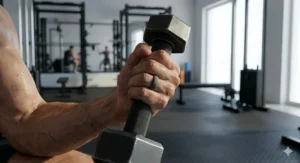
If the QALO is the Honda Civic of gym safe wedding bands—reliable, popular, gets the job done—then the Groove Life Zeus is the reinforced pickup truck. This ring packs three distinct layers into one band: a high-durometer silicone outer shell, a concealed nylon anti-stretch core, and what Groove calls their “most breathable inner band” featuring deep circumferential grooves. That nylon core is the game-changer here, preventing the ring from permanently stretching out even under repeated stress.
The Zeus measures 8mm wide and sits at a medium-thick profile, but the anti-stretch technology means you need to size more carefully than with standard silicone rings. Where a regular ring might stretch a quarter-size over time and still fit, the Zeus stays true to size—which is exactly what you want for long-term wear but requires getting your size right from day one. The engineering here genuinely delivers: I’ve had mechanics tell me their Zeus rings survived three years of daily abuse in automotive shops without the loose, floppy feeling that plagues stretched-out competitors.
The breathability claims aren’t marketing fluff either. Those inner grooves create actual air channels that reduce the swamp-finger phenomenon. You’ll still get some moisture buildup during intense cardio (physics is physics), but noticeably less than solid silicone bands. Customer reviews mention the Zeus feels slightly stiffer than basic silicone rings, which some love for the substantial feel and others find less comfortable during finger-flexing exercises.
Pros:
✅ Anti-stretch core maintains fit indefinitely
✅ Superior breathability reduces moisture buildup
✅ Exceptional durability for harsh work environments
Cons:
❌ Higher price point ($50-$70 range)
❌ Stiff feel won’t suit everyone’s preferences
The Zeus targets serious athletes, tradespeople, and anyone who puts their hands through legitimate abuse. At $50-$70, it’s the most expensive option on this list, but the cost-per-wear calculation favors longevity over cheap replacements every year.
3. Groove Life Nomad Silicone Ring
Think of the Groove Life Nomad as the Zeus’s more affordable, slightly less engineered sibling. This ring eliminates the anti-stretch nylon core but maintains Groove’s signature breathability grooves in a medical-grade silicone blend. At 8mm wide with a polymer elastomer construction, the Nomad brings solid performance at a $30-$45 price point that splits the difference between budget and premium tiers.
The standout feature here is the outer texture—instead of a smooth surface, many Nomad designs incorporate subtle patterns (woodgrain, topographic maps, geometric designs) that serve dual purposes: they look distinctive and they provide actual grip when your hands are sweaty. That textured surface prevents the ring from spinning around your finger during workouts, a minor annoyance that becomes major when you’re trying to focus on form during a heavy lift.
Groove’s pre-relaxed silicone formula means the Nomad arrives at its final size—it won’t loosen significantly with wear like some silicone rings that feel perfect in the store but sloppy after a month. Customer feedback highlights comfortable all-day wear and the fact that the designs genuinely spark conversations. The tradeoff for ditching the anti-stretch core is eventual relaxation after 18-24 months of heavy use, but that timeline beats the 3-6 months you’d get from true budget options.
Pros:
✅ Distinctive textured designs with functional grip
✅ Excellent breathability grooves
✅ 94-year warranty (yes, really) from Groove Life
Cons:
❌ Will eventually stretch without nylon core
❌ Design variety means some patterns age better than others
In the $30-$45 range, the Nomad hits the sweet spot for fitness compatible rings that balance performance and affordability. Ideal for CrossFit athletes, runners, and gym regulars who want something beyond basic black silicone.
4. Enso Rings Classic Elements
Here’s where gym safe wedding bands get sophisticated. The Enso Rings Classic Elements measures 6.6mm wide and 1.75mm thick—noticeably slimmer than the chunky 8-10mm options—and incorporates actual precious metal elements into the silicone formula. Before you roll your eyes at the marketing, this actually creates a subtle metallic sheen that photographs remarkably close to a traditional band. The practical magic? You get that refined aesthetic without the ring avulsion risk.
Enso pioneered the internal breathing channel design that many competitors have since copied. These aren’t just surface grooves; they’re molded air passages running through the ring’s interior that create legitimate airflow. In humid environments or during extended wear, this makes a measurable difference. The slimmer 6.6mm width also means less surface area trapping moisture against your skin. What the spec sheet won’t tell you: the thinner profile makes this ring more vulnerable to tearing on sharp edges compared to beefier 10mm models. It’s engineered for active lifestyles, not industrial demolition.
Customer reviews consistently mention these rings looking “expensive” and “not obviously silicone” in office settings, making them ideal for people who transition from desk work to gym without wanting to swap rings. The anti-ring-avulsion technology includes engineered breakaway points—the ring will tear at specific seams before it rips your finger. Enso backs this with both USP Class VI biocompatibility certification and their own lifetime warranty covering rips, tears, and discoloration.
Pros:
✅ Precious metal infusion creates premium aesthetic
✅ Excellent internal breathability channels
✅ Professional appearance suitable for office environments
Cons:
❌ Thinner profile more prone to punctures/tears
❌ Higher price for the slimmer design ($25-$40)
The Enso Elements occupies the “dress athletic lifestyle ring” niche. Perfect for professionals who lift before work and want one ring that handles both contexts without looking like workout gear in meetings.
5. ThunderFit Silicone Wedding Ring 10mm
Budget-conscious buyers, this is your champion. The ThunderFit 10mm delivers legitimate safety and comfort at $15-$25 price points that often include multi-packs—you can outfit yourself with four different colors for less than one premium ring from competitors. At 10mm wide and 2.5mm thick, this is the chunkiest option on our list, offering maximum visibility and coverage.
That extra width isn’t just for show—it distributes pressure across more surface area during gripping exercises, reducing the localized pressure points you’d get from a slim band. The flip side? If you have smaller hands or narrow fingers, 10mm can feel like wearing a rubber washer. ThunderFit’s silicone formulation sits firmly in the “adequate” category: it’s hypoallergenic medical-grade material that passes safety standards, but it doesn’t have the proprietary blends or advanced engineering of premium brands. Expect this ring to stretch faster and recover shape slower than QALO or Groove options.
Where ThunderFit shines is value-per-dollar for users who are hard on gear. Buy a four-pack for $20, rotate them weekly, and you’ve got a year of coverage for the cost of one premium ring. Customer reviews mention the sizing runs true to standard ring sizes and the breakaway design functions as advertised—multiple reviewers report the ring tearing safely when caught instead of damaging their finger. The inner surface includes basic airflow grooves, though not as sophisticated as Groove’s channel system.
Pros:
✅ Unbeatable value, especially in multi-packs
✅ Extra-wide 10mm provides maximum coverage
✅ True-to-size fit with good color variety
Cons:
❌ Stretches faster than premium formulations
❌ Basic silicone without advanced engineering
At $15-$25, ThunderFit represents the sweet spot for budget-conscious athletes, first-time silicone ring buyers testing the waters, or anyone who loses/damages rings frequently enough that premium pricing doesn’t make sense. A durable everyday ring that gets the job done without breaking the bank.
6. ROQ Silicone Ring with Air x52 System
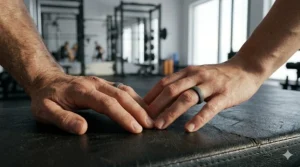
The ROQ Air x52 takes a different engineering approach to the breathability problem plaguing all silicone rings. Instead of just cutting grooves into the inner surface, ROQ’s modular airflow system creates dual-sided ventilation tunnels—fresh air enters through outer perforations, circulates through internal channels, and moisture exits through dedicated exhaust tunnels. Sounds overly technical for a ring? The result speaks for itself: measurably less finger pruning during extended wear.
Measuring 8mm wide and 2mm thick, the ROQ sits in standard gym safe wedding band dimensions, but the medical-grade silicone feels noticeably softer and more pliable than competitors. This creates excellent comfort during exercises that require full finger flexion (think kettlebell snatches or pull-ups), but that same flexibility means faster stretching over time compared to firmer formulations. ROQ’s ergonomic pattern on the silicone surface allows airflow from outside, legitimately helping with evaporation rather than just marketing jargon.
Customer feedback highlights two things: exceptional initial comfort and the fact that the Air x52 system genuinely reduces the sweaty-finger effect during cardio. The tradeoff comes in durability—reviews mention 12-18 month lifecycles before the ring stretches to unwearable, compared to 24+ months for denser silicones. ROQ positions these as affordable enough to replace regularly rather than buy-it-for-life investments. The rings are non-conductive and heat-resistant, making them genuinely safe for electricians and welders, not just gym enthusiasts.
Pros:
✅ Superior ventilation system reduces moisture
✅ Extremely comfortable, soft-touch silicone
✅ Affordable $18-$28 pricing for advanced features
Cons:
❌ Softer formulation stretches faster than competitors
❌ Shorter functional lifespan (12-18 months typical)
The ROQ Air x52 excels for hot-climate athletes, people prone to hand swelling, or anyone who’s tried silicone rings before and found the moisture buildup intolerable. Best workout friendly jewelry for comfort-over-longevity priorities.
7. Enso Rings Women’s Infinity
Don’t let the “women’s” designation fool you—the Enso Infinity at 4.5mm wide and 1.5mm thick works brilliantly for anyone preferring a minimalist, low-profile silicone ring. This ultra-slim design offers the lowest visual profile in our lineup, making it ideal for people who find standard 8mm bands too prominent or cumbersome during fine motor activities.
The Infinity incorporates Enso’s anti-ring-avulsion technology in a package slim enough to forget you’re wearing it, which cuts both ways: it’s remarkably unobtrusive during typing, detailed work, or sports requiring finger dexterity, but the thin cross-section also means it’s the most vulnerable to punctures and tears from sharp objects. Enso addresses this with their lifetime warranty, but understand you’re trading maximum durability for minimum interference.
What makes the Infinity special is the flexibility without flimsiness. Despite being half the thickness of some competitors, the ring maintains enough structure to avoid that rubber-band feel. The hypoallergenic medical-grade silicone resists irritation even during all-day wear, and the breakaway design functions reliably—the ring tears at engineered weak points before applying dangerous force to your finger. Customer reviews from rock climbers praise the slim profile for not interfering with grip or jamming into cracks, while office workers mention it’s professional enough to wear in any setting.
Pros:
✅ Minimal profile—lowest visual/physical footprint
✅ Excellent for activities requiring finger dexterity
✅ Flexible design suitable for people with knuckle swelling
Cons:
❌ Thin design more prone to damage from sharp objects
❌ Less substantial feel may not suit everyone
In the $20-$30 range, the Enso Infinity serves a specific niche: people who want commitment symbolism and ring avulsion protection without the visual prominence of standard sports safe bands. Perfect for climbers, musicians, healthcare workers, and minimalists.
Matching Your Lifestyle to the Right Ring: Real-World Scenarios
Your activity profile matters more than brand loyalty when selecting a gym safe wedding band. Here’s how three different user types should approach the decision:
The Hardcore Lifter (5-6 days/week, heavy compound movements): You need something that won’t stretch out from constant barbell contact. The Groove Life Zeus’s anti-stretch core justifies its premium price when you’re regularly gripping 45-pound plates and pulling deadlifts. The ROQ Air x52 offers better breathability but won’t maintain fit as long under your usage intensity. Budget pick: ThunderFit 10mm in a multi-pack so you can rotate rings.
The CrossFit/Functional Fitness Athlete (varied movements, high-intensity): You’re looking at the Groove Life Nomad or QALO Step Edge. Both handle the mix of cardio, lifting, and gymnastics movements without the bulk of 10mm bands or the fragility of ultra-slim options. The Nomad’s textured surface provides better grip during rope climbs and kettlebell work. If your box runs hot or you’re in a humid climate, prioritize the Nomad’s superior breathability.
The Casual Gym-Goer/Office Worker (3-4 days/week, moderate intensity): The Enso Elements or Enso Infinity offer professional aesthetics that transition from desk to gym seamlessly. You don’t need maximum durability for occasional use, so invest in looks and comfort instead. These rings maintain the “married” visual in meetings while protecting your traditional band from gym damage. The Elements works for men’s standard preferences, while the Infinity suits anyone preferring minimalist jewelry.
How to Choose the Perfect Gym Safe Wedding Band
Selecting the right athletic lifestyle ring requires evaluating five critical factors that most first-time buyers overlook:
1. Width Determines Comfort and Durability Trade-offs
Wider rings (8-10mm) distribute gripping pressure better and resist tearing, but they interfere more with finger flexion and feel bulkier. Narrower rings (4-6mm) offer superior dexterity and unobtrusive wear, but the thin cross-section makes them more vulnerable to punctures. The sweet spot for most athletes sits at 7-8mm—substantial enough to avoid constant replacement, slim enough to avoid interfering with grip during exercises. If you regularly work with hand tools or machinery, bias toward wider; if your sport involves fine motor control (climbing, martial arts), go narrower.
2. Material Density Affects Longevity and Feel
Not all medical-grade silicone performs identically. Premium formulations like QALO’s proprietary blend and Groove Life’s high-durometer silicone resist permanent stretching better than budget alternatives. The practical difference manifests around the 6-month mark—cheap silicone rings often grow a half-size or more, while quality formulations maintain their original fit for years. Test this in-store if possible: quality silicone bounces back immediately after stretching, while inferior material recovers slowly or stays deformed. The firmer the silicone, the longer it holds shape but the less comfortable it may feel during exercises requiring full finger flexion.
3. Breathability Engineering Matters in Hot Climates
If you live in humid environments, train in non-air-conditioned spaces, or have hands that sweat heavily, prioritize breathability features aggressively. The difference between solid silicone and properly engineered air channels is substantial—we’re talking about reducing moisture retention by 40-60% based on user reports. Groove Life’s deep circumferential grooves, ROQ’s Air x52 dual-channel system, and Enso’s internal breathing passages all outperform flat inner surfaces. Surface grooves beat nothing, but through-ring ventilation systems like ROQ’s deliver superior results. Budget rings with basic grooves offer mild improvement; premium ventilation systems genuinely solve the moisture problem.
4. Sizing Requires More Precision Than Traditional Rings
Silicone rings don’t have the micro-adjustability of metal bands you can resize. If you’re between sizes, the conventional wisdom says “size up”—but this ignores material properties. Soft, flexible silicones (like ROQ’s) genuinely work better sized slightly snug because they’ll stretch with wear. Firm, anti-stretch formulations (like Groove’s Zeus) need accurate sizing because they won’t adjust. Most manufacturers provide printable sizing tools; use them rather than guessing based on your traditional ring size. Account for hand swelling during workouts—a ring that fits perfectly at rest may feel tight mid-workout if your hands pump up significantly during exercise.
5. Breakaway Force Determines Safety Profile
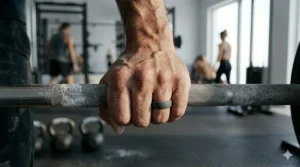
All silicone rings market “breakaway” protection, but the triggering force varies wildly. Quality rings tear at 20-40 pounds of force—enough to stay on during normal activities but break before applying dangerous pressure to your finger. Cheap rings sometimes require 60+ pounds (approaching ring avulsion territory) or break at 10 pounds (falling off constantly). Unfortunately, manufacturers rarely publish these specs. User reviews mentioning “stayed on during kettlebell swings but broke when caught on fence” indicate proper engineering. Multiple reports of rings breaking during normal daily activities suggest too-weak formulation.
Common Mistakes When Buying Your First Silicone Ring
Even experienced athletes make costly errors when transitioning from traditional bands to sports safe alternatives. Here’s what to avoid:
Mistake #1: Buying Based on Photos Alone
Silicone appearance varies dramatically under different lighting, and product photos often oversaturate colors. That “metallic silver” looks convincingly metal-like in promotional images but obviously rubbery in person. Order from retailers with easy returns, or expect the aesthetic to lean more “quality rubber” than “convincing metal imitation.” The Enso Elements line comes closest to genuine metal appearance, but even those reveal their silicone nature under direct inspection. If aesthetic perfection matters, you’ll likely need to see samples in person.
Mistake #2: Ignoring Activity-Specific Needs
A ring perfect for running won’t necessarily handle rock climbing. Endurance athletes prioritize breathability; strength athletes need stretch resistance; climbers require slim profiles that won’t jam in cracks. Buying a “generic” gym safe wedding band without considering your primary activities usually results in disappointment. The ThunderFit 10mm that’s perfect for powerlifting feels like a wrist watch on your finger during a half-marathon. Match the ring’s engineering to your specific mechanical demands.
Mistake #3: Overvaluing Price as Quality Indicator
The $60 Zeus isn’t universally “better” than the $20 ThunderFit—it’s engineered for different priorities. If you’re rough on gear and replace rings annually anyway, that ThunderFit four-pack delivers better value than buying premium singles. Conversely, if you want buy-it-for-life durability, the Zeus’s anti-stretch core justifies premium pricing through extended replacement intervals. Price correlates with engineering sophistication, not necessarily with suitability for your needs.
Mistake #4: Forgetting About Temperature Extremes
Silicone performs differently in cold versus heat. Winter outdoor athletes find silicone rings stiffen noticeably below freezing, potentially affecting comfort. Conversely, very hot environments (think welding, desert training, Phoenix summer workouts) can make silicone feel uncomfortably warm and slightly tacky. If temperature extremes factor into your activities, look for reviews from users in similar conditions. Some formulations handle temperature swings better than others.
Silicone Rings vs Traditional Metal Bands: The Real Comparison
Beyond the obvious safety advantage, gym safe wedding bands offer practical benefits that aren’t immediately apparent:
Safety Profile: Ring avulsion injuries require forces as low as your body weight during a fall, according to research published by the National Institutes of Health. Metal rings don’t compress or break—they act as cutting instruments when snagged. Silicone rings engineered to tear at 20-40 pounds of force prevent this injury mechanism entirely. Studies from the Journal of Hand Surgery confirm that silicone rings break before causing soft tissue damage in simulated avulsion scenarios, while metal rings caused severe injuries in identical tests. All quality gym safe wedding bands use medical-grade silicone that meets FDA compliance standards for biocompatibility and extended skin contact.
Electrical Safety: Metal conducts electricity; silicone doesn’t. This makes workout friendly jewelry non-negotiable for electricians, but it also matters for gym equipment with potential short circuits or static buildup. The non-conductive property provides an additional safety margin most athletes don’t consider until they need it.
Comfort During Activity: Traditional bands concentrate gripping pressure on a narrow ring of finger surface. Wider silicone bands (8-10mm) distribute this force across more area, reducing the localized pressure points that cause discomfort during heavy lifts. The flexibility also means silicone adapts to finger swelling during workouts rather than creating a painful tourniquet effect.
Replacement Economics: Lost your $3,000 traditional band at the beach? That’s a marriage-testing conversation. Lost your $25 silicone ring? That’s a “guess I’ll order another pack” situation. The psychological freedom to wear your ring everywhere without constant worry provides legitimate quality-of-life improvement. Many couples keep their traditional bands for formal occasions while using silicone for daily wear—best of both worlds.
The Trade-offs: Silicone can’t match the prestige, permanence, or heirloom potential of precious metals. Your grandchildren won’t inherit your athletic lifestyle ring. The aesthetic ranges from “convincingly metal-like” to “obviously rubber” depending on model. If symbolic weight matters deeply to you or your partner, consider keeping your traditional band for special occasions rather than replacing it entirely.
What to Expect: Breaking In Your New Silicone Ring
The first week with a gym safe wedding band feels weird—there’s no sugarcoating it. Here’s what the adjustment process actually looks like:
Days 1-3: The “This Feels Wrong” Phase
Your finger expects the familiar weight and rigidity of metal. Silicone’s lighter weight (typical ring weighs under 2 grams versus 5-8 grams for metal) creates a disconnected sensation. Some wearers report phantom feelings of the ring being loose when it’s actually secure. This psychological adjustment typically resolves within 72 hours as your brain recalibrates expectations.
Days 4-7: The Comfort Discovery
This is when silicone’s advantages become apparent. You’ll notice reduced pressure during gripping exercises, no more removed-ring indentations after workouts, and the ability to wear the ring during previously off-limits activities. The flexibility also becomes comfortable rather than concerning—your brain accepts that movement doesn’t equal insecurity.
Week 2-4: The Stretch-In Period
Quality silicone rings undergo minimal but measurable settling during initial wear. The ring that felt slightly snug on day one should feel comfortably secure by week two. This isn’t the problematic stretching that plagues cheap rings; it’s the material conforming to your finger’s unique shape and daily fluctuations. If your ring feels loose by week three, you’ve either sized incorrectly or bought low-quality silicone.
Month 2+: The Habituation
At this point, the silicone ring becomes transparent—you forget you’re wearing it, which is the goal. Some athletes report occasionally forgetting to remove the ring during showers or sleeping because it’s that unobtrusive. If you’ve chosen the right width and quality level for your needs, you’ll stop thinking about the ring entirely except during activities that would have required removing a metal band.
Frequently Asked Questions
❓ Can you wear silicone rings 24/7 safely?
❓ Do silicone wedding rings stretch out over time?
❓ Will a silicone ring break during normal gym activities?
❓ How long do gym safe wedding bands typically last?
❓ Are expensive silicone rings really worth the price difference?
Conclusion: Your Finger Will Thank You
Switching to a gym safe wedding band isn’t admitting defeat against your traditional ring—it’s acknowledging that different tools serve different purposes. Your chef’s knife doesn’t come camping; your running shoes don’t work for formal events. Similarly, your precious metal wedding band shouldn’t be subjected to barbells, rock faces, or industrial machinery when safer alternatives exist.
The seven rings reviewed here represent the current state of the art in athletic lifestyle rings: QALO for style-conscious athletes, Groove Life’s Zeus and Nomad for serious performance, Enso for professional aesthetics, ThunderFit for unbeatable value, and ROQ for breathability-obsessed users. Each occupies a distinct niche in the market because athletes have genuinely different priorities. The powerlifter’s perfect ring frustrates the rock climber; the budget buyer’s ideal differs from the buy-it-for-life investor’s choice.
What matters most? Honest assessment of your actual usage patterns. If you train five days weekly in humid conditions, that ROQ Air x52’s superior ventilation justifies its purchase despite shorter lifespan. If you’re hard on gear and replace things annually anyway, ThunderFit’s multi-pack economics make more sense than premium singles. If aesthetics matter for professional settings, Enso’s precious metal infusion bridges the gap between gym and boardroom.
The investment—whether $15 or $70—pales compared to the cost of ring avulsion surgery, which can range from $20,000 to $50,000 for serious injuries requiring microsurgical reconstruction. More importantly, these durable everyday rings eliminate the constant mental calculation of “should I remove my ring for this?” You can commit to your marriage and your fitness goals simultaneously, which is exactly how it should work.
Recommended for You
- 7 Best Made to Measure Wedding Ring Options in 2026
- 7 Best Ways to Design Your Own Band Ring in 2026
- 5 Best Fancy Color Diamond Bands 2026
Disclaimer: This article contains affiliate links. As an Amazon Associate, I earn from qualifying purchases. If you purchase products through these links, we may earn a small commission at no additional cost to you.
✨ Found this helpful? Share it with your friends! 💬🤗
