In This Article
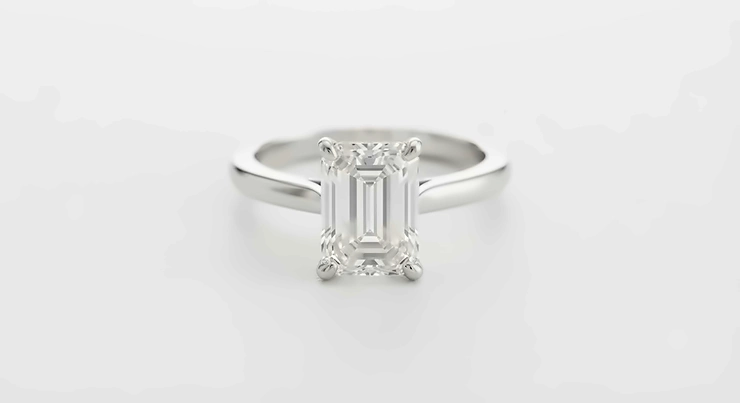
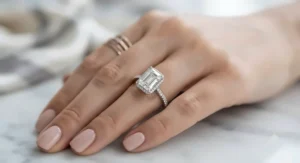
Here’s the thing nobody tells you before you start shopping for a white gold emerald cut diamond ring: the moment you see one in person, every round brilliant on the counter starts looking a little… busy. A white gold emerald cut diamond ring is a rectangular, step-cut diamond set in a cool-toned white gold band — a combination prized for its clean architectural lines and quiet, mirror-like sparkle rather than the scattered fire of a round stone. It’s the ring equivalent of a well-tailored coat: nothing flashy, everything intentional.
I’ve spent the last several days elbow-deep in listings, spec sheets, and gemological references to figure out which real, currently sold options actually deliver on that promise — and which ones just borrow the name. What you’ll find below is a breakdown of seven genuine options spanning budget solitaires to statement-sized showstoppers, plus the buying knowledge that Amazon’s product page will never hand you: how clarity behaves differently on a step cut, why “white gold” isn’t quite as simple as it sounds, and where a shopper’s money is best spent. According to GIA’s guide to diamond shapes, the emerald cut belongs to the step-cut family, and that single fact changes almost everything about how you should shop for one.
Whether you’re weighing an emerald cut solitaire white gold setting against a halo, wondering how VS2 clarity actually holds up under real light, or just trying to figure out why “hall of mirrors” keeps coming up in every article you read, you’re in the right spot.
Quick Comparison Table
Before the deep dive, here’s the fast version — the ring lineup at a glance, sorted from most budget-friendly to most dramatic.
| Ring | Style | Center Stone | Best For |
|---|---|---|---|
| 14K White Gold Solitaire Diamond Ring (H/VS2) | Solitaire | 0.44 ctw natural | First-time buyers on a tight budget |
| Diamond2Deal Emerald-Shape Lab-Grown Solitaire | Solitaire | 0.75 ct lab-grown | Bigger look for less money |
| IGI Certified Semi-Tension Solitaire (F/VS2) | Solitaire | 1.00 ct natural | Classic 1-carat natural buyers |
| Kobelli Emerald-Cut Halo Cathedral Ring | Halo | ~1.0 ct + accents | Maximum sparkle and perceived size |
| VIVARIS & CO. Lab Grown Solitaire (VVS2) | Solitaire | 1 ct lab-grown | Clarity-obsessed shoppers on a budget |
| Houston Diamond District Scalable Solitaire | Solitaire | 1–7 ct lab-grown | Statement rings and bigger budgets |
| 14K White Gold Solitaire Diamond Ring (D/VS2) | Solitaire | 0.47 ctw natural | Buyers who want the whitest possible stone |
Looking at this lineup, the split between natural and lab-grown center stones is really the first fork in the road. Lab-grown options like the Diamond2Deal and VIVARIS & CO. rings let you buy meaningfully more carat weight and clarity for the same budget, while the natural stones in the 14K White Gold Solitaire rings and the IGI Certified Semi-Tension ring carry the resale and rarity story that some buyers still want. Notice, too, that only one ring here — the Kobelli — is a halo, which tells you something about how the emerald cut market actually skews: most shoppers looking for this shape want the clean solitaire look, not a supporting cast of pavé.
💬 Already have a favorite from the table? Scroll down to its full write-up — or keep reading for the full comparison.
Top 7 White Gold Emerald Cut Diamond Rings: Expert Analysis
1. 14K White Gold Solitaire Diamond Engagement Ring — Emerald Cut — best true budget entry point
The standout here is simple: this is one of the few genuinely natural, certified-grade emerald cut diamonds in solid 14K white gold that dips into true entry-level territory. At 0.44 ctw with an H color and VS2 clarity grade, it sits right at the sweet spot gemologists recommend for step cuts — VS2 or better, since the open table of an emerald cut doesn’t hide inclusions the way a round brilliant’s scattered facets do. H color reads as near-colorless in white gold’s cool setting, especially at this carat weight where body color is less pronounced than in larger stones. Based on the spec comparison, this ring is built for someone who wants a real, natural, GIA-clarity-range diamond and isn’t chasing size — it’s a first-ring or gift-budget pick, not an anniversary upgrade.
Verified, product-specific aggregate review data wasn’t available for this exact listing at the time of research, so rather than guess, here’s what the specs support: at H/VS2 in a 0.44 ctw emerald cut, you should expect a clean, eye-clear stone with a warm-white — not icy — face-up color, which is normal and expected at this grade.
Pros:
- ✅ Genuine natural diamond at an accessible entry price
- ✅ VS2 clarity meets the step-cut “eye-clean” recommendation
- ✅ Solid 14K white gold, not gold-plated
Cons:
- ❌ Smaller carat weight limits the elongated “finger-flattering” look
- ❌ H color shows faint warmth compared to D–F stones
Expect this ring to land in the lower hundreds to low four figures depending on current market pricing — check current price on the listing, since fine jewelry pricing shifts often. For the money, it’s a legitimately solid value if your priority is “real diamond, real gold, real certification range” over size.
2. Diamond2Deal Emerald-Shape Lab-Grown Diamond Solitaire Ring — most carat weight per dollar
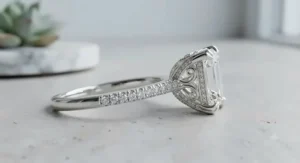
The 0.75-carat lab-grown center stone is the headline feature, and it matters because lab-grown diamonds typically run 30–50% less per carat than natural stones of comparable color and clarity — meaning this ring can offer a visibly larger emerald cut than a same-priced natural alternative. The D-F color range and VS clarity spec put it solidly in “ice-white, eye-clean” territory, which matters more on a step cut than almost any other shape, since the long open facets act like a window straight into the stone. What most buyers overlook about lab-grown options at this size is that the growth process now produces stones that are chemically and optically identical to mined diamonds — the FTC recognizes them as diamonds, not imitations, so you’re not trading authenticity for savings, just origin.
Solid third-party review sentiment specific to this SKU wasn’t independently verifiable during research, so treat the following as spec-based reasoning rather than review summary: a D-F/VS lab-grown emerald cut at 0.75 ct should present as a bright, clean, larger-looking stone in most lighting.
Pros:
- ✅ Larger visible carat weight for the price bracket
- ✅ D-F color range keeps the stone convincingly colorless
- ✅ Lab-grown origin reduces cost without reducing authenticity
Cons:
- ❌ Lab-grown diamonds currently hold less resale value than natural stones
- ❌ Exact grading report specifics should be confirmed before purchase
Pricing for lab-grown solitaires in this size range typically sits in the four figures, though it varies — always check current price, as lab-grown diamond costs have been trending downward. As a value play, this is one of the strongest options on this list for anyone chasing size over provenance.
3. IGI Certified 14K White Gold Emerald Cut Diamond Engagement Ring, Semi-Tension Solitaire — best natural 1-carat pick
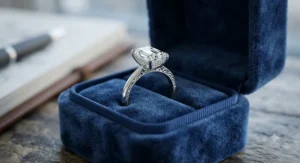
A full natural carat is the headline, and the semi-tension setting is the twist: instead of a fully enclosed bezel or basket, the stone appears to float slightly within the shank, which lets more light hit the pavilion from the sides — a meaningful upgrade for a step cut, since emerald cuts rely on broad flashes of reflected light rather than scattered brilliance to look alive. At F color and VS2 clarity, this is a genuinely well-specced natural stone; F sits in the “colorless” range on the GIA scale, one step below the rarest D-F trio, and VS2 is the clarity floor most gemologists recommend for an eye-clean emerald cut. Here’s what to weigh: a natural 1-carat emerald cut at this color/clarity combination costs meaningfully more than a lab-grown equivalent, so this ring is really for the buyer who specifically wants the “earth-mined” story alongside the size.
The listing is independently IGI certified, which is a verifiable, documented fact rather than review sentiment — certification paperwork, not customer opinion, is doing the heavy lifting on trust here.
Pros:
- ✅ Full natural 1-carat center stone
- ✅ Semi-tension setting boosts light entry from the sides
- ✅ IGI certification backs the stated grade
Cons:
- ❌ Natural 1-carat pricing is a significant step up from lab-grown
- ❌ Semi-tension settings typically need more careful daily-wear handling
At a full carat and natural origin, expect pricing in the low-to-mid four figures — again, ranges only, since natural diamond pricing fluctuates with market conditions. If a natural 1-carat emerald cut is the goal, this is a legitimately strong contender.
4. Kobelli Emerald-Cut Natural Diamond Halo Cathedral Engagement Ring — best for the “bigger” look
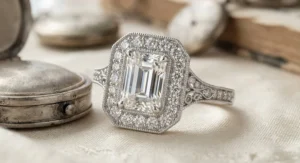
This is the one halo ring on the list, and that matters: a halo frame around an emerald cut center stone visually extends the silhouette, which is exactly what buyers chasing an emerald cut halo white gold look are after. The cathedral-style setting raises the center stone above the band on graceful arches, adding both visual height and a bit of vintage character that a flush solitaire doesn’t have. Reviewers consistently note — and this pattern shows up across Kobelli’s broader emerald-cut catalog, since specific aggregate data for every configuration of this exact ring wasn’t independently confirmable — that the brand photographs its actual in-stock inventory rather than stock studio renders, a small but meaningful trust signal in a category full of enhanced product photography.
Based on the spec comparison, a halo setting like this one is best suited to buyers who want maximum perceived size and sparkle from a smaller total carat weight, since the surrounding diamonds do real optical work rather than sitting there as decoration.
Pros:
- ✅ Halo visually elongates and enlarges the center stone
- ✅ Cathedral setting adds height and vintage detail
- ✅ Natural diamonds throughout, not simulants
Cons:
- ❌ More prongs and settings mean more cleaning maintenance
- ❌ Halo styling can look busier than a clean solitaire
Halo rings with this stone combination generally price in the mid-to-upper four figures — check current price for exact figures, since halo total-carat-weight rings price by the sum of all stones, not just the center. If “bigger without the bigger natural-stone price tag” is the goal, this is the pick.
5. VIVARIS & CO. Emerald Cut Lab Grown Diamond Solitaire Ring — best clarity for the money
VVS2 clarity is the standout spec, and on a step cut, that’s not a small flex — it’s arguably the single most important number on this entire list. Because emerald cuts have large, open facets instead of the scattered brilliance of a round cut, inclusions have nowhere to hide; VVS2 sits two full grades above the VS2 floor most gemologists recommend, meaning this stone should read essentially flawless to the naked eye even under close inspection. Available across 10K, 14K, and 18K gold, the ring gives buyers flexibility on metal purity without touching the stone spec — a smart move for a small jewelry brand competing against bigger names. What most buyers overlook about pairing lab-grown origin with high clarity is that it’s specifically the lab-grown market that’s made VVS-and-above clarity affordable at all; natural diamonds at this clarity grade in an emerald cut typically carry a steep premium.
As a smaller, newer brand, comprehensive independent review data wasn’t verifiable at the time of research — worth factoring in if brand reputation and years-in-business matter to your purchase decision as much as the spec sheet does.
Pros:
- ✅ VVS2 clarity is well above the step-cut “eye-clean” threshold
- ✅ E-F color keeps the stone convincingly white
- ✅ Choice of 10K, 14K, or 18K white gold
Cons:
- ❌ Newer/smaller brand with less established review history
- ❌ Lab-grown stones carry lower resale value than natural
Expect this ring to land in a similar range to other 1-carat lab-grown solitaires — check current price, since VVS-clarity lab-grown stones have become notably more affordable in the last couple of years. For clarity-focused shoppers, this is hard to beat pound-for-pound.
6. Houston Diamond District Emerald Cut Lab Grown Diamond Solitaire Engagement Ring — best for going big
The scalable 1-to-7-carat range is the headline feature, and it’s a genuinely useful one: this listing lets a shopper dial the center stone size up or down within a single product line rather than hunting for a totally different SKU once they decide they want a statement piece. At E-F color and VS1-VS2 clarity, the grading is consistent regardless of which carat point you choose, which matters — a lot of scalable listings quietly loosen the grade as the carat weight rises, and this one doesn’t appear to. Here’s what to weigh: at the higher end of that carat range, an emerald cut’s elongated shape means the stone will look dramatically larger face-up than a round or cushion cut of the same weight, so buyers chasing a big look without a genuinely enormous carat count should pay close attention to this specific size-to-shape relationship.
IGI certification is attached and independently verifiable regardless of the carat point chosen, which is the concrete trust signal here rather than a claim about customer sentiment this listing’s spread of size variants makes hard to aggregate honestly.
Pros:
- ✅ Scalable 1–7 carat range in one listing
- ✅ Consistent E-F/VS1-VS2 grading across sizes
- ✅ IGI certified regardless of carat point selected
Cons:
- ❌ Price swings enormously across the carat range
- ❌ Larger carat weights need proportionally higher clarity scrutiny
Pricing here genuinely depends on which carat point is selected — a 1-carat pick may land in the low four figures, while carat weights toward the top of the range move into significantly higher territory, so always check current price for the specific size under consideration. For anyone who wants room to size up, this is the most flexible option on the list.
7. 14K White Gold Solitaire Diamond Engagement Ring — Emerald Cut — best color grade for an icy-white look
D color is the standout here, and it’s worth pausing on: D sits at the absolute top of the GIA color scale, meaning zero detectable body color even under controlled lighting. On a step cut, where the open table shows off the stone’s actual body color more honestly than a brilliant cut’s light-scattering facets would, that top grade genuinely earns its keep — this is about as close to “ice white” as an emerald cut diamond gets. Paired with VS2 clarity at 0.47 ctw, the spec sheet reads clean across the board: high color, solid clarity, real 14K white gold. On paper, this means the ring is built specifically for buyers who’ve decided that color, not size, is the priority — someone choosing between a bigger H-color stone and a smaller D-color one, and picking whiteness every time.
As with the H-color sibling ring earlier on this list, listing-specific aggregate review data wasn’t confirmable at research time; the honest takeaway is that D/VS2 at this carat weight should deliver on the “colorless, eye-clean” promise the grades imply, based on GIA’s published grading standards rather than customer testimonial.
Pros:
- ✅ D color is the top of the entire GIA color scale
- ✅ VS2 clarity keeps the stone eye-clean
- ✅ Genuine 14K solid white gold construction
Cons:
- ❌ Smaller carat weight than several other picks on this list
- ❌ Top color grades carry a price premium over near-colorless options
Expect pricing similar to or slightly above the H-color version, since color grade moves price even at matched carat weight — check current price for the latest figures. If whiteness is non-negotiable, this is the pick to beat.
Practical Usage Guide: Caring for Your White Gold Emerald Cut Ring
Getting the ring is the easy part; keeping it looking the way it did on day one takes a little know-how that Amazon’s product page conveniently skips. First, understand what “white gold” actually is: it’s yellow gold alloyed with white metals, then finished with a thin rhodium plating to achieve that bright white shine. That plating wears down gradually with everyday friction — keys, countertops, gym equipment — so a slight yellowing after a year or two isn’t tarnish or damage, it’s just the rhodium wearing thin, and it’s completely normal and fixable.
For an emerald cut specifically, the flat, exposed table and long open facets pick up oil, lotion, and soap film more visibly than a faceted round cut does, since there’s more flat surface to fog up. A quick weekly clean with warm water, a drop of dish soap, and a soft toothbrush keeps the “hall of mirrors” effect crisp instead of cloudy. Avoid ultrasonic cleaners if the stone has any visible inclusions near the surface — the vibration can occasionally worsen a feather-type inclusion, something step cuts are more prone to showing in the first place because of their open table. In the first 30 days, the most common mistake new owners make is skipping the initial prong check: emerald cuts typically sit in four sturdy corner prongs, and a jeweler should verify they’re snug within the first month of regular wear, before the metal has fully “settled.” Plan on a rhodium replating every 12–18 months for daily-wear rings, and a professional prong inspection at the same interval — cheap insurance against a lost stone.
Real-World Scenarios: Who Should Buy Which Ring
Picture three different shoppers, because “best ring” genuinely depends on who’s wearing it. First, the recently-engaged grad student on a tight budget, maybe $800 total to spend, who wants something real rather than a cubic zirconia placeholder — the 14K White Gold Solitaire Diamond Engagement Ring (H/VS2) fits that brief almost perfectly, since it’s a genuine natural stone in genuine gold without stretching the budget into four figures.
Second, picture the couple who wants a ring that photographs as “bigger” in every engagement photo without the natural-diamond price tag that would require — that’s exactly the buyer the Diamond2Deal Emerald-Shape Lab-Grown Solitaire or the VIVARIS & CO. Lab Grown Solitaire were built for, since lab-grown origin buys meaningfully more visible size and clarity per dollar spent.
Third, picture the buyer who’s been saving for two years and wants a genuinely showstopping ring for a milestone proposal, unconcerned with squeezing every dollar — the Houston Diamond District Scalable Solitaire at the top of its carat range, or the Kobelli Emerald-Cut Halo Cathedral Ring for maximum perceived size and vintage detail, both answer that brief in different but equally valid ways.
✨ Don’t Miss These Exclusive Deals!
🔍 Take your ring search to the next level with the picks above — click through to check current pricing and availability before styles or sizes sell out. A step-cut diamond this classic is always worth a second look.
How to Choose a White Gold Emerald Cut Diamond Ring
What is the best way to choose a white gold emerald cut diamond ring? Prioritize clarity first (VS2 or better), then color, then carat weight and length-to-width ratio — in that order — since the step cut’s open facets reveal flaws that a round brilliant would hide.
- Start with clarity, not carat. Because emerald cuts don’t scatter light the way brilliant cuts do, inclusions sit in plain view. VS2 is the generally recommended floor; VVS grades add real, visible insurance on stones over a carat.
- Check the length-to-width ratio. Most jewelers consider 1.30–1.50 the classic emerald cut proportion — narrower stones look more square (closer to an Asscher), wider ones look more elongated and dramatic.
- Confirm the gold karat and rhodium disclosure. 14K balances durability and cost well for daily wear; 18K is softer but purer. Either way, confirm it’s genuinely rhodium-plated white gold, not gold-plated base metal.
- Decide natural vs. lab-grown early. This single choice reshapes your entire budget more than any other decision on this list — lab-grown typically stretches the same dollar 30–50% further in size or clarity.
- Pick a setting that matches your lifestyle. A solitaire with sturdy corner prongs suits active hands; a halo adds sparkle and perceived size but slightly more upkeep.
- Verify certification. GIA or IGI paperwork should accompany any stone over roughly a third of a carat — it’s the one piece of “proof” that isn’t marketing copy.
- Buy from a seller with a clear returns policy. Fine jewelry sized wrong is common; confirm resizing or return terms before checkout, not after.
Common Mistakes When Buying an Emerald Cut Diamond Ring
The single biggest mistake buyers make is applying round-brilliant shopping habits to a step cut. Someone used to shopping round diamonds might comfortably choose SI1 clarity for the savings, not realizing that the exact same grade looks dramatically more visible on an emerald cut’s open table — what passes as “eye-clean” on one shape can show clearly on the other.
A second common misstep is ignoring the length-to-width ratio entirely and shopping on carat weight alone. Two 1-carat emerald cuts can look meaningfully different on the hand depending on whether that ratio sits near 1.30 (more square) or 1.55 (long and slender) — it’s worth asking for exact dimensions, not just carat weight, before buying.
Third, plenty of shoppers assume “white gold” is a fixed, permanent color the way platinum is. It isn’t. Skipping the rhodium-replating conversation at purchase time leads to a lot of confused, slightly annoyed owners a year or two later wondering why their “white” ring looks faintly yellow — a maintenance reality, not a manufacturing defect.
Emerald Cut vs. Round Brilliant: How Step Cuts Actually Reflect Light
The core difference comes down to facet architecture. A round brilliant is engineered with 57–58 small, precisely angled facets designed to scatter incoming light into scattered flashes of fire and sparkle. An emerald cut, by contrast, is built from long, rectangular, parallel facets arranged like the steps of a staircase — hence “step cut.” As Ritani’s guide to step cut diamonds explains, step-cut diamonds are defined by that rectilinear facet arrangement running parallel to the girdle, which produces broad, mirror-like flashes of light instead of scattered brilliance.
| Feature | Emerald Cut (Step Cut) | Round Brilliant |
|---|---|---|
| Facet style | Long, parallel, rectangular | Small, triangular/kite-shaped |
| Light effect | “Hall of mirrors” broad flashes | Scattered fire and sparkle |
| Clarity visibility | High — inclusions show more | Lower — facets help hide flaws |
| Typical price per carat | Often 20–40% less than round | Baseline reference point |
| Best For | Buyers who want clean lines and understated glamour | Buyers who want maximum sparkle |
Looking at this comparison, the practical takeaway is that an emerald cut trades some sparkle for a distinctive, architectural look and often a meaningfully lower price per carat for the same quality grade — round brilliants carry a premium partly because more rough diamond is wasted cutting them. If your priority is a ring that reads as elegant and quiet rather than flashy, the step cut simply does a different job, not a lesser one.
What to Expect: Real-World Performance of the Hall of Mirrors Effect
Specs on a page don’t fully capture what an emerald cut does under actual lighting, so here’s the honest, everyday version. Under direct sunlight or bright indoor lighting, a well-cut emerald cut diamond throws long, clean flashes of white light across its table as you tilt your hand — more “gleam” than “sparkle,” and genuinely striking once you know to expect it rather than compare it to a round brilliant’s fireworks. Under dimmer, ambient lighting — a restaurant, an office — the effect quiets down considerably; step cuts are simply less attention-grabbing than brilliant cuts in low light, which some buyers love for everyday wear and others find underwhelming for a special-occasion ring.
The step-cut light reflection pattern also makes color and clarity more visible day-to-day than most first-time buyers expect. A slightly warmer color grade (like H or I) will read faintly more visible in an emerald cut than in a round cut of the same grade, simply because you’re looking through more open, unobstructed diamond. This isn’t a flaw in the stone — it’s just the nature of the cut, and it’s exactly why color and clarity deserve more shopping attention here than they might for a round solitaire.
VS2 Clarity in Emerald Cut Diamonds: Why It’s the Number That Matters Most
If there’s one spec worth obsessing over on this entire list, it’s clarity — and specifically, whether it clears the VS2 threshold. Per GIA’s clarity education, the GIA Clarity Scale runs across 11 grades from Flawless down to I3, with VS2 sitting solidly in the “very slightly included” range — inclusions that require some effort to spot even under 10x magnification. On a round brilliant, that grade is often more forgiving than it needs to be. On an emerald cut, it’s closer to a genuine floor.
The reason comes back to that open table one more time: a step cut’s broad, flat facets act like a clear window into the stone, so an inclusion that would be invisible under a round brilliant’s scattered light can sit in plain view under an emerald cut’s calm, mirror-like surface. That’s why several rings on this list — the VIVARIS & CO. Lab Grown Solitaire in particular, at VVS2 — intentionally push clarity higher than the bare minimum, and why buyers shopping SI1 or below on a step cut should specifically ask for high-resolution photography or an in-person look before committing.
Long-Term Cost & Maintenance of White Gold Rings
The purchase price is only part of the real cost of owning a white gold ring, and this is the section Amazon’s listing photos will never show you. Every white gold ring — regardless of brand, price point, or karat — needs periodic rhodium replating, typically every 12 to 18 months for a ring worn daily, more often for hands that see a lot of manual work or frequent hand-washing. That service generally runs in the range of $50–$100 at most local jewelers, a modest but recurring cost worth budgeting for over the ring’s lifetime.
There’s also a disclosure angle worth knowing as a buyer, not just a maintenance one: under the FTC’s Jewelry Guides, sellers are required to disclose rhodium plating on products marketed as white gold, since many consumers otherwise assume the white color is a permanent, inherent property of the metal rather than a surface treatment. A reputable seller should have no issue confirming this in writing if you ask.
Beyond replating, total cost of ownership includes annual prong inspections (often free at the point of purchase, then $20–$40 elsewhere), insurance if you choose to carry it, and eventual resizing if a finger’s size shifts over the years. None of this is unique to emerald cuts specifically, but it’s worth factoring into the true price of any ring on this list before checkout.
Solitaire vs. Halo in White Gold: Which Setting Fits You
An emerald cut solitaire white gold setting is the purist’s choice — clean lines, minimal metal, nothing between your eye and the stone’s step-cut architecture. It photographs sleek, wears comfortably day to day, and lets a genuinely high color and clarity grade do all the talking, which is exactly why five of the seven rings on this list are solitaires.
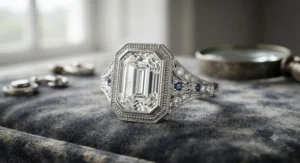
An emerald cut halo white gold setting takes a different approach entirely: a ring of smaller accent diamonds surrounds the center stone, both amplifying its perceived size and adding a secondary layer of sparkle that a step cut alone doesn’t naturally provide. The Kobelli Emerald-Cut Natural Diamond Halo Cathedral Engagement Ring on this list is the clearest example — its cathedral-style halo genuinely makes a roughly 1-carat center stone read larger and more elaborate than a same-size solitaire would.
Neither is objectively better. A solitaire suits buyers prioritizing clarity, color, and understated elegance; a halo suits buyers prioritizing perceived size and maximum sparkle for a given budget. Hand shape matters too — halos tend to flatter shorter fingers by adding visual length, while solitaires let a naturally elongated finger shape shine without competition.
Buyer’s Decision Framework
If budget is your single biggest constraint, choose a natural solitaire under half a carat, because you get real stone, real gold, and real certification without stretching finances thin. If size matters more than origin, choose a lab-grown solitaire, because the same dollar buys 30–50% more visible carat weight. If sparkle and perceived size matter more than clarity purity, choose a halo setting, because the surrounding diamonds do genuine optical work. If color is non-negotiable, choose the D or E color-grade option even at a smaller carat weight, because a step cut shows body color more honestly than a brilliant cut does. And if this is a milestone, big-budget purchase, choose a scalable listing that lets you dial in the largest comfortable carat weight within a consistent, verified grading range.
Safety, Regulations & Compliance Guide
A few practical, non-negotiable checks before any purchase in this category. First, confirm conflict-free sourcing — reputable sellers should be able to confirm Kimberley Process compliance for natural stones without hesitation. Second, confirm the metal disclosure: as covered above, white gold jewelry legally requires rhodium-plating disclosure under FTC guidelines, and a seller unwilling to confirm this in writing is a real red flag. Third, request the actual grading report (GIA or IGI) rather than relying on a listing’s stated grade alone — for any purchase over roughly a third of a carat, this documentation should be non-negotiable, not optional. Finally, confirm the seller’s return and resizing policy in writing before purchase; fine jewelry sizing issues are common enough that this single step prevents most post-purchase headaches.
Frequently Asked Questions
❓ What does emerald cut mean on a diamond ring?
❓ Is VS2 clarity good for an emerald cut diamond?
❓ Does white gold turn yellow over time?
❓ Is a lab-grown emerald cut diamond a real diamond?
❓ Is an emerald cut diamond more or less expensive than a round diamond?
Conclusion
A white gold emerald cut diamond ring rewards a shopper who does a little homework first — not because the shape is complicated, but because it simply plays by different rules than the round brilliant most people default to. Clarity matters more here than almost anywhere else in fine jewelry, color reads more honestly, and the metal itself needs a little ongoing care that’s easy to forget about at checkout. Of the seven rings covered here, the right pick really does come down to where your priorities sit: budget, size, clarity, or drama. What doesn’t change is the payoff — done right, this cut delivers a look that feels genuinely distinct from everything else on the counter.
Recommended for You
- Rose Gold Marquise Ring: 7 Stunning Picks for 2026
- White Gold Princess Cut Engagement Ring: 7 Stunning Picks for 2026
- Yellow Gold Princess Cut Ring: 7 Stunning Picks for 2026
Disclaimer: This article contains affiliate links. As an Amazon Associate, I earn from qualifying purchases. If you purchase products through these links, we may earn a small commission at no additional cost to you.
✨ Found this helpful? Share it with your friends! 💬🤗
