
In This Article
Women’s wedding bands for active lifestyles are rings engineered to survive sweat, impact, water, and constant motion. They are typically built from silicone, tungsten carbide, titanium, or hard-wearing gold in low-profile, comfort-fit shapes that resist snagging, scratching, and swelling-related tightness. They still work as a genuine symbol of commitment.

A traditional diamond-and-gold set was designed for brunch, not burpees. Kettlebell handles chew polished metal, and wide bands trap sweat. On the rare, ugly occasion a ring catches on a rack, a fence, or a pull-up bar, the damage can be serious. Ring avulsion injuries happen when a ring is yanked suddenly, and the Cleveland Clinic notes that almost all of them need surgery.
So shopping for women’s wedding bands for active lifestyles is really a hunt for three things at once. You want a ring you forget you’re wearing, one that still looks like a wedding band in photos ten years from now, and one that won’t hurt you when life goes sideways.
This guide sorts through seven real options across budget, mid-range, and premium tiers: silicone, tungsten, titanium, and solid gold. Instead of reciting spec sheets, I’ll translate every number into what it means at 6 a.m. in the gym or halfway up a switchback. You’ll also get a plain-English read on scratch resistant wedding bands, the hardness scale for ring metals, tungsten vs gold durability, and ring removal for workouts. Prices are ranges only, so check current pricing before you buy.
Quick Comparison: Women’s Wedding Bands for Active Lifestyles at a Glance
| Ring | Material | Price Range | Standout Trait | Best For |
|---|---|---|---|---|
| QALO Women’s Classic | Silicone | Under about $40 | Huge style variety | Everyday gym and wet work |
| Groove Life Thin | Silicone | Roughly $20–$40 | Breathable inner grooves | Sweaty, high-volume training |
| Enso Elements Classic Thin | Silicone | Roughly $30s–$40s | Metal-like finish | Office-to-gym crossover |
| Egnaro Braided | Silicone | Under about $25 | Ultra-thin, stackable | Backup or gym spare |
| King Will 4mm | Tungsten carbide | Roughly $20–$60 | Extreme scratch resistance | Daily wear, moderate lifting |
| TIGRADE 2mm Titanium | Titanium + CZ | Roughly $20–$50 | Featherweight sparkle | Low-impact active days |
| Amanda Rose 14K | Solid 14K gold | Roughly $250–$500 | Resizable, repairable | Heirloom, lower-risk activity |
Silicone options dominate on price and injury safety, which is why four of the seven picks live in that lane. King Will 4mm is the only entry that stays looking new after years of abuse, while Amanda Rose 14K is the only one you can resize or repair. If you train hard, the smartest setup for many women is a silicone ring for the gym and a metal ring for everything else.
💬 Just one click — help others make better buying decisions too!😊
Top 7 Women’s Wedding Bands for Active Lifestyles: Expert Analysis
1. QALO Women’s Classic Silicone Wedding Ring — widest style range on a budget
The headline here is choice. QALO sells women’s silicone bands in a long list of colors, patterns, and two-layer finishes, so this isn’t a one-look rubber loop. The material is medical-grade silicone, which is non-porous and non-conductive, a real plus around wet gear or electrical work. One third-party review reports the women’s version is built to give way at roughly 23 pounds of pressure, versus about 44 for the men’s. In practice, it’s meant to fail before your finger does. Treat that number as approximate, not a lab result.
Based on the spec picture, QALO is the low-regret pick for lifters, hikers, nurses, and anyone whose hands live in water. What most buyers overlook is sizing, because fit varies by style. Reviewers consistently praise the comfort and how well it handles messy, wet conditions. A recurring complaint is inconsistent fit, and one reviewer’s larger size slid off during handwashing. Others mention color fading with constant sweat and water.
Pros:
- ✅ Huge range of colors and patterns
- ✅ Reported break-away design for snag safety
- ✅ Cheap enough to keep spares
Cons:
- ❌ Fit can be inconsistent between styles
- ❌ Color may fade with sweat and water
Price sits roughly under $40 depending on style (check current price), which makes QALO excellent value as a dedicated workout ring.
2. Groove Life Thin Silicone Ring — breathable grooves for sweaty workouts
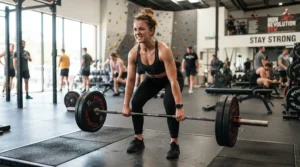
Groove Life built its reputation on molded channels inside the band that let air in and push moisture out. The Thin version runs about 5.5–6mm wide and comes in sizes 4 through 10. The brand says a rigid inner band keeps it from stretching into a floppy loop. That means less trapped sweat during hot yoga or spin, and a shape that should outlast bargain rubber rings. The brand’s 94-year guarantee covers breaks, tears, and stretching, though it notes fees may apply.
Here’s my read: this is the strongest silicone pick for high-sweat training. The brand advises sizing down, since silicone relaxes after a few days, and expecting a slightly stiff first week. One trade-off to weigh is that I couldn’t find a published break-away threshold. If you do rope climbs or rig work, ask the brand before assuming it will snap free. Buyers describe it as comfortable, and testers at The Inertia named it their best silicone option for women. One buyer reports it can flip inside out during heavy lifting.
Pros:
- ✅ Grooves for airflow and moisture release
- ✅ Slim 5.5–6mm low-profile shape
- ✅ Long guarantee coverage
Cons:
- ❌ Can flip inside out while lifting
- ❌ No published break-away rating found
Expect roughly the $20–$40 range (check current price), and Groove Life Thin is strong value for daily training.
3. Enso Rings Elements Classic Thin — most metal-like finish in silicone
Ever wish a silicone ring didn’t look like silicone? Enso infuses its Elements line with mineral and precious-metal finishes in gold, silver, and platinum tones. The rings are made in Utah from medical-grade silicone with built-in airflow channels. The brand describes an anti ring avulsion design meant to break away under pressure, and it advertises a lifetime guarantee. On paper, that’s a ring that photographs like jewelry and behaves like safety gear.
The analysis gets more nuanced once you read the testers. GearJunkie praised the realistic look and comfort but reported stretching after a few months of daily use, with several rings lost while swimming and a rough warranty process. The Inertia found Enso had more give than Groove Life but felt sturdier than budget options. One review site lists an average of around 3.5 on Trustpilot, so sentiment is mixed. This is the pick if appearance matters as much as performance, and if you’re willing to replace it as it loosens.
Pros:
- ✅ Most realistic precious-metal look
- ✅ Break-away safety design advertised
- ✅ Breathable channels for sweaty hands
Cons:
- ❌ Reported stretching within months
- ❌ Warranty experiences reported as bumpy
Price lands roughly in the $30s–$40s range (check current price). Enso Elements Classic Thin is worth it for looks, provided you budget for eventual replacement.
4. Egnaro Women’s Braided Silicone Wedding Ring — cheapest way to stack and swap
Egnaro takes the thin-and-stackable route. Listings show braided bands around 2.5mm wide and 1.8mm thick, plus a 3.5mm-wide version around 2mm thick, in many colors. Those dimensions make it the slimmest silicone in this lineup, which means almost no bulk under lifting gloves. The trade-off is that thinner silicone has less material to resist tearing and less structure to hold its shape.
I’d treat Egnaro as a gym spare rather than a forever ring. The maker claims medical-grade, non-toxic, hypoallergenic silicone, but those are manufacturer claims. I couldn’t find independent, verifiable review data solid enough to summarize, and I couldn’t confirm a warranty comparable to the lifetime-style coverage from Groove Life or Enso. That honesty matters, so use it where a lost or torn ring is an annoyance, not a heartbreak. It’s smart for beach days, pregnancy-swelling phases, or a backup in your gym bag.
Pros:
- ✅ Ultra-thin, low-profile feel
- ✅ Many colors for mixing and stacking
- ✅ Very inexpensive to replace
Cons:
- ❌ Long-term durability unverified
- ❌ Warranty details not confirmed
Price is typically under about $25 (check current price), so Egnaro Braided is good value as a backup, not a primary.
5. King Will 4mm Domed Tungsten Wedding Band — scratch-proof shine on a budget
Want a metal ring that still looks new after a year of keys, dumbbells, and door handles? King Will uses tungsten carbide, rated roughly 8.5–9 on the Mohs scale, about ten times harder than 18K gold according to jeweler sources. This 4mm domed style is a comfort-fit, unisex band with a listed thickness around 1.9mm. Comfort fit means a rounded interior that slides over the knuckle and reduces pinching.
Here’s the honest catch: tungsten resists scratches but is brittle. A sharp, heavy blow can crack it, and a cracked ring can’t be repaired. It also can’t be resized, so measure carefully. Emergency crews remove it by cracking it with locking pliers rather than cutting. Buyers describe a smooth glide-on fit and strong value, with the main worries being sizing and removal. It suits a desk-job-plus-moderate-gym life better than heavy barbell work.
Pros:
- ✅ Exceptional scratch resistance
- ✅ Holds polish with minimal upkeep
- ✅ Budget-friendly for a metal ring
Cons:
- ❌ Cannot be resized
- ❌ Can crack under sharp impact
Expect roughly $20–$60 depending on width and finish (check current price). King Will 4mm is outstanding value for scratch-free daily wear.

6. TIGRADE 2mm Titanium Eternity Ring — featherweight sparkle without snag risk
Titanium is the lightweight middle child. It’s about 6 on the Mohs scale, tougher against scratches than gold or platinum but softer than tungsten. It’s also hypoallergenic. The TIGRADE 2mm Titanium band wraps cubic zirconia stones all the way around a slim 2mm shank in sizes 3 through 13.5. With no prongs to catch, it’s a genuinely low-profile way to get sparkle.
Where it fits: low-impact active days, like walking, yoga, cycling, and desk-to-studio routines. A review-aggregator site summarizing buyer comments highlights all-day comfort, a low profile that doesn’t catch on clothing, and a ring holding up after months of continuous wear, including a healthcare worker. The caveats are that titanium generally can’t be resized and needs powered, diamond-coated tools for emergency removal. The CZ stones can also cloud or chip with hard knocks. For barbell days, swap it out.
Pros:
- ✅ Extremely light and comfortable
- ✅ Prong-free, snag-resistant profile
- ✅ Hypoallergenic metal
Cons:
- ❌ Difficult to resize or repair
- ❌ CZ stones can scuff with hard knocks
Price is roughly $20–$50 (check current price). TIGRADE 2mm Titanium is high value for sparkle-on-a-budget.
7. Amanda Rose 14K Gold 2mm Classic Plain Wedding Band — heirloom-grade and resizable
Not every active woman wants to abandon gold. The Amanda Rose 14K listing describes a solid, hallmarked, seamless one-piece band made in the USA, with a 30-day return policy. At 2mm it’s slim, and 14K is harder than 18K because it contains more hardening alloy. Pure gold sits around 2.5–3 on the Mohs scale, so expect scratches, but gold deforms rather than shattering, and a jeweler can polish, resize, and repair it.
My take is that this is a “one ring, real life” choice for lower-impact activity. Pair it with a silicone ring for lifting and you keep the heirloom safe. I couldn’t verify enough independent reviews to summarize honestly, so lean on the return window and inspect the fit carefully. Thin gold can also bend under hard knocks, and losing it hurts far more than losing silicone.
Pros:
- ✅ Solid gold, hallmarked and seamless
- ✅ Resizable and repairable by a jeweler
- ✅ Holds real long-term value
Cons:
- ❌ Scratches show quickly
- ❌ Costly if lost or damaged
Price runs roughly $250–$500 depending on the gold market (check current price). Amanda Rose 14K is best value if you’ll wear it for decades.
| Ring | Material | Toughness Note | Price Range | Review Theme | Best For |
|---|---|---|---|---|---|
| QALO Women’s Classic | Silicone | Reported break-away | Under about $40 | Comfort; sizing varies | Wet, messy workdays |
| Groove Life Thin | Silicone | Rigid inner band | Roughly $20–$40 | Comfort; can flip when lifting | Sweaty training |
| Enso Elements Classic Thin | Silicone | Break-away design | Roughly $30s–$40s | Realistic look; stretches | Office-to-gym |
| Egnaro Braided | Silicone | Thin, less structure | Under about $25 | Unverified | Backup ring |
| King Will 4mm | Tungsten | Scratch-proof, brittle | Roughly $20–$60 | Smooth fit; value | Daily wear |
| TIGRADE 2mm Titanium | Titanium | Light, lightly scuffs | Roughly $20–$50 | Comfort; low profile | Low-impact days |
| Amanda Rose 14K | 14K gold | Bends, doesn’t shatter | Roughly $250–$500 | Not verifiable | Heirloom wear |
Read the table by failure mode, not just price. Silicone stretches or tears, tungsten cracks, titanium scuffs, and gold scratches. The best ring for you is the one whose failure you can live with in your most demanding activity. That’s why the two-ring strategy, silicone for training and metal for life, keeps showing up.
Hardness Scale for Ring Metals: What the Numbers Really Mean
The Mohs scale ranks scratch resistance from 1 to 10, based on which materials can scratch which. It’s ordinal rather than linear, so a jump of one number isn’t a jump of one unit of toughness. Here’s roughly how the hardness scale for ring metals shakes out in jeweler sources: pure gold about 2.5–3, platinum 4–4.5, cobalt around 5.5, titanium around 6, and tungsten carbide roughly 8.5–9, with diamond at 10. Higher-karat gold is softer, so 14K outlasts 18K.
Why does this matter? Everyday grit commonly includes quartz, which sits around 7. Anything below that number can pick up micro-scratches from dust, gym chalk, and countertops, gold and titanium included. Tungsten carbide is the only common ring material that clears the bar.
But hardness is only half the story. Wikipedia cautions that the scale is not a reliable predictor of how materials endure in industrial settings, and jewelers stress it says nothing about toughness. Gold bends. Tungsten cracks. So when you read any hardness scale for ring metals chart, ask two questions: how does it wear, and how does it fail? Compare King Will 4mm with Amanda Rose 14K and you’re seeing that difference in action.

Tungsten vs Gold Durability: Which Fails Better?
Tungsten vs gold durability isn’t a simple win. Tungsten carbide resists scratching about ten times better than 18K gold, so it keeps its polish through years of desk, kitchen, and gym contact. But when a hard, sharp force finally arrives, tungsten tends to crack, and a cracked ring can’t be repaired. Gold behaves the opposite way, showing wear early but deforming instead of shattering, and a jeweler can restore it.
Resizing and resale also tilt the debate. Gold and platinum can generally be resized and hold intrinsic value, while tungsten and titanium usually can’t be resized and hold little resale value. For a long-term heirloom, gold is the safer bet, and for a tough, low-cost everyday band, tungsten wins.
| Factor | Tungsten (King Will 4mm) | 14K Gold (Amanda Rose 14K) | Silicone (Groove Life Thin) |
|---|---|---|---|
| Scratch resistance | Excellent | Low; polishable | Not metal; can scuff or tear |
| Impact behavior | Can crack | Bends, rarely shatters | Flexes; may break away |
| Resize or repair | No | Yes | Replace under warranty |
| Resale value | Minimal | Strong | None |
| Best For | Scratch-free daily wear | Heirloom, low-risk activity | Lifting, sweat, water |
Looking at the comparison above, King Will 4mm is the better bet if your priority is a ring that still looks new, while Amanda Rose 14K justifies its price only if you value resizing and longevity. Groove Life Thin sidesteps the metal debate entirely, which is why many lifters use it as their training ring. For most active women, tungsten vs gold durability ends in a compromise: tungsten for daily wear, silicone for the riskiest hour of the day.
Scratch Resistant Wedding Bands: What Actually Holds Up
Scratch resistant wedding bands sit on a clear ladder. Tungsten carbide leads, titanium follows, platinum and gold trail. Finish matters almost as much as metal, though. Brushed and matte finishes hide fine scratches and fingerprints far better than mirror polish, which is why many jewelers suggest satin surfaces for hard-working hands.
Silicone plays by different rules. It won’t scratch the way metal does, but it can scuff, tear, or stretch. That’s a different failure mode, not a lack of durability. Scratch resistance also isn’t the same as safety. A nearly scratch-proof ring is still a hard, unforgiving loop when it snags, which is why break-away silicone earns its place in the gym bag.
Keep two practical rules in mind when shopping for scratch resistant wedding bands. First, ask what happens when the ring fails, not just when it’s scratched. Second, remember that gold-plated tungsten styles can lose their plating over time, even if the carbide underneath stays intact. If perfect, permanent color matters, pick a solid-color option. King Will 4mm comes in polished and brushed looks, so choose the finish that matches how much wear you can tolerate.
How to Choose Women’s Wedding Bands for Active Lifestyles
The best choice depends on the riskiest thing you do in your ring, not the average day. Use these steps:
- Audit your activities. List impact, water, grip, and heat exposure. A lifter and a swimmer need different rings.
- Match material to failure mode. Silicone stretches or tears, tungsten cracks, titanium scuffs, and gold scratches. Pick the failure you can accept.
- Choose a slim, comfort-fit profile. Women’s bands commonly run 2–4mm, and a rounded interior reduces pinching over the knuckle.
- Size for swollen fingers. Measure at room temperature, since heat and cold shift finger size. For silicone, follow each brand’s fit advice, such as sizing down for Groove Life Thin.
- Check the safety design. Look for break-away claims or a plan for emergency removal.
- Decide between one ring or two. A silicone gym ring plus a daily metal ring solves most conflicts.
- Verify warranty, returns, and resizing. Non-resizable metals make return policies matter.
Low Profile Durable Wedding Rings: Why Slim Beats Showy
Low profile durable wedding rings work because less ring means less to catch. A band sitting close to the finger with a smooth, domed top has few edges to hook on a barbell, a zipper, or a fence. Sources on women’s bands commonly place typical widths between 1.5mm and 4mm, with many women choosing 2–4mm. Bezel and channel settings tuck stones inside metal walls, and half-eternity designs keep the underside plain and flush, which resists snagging.
There’s a trade-off, though. Very thin metal can bend more easily under a hard knock, particularly in soft gold. That’s why TIGRADE 2mm Titanium and Amanda Rose 14K suit lower-impact days, while thicker, stiffer silicone like Groove Life Thin handles the rough stuff. When you shop for low profile durable wedding rings, look for a comfort-fit interior and smooth edges, then ask whether the material can handle your sport. A ring that’s slim but fragile isn’t a bargain.
Gym-Friendly Wedding Bands: A Setup Guide for Every Workout
Gym-friendly wedding bands live or die on habits. Here’s a practical setup you can start this week.
First 30 days. Expect a break-in. Silicone can feel stiff for about a week before softening, so don’t panic-size up. Most brands suggest going down a size, since silicone relaxes.
By workout type.
- Lifting and rigs: silicone only, or no ring at all.
- Cardio and classes: silicone or low-profile titanium.
- Swimming: silicone, which is waterproof and unaffected by chlorine.
- Hiking or trail running: silicone with grooves for sweat.
Care. Rinse after sweaty sessions and use mild soap and warm water. Groove Life suggests removing its ring briefly in the shower to prevent soap buildup in the channels. For titanium, avoid ultrasonic cleaners and harsh chemicals.
Common mistakes. Wearing gold in the weight room, tossing rings loose into pockets, and buying silicone too tight. Keep a small ring dish or zip pouch in your gym bag, and you’ll avoid most disasters. Gym-friendly wedding bands aren’t about giving up symbolism. They’re about matching the ring to the hour.

Ring Removal for Workouts: When to Take It Off and How
Ring removal for workouts is a safety skill. Cleveland Clinic guidance says to avoid wearing rings or other jewelry when working with tools or heavy equipment. That includes barbells, rigs, and machinery, where a snagged band can cause the kind of injury that ends careers.
Normal removal when fingers swell. Heat, exercise, and salty meals can all swell fingers. Elevate your hand, rinse with cool water, and use soap or lotion as lubricant. Don’t force it, since forcing can make swelling worse.
Emergency removal depends on the metal. Gold, silver, and platinum can be cut with a ring cutter. Tungsten carbide and ceramic can’t be cut with standard cutters. According to emergency medicine guidance, they’re cracked with vise-grip-style locking pliers. Titanium and cobalt generally need a powered, diamond-coated cutter, according to several emergency-removal guides. Most ERs and fire departments carry the right tools, and you can call your local hospital ahead if you’re curious.
If your finger turns pale, purple, or numb, go to an emergency room. Home removal risks hurting the finger with the pliers themselves. Building ring removal for workouts into your routine, whether that’s a silicone swap or a habitual pocket-free ring dish, is cheaper than any ER visit.
Real-World Scenarios: Three Active Women, Three Rings
Here are three hypothetical profiles matched to real options.
The strength trainer. She lifts five days a week and has about $75 to spend. She’d pair Groove Life Thin for training with King Will 4mm for daily wear. Silicone handles the barbell, while tungsten keeps looking sharp for the office.
The trail runner and hiker. She logs long miles in heat, with swelling fingers and frequent sweat. QALO Women’s Classic or Enso Elements Classic Thin fits, because both are silicone, break-away oriented, and cheap to replace if lost on a trail. Size carefully and expect to replace it eventually.
The yoga-and-desk professional. She practices three days a week with low-impact movement and wants sparkle. TIGRADE 2mm Titanium works for its lightweight, low-profile feel, with Egnaro Braided as a rainy-day backup. If she wants heirloom quality, Amanda Rose 14K fits, ideally swapped for silicone during hard workouts.
Problem → Solution Guide for Active Ring Wearers
Problem: silicone stretches out. Solution: size down as brands suggest, and use warranty coverage. Watch for slipping when hands are wet, especially with Enso Elements Classic Thin, where testers reported stretching.
Problem: sweat rash or trapped moisture. Solution: choose grooved designs like Groove Life Thin, and dry your finger after workouts. Rotate rings so skin can breathe.
Problem: gold looks dull and scratched. Solution: pick a satin finish, and schedule a jeweler polish. Amanda Rose 14K can be restored in ways tungsten can’t.
Problem: worry about tungsten cracking. Solution: avoid hard impacts and keep King Will 4mm off the barbell. Remember it can’t be resized, so measure carefully.
Problem: finger swelling traps the ring. Solution: elevate, cool, and lubricate. If that fails, seek emergency removal, especially for tungsten or titanium bands.
Long-Term Cost & Maintenance
Cost per year tells a different story than the sticker price. A silicone ring you replace annually might cost roughly $20–$40 a year. A tungsten band could last many years with almost no maintenance. Gold costs the most up front, but it can be resized, repaired, and it holds intrinsic value.
| Path | Upfront | Replacement Cycle | Maintenance | Best For |
|---|---|---|---|---|
| Silicone-only (QALO, Groove Life Thin) | Low | Every 1–3 years, varies | Soap and water | Heavy training |
| Tungsten (King Will 4mm) | Low–mid | Many years unless cracked | Minimal | Scratch-free daily wear |
| Titanium (TIGRADE 2mm Titanium) | Low–mid | Several years | Gentle cleaning | Low-impact wear |
| 14K gold (Amanda Rose 14K) | High | Decades | Periodic polish | Heirloom wear |
| Two-ring system | Mid | Silicone every few years | Low | Most active women |
The two-ring system usually wins on total value, because the expensive ring avoids the abuse and the cheap ring absorbs it. Solo silicone is cheapest, though it may need replacing regularly. Gold’s advantage is longevity, but only if you protect it during hard workouts. Prices are ranges and gold in particular moves with the market, so check current pricing.
Common Mistakes When Buying Women’s Wedding Bands for Active Lifestyles
The first mistake is buying on hardness alone. A high rating says little about how a ring fails. The second is ignoring resizing, because tungsten and titanium rarely can be adjusted. The third is buying silicone too tight or too loose, since fit shifts as the material relaxes.
Another mistake is wearing a standard metal band for everything. Medical literature describes ring avulsion injuries as classically occurring when a wedding band catches on machinery or a protruding object. That’s a reason to keep a break-away option handy. Also skipping the fine print on warranties, returns, and fees is costly. Groove Life Thin notes fees may apply, and reviewers of Enso Elements Classic Thin flagged warranty friction.
Finally, don’t assume a plated finish is permanent. Gold-plated tungsten can lose color even when the core stays intact. Pick solid tones if you’re rough on jewelry, and always match the ring to your riskiest habit.
FAQ
❓ What is the most durable wedding band for a woman who works out every day?
❓ Can you wear a tungsten wedding band to the gym?
❓ Are silicone rings good women's wedding bands for active lifestyles?
❓ How much should I spend on scratch resistant wedding bands?
❓ Can tungsten or titanium bands be resized?
Conclusion
The best women’s wedding bands for active lifestyles aren’t about one perfect metal. They’re about matching a ring’s failure mode to your riskiest habit. QALO Women’s Classic, Groove Life Thin, and Enso Elements Classic Thin cover the training-day needs with silicone, while Egnaro Braided is a cheap spare. King Will 4mm delivers scratch-proof daily wear, TIGRADE 2mm Titanium brings light sparkle, and Amanda Rose 14K offers heirloom-quality gold you can resize and repair.
If you want a single recommendation, build a two-ring system. Wear a silicone band for lifting, swimming, and trails, and wear tungsten or gold for everything else. Measure carefully, respect ring removal for workouts, and never force a stuck ring. Prices move, so check current pricing before you buy.
Recommended for You
- Curved Wedding Bands For Curved Engagement Rings: 7 Best Picks 2026
- Thin Stackable Wedding Bands For Layering: 7 Best Picks 2026
- 7 Best Stackable Wedding Bands For Petite Fingers In 2026
Disclaimer: This article contains affiliate links. As an Amazon Associate, I earn from qualifying purchases. If you purchase products through these links, we may earn a small commission at no additional cost to you.
✨ Found this helpful? Share it with your friends! 💬🤗
