In This Article
Classic gold wedding bands vs platinum wedding bands is a choice between a warm, alloyed metal sold by karat purity, usually 14k or 18k, and a dense, naturally white metal sold at roughly 95% purity. Both are precious and traditional. On a real hand over real decades, they behave very differently. 💍
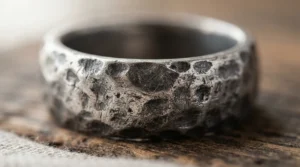
You’ll wear this thing while washing dishes, hauling luggage, gripping steering wheels, and slamming car doors. Nobody warns you about that part in the jewelry-store glow. The catalog photo is the first day of the relationship. What matters is year twenty-two.
Before comparing anything, know that the labels are legally policed. The FTC’s consumer guidance on buying platinum, gold, and silver jewelry explains that karat marks show how much pure gold a piece contains, and that anything under 50% pure platinum can’t be sold as “platinum.” Read the stamp. It’s your first line of defense.
Here’s how this guide works. I researched seven real bands sold on Amazon, spanning platinum, 14k, and 18k gold. I pulled real specs from the listings and the best available industry testing, then translated the numbers into daily-life meaning. Where I couldn’t verify something, such as review sentiment or live listing prices, I say so plainly. Prices below are ranges I estimated from metal weight and September 2026 spot levels, not live Amazon prices. Check current price before you buy.
Skip ahead if you like, but the short version is this: platinum wins on longevity, gold wins on flexibility and upfront cost, and the “harder metal wins” argument is shakier than jewelers admit.
Quick Comparison: 7 Wedding Bands at a Glance
| Band | Metal | Width | Standout | Best For |
|---|---|---|---|---|
| Amazon Collection Standard Comfort Fit Platinum Milgrain Wedding Band | 950 platinum | 6mm | Vintage milgrain edges | Traditional platinum fans |
| Jewelry Stores Network Solid Platinum 6mm Comfort Fit Wedding Band | 950 platinum | 6mm | Plain, unisex, solid | Matching couples |
| 950 Platinum 6 mm Plain Wedding Band | 950 platinum (hollow) | 6mm | Lightest platinum route | Budget platinum, known size |
| Sonia Jewels Solid 14k Yellow Gold 6mm Comfort Fit Wedding Band | 14k yellow gold | 6mm | Stamped, boxed classic | Traditional gold on a budget |
| GM Wedding Collection 14k White Gold 6mm Comfort Fit Plain Wedding Band | 14k white gold | 6mm | White look, gold pricing | Platinum-look seekers |
| Sonia Jewels Solid 18k Yellow Gold 4mm Comfort Fit Wedding Band | 18k yellow gold | 4mm | Richest gold color | Slim, stackable style |
| Men’s and Women’s 18k Yellow Gold 4mm Heavy Comfort Fit Plain Wedding Band | 18k yellow gold | 4mm | Thicker shank | Durable 18k seekers |
Two things jump out. The widths cluster at 6mm and 4mm, so you’re really choosing metal, not silhouette. Second, the Sonia Jewels Solid 18k Yellow Gold 4mm Comfort Fit Wedding Band and the Men’s and Women’s 18k Yellow Gold 4mm Heavy Comfort Fit Plain Wedding Band share a width but not a thickness. That gap matters far more than the table suggests.
💬 Just one click — help others make better buying decisions too!😊
Top 7 Gold and Platinum Wedding Bands: Expert Analysis
1. Amazon Collection Standard Comfort Fit Platinum Milgrain Wedding Band — vintage detailing, platinum staying power
Milgrain is that tiny beaded edge you see on antique rings, and it’s the reason this band doesn’t read as “generic plain platinum.”
The listing shows 950 platinum, meaning 95% pure, at 6mm wide with a rounded comfort-fit interior. In practice, comfort fit helps the ring slide over a knuckle without pinching once your fingers swell in summer heat. The milgrain adds texture, and texture is a quiet advantage. Fine scratches blend into detailed edges better than they do across a mirror-flat surface.
Based on the spec comparison, this suits someone who wants platinum’s heft and purity in a traditional, slightly vintage style. Six millimeters is a statement width, though. On a smaller hand it can feel like wearing a napkin ring.
I couldn’t retrieve verified review text for this listing, so there’s no aggregated sentiment to report. Before buying, scan recent reviews for comments on finish quality and sizing consistency.
Pros:
- ✅ Genuine 950 platinum purity
- ✅ Milgrain edges hide micro-scratches well
- ✅ Comfort-fit interior for swollen-finger days
Cons:
- ❌ 6mm width overwhelms smaller hands
- ❌ Polished areas will still dull into patina
Estimated range: roughly $900-$1,500. Check current price. The value verdict is strong for detail-loving platinum buyers.
2. Jewelry Stores Network Solid Platinum 6mm Comfort Fit Wedding Band — plain solid platinum for couples
This is the no-drama option. The listing markets it for men, women, and couples alike, which is unusual and useful.
It’s solid 950 platinum, 6mm wide, with a comfort-fit profile. “Solid” is the key word here. It means the full mass of platinum that gives the metal its wear behavior, which the hollow option below doesn’t offer. A plain polished surface is also the easiest to refresh, since a jeweler can re-polish it without fighting intricate detail.
Here’s what to weigh. Sibling listings from the same seller include a 4mm half-round version, so a couple could pair a 6mm and a 4mm in identical metal. That’s a practical way to match without matching widths. This is spec-sheet reasoning, not a test result.
No verifiable review summary came up in my research for this listing. Read the newest reviews and look for mentions of fit accuracy and packaging.
Pros:
- ✅ Solid platinum, not a hollow shell
- ✅ Unisex profile suits matching sets
- ✅ Plain surface refinishes cleanly
Cons:
- ❌ Heavier feel than gold at the same width
- ❌ Plain look shows scuffs faster than textured styles
Estimated range: roughly $1,000-$1,600. Check current price. Good value if you want platinum without decoration tax.
3. 950 Platinum 6 mm Plain Wedding Band — lightest, cheapest way into platinum
This one comes with an asterisk you must read before clicking anything. The listing says the ring is built as a hollow tube and cannot be resized.
Hollow construction is how it stays light and cheaper. It’s also where the platinum durability story partly falls apart. Platinum’s reputation rests on dense, solid metal that displaces rather than wears away. A hollow shell can dent inward under a crushing blow and can’t be reshaped like a solid ring.
So who is it for? Someone with a stable finger size, a desk-bound or low-impact life, and a strong desire for the platinum look and hypoallergenic ring metals credentials at a lower price. It’s a poor pick for a first-time buyer, since sizing can change with age, weight, and pregnancy.
I found no verifiable review summary for this listing during research. Read recent reviews specifically for sizing accuracy and dent complaints.
Pros:
- ✅ Real 950 platinum at lighter weight
- ✅ Lower metal cost than solid platinum
- ✅ Wide 6mm look without heavy feel
Cons:
- ❌ Cannot be resized per the listing
- ❌ Hollow shell can dent under crushing force
Estimated range: roughly $500-$900. Check current price. It’s a real value only if you accept those limits.
4. Sonia Jewels Solid 14k Yellow Gold 6mm Comfort Fit Wedding Band — classic warmth, easy on the budget
If “wedding band” conjures a warm yellow half-round in your head, this is that ring.
The listing describes a half-round profile, 14k stamp, 6mm width, and 1.7mm thickness, with a ring box included. Fourteen-karat gold is 58.5% gold, and that lower purity is exactly why it resists daily knocks better than richer alloys. The 1.7mm shank is on the slim side for a 6mm-wide band, though. It feels light, but there’s less metal to lose across decades of wear.
Here’s the analysis. This works for someone who wants traditional yellow gold at a friendlier price and accepts a polish every few years. If you’re rough on your hands, consider a thicker shank.
Verified review sentiment wasn’t retrievable for this listing. Check the reviews for comments about finish and thickness in person versus photos.
Pros:
- ✅ Stamped 14k with classic half-round profile
- ✅ Tough alloy ratio for everyday wear
- ✅ Ring box included per listing
Cons:
- ❌ Slim 1.7mm shank for the width
- ❌ Scratches and needs occasional polishing
Estimated range: roughly $650-$1,000. Check current price. Solid value for a traditionalist.
5. GM Wedding Collection 14k White Gold 6mm Comfort Fit Plain Wedding Band — the platinum look at a gold price
White gold is the impersonator of this lineup, and a decent one, if you understand what you’re buying.
The listing shows 14k white gold, 6mm, plain unisex profile, comfort fit. The care note says to wipe with a soft cloth and avoid harsh chemicals. White gold is yellow gold whitened with other metals, and most shops rhodium-plate it for that bright mirror finish. Plating wears off, roughly every couple of years according to jeweler guidance, which means recurring upkeep platinum doesn’t have.
The listing snippet doesn’t say whether the whitening alloy is nickel-based or palladium-based, so nickel-sensitive buyers should ask the seller before ordering. Also, the specific size listing I saw sat at a very low sales rank, which suggests a thin review pool. You can’t lean on crowd wisdom here.
Pros:
- ✅ Bright white look at gold-tier pricing
- ✅ Plain profile is easy to polish
- ✅ Comfort-fit rounded interior
Cons:
- ❌ Needs periodic rhodium replating
- ❌ Alloy composition isn’t stated in the listing
Estimated range: roughly $650-$1,000. Check current price. Good value for the look, provided you budget for replating.

6. Sonia Jewels Solid 18k Yellow Gold 4mm Comfort Fit Wedding Band — richest color, slim stackable profile
Eighteen-karat gold is the sunniest, most buttery yellow you can buy in a wedding band. That’s not marketing. It’s 75% gold showing off.
The listing describes a 4mm half-round band, 1.6mm thick, 18k stamp, ring box included. At 75% purity, this alloy is softer than 14k. Combine that with a slim 1.6mm shank and you get a beautiful, delicate ring that rewards gentle wear. It stacks nicely under an engagement ring.
Who should buy it? Desk workers, gentle-handed wearers, and anyone who loves the color more than they fear a few dents. Who should skip it? Anyone lifting weights, working with tools, or planning to wear it through decades of contact sports.
No verifiable reviews turned up in my research. Look for feedback on ring thickness and whether it holds its shape.
Pros:
- ✅ Deep, rich 18k color
- ✅ Slim profile stacks with engagement rings
- ✅ 18k stamp and box per listing
Cons:
- ❌ Softer alloy dents more readily
- ❌ Thin 1.6mm shank has little wear margin
Estimated range: roughly $600-$950. Check current price. Great for the right lifestyle, risky for the wrong one.
7. Men’s and Women’s 18k Yellow Gold 4mm Heavy Comfort Fit Plain Wedding Band — the sturdier 18k answer
This is the fix for the problem in pick six. The listing calls out a heavier comfort fit, 4mm wide and 2.55mm thick.
Thickness is the secret ingredient. That’s about a millimeter more depth than the slimmer 18k band, which translates into more metal to wear through, more resistance to bending, and a more substantial feel. It’s the same rich 18k color with better survival odds.
Based on the spec comparison, this is the smarter 18k purchase for anyone with an active life. The trade-off is cost, since more metal means a higher price, and weight, since it feels more present on the finger. The listing title doesn’t clearly name a brand, so verify seller details before ordering.
Verified review sentiment wasn’t retrievable here. Read reviews for finish quality and sizing.
Pros:
- ✅ 2.55mm thickness adds real durability
- ✅ Unisex half-round classic
- ✅ Rich 18k color
Cons:
- ❌ Costs more than slimmer 18k bands
- ❌ Brand isn’t clear from the listing title
Estimated range: roughly $900-$1,400. Check current price. Good long-term value if you choose 18k.
| Band | Purity | Thickness | Resizable? | Est. Range | Best For |
|---|---|---|---|---|---|
| Amazon Collection Platinum Milgrain Band | 95% | Not stated | Typically yes, via a platinum-savvy jeweler | $900-$1,500 | Vintage-style platinum |
| Jewelry Stores Network Platinum 6mm | 95% | Not stated | Typically yes | $1,000-$1,600 | Matching couples |
| 950 Platinum 6 mm Plain Wedding Band | 95% | Hollow tube | No, per listing | $500-$900 | Fixed-size, low-impact wear |
| Sonia Jewels 14k 6mm | 58.5% | 1.7mm | Yes | $650-$1,000 | Traditional gold on a budget |
| GM Wedding Collection 14k White Gold | 58.5% | Not stated | Typically yes | $650-$1,000 | White look for less |
| Sonia Jewels 18k 4mm | 75% | 1.6mm | Yes | $600-$950 | Gentle-handed wearers |
| 18k Heavy Comfort Fit Plain Band | 75% | 2.55mm | Yes | $900-$1,400 | Durable 18k |
Looking at the comparison above, the real dividing line isn’t gold versus platinum. It’s solid versus thin. The Sonia Jewels 18k 4mm and the 18k Heavy Comfort Fit Plain Band are the same karat and width, yet the extra thickness of the latter is what buys longevity. Budget shoppers should note that the 950 Platinum 6 mm Plain Wedding Band saves money by giving up resizing, which is a trade only some buyers should make.
How to Choose Between Classic Gold Wedding Bands vs Platinum Wedding Bands
Here’s how to decide, in order, so you don’t get seduced by a shiny listing photo.
- Rank your priorities. Pick your top two from color, longevity, upkeep, and upfront cost. Platinum favors longevity and low upkeep; gold favors upfront cost and color variety.
- Match the metal to your hands. Heavy manual work, weight lifting, and climbing punish thin gold. Thickness and solid construction matter more than the metal name.
- Test your skin history. If you’ve ever reacted to cheap earrings, treat nickel as a suspect and ask any seller about alloy composition before purchase.
- Set a thickness floor. Wide but thin bands, like 6mm at under 2mm thick, feel light but wear through faster. Thicker is a better investment in any metal.
- Confirm the stamp. Platinum should read 950 Pt or similar. Gold should show 14k or 18k, plus a maker’s mark.
- Decide your maintenance tolerance. If replating and polishing sound like chores, platinum or 18k yellow gold reduce recurring work.
Simple shortcut: If you want the least maintenance, choose solid platinum. If you want the best cost-to-durability ratio, choose 14k yellow in a thicker shank. If you love deep yellow color and have gentle hands, choose 18k, and go thick.
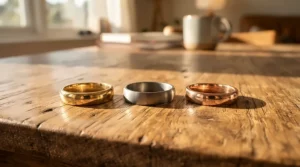
Gold vs Platinum Durability: What the Evidence Actually Says
The internet loves “platinum is harder, so it wins.” The truth is more interesting, and messier.
The Platinum Guild International commissioned a study on wear resistance of platinum and gold alloys. JCK’s coverage of the study reports that in abrasion tests, gold lost metal weight while platinum did not, and that white gold specimens showed a major color change in corrosion tests. One important caveat: PGI is an industry group that promotes platinum, so treat the findings as informative but not neutral.
Here’s the twist. The same coverage notes that higher Vickers hardness did not lead to less mass or volume loss in either metal. In other words, gold vs platinum durability isn’t a hardness contest. Platinum tends to move around under stress. It scratches, and those scratches displace metal rather than remove it, leaving a soft, satin patina many owners love and some hate. Gold, by contrast, sheds tiny amounts of material with wear and polishing, which is why an old gold band can look thinner at the bottom of the shank.
Real-world translation: after twenty-plus years of daily wear, a platinum band usually keeps its mass and shows character marks. A gold band may need a rebuild or replacement sooner, particularly in slim styles. Neither is fragile with reasonable care. Platinum just plays a longer game.
Metal Hardness Comparison: Why the Numbers Mislead
Hardness numbers are seductive because they look like verdicts. They aren’t.
| Property | Platinum 950 | 18k Gold | 14k Gold |
|---|---|---|---|
| Purity | ~95% | 75% | 58.5% |
| Hardness (Vickers, typical figures) | ~130, roughly 150 with special treatment | Varies by alloy recipe | ~150 (white gold example) |
| Weight feel | Baseline: heaviest | Platinum runs roughly 40% heavier | Platinum runs roughly 60-70% heavier |
| Wear behavior | Displaces, keeps mass | Gradual mass loss | Gradual mass loss |
| Best For | Longevity, low upkeep | Rich color, gentle wear | Value, everyday toughness |
Looking at the table, a typical 14k white gold recipe posts a higher Vickers number than platinum, yet platinum shows better wear resistance in the industry test above. That’s the paradox behind every metal hardness comparison. Indentation resistance and abrasion resistance are different behaviors. On the Mohs scale, platinum sits around 3.5 and pure gold around 2.5-3, but nobody wears pure gold.
Bottom line: use hardness as a rough guide, not a final answer. Thickness, purity, and the way the metal wears matter more. Heavier also means more comfortable for some people and annoying for others, so try platinum’s weight before committing.
14k vs 18k Gold Wedding Bands: Purity, Strength, and Color
The choice between 14k vs 18k gold wedding bands comes down to a three-way tug-of-war: color, strength, and skin.
Fourteen-karat gold is about 58.5% gold, while 18k is 75%, and that purity gap drives everything. The 18k band has a deeper, richer yellow and feels more luxurious. The 14k band contains more alloy metals, which makes it tougher in daily use and gentler on your budget. Since 18k is both purer and denser, an identically sized 18k band contains roughly 50% more actual gold than its 14k twin. That’s the hidden reason it costs so much more.
For skin sensitivity, the American Academy of Dermatology lists 18-karat yellow gold among nickel-free options, while lower karats and white gold deserve more scrutiny. Color also matters. White gold at 14k typically needs rhodium plating to look bright white, because its natural tone is warmer than most people expect.
My advice, framed as reasoning: choose 14k for active lives and tighter budgets, and choose 18k only if you also choose thickness. The Sonia Jewels 14k 6mm and the 18k Heavy Comfort Fit Plain Band represent those two philosophies well.
Hypoallergenic Ring Metals: Who Needs Them and What Qualifies
Nickel is the villain in most jewelry-rash stories, and estimates of how many people react range from roughly 10% to nearly 20% depending on the source. The AAD’s guidance says to wear nickel-free, hypoallergenic metals, and lists options such as 18-, 22-, and 24-karat yellow gold as safer choices.
Here’s where hypoallergenic ring metals get tricky. White gold has historically used nickel as a whitening agent, so a real gold ring can still trigger a reaction. Palladium-based white gold is the safer version. Platinum at 950 purity is widely described as hypoallergenic, but the remaining 5% is other metals, so ask what they are. Some people who react to nickel also react to cobalt. Gold allergy itself exists too. DermNet notes it’s often seen alongside nickel and cobalt allergy.
No metal is universally safe. If you’ve had reactions before, ask any seller for alloy details in writing and consider a patch test with a dermatologist. For sensitive skin, the best bets are typically 18k yellow gold, palladium white gold, or platinum with a confirmed alloy. Notice the GM Wedding Collection 14k White Gold listing doesn’t state its whitening metal, which is exactly the question you’d need answered.
Platinum Wedding Band Cost: Why the Premium Exists
Platinum wedding band cost is usually explained with one word: rare. The full picture has more layers.
First, purity. A platinum band is around 95% platinum, while a 14k band is 58.5% gold. Second, density. Platinum bands run roughly 60-70% heavier than the same band in 14k, so the ring simply contains more metal. Third, labor. Platinum is harder to work and polish, which typically raises the making cost.
Now the surprising part: spot prices. Gold traded around $4,300 an ounce in late September 2026, while one September 22 reading put platinum near $1,830, roughly 22% higher than a year earlier. Platinum has also been volatile, having sat above $2,300 in late February, per Fortune’s price tracking. Sources vary, so treat these as approximate.
Rough back-of-envelope math for a size-10, 6mm band puts the raw metal content near $450-$550 for 14k, $550-$700 for solid platinum, and $700-$850 for 18k. That’s an estimate of metal only, not retail. It suggests the platinum premium at the moment comes more from labor and markup than from the metal itself. The old rule “platinum always costs far more” is less reliable than it used to be.

Wedding Band Metal Pricing: Value Analysis
Wedding band metal pricing looks different when you spread it across decades.
| Metal Option | Est. Range (6mm-class) | Recurring Costs | Best For |
|---|---|---|---|
| 14k yellow gold, like Sonia Jewels 14k 6mm | $650-$1,000 | Occasional polish | Value seekers |
| 14k white gold, like GM Wedding Collection 14k White Gold | $650-$1,000 | Rhodium replating every couple of years | Platinum-look budgets |
| 18k yellow gold, like 18k Heavy Comfort Fit Plain Band | $900-$1,400 | Occasional polish | Rich color fans |
| Solid platinum, like Jewelry Stores Network Platinum 6mm | $1,000-$1,600 | Optional re-polish | Long-term wearers |
| Hollow platinum, like 950 Platinum 6 mm Plain Wedding Band | $500-$900 | None planned, but no resizing | Fixed-size, low-impact wear |
Prices here are estimates, not listing prices. Check current price.
The table shows that white gold’s cheap entry price gets partly eaten by replating over time. Spread a $1,200 platinum band across forty years and it costs about $30 a year. A $700 gold band that needs one rebuild and periodic replating can close much of that gap. The Amazon Collection Platinum Milgrain Band and the Sonia Jewels 14k 6mm show two honest paths: pay more once, or pay less and maintain more. Total cost of ownership, not sticker price, is the real comparison.
Care and Maintenance Guide: Your First 30 Days
Most wedding band regret starts in month one, not year ten. Here’s the playbook Amazon listings don’t give you.
- Expect swelling swings. Fingers change size with heat, salt, and time of day. Comfort fit interiors, like those on the Jewelry Stores Network Platinum 6mm and Sonia Jewels 14k 6mm, help a lot. If it feels tight in the evening, don’t force it. Check size at different times of day.
- Take it off for heavy gripping. Gym barbells and hand tools concentrate pressure on a thin shank. Remove the ring first, especially on slimmer bands like the Sonia Jewels 18k 4mm.
- Avoid harsh chemicals. Bleach and strong cleaners can harm gold alloys, and listings like the GM Wedding Collection 14k White Gold explicitly advise gentle cleaning with a soft cloth.
- Clean gently. Warm water, mild soap, and a soft brush work for most rings.
- Store it separately. Toss it in a drawer with other jewelry and it will scratch or be scratched.
- Book a check-up. Have a jeweler inspect it once a year. Platinum can be re-polished, though many owners keep the patina. White gold may need replating.
- Know your resizing limits. The hollow 950 Platinum 6 mm Plain Wedding Band can’t be resized per its listing, so don’t buy it if your size is still changing.
Real-World Scenarios: Which Metal Fits Which Life
Let’s translate specs into actual lives. These are hypothetical profiles built from the specs above.
The healthcare worker. Picture someone washing hands thirty times a shift, with a budget around $1,000. Constant chemical exposure and friction favor a durable metal. Solid platinum like the Jewelry Stores Network Platinum 6mm is the long-term pick if budget allows. If not, the Sonia Jewels 14k 6mm is a tougher, cheaper alternative, though its slim shank calls for care.
The weekend climber and DIYer. High impact, frequent grip pressure, and rough surfaces punish thin or hollow bands. Avoid the 950 Platinum 6 mm Plain Wedding Band here, since dents in a hollow shell can’t be reshaped. Go solid: the Amazon Collection Platinum Milgrain Band, whose milgrain edges hide scuffs, or the 18k Heavy Comfort Fit Plain Band for its thicker shank.
The nickel-sensitive teacher. Desk-bound, gentle hands, history of earring rashes. Skip anything with unspecified white-gold alloy. The Sonia Jewels 18k 4mm suits gentle wear, and per the AAD’s nickel guidance, 18k yellow gold is among the safer picks. Confirm the alloy with the seller anyway.
The pattern is simple. The more punishing your life, the more thickness and solid construction matter, no matter which metal you choose.
Common Mistakes When Buying Wedding Bands
Learn from other people’s mistakes. It’s cheaper.
- Chasing hardness numbers. As shown above, higher Vickers doesn’t guarantee less wear. Weight retention and thickness tell you more.
- Ignoring thickness. A 6mm band at 1.7mm thick looks generous but has little material to lose. Compare thickness, not just width.
- Skipping the stamp. Under FTC guidance, platinum should be marked appropriately and gold should carry a karat mark. If it isn’t stamped, ask why.
- Assuming white gold is maintenance-free. Rhodium plating fades, and the underlying gold is naturally warmer than the bright finish suggests.
- Buying hollow without a plan. Hollow platinum can’t be resized per the listing, so it’s a bad match for changing hands.
- Judging only by spot price. Spot doesn’t include labor, weight, or retail markup, so it can’t predict your price tag.
FAQ
❓ Do platinum wedding bands scratch?
❓ Is 18k gold too soft for an everyday wedding band?
❓ Can you resize a platinum wedding band?
❓ Are platinum wedding bands worth the extra money?
❓ How can you tell if a wedding band is real platinum?
Conclusion
So, classic gold wedding bands vs platinum wedding bands: who wins? It depends on which decade you’re optimizing for.
Platinum is the long-haul metal. It keeps its mass, needs no replating, and, once you confirm the alloy, is a solid choice among hypoallergenic ring metals. Gold is the flexible one. It costs less up front, comes in richer colors, and is easy to resize and repair. The catch with gold is thickness and upkeep, especially with white gold and slim 18k styles.
If you want my bottom line, framed as reasoning from the specs and evidence: pick solid platinum like the Jewelry Stores Network Platinum 6mm or the Amazon Collection Platinum Milgrain Band if you want to buy once and forget it. Pick the Sonia Jewels 14k 6mm if value and toughness lead your list. Pick the 18k Heavy Comfort Fit Plain Band if you love deep gold color and want it to last. Treat the GM Wedding Collection 14k White Gold, the Sonia Jewels 18k 4mm, and the 950 Platinum 6 mm Plain Wedding Band as good-fit picks for specific lives, not universal answers.
Whatever you choose, read the stamp, measure the thickness, ask about the alloy, and check current price before you commit. The ring you’ll actually love wearing is the one built for your hands, not the one that won the internet argument.
Recommended for You
- Women’s Wedding Bands For Active Lifestyles: 7 Proven Picks 2026
- Curved Wedding Bands For Curved Engagement Rings: 7 Best Picks 2026
- Thin Stackable Wedding Bands For Layering: 7 Best Picks 2026
Disclaimer: This article contains affiliate links. As an Amazon Associate, I earn from qualifying purchases. If you purchase products through these links, we may earn a small commission at no additional cost to you.
✨ Found this helpful? Share it with your friends! 💬🤗
