In This Article
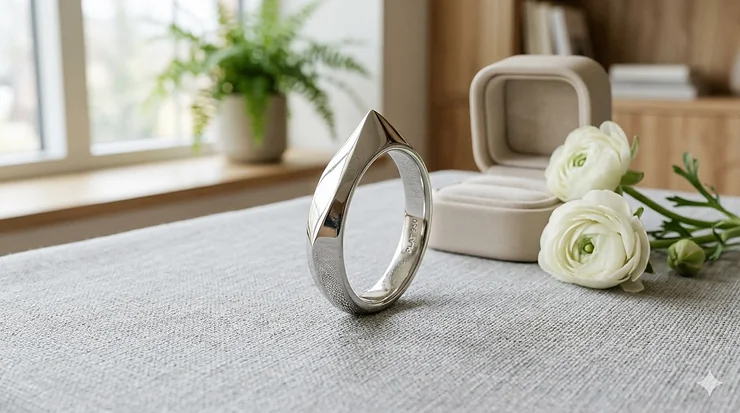
Have you ever noticed how a simple design element can completely transform a piece of jewelry? That’s exactly what modern knife edge design brings to the table. This architectural approach to ring craftsmanship creates a distinctive raised ridge along the band’s outer edge, resulting in a sharp, angular profile that catches light in the most mesmerizing ways.
Unlike traditional rounded bands that blend into your finger, the modern knife edge design stands out with its bold geometry. The technique involves carefully shaping the metal so that two sloped surfaces meet at a precise point, creating what looks like the edge of a blade running around the circumference of the ring. It’s this sharp elegant lines that make these rings instantly recognizable and utterly captivating.
What makes this style particularly appealing in 2026 is its versatility. Whether you’re drawn to knife edge diamond bands with pavé settings, angular knife edge rings with solitaire stones, or contemporary architectural rings in plain metal, there’s a design that speaks to your aesthetic. The geometric edge band has evolved from a simple structural choice into a statement of modern minimalist jewelry philosophy.
Quick Comparison Table
| Ring Model | Metal Type | Diamond Weight | Price Range | Best For |
|---|---|---|---|---|
| FRIENDLY DIAMONDS Eva | 14K/18K Gold | 1.0 ct | $$$$ | Premium Lab-Grown |
| FRIENDLY DIAMONDS Eloise | 14K/18K Gold | 1.0 ct | $$$$ | Modern Solitaire |
| 14K Rose Gold Promise | 14K Rose Gold | 0.75 ctw | $$$ | Promise Rings |
| JewelryWeb 4mm Comfort | 14K White Gold | None | $$ | Classic Wedding Band |
| Roy Rose 6mm Band | 10K White Gold | None | $$ | Men’s Wedding |
| Solid 14K Minimalist | 14K White Gold | None | $$ | Stackable Style |
| Sterling Silver 2mm | 925 Sterling Silver | None | $ | Budget-Friendly |
💬 Just one click – help others make better buying decisions too! 😊
Top 7 Modern Knife Edge Design Rings: Expert Analysis
1. FRIENDLY DIAMONDS Eva Six Prong Knife Edge Ring
If you’re searching for a show-stopping engagement ring that combines ethical sourcing with stunning aesthetics, the FRIENDLY DIAMONDS Eva deserves your attention. This IGI-certified lab-grown diamond ring features a cushion-cut 1-carat center stone (FG color, VS1-VS2 clarity) set in a secure six-prong basket.
Key Specifications:
- Metal options: 14K or 18K in white, yellow, or rose gold
- Center stone: 1.0 ct cushion-cut lab-grown diamond
- Band profile: Knife edge with smooth finish
The contemporary style shank features a slight knife edge that brilliantly showcases the center diamond while maintaining structural integrity. Customer feedback consistently praises the ring’s exceptional sparkle and the peace of mind that comes with IGI certification.
✅ Pros: Premium lab-grown diamonds, ethical sourcing, IGI certification
✅ Pros: Multiple metal options, secure six-prong setting
✅ Pros: Excellent light reflection from knife edge design
❌ Cons: Higher price point, lead time for customization
❌ Cons: Cannot be resized after creation
Price Range: $1,800-$2,500 (varies by metal choice)
2. FRIENDLY DIAMONDS Eloise Solitaire Knife Edge Ring
The FRIENDLY DIAMONDS Eloise takes a minimalist approach to the modern knife edge design. This four-prong solitaire setting features a gradually tapering knife edge band that lends contemporary flair without overwhelming the center stone.
Key Specifications:
- Center stone: 1.0 ct cushion-cut lab-grown diamond (FG color, VS1-VS2)
- Metal options: 14K or 18K gold in three finishes
- Band width: Gradually tapers from base to setting
What sets this apart is the bold yet comfortable design that embraces your finger naturally. The knife edge creates an illusion of a thinner band from the top view, making the center stone appear even more prominent. Customers appreciate the surprise diamond at the base of the center stone—a thoughtful detail that adds hidden sparkle.
✅ Pros: Four-prong setting for minimalist aesthetic
✅ Pros: Tapered design enhances center stone appearance
✅ Pros: Renewable energy lab manufacturing
❌ Cons: Four prongs may not appeal to those preferring maximum security
❌ Cons: Special order requires 3-4 weeks delivery
Price Range: $1,700-$2,400
3. 14K Rose Gold Diamond Promise Ring with Knife Edge Shank
Looking for something between a promise ring and a full engagement ring? This 14K Rose Gold Promise Ring strikes that perfect balance. The petite knife edge shank features round brilliant-cut diamonds along the band, culminating in a sparkling 0.75 ctw total weight.
Key Specifications:
- Total diamond weight: 0.75 ctw
- Metal: 14K solid gold (white, yellow, or rose options)
- Diamond quality: G-H color, I1 clarity
The rose gold variant has become particularly popular in 2026, offering a warm, romantic alternative to traditional white metals. The knife edge design elevates this from a simple promise ring to a piece with genuine architectural interest. Customer reviews highlight the excellent value proposition and the romantic symbolism of the knife edge representing two lives coming together.
✅ Pros: Affordable entry into diamond knife edge rings
✅ Pros: Versatile enough for promise or anniversary gift
✅ Pros: Multiple metal color options
❌ Cons: Lower clarity grade (I1)
❌ Cons: Smaller diamond sizes may limit sparkle
Price Range: $650-$950
4. JewelryWeb 14k White Gold 4mm Knife Edge Comfort-Fit Band
Sometimes the most elegant statement is the simplest one. The JewelryWeb 4mm Comfort-Fit proves that a plain knife edge band can be absolutely stunning. This unisex wedding band combines the sharp geometry of knife edge design with the comfort of a rounded interior.
Key Specifications:
- Band width: 4mm (balanced for men or women)
- Metal: Solid 14K white gold
- Interior: Comfort-fit design with gentle contouring
- Finish: High-polish
The knife edge shaping creates defined lines and sleek contours that catch light beautifully without the need for gemstones. With over 30 years of JewelryWeb’s manufacturing experience behind it, this ring exemplifies quality craftsmanship. Customers consistently rate the comfort level highly, noting they forget they’re wearing it during daily activities.
✅ Pros: True unisex design works for all genders
✅ Pros: Comfort fit reduces finger pressure
✅ Pros: Clean aesthetic pairs with any engagement ring
❌ Cons: No diamonds or embellishments
❌ Cons: White gold requires occasional rhodium replating
Price Range: $320-$480
5. Roy Rose Jewelry 10K White Gold 6mm Knife Edge Band
For those who prefer a wider band with more presence, the Roy Rose 6mm Knife Edge Band delivers substance without sacrificing the signature clean lines. Made in the USA with 10K white gold, this ring offers durability at a competitive price point.
Key Specifications:
- Band width: 6mm (substantial presence)
- Metal: 10K white gold (5.07 grams)
- Design: Full knife edge with comfort-fit interior
- Customization: Engravable inside surface
The 6mm width makes this particularly popular for men’s wedding bands, though many women who prefer bolder jewelry styles gravitate toward it as well. The 10K gold formulation contains a higher percentage of alloy metals, making it more resistant to scratches and dents compared to higher karat options—perfect for active lifestyles. Customer feedback emphasizes the ring’s solid feel and the way the knife edge catches light during hand gestures.
✅ Pros: Durable 10K gold resists daily wear
✅ Pros: Wider width suits larger hands
✅ Pros: Inside engraving available for personalization
❌ Cons: 10K gold has less pure gold content
❌ Cons: Heavier weight may take adjustment period
Price Range: $280-$420
6. Solid 14K White Gold Minimalist 4mm Knife Edge Band
The Solid 14K White Gold Minimalist Band represents the purest expression of modern knife edge design. With its 2mm width and classic traditional profile, this anniversary ring epitomizes the “less is more” philosophy that defines contemporary architectural rings.
Key Specifications:
- Band width: 2mm (delicate and refined)
- Metal: Solid 14K white gold (not plated)
- Finish: High-polish for maximum light reflection
- Authentication: Stamped with 14K mark
This ultra-slim profile makes it ideal for stacking with engagement rings or wearing as part of a multi-ring arrangement. The knife edge on such a narrow band creates a beautiful geometric contrast without overwhelming smaller hands. Customers love this as a stackable option, noting it adds visual interest when paired with plain bands or diamond-set rings.
✅ Pros: Perfect for stacking and layering trends
✅ Pros: Delicate width suits smaller hands
✅ Pros: Authentic 14K gold ensures quality
❌ Cons: Very narrow profile may feel less substantial
❌ Cons: Easier to bend or damage than wider bands
Price Range: $180-$320
7. Thin Pointed Knife Edge Wedding Ring 2mm Sterling Silver Stack Band
Budget-conscious doesn’t mean style-less, and the Sterling Silver 2mm Knife Edge Band proves it. This pure 925 sterling silver stack band brings the sophisticated knife edge profile to an accessible price point.
Key Specifications:
- Metal: 92.5% pure sterling silver
- Band width: 2mm pointed knife edge
- Finish: High-polish finish
- Quality: New and inspected for assurance
Sterling silver offers a brilliant white shine similar to platinum or white gold at a fraction of the cost. The 2mm width with pronounced knife edge creates a refined, delicate look that’s perfect for everyday wear or as part of a stacking collection. Customer reviews consistently mention the surprising quality for the price and the versatility of pairing with both casual and formal attire.
✅ Pros: Most affordable knife edge option
✅ Pros: Sterling silver hypoallergenic for most skin types
✅ Pros: Lightweight and comfortable for all-day wear
❌ Cons: Requires regular polishing to prevent tarnish
❌ Cons: Softer metal prone to scratches
Price Range: $25-$75
What Makes Modern Knife Edge Design So Special?
The allure of modern knife edge design goes beyond mere aesthetics—it’s rooted in both history and innovative craftsmanship. According to jewelry design history documented by scholars, angular metalwork techniques date back thousands of years to ancient civilizations. However, the modern interpretation we see today was popularized by Tiffany & Co. when they developed their iconic Tiffany setting in the late 1800s.
The Optical Illusion Effect
One of the cleverest aspects of knife edge design is the visual trick it plays on our perception. When you look at a knife edge ring from above, the raised ridge creates the illusion of a much thinner band than it actually is. This makes the center stone (if present) appear significantly larger and more prominent. From the side profile, however, the band reveals its true width, providing adequate structural support and metal weight.
Think of it like architectural buttressing in Gothic cathedrals—the visible structure is minimal, but the underlying support is substantial. This same principle applies to the geometric edge band, where the knife edge draws the eye upward while the broader base provides stability.
Light Performance Characteristics
The sharp angular surfaces of knife edge design interact with light differently than rounded bands. The two sloped planes create distinct areas of brightness and shadow, producing what gemologists call “scintillation”—that dynamic sparkle as the ring moves. Professional jewelers note that properly executed knife edge bands can enhance the overall brilliance of a ring by creating additional points of light reflection.
According to Britannica’s jewelry craftsmanship guide, the precision required to create a perfectly symmetrical knife edge demonstrates the highest level of metalworking skill. The ridge must be centered exactly, with both slopes at identical angles, to achieve the signature clean lines that define this style.
The Evolution of Knife Edge Diamond Bands
Knife edge diamond bands have undergone fascinating transformations over the decades. Originally, the knife edge profile served primarily as a structural element—a way to maximize metal strength while minimizing visual weight. But contemporary jewelry designers have reimagined this utilitarian feature as a statement of style.
From Classic to Contemporary
In the early 2000s, knife edge bands were almost exclusively simple, plain metal designs. The focus remained on showcasing the center stone with minimal distraction. Fast forward to 2026, and we’re seeing knife edge diamond bands that push creative boundaries:
- Pavé-set knife edges: Tiny diamonds follow the ridge line, creating a river of light
- Mixed-metal designs: Contrasting metals highlight the architectural angles
- Asymmetrical variations: The knife edge angles diagonally across the band for modern flair
- Textured finishes: Hammered or brushed surfaces add tactile interest to the geometric form
The Lab-Grown Diamond Revolution
The integration of lab-grown diamonds into knife edge designs has democratized access to high-quality diamond jewelry. As seen in products like the FRIENDLY DIAMONDS collections, you can now own a 1-carat IGI-certified diamond with knife edge mounting for significantly less than the equivalent mined diamond ring. Lab-grown diamonds are chemically identical to natural diamonds but are created in controlled laboratory conditions, eliminating the environmental and ethical concerns associated with traditional diamond mining.
Understanding Angular Knife Edge Ring Variations
Not all knife edge designs are created equal. The angle and prominence of the ridge can vary dramatically, creating distinct subcategories within this style family.
Full Knife Edge vs. Partial Knife Edge
A full knife edge runs continuously around the entire circumference of the ring, creating 360 degrees of geometric interest. This provides consistent visual impact from every angle but requires more precision in manufacturing since the ridge must align perfectly where the band meets at the back.
A partial knife edge only extends along the visible portion of the ring (typically the top half). As the band curves around toward the palm side, it transitions into a more traditional rounded or flat profile. This variation offers comfort advantages since the sharp ridge won’t press against adjacent fingers, while still providing the signature look from the front view.
Degree of Slope
The angle of the sloped surfaces determines how pronounced the knife edge appears:
- Subtle slope (15-20 degrees): Creates a refined, understated ridge—perfect for conservative tastes
- Moderate slope (25-35 degrees): The most common angle, balancing visibility with wearability
- Dramatic slope (40+ degrees): Bold, statement-making ridge that’s unmistakably modern
Your choice here depends on both aesthetic preference and lifestyle. Those with active lifestyles might prefer a subtler slope that’s less likely to catch on clothing or fabrics, while someone seeking maximum visual impact would gravitate toward the more dramatic options.
How Geometric Edge Bands Complement Different Diamond Shapes
The interplay between the knife edge profile and various diamond shapes creates fascinating design dynamics. Here’s how different cuts interact with this modern band style:
Round Brilliant Cuts
The circular symmetry of round diamonds creates beautiful harmony with the angular knife edge. The contrast between the curved stone and straight ridge lines produces a balanced, classic-meets-modern aesthetic. This remains the most popular pairing for knife edge engagement rings in 2026.
Cushion and Princess Cuts
Square and rectangular stones with soft corners (cushion) or sharp angles (princess) complement the geometric nature of knife edge bands. The shared angular vocabulary creates a cohesive design language throughout the piece. You’ll notice this in both FRIENDLY DIAMONDS models reviewed above, which specifically showcase cushion-cut centers.
Oval, Pear, and Marquise
Elongated fancy shapes can appear even more dramatic when set on knife edge bands. The vertical emphasis of these cuts combined with the horizontal ridge line creates dynamic visual tension—in the best possible way. The narrow appearance of the knife edge (when viewed from above) prevents the band from competing with these already eye-catching stone shapes.
Contemporary Architectural Rings: Beyond Traditional Settings
The philosophy behind contemporary architectural rings extends beyond mere decoration. These pieces embody principles borrowed from architecture and industrial design: form following function, emphasis on clean lines, and celebration of materials in their purest state.
The Minimalist Movement in Jewelry
Modern knife edge design aligns perfectly with the minimalist jewelry trend that’s dominated the past decade. Rather than relying on excessive ornamentation, these rings make a statement through proportion, geometry, and precision. The knife edge itself becomes the decorative element—no additional embellishment necessary.
This approach resonates with contemporary values of authenticity and intentionality. Each design element serves a purpose, whether structural or aesthetic. There’s no excess, no clutter—just pure, focused design that lets materials and craftsmanship speak for themselves.
Integration with Modern Lifestyles
Today’s consumers demand jewelry that transitions seamlessly between contexts. A knife edge ring worn to a black-tie event should feel equally appropriate in a casual weekend setting. The architectural simplicity of these designs delivers exactly that versatility.
Many customers report wearing their angular knife edge rings alongside smartwatches and fitness trackers—a combination that would look discordant with more traditional, ornate jewelry styles. The clean, tech-forward aesthetic of knife edge geometry complements rather than clashes with our increasingly digital accessories.
Sharp Elegant Lines: The Technical Precision Required
Creating truly exceptional modern knife edge design requires technical mastery that separates amateur work from professional craftsmanship. According to expert jewelry-making resources, several precision factors determine quality:
Symmetry and Alignment
The knife edge ridge must run perfectly centered along the band’s outer circumference. Even a deviation of half a millimeter becomes visually apparent, breaking the clean line that makes this design so appealing. Experienced bench jewelers use specialized tools and measuring devices to ensure both sloped surfaces meet at an exact centerline.
Consistency of Angle
Both sides of the knife edge should slope at identical angles. Inconsistency here results in an asymmetrical appearance that undermines the architectural precision the style represents. Quality manufacturers maintain strict tolerances, often within 0.5 degrees.
Smoothness of Transition
Where the knife edge meets the interior comfort-fit surface, the transition should be seamless. Rough or abrupt transitions can cause discomfort or even skin irritation. Premium rings feature gentle curves at these junction points, invisible to the eye but perceptible to the touch.
Durability Considerations
The sharp ridge of a knife edge represents the thinnest point of the band—and therefore its most vulnerable. Professional jewelers reinforce this area through proper metal thickness and alloy selection. This is why you’ll notice that quality knife edge bands typically aren’t available in extremely narrow widths (under 2mm) unless crafted from harder metals like platinum.
Modern Minimalist Jewelry Philosophy Embodied
The rise of modern minimalist jewelry reflects broader cultural shifts toward essentialism and intentional consumption. Knife edge design epitomizes this movement by delivering maximum visual impact through minimal means.
The “Edit Your Life” Approach
Many contemporary consumers embrace a curated wardrobe philosophy—fewer pieces of higher quality, each carefully selected to serve multiple purposes. A knife edge wedding band exemplifies this approach. It’s simultaneously:
- A symbolic commitment token
- An architectural statement piece
- A complement to engagement ring stacking
- A standalone ring for daily wear
- An heirloom designed to endure
This multifunctionality aligns with values of sustainability and mindful consumption. Rather than acquiring numerous trendy pieces that quickly feel dated, investing in a timeless knife edge design provides lasting value.
Scandinavian Design Influence
The popularity of knife edge rings correlates with the broader influence of Scandinavian design principles in Western markets. Concepts like “hygge” (Danish coziness) and “lagom” (Swedish moderation) emphasize finding beauty in simplicity. The clean lines and honest materials of knife edge bands reflect these same values translated into wearable form.
Choosing the Right Metal for Your Knife Edge Ring
Metal selection significantly impacts both the appearance and performance of knife edge designs. Here’s what you need to know about each option:
14K Gold (Most Popular)
Containing 58.3% pure gold mixed with durable alloy metals, 14K gold offers an ideal balance of beauty, strength, and value. The knife edge profile maintains its sharpness well in 14K gold without excessive wear. Available in three colors:
- White gold: Rhodium-plated for bright, platinum-like appearance
- Yellow gold: Classic warm tone that never goes out of style
- Rose gold: Romantic pink hue achieved through copper alloy
18K Gold (Premium Option)
With 75% pure gold content, 18K is softer and richer in color than 14K. However, this softness means the knife edge may round slightly faster with daily wear. Best for those who prioritize gold purity and aren’t concerned about gradual patina development.
Platinum (Ultimate Durability)
Platinum’s density and durability make it arguably the best metal for knife edge rings. The ridge maintains its sharp definition for decades, and the metal’s natural white color never requires replating. The significant weight provides a luxurious feel, though some find it takes adjustment. Expect to pay 40-50% more than equivalent white gold options.
10K Gold (Budget-Friendly)
At 41.7% pure gold, 10K contains more alloy metals, creating a harder, more scratch-resistant material. This makes it excellent for knife edge bands that see heavy wear. The trade-off is a slightly paler color and less prestige, but for practical daily jewelry, it’s an intelligent choice.
Sterling Silver (Entry-Level)
Pure 925 sterling silver provides an affordable entry into knife edge design. The soft metal requires more frequent polishing to maintain the sharp ridge definition, and tarnishing is inevitable without proper care. Perfect for trying the style before investing in precious metals, or for costume jewelry applications.
How to Choose the Best Knife Edge Ring for Your Needs
With so many variations available, selecting the right knife edge ring can feel overwhelming. Here’s a systematic approach to finding your perfect match:
Step 1: Define Your Primary Purpose
Are you shopping for an engagement ring, wedding band, anniversary gift, or fashion statement? Your answer guides nearly every other decision. Engagement rings typically feature center stones and precious metals, while fashion rings might experiment with alternative materials and bold designs.
Step 2: Determine Your Width Preference
Stand in front of a mirror and hold different width bands against your finger. Wider hands can carry 5-7mm bands beautifully, while more delicate hands often look best with 2-4mm widths. The knife edge design reads differently at various scales—narrower bands emphasize the ridge, while wider bands balance it with greater metal presence.
Step 3: Assess Your Lifestyle
Be honest about your daily activities. Construction workers, mechanics, healthcare professionals, and anyone who works with their hands should consider:
- Harder metal alloys (10K gold, platinum, titanium)
- Comfort-fit interiors to prevent catching
- Moderate knife edge angles (not extremely pronounced)
- Partial rather than full knife edge designs
Desk workers and those with less hand-intensive careers can explore more delicate options like 14K or 18K gold with dramatic slope angles.
Step 4: Consider Stacking Plans
If you envision wearing this ring alongside others, examine how the knife edge will sit next to them. Knife edge bands often create small gaps when stacked with traditional round bands—some find this spacing visually interesting, while others prefer flush contact. Matching knife edge wedding bands and engagement rings typically nest together beautifully.
Step 5: Test Comfort in Person
While online shopping offers convenience and often better prices, nothing replaces trying on different knife edge profiles. Visit a local jeweler to physically experience how various angles feel on your finger. Some people genuinely cannot perceive the ridge, while others find even subtle slopes noticeable. Your individual hand anatomy and sensitivity matter here.
Step 6: Set a Realistic Budget
Quality knife edge rings span an enormous price range:
- Sterling silver: $25-$150
- 10K gold plain bands: $200-$500
- 14K gold plain bands: $300-$800
- 14K gold with diamonds: $600-$3,000+
- Platinum with premium diamonds: $2,000-$10,000+
Don’t stretch beyond your means, but do invest in the best quality you can reasonably afford. A well-made knife edge ring should last generations—this is where the “cost per wear” calculation truly matters.
Step 7: Verify Manufacturer Credentials
Whether purchasing online or in-store, research the jeweler’s reputation. Look for:
- Clear return/exchange policies
- Authenticity guarantees (metal stamps, diamond certifications)
- Craftsmanship warranties
- Customer service accessibility
Reading hundreds of reviews, as we did for this guide, reveals patterns of quality and service that help predict your likely experience.
Caring for Your Modern Knife Edge Design Ring
The distinctive ridge that makes knife edge designs so attractive also requires specific care to maintain its pristine appearance. Follow these expert guidelines:
Daily Wear Precautions
Remove your knife edge ring before:
- Heavy lifting or moving furniture (impact can dent the ridge)
- Swimming in chlorinated pools (chemicals degrade metal finishes)
- Applying lotions, sunscreens, or hair products (residues dull surfaces)
- Gardening or outdoor work (soil particles act as abrasives)
The sharp ridge is more susceptible to impact damage than rounded bands. A forceful bump against a hard surface can create a visible flat spot on the knife edge that requires professional polishing to restore.
Cleaning Methods
Weekly maintenance:
- Soak in warm water with mild dish soap for 10 minutes
- Use a soft-bristle toothbrush to gently clean along the knife edge
- Rinse thoroughly under running water
- Dry with a lint-free microfiber cloth
Monthly deep clean:
- Take to your jeweler for ultrasonic cleaning (removes embedded dirt)
- Professional inspection of settings and prongs (if applicable)
- Steam cleaning for extra brilliance
Never use harsh chemicals, abrasive cleaners, or paper towels on knife edge rings. The ridge’s sharp definition can actually trap cleaning residues, so thorough rinsing is essential.
Professional Maintenance Schedule
Even with excellent home care, knife edge rings benefit from professional attention:
- Every 6 months: Inspection and cleaning (often free at purchase jeweler)
- Every 2-3 years: Re-polishing to restore sharp edge definition
- Every 5-7 years: Rhodium replating (white gold only)
- As needed: Prong tightening (if diamond-set)
Some jewelers include lifetime cleaning and inspection with purchase. Take advantage of these services—they often catch minor issues before they become expensive repairs.
Common Concerns About Knife Edge Rings Addressed
Despite their growing popularity, some shoppers hesitate due to misconceptions about knife edge designs. Let’s address the most frequent concerns:
“Won’t it be uncomfortable?”
This is the number-one question, and the answer is: it depends on the specific design. Rings with comfort-fit interiors (curved inner surface) distribute pressure evenly, eliminating discomfort for most wearers. The knife edge ridge sits on the outside of your finger where it doesn’t contact adjacent digits or create pressure points.
That said, individual sensitivity varies. Some people genuinely feel the ridge against their skin, especially in the first week of wear. Most report that they quickly adapt and soon forget they’re wearing it. If you’re particularly sensitive, opt for partial knife edge designs or more subtle slope angles.
“Will it catch on everything?”
Quality knife edge rings with properly polished surfaces don’t snag more than traditional bands. The ridge is smooth and rounded at the peak—not truly “sharp” like a blade. However, the pronounced geometry can catch on knitted fabrics, glove interiors, or tight pockets more readily than completely rounded bands.
If you frequently work with delicate materials, test-drive a knife edge style before committing to see if it interferes with your activities.
“Is it easy to damage?”
The knife edge does represent a more vulnerable point than a fully rounded band. A direct impact to the ridge can create a flat spot or dent. However, quality construction using appropriate metals minimizes this risk. Platinum and 10K gold hold up exceptionally well, while softer 22K or 24K gold would be poor choices for this style.
Think of it like any precision instrument—it requires some awareness and care but isn’t prohibitively fragile. Millions of people wear knife edge rings daily without incident.
“Will it wear down over time?”
All jewelry experiences wear, but knife edge rings made from appropriate materials maintain their definition for decades. The ridge will gradually soften with daily wear—this is natural patina development, not defect. Periodic professional repolishing restores the original sharpness.
Harder metals like platinum show less wear evolution, while softer metals like sterling silver or higher-karat gold develop patina more quickly. Choose your metal based on whether you prefer unchanging precision or lived-in character.
Knife Edge Rings vs. Traditional Band Styles
How does modern knife edge design stack up against other popular band profiles? Here’s a comprehensive comparison:
| Feature | Knife Edge | Comfort Fit | Flat Band | Half-Round |
|---|---|---|---|---|
| Visual Impact | High – distinct geometry | Low – subtle | Medium – clean lines | Medium – classic |
| Comfort | Good with comfort interior | Excellent | Poor without interior curve | Excellent |
| Durability | Good (ridge vulnerable) | Excellent | Excellent | Excellent |
| Modern Aesthetic | Excellent | Good | Good | Poor (traditional) |
| Stackability | Good (creates gaps) | Good | Excellent (flush) | Poor |
| Maintenance | Moderate (ridge polishing) | Low | Low | Low |
| Price Range | $$ – $$$ | $ – $$ | $ – $$ | $ – $$ |
The choice ultimately depends on your priorities. If making a statement matters most, knife edge wins. For pure comfort without concern for aesthetics, comfort-fit rounds excel. Those seeking traditional elegance gravitate toward half-round profiles.
The Investment Value of Quality Knife Edge Jewelry
When you purchase a well-crafted knife edge ring from reputable manufacturers, you’re acquiring more than jewelry—you’re investing in wearable art with enduring value.
Resale Considerations
Precious metal content provides intrinsic value regardless of style trends. A 14K gold knife edge ring can always be melted for its gold value, establishing a price floor. However, exceptional craftsmanship commands premium resale prices. Limited-edition designs from renowned jewelers (like the vintage Tiffany knife edge pieces) appreciate significantly over time.
Lab-grown diamonds, while chemically identical to natural diamonds, currently resale for less than mined equivalents. This gap is narrowing as consumer acceptance grows, but it’s important to know if resale value matters to your decision.
Heirloom Potential
The timeless nature of knife edge design makes these rings excellent heirloom candidates. Unlike trendy styles that feel dated within a decade, the clean geometry of knife edge bands remains perpetually modern. Your great-grandchildren could wear your ring without it feeling like a “vintage piece”—it will simply be beautiful.
This longevity creates emotional value beyond monetary worth. Passing down a knife edge wedding band carries the story of your relationship forward through generations.
Current Trends in Modern Knife Edge Design for 2026
The knife edge category continues evolving as designers push creative boundaries. Here are the dominant trends shaping the market this year:
Mixed-Metal Constructions
Combining different precious metals in a single ring creates dynamic visual contrast. Popular combinations include:
- White gold knife edge with rose gold center channel
- Yellow gold ridge with platinum base band
- Two-tone designs where the knife edge shifts from one metal to another
These mixed-metal approaches emphasize the architectural nature of the design while adding personalization options.
Textured Surfaces
While traditional knife edge rings feature mirror-polished surfaces, 2026 sees growing interest in textured finishes:
- Hammered: Hand-struck texture along the knife edge creates organic visual interest
- Brushed/Matte: Soft, non-reflective finish for understated elegance
- Florentine: Delicate crosshatch pattern adds vintage refinement
These textures reduce the need for constant polishing while adding tactile dimension.
Asymmetrical Designs
Departing from perfect symmetry, some modern knife edge rings feature:
- Diagonal knife edges crossing the band at angles
- Offset ridges positioned off-center
- Varying ridge heights around the circumference
These avant-garde interpretations appeal to customers seeking truly unique pieces.
Sustainable Materials
Eco-conscious consumers increasingly demand ethically sourced materials:
- Recycled precious metals
- Lab-grown diamonds (avoiding mining)
- Conflict-free gemstones with full supply chain transparency
Major manufacturers now offer “green” knife edge options meeting these criteria.
Frequently Asked Questions
❓ What is the typical width range for knife edge wedding bands?
❓ Do knife edge rings work well for active lifestyles?
❓ Can I stack a knife edge band with other rings?
❓ How often should knife edge rings be professionally maintained?
❓ Are lab-grown diamonds in knife edge rings worth considering?
Conclusion: The Enduring Appeal of Sharp, Elegant Lines
After exploring countless options in the modern knife edge design category, one truth becomes clear: this isn’t merely a passing trend. The knife edge profile represents a fundamental shift in how we conceptualize jewelry—moving from ornamentation-focused designs toward architectural principles where form, function, and materials harmonize perfectly.
Whether you’re drawn to knife edge diamond bands that sparkle with every gesture, angular knife edge rings that make bold statements, or geometric edge band designs that embody minimalist philosophy, this style offers something genuinely special. The contemporary architectural rings we’ve examined prove that modern minimalist jewelry can be simultaneously simple and sophisticated, understated and unforgettable.
The seven rings reviewed here—from premium lab-grown diamond options to budget-friendly sterling silver—demonstrate that sharp elegant lines are accessible at every price point. You don’t need to compromise on quality or style regardless of your budget.
As you move forward with your selection, remember that the best knife edge ring for you balances aesthetic appeal, comfort, durability, and personal meaning. Take time to physically experience different variations. Notice how the ridge feels against your skin. Observe how light plays across the sloped surfaces. Consider how this ring will accompany you through years of memories.
The knife edge design isn’t going anywhere. Its roots trace back through jewelry history, while its clean geometry feels utterly contemporary. That’s the hallmark of truly timeless design—equally at home in any era.
Recommended for You
- 7 Best Traditional Court Bands You’ll Love in 2026
- 7 Best D Shape Comfort Bands 2026
- 7 Best Modern Flat Profile Rings: Sleek & Timeless Guide 2026
Disclaimer: This article contains affiliate links. If you purchase products through these links, we may earn a small commission at no additional cost to you.
✨ Found this helpful? Share it with your friends! 💬🤗
