In This Article
Here’s a confession: shopping for a yellow gold engagement ring women actually want to wear every single day is a lot harder than the jewelry ads make it look. Scroll through enough listings and every ring starts to blur into the same glittering blob of stock photography. That’s exactly the fog this guide is here to cut through. A yellow gold engagement ring is, at its simplest, a ring built from a gold-and-metal alloy (usually 14k or 18k) prized for its warm, honey-toned glow and its uncanny ability to make a diamond look like it’s lit from within. Below, we’ve pulled seven real, currently available rings spanning under-$500 starter pieces to showstoppers graded against the industry-standard 4Cs of diamond quality, and we’re pairing each one with honest, spec-grounded commentary instead of recycled marketing copy. You’ll get side-by-side comparisons, a breakdown of what “14k” actually means for your knuckles and your wallet, and a plain-English look at why yellow gold flatters certain skin tones the way white gold simply can’t. Jewelers who work with the metal regularly point out that its warm hue flatters a wide range of skin tones and slots naturally into both vintage-inspired and thoroughly modern settings, which is part of why it never really goes out of style. Whether you’re proposing this weekend or just window-shopping for “someday,” consider this your no-fluff shortcut to a smart decision.
Quick Comparison Table: Yellow Gold Engagement Rings at a Glance
Before the deep dive, here’s the shortcut for skimmers who just want the highlights.
| Ring | Gold Type | Center Stone | Price Range | Best For |
|---|---|---|---|---|
| Diamond2Deal GIA Certified Solitaire | Solid 14k | Natural diamond (GIA) | $900–$3,000+ | Buyers who want lab-verified quality |
| Diamond Wish Bezel Solitaire | Solid 14k | Natural diamond (IGI) | $600–$1,200 | Active hands, everyday wear |
| Kobelli Oval Moissanite Halo | Solid 14k | Moissanite + diamond accents | $700–$1,100 | Max sparkle-per-dollar |
| Angara Vintage Halo | Solid 14k | Lab-grown diamond | $1,000–$1,800 | Antique-style lovers |
| espere Three-Stone Dainty | Solid 14k | Moissanite | Under $150 | Minimalists on a tight budget |
| Claddagh Gold Dainty Solitaire | Solid 14k | Natural diamond | Under $500 | Proof solid gold + real diamond can be affordable |
| PAVOI CZ Halo | Gold-plated | Cubic zirconia | Under $50 | Placeholder rings, promise rings, testing a style |
Looking at the table, the spread here matters more than any single row: three of these rings sit comfortably in solid-gold-with-real-diamond territory under $1,200, while the PAVOI CZ Halo exists specifically to prove that “gold-colored” and “solid gold” are not the same purchase. If your budget caps out under $500, skip straight to the Claddagh Gold Dainty Solitaire section — it’s the rare listing that hits that price point without switching to plating or simulated stones.
💬 Found a favorite already? Save this table and compare it side by side with the full breakdown below!
💬 Just one click — help others make better buying decisions too!😊
Top 7 Yellow Gold Engagement Rings: Expert Analysis
Amazon’s marketplace for engagement rings is enormous and, frankly, repetitive — a lot of “solitaire diamond ring 14k yellow gold” listings look nearly identical until you dig into setting type, certification, and stone sourcing. We narrowed the field to seven rings that actually differ from each other in a way that matters for a real buying decision: certification body, setting security, stone type, and price tier. Here’s the honest rundown.
1. Diamond2Deal GIA Certified Diamond Solitaire Engagement Ring — GIA paperwork most competitors skip
The headline feature here is the GIA certification, which is worth pausing on before anything else. Set in solid 14k yellow gold with an F color, VS1 clarity natural diamond, this solitaire is built around a classic four-prong setting that lets light hit the stone from nearly every angle. Based on the spec comparison against the rest of this list, F/VS1 sits solidly in the “eye-clean, near-colorless” zone that jewelers consider the sweet spot before returns sharply diminish relative to price. This ring is for the buyer who wants a paper trail — someone proposing to a partner who will absolutely ask “is it certified?” and wants a real answer instead of a vague reassurance. Reviewers of GIA-graded diamonds consistently emphasize the peace of mind that comes from independent grading rather than a seller’s in-house claim, since GIA reports are not issued by the retailer selling the stone.
Pros:
- ✅ GIA grading removes guesswork on color and clarity
- ✅ F color reads bright white against the yellow gold band
- ✅ Classic four-prong setting maximizes light return
Cons:
- ❌ Premium pricing scales fast with carat weight
- ❌ Prong settings need periodic tightening checks
Price sits in the four figures for most carat weights and climbs from there — check current price, since carat and clarity selections shift the total substantially. For a couple prioritizing verifiable quality over any other factor, the Diamond2Deal GIA Certified Diamond Solitaire Engagement Ring earns its spot at the top of this list.
2. Diamond Wish 14k Yellow Gold Bezel-Set Solitaire Diamond Ring — bezel setting built to outlast daily wear
Where most solitaires use prongs, this one wraps the diamond in a full metal bezel, and that single design choice changes the whole personality of the ring. The 3/4 carat total weight stone sits flush against the band rather than perched above it, which means there’s no raised edge to snag on gloves, sweaters, or a baby’s blanket. What most buyers overlook about bezel settings is that they trade a small amount of light performance (the metal collar blocks light from the sides) for a dramatic gain in durability — a fair trade for anyone whose hands don’t sit still all day. IGI certification backs the diamond, and the H-I color, I1-I2 clarity grade puts this squarely in the “value” tier rather than the “flawless” tier. Aggregated buyer sentiment on similarly bezel-set solitaires tends to praise the low-maintenance feel and modern minimalist look, while occasional feedback notes bezel settings can make a diamond appear marginally smaller than the same carat weight in a prong setting.
Pros:
- ✅ Bezel setting protects the diamond from chips and snags
- ✅ IGI certification confirms diamond authenticity
- ✅ Comfortable, low-profile everyday silhouette
Cons:
- ❌ I1-I2 clarity means some inclusions may be visible
- ❌ Bezel setting can visually shrink stone presence slightly
Expect this ring to land in the $600-$1,200 range depending on size selection — a reasonable middle ground for a hands-on lifestyle. If your partner works with her hands constantly, whether that’s gardening, teaching, or nursing, the Diamond Wish 14k Yellow Gold Bezel-Set Solitaire Diamond Ring is the practical pick on this list.
3. Kobelli Oval Moissanite Halo Engagement Ring — most fire per dollar in the lineup
This is where things get interesting for buyers chasing maximum visual impact per dollar spent. The center stone is a two-carat oval moissanite, surrounded by genuine earth-mined diamond accents, all set in 14-karat gold with a high-polish finish. On paper, this means you get the diamond halo’s sparkle with a moissanite center that outperforms diamond on raw refractive brilliance — moissanite famously throws more “fire” (rainbow flashes) than diamond does, which some buyers love and others find slightly too flashy for daily wear. Kobelli designs and assembles its pieces in Los Angeles, and the brand leans on decades of in-house craftsmanship rather than outsourced manufacturing. What the spec sheet won’t tell you, but reviewers of moissanite halo rings note, is that the outer diamond accents help “ground” the moissanite’s extra sparkle, making the overall look read as refined rather than costume-jewelry bright.
Pros:
- ✅ Oval moissanite delivers exceptional brilliance and fire
- ✅ Real diamond accents add authenticity and sparkle depth
- ✅ Los Angeles-based craftsmanship with decades of experience
Cons:
- ❌ Moissanite’s extra fire isn’t for everyone’s taste
- ❌ Oval shape shows any bow-tie effect more than round cuts
At around $700-$1,100, this ring gives serious size and sparkle without the price tag of an equivalent diamond. For a bride who wants her ring photographed and noticed, the Kobelli Oval Moissanite Halo Engagement Ring punches well above its price class.
4. Angara Lab-Grown Vintage-Inspired Oval Diamond Ornate Halo Ring — old-world detail without the antique price tag
If the word “vintage” is doing any work in your search, this is the ring built for you. The setting leans into milgrain edging, an ornate halo, and detailing reminiscent of Edwardian and Art Deco engagement rings, all cast in solid 14k gold rather than a gold-plated base. Based on the spec comparison, lab-grown diamonds share identical optical, chemical, and physical properties with mined diamonds — the FTC’s revised jewelry guides confirm that man-made diamonds sharing those properties may legitimately be marketed as diamonds when clearly disclosed as lab-grown — so the vintage look here comes without the vintage price. Angara builds every ring to order, meaning you select carat weight, grade, and ring size rather than picking from fixed stock, which is a meaningful difference from the other listings on this page. Buyers consistently mention the “wow” factor of the detailed metalwork in photos looking even better once the ring physically arrives, alongside praise for responsive customer service during the customization process.
Pros:
- ✅ Intricate milgrain and filigree detailing feels genuinely antique
- ✅ Lab-grown diamond keeps cost down without sacrificing sparkle
- ✅ Fully customizable carat weight, grade, and ring size
Cons:
- ❌ Made-to-order means longer processing time than in-stock rings
- ❌ Intricate detailing has more surface area to clean
Pricing typically runs $1,000-$1,800 depending on the carat and grade selected — mid-range for the amount of hand-finished detail involved. If vintage aesthetics matter more to your partner than brand-name recognition, the Angara Lab-Grown Vintage-Inspired Oval Diamond Ornate Halo Ring is the clear standout here.
5. espere 14K Yellow Gold Moissanite Three-Stone Dainty Ring — smallest budget footprint with a past-present-future story
Three-stone rings carry built-in symbolism — past, present, and future — and this one delivers that meaning in a genuinely petite, stackable silhouette. The 0.2 total carat weight is intentionally modest, and the ring is cast in solid 14k gold rather than plated over a base metal, which matters more than the small carat count might suggest. Here’s what to weigh: this is not a statement ring, and it was never designed to be one. It’s built for someone who wants delicate, everyday jewelry that can be stacked with other bands rather than a single showpiece stone. Aggregated customer feedback on this piece is notably specific: reviewers report the gold “looks like real 14K gold” when compared side by side against other solid and plated pieces they own, and separately note the ring has held its shape and stone security for roughly two years of daily wear without loosening.
Pros:
- ✅ Solid 14k gold construction, not plated
- ✅ Delicate three-stone design stacks well with other rings
- ✅ Verified long-term wear reports from real owners
Cons:
- ❌ 0.2 total carat weight reads as understated, not showy
- ❌ Small stone size makes clarity flaws more forgiving but less impressive
At under $150, this is one of the most accessible solid-gold options on the list. For the minimalist who’d rather stack three delicate rings than wear one big one, the espere 14K Yellow Gold Moissanite Three-Stone Dainty Ring is worth serious consideration.
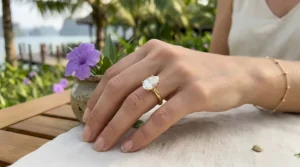
6. Claddagh Gold Dainty 14K Yellow Gold Diamond Solitaire Proposal Ring — proof a solid-gold diamond ring can dip under $500
This ring exists to answer a very specific question: can you actually get solid gold and a real diamond under $500? The answer, based on this listing, is yes — with reasonable expectations about carat size. Hand-polished to a high-sheen finish and produced by a family-owned goldsmith operation based in Los Angeles, this dainty solitaire keeps costs down primarily by using a smaller, budget-friendly diamond rather than cutting corners on the gold itself. Reviewers consistently note the ring’s comfortable everyday wearability and describe the craftsmanship as more refined than the price point suggests, though a few mention wishing the center stone had more presence. Here’s what most shoppers don’t realize: at this price tier, the gold itself and the labor are often a larger share of the cost than the diamond, so a small, well-cut stone in solid gold frequently outperforms a slightly larger stone in a lower-karat or plated setting.
Pros:
- ✅ Genuine solid gold construction under $500
- ✅ Hand-polished, USA-based craftsmanship
- ✅ Comfortable dainty band for daily wear
Cons:
- ❌ Diamond size is modest given the budget price point
- ❌ Limited size run compared to larger retailers
This one genuinely lands under $500 at the time of research — always confirm current pricing before you commit. For a proposal on a tight timeline and a tighter budget, the Claddagh Gold Dainty 14K Yellow Gold Diamond Solitaire Proposal Ring is the honest budget champion of this list.
7. PAVOI 14K Gold Plated Halo Cubic Zirconia Engagement Ring — the honest entry point for stretched budgets
This last pick is on the list precisely because honesty matters more than flattery, and this ring needs a clear-eyed explanation rather than a sales pitch. Unlike every other entry here, this is gold-plated brass or base metal, not solid gold, and the center stone is cubic zirconia rather than a diamond or diamond simulant like moissanite. Under FTC guidance, a plated item can only be marketed using “gold” terminology when the karat fineness and plating method are clearly disclosed, which is exactly why you’ll see this listed as “14K gold plated” rather than simply “14K gold.” Based on the spec comparison, cubic zirconia is a synthetic stone with a Mohs hardness around 8, meaning it’s more prone to surface scratching over years of wear than diamond (10) or moissanite (9.25). Reviewers of similar CZ halo rings frequently describe the visual sparkle as impressive for the price, while also flagging that gold plating eventually wears thin at points of friction, like the underside of the band.
Pros:
- ✅ Extremely low cost of entry
- ✅ Halo design creates a large visual presence
- ✅ Good option for a placeholder or promise ring
Cons:
- ❌ Gold plating wears away over time with daily use
- ❌ Cubic zirconia scratches more easily than diamond or moissanite
Priced under $50 in most listings, this is the ring for a “we’ll upgrade later” proposal, a placeholder while you shop for the real thing, or a promise ring rather than a lifetime piece. The PAVOI 14K Gold Plated Halo Cubic Zirconia Engagement Ring rounds out this list as the clearly labeled budget floor, not a hidden gem.
✨ Don’t Miss These Exclusive Deals!
🔍 Take your yellow gold engagement ring women search to the next level with these carefully selected picks. Click on any highlighted item to check current pricing and availability before styles or sizes sell out!
How to Choose a Yellow Gold Engagement Ring for Women
Picking between seven strong options gets easier once you have a framework instead of a gut feeling. Here’s the criteria that actually move the needle:
- Set a real budget range first. Decide whether you’re shopping the under-$500 tier, the $500-$1,500 mid-range, or the $1,500+ premium bracket before you fall in love with a listing you can’t afford.
- Decide on natural, lab-grown, or moissanite. Each has a different price-per-sparkle ratio; lab-grown and moissanite stretch your budget further for a similar visual impact.
- Check the certification. GIA and IGI are the two most trusted independent labs — a ring without either should be priced accordingly lower.
- Match the setting to her lifestyle. Prongs show off more light; bezels protect against daily bumps. Active hands should lean bezel or flush-set.
- Confirm it’s solid gold, not plated. Look for “solid 14k” or “solid 18k” language specifically, since plated pieces wear down over years of daily contact.
- Consider her existing jewelry wardrobe. Yellow gold pairs best when it echoes metal tones she already wears daily.
- Always check current pricing before buying. Gold and diamond markets shift, so the number you see today may not be the number tomorrow.
14k vs 18k Gold Karat: Which Should You Choose
This is one of the most common points of confusion for first-time ring shoppers, and it deserves a straight answer instead of jewelry-store jargon. Gold karat measures purity on a 24-part scale. Pure, 24-karat gold is too soft on its own for a ring meant to survive daily wear, so jewelers alloy it with harder metals like copper and silver to build in durability. Following that math, an 18k piece works out to 18 parts gold blended with six parts other metal, while a 14k piece is 14 parts gold to 10 parts alloy. In practice, 14k contains roughly 58.3% pure gold and 18k contains 75%.
| Factor | 14k Yellow Gold | 18k Yellow Gold |
|---|---|---|
| Gold purity | ~58.3% | ~75% |
| Durability | Higher (more alloy metal) | Lower (softer, more pure gold) |
| Color depth | Slightly lighter, brassier tone | Richer, deeper yellow |
| Typical price | Lower | 15-25% higher, roughly |
| Best For | Everyday wear, active lifestyles | Special-occasion depth of color, less daily wear |
Here’s what most buyers overlook: 18k isn’t objectively “better,” it’s a different trade-off. The extra alloy metal in 14k gold is precisely what makes it more scratch- and dent-resistant for a ring worn 24/7, which is why most of the products in our top 7 — including the Diamond2Deal GIA Certified Diamond Solitaire Engagement Ring — default to 14k rather than 18k. If daily durability tops your priority list, 14k is the smarter buy; if a deeper, richer color matters more than resisting the occasional scuff, 18k earns its premium.
Gold Alloy Composition: What’s Actually in Your Ring
“Yellow gold” isn’t a single material, it’s a recipe, and understanding the recipe explains why two 14k rings from different brands can look and wear so differently. Standard yellow gold alloys typically combine pure gold with copper and silver in varying ratios — copper adds warmth and hardness, while silver keeps the color from skewing too orange. Manufacturers generally aren’t required to spell out the exact secondary metals used in that alloy blend, which is precisely why buying from a brand with transparent sourcing and clear karat marking matters more than it might seem.
The karat stamp tells you how much pure gold sits inside the piece, and reputable sellers back that stamp with a maker’s mark or registered trademark nearby — if a listing shows a karat number with zero brand accountability attached, treat that as a signal to dig deeper before buying. This is also where the line between “gold,” “gold filled,” and “gold plated” becomes critical: terms like gold filled, gold overlay, and rolled gold plate all describe a mechanically applied layer of at least 10-karat gold sitting on top of a cheaper base metal, rather than gold running consistently through the entire piece. The FTC’s consumer guide to gold jewelry breaks down each of these terms in plain language if you want the full glossary before you buy. That distinction is exactly why the PAVOI 14K Gold Plated Halo Cubic Zirconia Engagement Ring earns a different long-term durability conversation than any of the six solid-gold rings above it on this list — the alloy composition, not just the color, determines how the ring ages.
Warm Skin Tone Metal Pairing: Is Yellow Gold Right for You
The classic rule of thumb — warm undertones suit yellow and rose gold, cool undertones suit white gold and platinum — holds up reasonably well in practice, though it’s more of a starting point than a hard law. A quick way to check: look at the veins on the inside of your wrist in natural daylight. Greenish veins generally signal a warm undertone; bluish veins usually mean cool. Yellow gold tends to warm up a diamond’s contrast, giving the stone a classic, luminous glow rather than a stark, icy sparkle, and that same warmth tends to flatter skin with golden, olive, or deeper warm undertones especially well, since the metal essentially echoes tones already present in the skin rather than contrasting against them.
That said, don’t treat this as a rigid filter that rules yellow gold out for cooler skin tones — plenty of cool-toned wearers choose yellow gold purely because they love the look, and jewelers increasingly push back on the idea that skin tone should dictate metal choice at all. If you’re still unsure, the safest move is trying the ring on in natural light rather than under a jewelry counter’s warm spotlighting, which flatters literally every metal equally and tells you nothing useful.
Yellow Gold Engagement Ring Under $500: Realistic Expectations
Searching specifically for a yellow gold engagement ring under $500 means walking in with calibrated expectations, and that’s not a bad thing — it’s just a different shopping mission than chasing a showstopper. At this price point, you’re generally choosing between three honest paths: a smaller natural diamond in solid gold (like the Claddagh Gold Dainty 14K Yellow Gold Diamond Solitaire Proposal Ring), a moissanite or lab-grown stone that maximizes visual size for the dollar, or a well-made gold-plated ring with a simulated stone as a placeholder or promise ring.
What most shoppers overlook at this budget tier is that stone size and gold purity often compete directly for the same dollars — a listing offering a large center stone at a rock-bottom price under $500 is very likely either plated, heavily included, or a lower-karat alloy, so the honest move is deciding upfront which trade-off matters more: bigger stone or solid gold construction. There’s no shame in either choice; a clearly labeled CZ placeholder ring bought with the plan to upgrade later is a legitimate strategy, not a compromise you need to hide.
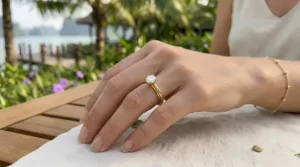
Vintage Yellow Gold Ring Styles for Women
Vintage-style yellow gold rings lean on design language borrowed from specific historical eras, and knowing the vocabulary helps you shop smarter rather than just saying “vintage” and hoping the listing matches your mental image. Filigree refers to delicate, lace-like metalwork, often pierced through so light passes through the band itself. Milgrain is the tiny beaded edging that traces the border of a setting, adding texture without adding bulk. Art Deco designs, popular in the 1920s-30s, favor geometric lines and step-cut stones, while Edwardian pieces lean toward romantic, nature-inspired curves.
The Angara Lab-Grown Vintage-Inspired Oval Diamond Ornate Halo Ring from our top 7 leans specifically into the ornate halo and milgrain camp, giving buyers that antique-inspired detail without hunting an actual estate sale. One genuinely useful tip: vintage-style settings tend to hide small inclusions and slightly lower color grades better than clean, modern minimalist settings do, since the surrounding detail draws the eye outward rather than concentrating it on the stone alone. That means a vintage-style ring can be a smart way to stretch a modest diamond budget further than a plain solitaire would allow.
Yellow Gold vs White Gold vs Rose Gold Engagement Rings
This is the comparison almost every couple has before they settle on yellow gold at all, so it’s worth addressing head-on rather than assuming yellow gold was the obvious pick from day one.
| Factor | Yellow Gold | White Gold | Rose Gold |
|---|---|---|---|
| Tone | Warm, classic honey tone | Cool, silvery-white | Warm, pinkish blush |
| Maintenance | Low — color is natural to the alloy | Needs rhodium re-plating over time | Low — color is natural to the alloy |
| Diamond contrast | Warms up the stone’s glow | Makes stone appear brighter/whiter | Softens and complements the stone |
| Popularity trend | Classic, resurging in 2026 | Long-standing modern favorite | Trend-driven, especially with millennials |
| Best For | Traditionalists, warm undertones | Cooler undertones, modern minimalists | Romantic, vintage-blush aesthetics |
The maintenance line is the one buyers most often miss. White gold isn’t naturally white — most white gold jewelry is rhodium-plated to achieve that bright, silvery finish, and that plating wears thin over years, requiring periodic professional re-plating to maintain the look. Yellow and rose gold skip that maintenance cycle entirely because their color comes from the alloy itself, not a surface treatment. That’s a meaningful long-term cost difference that rarely comes up in the showroom, but it should factor into your decision if low-maintenance jewelry matters to you.
Practical Usage Guide: Caring for Your Yellow Gold Ring
Getting a beautiful ring is only half the job — keeping it beautiful for decades takes a little routine maintenance that most retailers gloss over at checkout. In the first 30 days, avoid the most common rookie mistake: wearing the ring while applying lotion, sunscreen, or hairspray, all of which leave a filmy residue that dulls gold’s natural shine surprisingly fast. Clean it weekly using warm water, a few drops of mild dish soap, and a soft-bristled toothbrush reserved just for jewelry — work gently around the setting where lotion and skin oils tend to collect invisibly.
Schedule a professional prong check every six months if your ring has a prong setting like the Diamond2Deal GIA Certified Diamond Solitaire Engagement Ring; prongs loosen gradually with wear, and a stone falling out from a worn prong is one of the most preventable — and heartbreaking — jewelry losses. Store the ring in a fabric-lined box or a separate pouch rather than tossed loose in a drawer, since gold, while durable, still scratches against harder gemstones and costume jewelry. Finally, remove rings before swimming in chlorinated pools; chlorine can, over years of repeated exposure, weaken gold alloys and damage certain gemstone treatments. Getting into these habits in month one sets the tone for a ring that still looks sharp at year twenty.
Real-World Scenarios: Which Ring Fits Your Life
Sometimes the clearest way to choose is seeing yourself in someone else’s shoes. Here are three realistic profiles matched against our top 7.
The grad-school couple on a tight timeline. Budget is under $400, the proposal is happening in three weeks, and neither of them wants to wait on a made-to-order piece. The Claddagh Gold Dainty 14K Yellow Gold Diamond Solitaire Proposal Ring fits this scenario precisely — solid gold, a real diamond, in-stock sizing, and a price that doesn’t strain a graduate stipend.
The hands-on professional. She’s a nurse, a teacher, or a home cook who washes her hands two dozen times a day and can’t afford a snag-prone setting. The Diamond Wish 14k Yellow Gold Bezel-Set Solitaire Diamond Ring solves this directly, since the bezel eliminates the raised edges that catch on gloves and dish towels.
The romantic history buff. She collects antiques, loves period dramas, and has been not-so-subtly sending Pinterest boards of Art Deco jewelry for months. The Angara Lab-Grown Vintage-Inspired Oval Diamond Ornate Halo Ring speaks her exact design language without requiring an actual antique-shop budget.
💬 Just one click — help her see the ring that fits her life, not just her Pinterest board!
Common Mistakes When Buying a Yellow Gold Engagement Ring
Even well-intentioned shoppers repeat the same handful of errors, so let’s name them plainly. First, buying based on carat size alone while ignoring cut quality — a poorly cut larger diamond can look duller than a smaller, well-cut one, since cut (not size) determines how much light the stone actually reflects. Second, skipping certification entirely to save money upfront, then having no independent verification if a dispute or insurance claim comes up later. Third, assuming “gold” in a listing title means solid gold, when it may in fact be plated — always scan for the words “solid,” “filled,” or “plated” specifically. Fourth, guessing at ring size instead of measuring properly, which leads to costly resizing down the line (and some designs, like eternity bands, resize poorly or not at all). Fifth, ignoring the return policy, since fine jewelry return windows and restocking fees vary enormously between sellers, and a rushed proposal purchase is exactly the situation where you might need to exchange a size after the fact.
Long-Term Cost & Maintenance
The sticker price is never the whole financial story with fine jewelry, and yellow gold rings are no exception. Beyond the purchase itself, budget for annual insurance (typically 1-2% of the ring’s appraised value per year through a jewelry rider or standalone policy), periodic professional cleaning and inspection (often free at the original retailer, otherwise $20-$50 at an independent jeweler), and occasional resizing as weight or preference changes over the years.
Here’s where yellow gold has a genuine long-term cost advantage worth calling out directly: because the color comes from the alloy itself rather than a surface plating, yellow gold engagement rings avoid the recurring rhodium re-plating expense that white gold rings require every 12-18 months to maintain their bright finish. Over a 20-year span, that difference alone can offset a meaningful chunk of any upfront price gap between metal choices. Prong-set diamonds, like those in the Diamond2Deal GIA Certified Diamond Solitaire Engagement Ring, should factor in occasional re-tipping costs (reinforcing worn prong tips), typically $40-$80 per visit roughly every five to ten years of daily wear.
Safety, Certification & Regulations Guide
Buying fine jewelry sits inside a real regulatory framework designed to protect you, and knowing the basics helps you shop with more confidence. In the United States, the Federal Trade Commission oversees how gold jewelry can be marketed, requiring sellers to pair a karat quality mark with the trademark of the company standing behind it. The FTC’s broader Jewelry Guides exist to steer marketers away from deceptive claims about precious metal content, since a statement or omission that would reasonably mislead a shopper counts as deceptive under the agency’s standards. That’s the legal backbone behind every “14k,” “18k,” or “gold plated” label you’ll encounter while shopping.
On the diamond side specifically, independent grading labs like GIA and IGI exist precisely to remove seller bias from quality claims, replacing the vague, inconsistent descriptions jewelers once relied on with a standardized language buyers and sellers both trust. When a listing mentions GIA or IGI certification, as several rings in our top 7 do, that’s a meaningful signal of accountability, not just marketing filler. For the full regulatory detail behind every gold and diamond marketing claim you’ll encounter while shopping, the complete 16 CFR Part 23 jewelry guides are worth a bookmark before any major purchase.
Frequently Asked Questions
❓ Is yellow gold still in style for engagement rings in 2026?
❓ How much does a yellow gold engagement ring typically cost?
❓ Does yellow gold engagement ring make hands look tan?
❓ Can you resize a yellow gold engagement ring?
❓ What's the difference between yellow gold and gold vermeil?
Conclusion
Choosing a yellow gold engagement ring women will treasure for decades really comes down to matching honest priorities — budget, certification, setting durability, and personal style — against a ring’s actual specs rather than its marketing copy. Whether that means the GIA-backed confidence of the Diamond2Deal GIA Certified Diamond Solitaire Engagement Ring, the daily-wear practicality of the Diamond Wish 14k Yellow Gold Bezel-Set Solitaire Diamond Ring, or the budget-conscious honesty of the Claddagh Gold Dainty 14K Yellow Gold Diamond Solitaire Proposal Ring, the right pick is the one that fits both the relationship and the real number in your bank account. Take the comparison table back with you, revisit the “How to Choose” checklist before you commit, and remember that a ring purchased with clear eyes about karat, certification, and setting type tends to be the one nobody regrets years down the road.
Recommended for You
- 7 Best Moissanite Engagement Ring Women Picks for 2026 (Ranked)
- Aquamarine Engagement Ring: 7 Stunning Picks for 2026
- Morganite Engagement Ring Rose Gold: 7 Stunning Picks for 2026
Disclaimer: This article contains affiliate links. As an Amazon Associate, I earn from qualifying purchases. If you purchase products through these links, we may earn a small commission at no additional cost to you.
✨ Found this helpful? Share it with your friends! 💬🤗
