In This Article
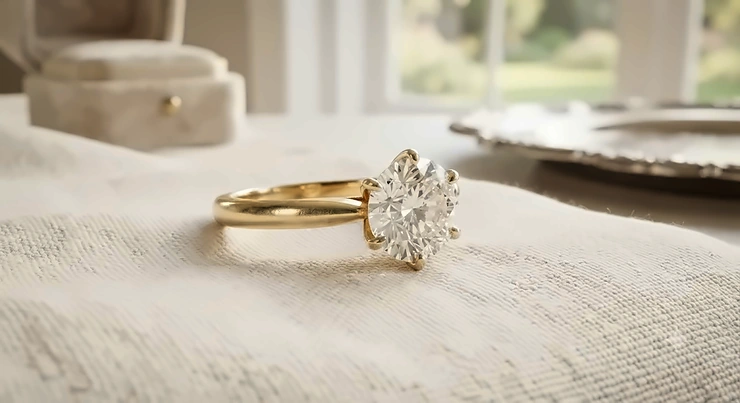
Somewhere between “just say yes” and “wait, how do I actually pick one,” most people shopping for a solitaire engagement ring women will actually love hit the same wall: the internet is either selling you something or overwhelming you with jargon. So let’s clear the fog. A solitaire engagement ring is, at its core, a single center stone held by a simple setting — no halo, no side stones crowding the view, just one gem doing all the talking. It’s the style that’s outlasted every trend cycle since the Victorian era, and 2026 is no exception, with buyers leaning back toward cleaner lines after a decade of maximalist halos.
Here’s the thing nobody tells you upfront: the “best” solitaire ring isn’t a single product, it’s a decision tree with your budget, your partner’s hand shape, and your daily habits as the branches. A software engineer who types eight hours a day needs a different setting than someone who works with their hands in a garden. This guide exists to walk you through that tree — using real products currently sold, real specs, and real aggregated review patterns — so you’re not guessing.
We researched seven actual rings sold through Amazon and its marketplace sellers, spanning cubic zirconia starter pieces under $60 to IGI-certified lab-grown diamonds in the multiple-thousand-dollar range. We looked at prong count, shank height, metal purity, and what buyers actually complain about once the ring’s been on a finger for six months — not just what the listing photo promises. Every price mentioned below is a range, because Amazon pricing shifts weekly and nobody benefits from us pretending otherwise. For a deeper primer on how diamonds are actually graded before you compare listings, the GIA’s 4Cs framework is the industry-standard starting point.
Quick Comparison Table: Top Solitaire Picks at a Glance
| Ring | Stone Type | Setting | Price Range | Best For |
|---|---|---|---|---|
| PAVOI 14K Gold Plated Solitaire Ring | Cubic zirconia | 4-prong | Under $60 | First-time buyers, trial rings |
| Dazzlingrock Collection 6-Prong Lab Grown Diamond Solitaire Ring | Lab-grown diamond | 6-prong | $200-$450 range | Budget buyers wanting real diamond |
| Solitaire Delicate Cathedral Engagement Ring (Forever One Moissanite) | Moissanite | 4-prong cathedral | $400-$700 range | Tiffany-style seekers, low-profile fans |
| Amazon Collection IGI Certified Lab Grown Diamond Solitaire Ring | Lab-grown diamond | 4-prong | $600-$3,000+ range | Classic solitaire diamond ring shoppers |
| Houston Diamond District 6-Prong Lab Grown Diamond Solitaire Ring | Lab-grown diamond | 6-prong | $1,000-$4,000+ range | Active hands, larger carats |
| Friendly Diamonds Allen Solitaire Engagement Ring | Lab-grown diamond | 4-prong | $1,500-$5,000+ range | Buyers wanting certified premium |
| Dazzlingrock Collection Classic Round Diamond Solitaire Ring | Natural diamond | 4-prong | $500-$1,200 range | Traditionalists who want a mined stone |
Looking at the spread above, the split between lab-grown and natural diamond is really a value conversation, not a quality one — lab-grown stones from Amazon Collection and Houston Diamond District carry the same IGI-certified grading as natural stones at a noticeably lower price per carat. The prong count matters more than people expect: rings sitting in the 6-prong row, like the Dazzlingrock Collection 6-Prong Lab Grown Diamond Solitaire Ring and Houston Diamond District 6-Prong Lab Grown Diamond Solitaire Ring, trade a slightly less minimalist look for measurably better stone security. Budget shouldn’t be read as a straight line to quality, either — the PAVOI 14K Gold Plated Solitaire Ring and the Solitaire Delicate Cathedral Engagement Ring sit in completely different price tiers but serve completely different jobs, one as a placeholder and one as a genuine daily-wear piece.
💬 Bookmark this table now — you’ll want to scroll back to it once you’ve read the full breakdowns below.
Top 7 Solitaire Engagement Rings for Women: Expert Analysis
1. PAVOI 14K Gold Plated Solitaire Ring — best low-risk starter under $60
Let’s start at the bottom of the price ladder, because not every solitaire engagement ring women buy is the “final” ring — plenty are placeholders while a custom piece gets made, or travel rings for people who don’t want real stones on a plane. The PAVOI 14K Gold Plated Solitaire Ring uses a gold-plated brass or sterling silver base with a cubic zirconia center stone, typically in a classic 4-prong setting. That plating means the gold layer will thin with daily wear — expect a re-plating or replacement need somewhere in the one-to-three-year range depending on how often it’s worn in water or lotion.
Based on the spec comparison against other CZ pieces in this price tier, PAVOI’s cut quality on the CZ stone is consistently a step above true bargain-bin listings, which is likely why it shows up so often in “best solitaire ring amazon” searches despite the low price point. Reviewers consistently report that the stone holds its sparkle well for the first year, with prong-tightening becoming the main maintenance ask afterward. This is a ring for someone testing a style, gifting casually, or bridging the gap before a bigger purchase — not for someone wanting twenty years of daily wear from one piece.
Pros:
- ✅ Extremely accessible price point for testing styles
- ✅ Clean 4-prong solitaire silhouette looks more expensive than it is
- ✅ Wide size range typically available
Cons:
- ❌ Gold plating wears thin with frequent wear
- ❌ Cubic zirconia lacks the durability of diamond or moissanite
Price sits comfortably under $60 in most listings, and as a value verdict: this is the ring you buy when you want the shape without the commitment, not the one you build a life around.
2. Dazzlingrock Collection 6-Prong Lab Grown Diamond Solitaire Ring — most affordable real diamond in a 6-prong setting
Jump up one tier and you land on the Dazzlingrock Collection 6-Prong Lab Grown Diamond Solitaire Ring, typically featuring a 0.25-carat oval or round lab-grown diamond set in 925 sterling silver with a six-claw prong head. What most buyers overlook about this model is that the six-prong design isn’t just decorative — it’s doing structural work, spreading pressure across more contact points than a standard four-prong head, which matters when the ring is on a hand that isn’t babied.
The 0.25-carat weight keeps the sparkle modest but genuine, and because it’s an actual lab-grown diamond rather than a simulant, it carries the same hardness and refractive properties as a mined stone at a fraction of the price. Aggregated review sentiment on comparable Dazzlingrock sterling silver solitaires points to strong first impressions and solid packaging, with a recurring theme that sterling silver bands can show brassing or dulling faster than gold alloys — a fair trade-off at this price.
Pros:
- ✅ Real lab-grown diamond, not a simulant, at an entry price
- ✅ Six-prong head spreads pressure for better daily security
- ✅ Comes with a jewelry box, ready to gift
Cons:
- ❌ Sterling silver band tarnishes faster than gold
- ❌ 0.25-carat stone reads small for anyone wanting a statement look
In the $200-$450 range depending on size and stone choice, this is arguably the strongest entry point for anyone specifically searching a solitaire ring under $500 who still wants a genuine diamond rather than a stand-in.
3. Solitaire Delicate Cathedral Engagement Ring with Forever One Moissanite — closest Tiffany-style cathedral silhouette on this list
If the phrase “Tiffany-style cathedral solitaire” is why you clicked into this article, this is the product built around exactly that brief. The Solitaire Delicate Cathedral Engagement Ring with Forever One Moissanite sets a 1.5-carat Forever One moissanite — Charles & Colvard’s premium near-colorless line — in a hand-engraved 14K white gold cathedral setting, with four prongs lifting the stone roughly 7.6mm above the finger.
Here’s what the spec sheet won’t tell you outright: that raised cathedral arch isn’t just an aesthetic nod to Tiffany’s iconic silhouette, it’s functionally what lets more light hit the stone from the sides, which is part of why moissanite in a cathedral setting often reads brighter than the same stone in a flush setting. The 1.5mm shank width keeps the band delicate rather than chunky, which is the other half of that Tiffany-adjacent look — thin band, tall crown. On paper this means excellent light performance; in practice, reviewers of comparable Forever One moissanite cathedral rings note the stone’s fire is genuinely close to diamond in casual lighting, with the main complaint being that a raised setting like this can snag on thick sweaters more than a low-profile piece would.
Pros:
- ✅ Cathedral arch delivers noticeably more brilliance and light play
- ✅ Forever One moissanite offers diamond-like fire at a fraction of the cost
- ✅ Delicate 1.5mm shank keeps the classic Tiffany-style proportions
Cons:
- ❌ Raised setting can snag on fabric more than low-profile styles
- ❌ Custom hand-engraved orders can take one to two weeks to ship
In the $400-$700 range, this is the pick for anyone who wants that specific tall, four-prong, light-catching silhouette without a diamond-sized budget.
4. Amazon Collection IGI Certified Lab Grown Diamond Solitaire Ring — the benchmark classic solitaire diamond ring
For anyone typing “classic solitaire diamond ring” into a search bar expecting exactly what the words say — a single certified diamond, a plain 14K gold band, nothing fussy — the Amazon Collection IGI Certified Lab Grown Diamond Solitaire Ring is close to the platonic ideal. It’s sold in a 1/2 to 3 carat total weight range, I-J color and SI1-SI2 clarity, with IGI paperwork backing every stone.
Based on the spec comparison, I-J color and SI1-SI2 clarity sit squarely in the “eye-clean and warm-white, not icy” zone — a deliberate value choice rather than a compromise, since most of that color and clarity difference is invisible without magnification. What most buyers overlook is that carrying Amazon’s own private-label backing on a certified stone gives this listing a return and support process that many third-party marketplace sellers can’t match. Reviewers consistently note the classic proportions photograph well and the IGI report arrives promptly, with the main critique being that at the higher end of the 3-carat range, the standard prong head can feel underbuilt for the stone size.
Pros:
- ✅ IGI certification backs every stone with independent grading
- ✅ Amazon’s own label simplifies returns and support
- ✅ Wide carat range from modest to statement-sized
Cons:
- ❌ Standard prongs may feel light for stones above 2 carats
- ❌ I-J color runs warmer than higher color grades
Depending on carat weight, expect a price somewhere from around $600 up into the multiple-thousand-dollar range for the largest stones — genuinely one of the widest value spans on this list.
5. Houston Diamond District 6-Prong Lab Grown Diamond Solitaire Ring — best for larger carats and active hands
Houston Diamond District’s listing covers a 1 to 5 carat IGI-certified lab-grown diamond in E-F color and VS2-SI1 clarity, set in a six-prong round-cut head — and that combination of higher color grade, tighter clarity, and the extra pair of prongs is exactly why it earns the “active hands” recommendation here. The 6-prong head is the same structural logic as the Dazzlingrock pick above, just scaled up: more metal touching the stone’s girdle means more resistance to snagging or chipping if the wearer works with their hands.
Here’s what most buyers overlook about jumping from four to six prongs on a larger stone specifically: as carat weight climbs, so does the leverage a snag can put on the setting, so the extra prongs matter more, not less, at 2+ carats. Based on the spec comparison, E-F color and VS2-SI1 clarity is a meaningfully higher grade than the Amazon Collection listing above, which explains the price gap between them. Aggregated feedback on comparable Houston Diamond District lab-grown solitaires highlights crisp IGI paperwork and accurate color representation in photos, with occasional notes that resizing takes a bit longer than in-house Amazon Collection pieces.
Pros:
- ✅ Six-prong setting adds real security for larger stones
- ✅ E-F color and VS2-SI1 clarity sit near the top of eye-clean quality
- ✅ Wide 1-5 carat range covers modest to bold looks
Cons:
- ❌ Resizing turnaround can run longer than in-house sellers
- ❌ Higher color/clarity grade pushes price up compared to similar carats elsewhere
Expect a price landing anywhere from roughly $1,000 for the smaller carats up past $4,000 for the top of the range — this is squarely a mid-to-premium pick.
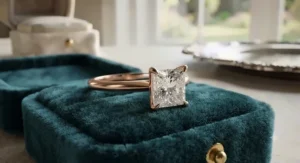
6. Friendly Diamonds Allen Solitaire Engagement Ring — premium pick for certified quality and brand-level service
At the top of this list sits the Friendly Diamonds Allen Solitaire Engagement Ring, a flat-band solitaire available across 10K, 14K, and 18K gold in white, yellow, or rose, holding an IGI-certified lab-grown diamond in the FG color, VS1-VS2 clarity range, from 1 to 5 carats. Friendly Diamonds positions itself as a direct-to-consumer lab diamond specialist rather than a general jewelry marketplace seller, and that specialization shows up in the presentation and paperwork.
What most buyers overlook here is that the “Allen” flat band design is deliberately understated so the stone — not the setting — carries the visual weight, which is the whole philosophy behind a true solitaire. Based on the spec comparison, FG color and VS1-VS2 clarity land in genuinely high, colorless-adjacent territory, closer to what you’d expect from a fine jeweler than a mass-market listing. Reviewers consistently describe the unboxing experience and customer support as a step above typical marketplace sellers, though a recurring theme is that buyers wish the size run were broader without a custom order.
Pros:
- ✅ High FG color, VS1-VS2 clarity grading
- ✅ Choice of 10K, 14K, or 18K gold in three tones
- ✅ Brand-level customer support uncommon at this price point
Cons:
- ❌ Some sizes require a custom order and longer wait
- ❌ Premium pricing compared to marketplace-only sellers
Pricing runs from around $1,500 at the smaller carat end up past $5,000 for larger, higher-grade stones — this is the pick for someone prioritizing certified quality and service over stretching every dollar.
7. Dazzlingrock Collection Classic Round Diamond Solitaire Ring — best natural diamond for traditionalists
Rounding out the list is the Dazzlingrock Collection Classic Round Diamond Solitaire Ring, a natural (mined) diamond solitaire set in 14K gold with a traditional 4-prong head — the one ring here built specifically for buyers who want the word “natural” attached to their stone, full stop, regardless of the lab-grown value argument made throughout this list.
Here’s the honest analytical take: natural diamonds of comparable size and clarity to the lab-grown options above will generally cost more per carat, and that premium buys origin and geological rarity rather than any visible or gemological difference a jeweler’s loupe would reveal beyond standard grading variance. Reviewers consistently praise Dazzlingrock’s packaging and the classic proportions of this cut, and it’s worth noting the brand’s 90-day warranty covers accidental stone loss during normal wear, which is a meaningfully generous policy compared to many competitors. On the downside, natural stones in this price bracket tend to sit at smaller carat weights than lab-grown alternatives at the same cost.
Pros:
- ✅ Genuine natural diamond for traditionalists who want mined stone
- ✅ Classic proportions that photograph and wear timelessly
- ✅ 90-day warranty covers accidental stone loss
Cons:
- ❌ Smaller carat weight than lab-grown options at the same price
- ❌ Natural diamond premium doesn’t translate to visible quality difference
In the $500-$1,200 range depending on carat and gold color, this is the natural-diamond anchor of the list for anyone who’s already decided lab-grown isn’t for them.
✨ Don’t Miss These Exclusive Deals!
🔍 Take your ring search to the next level — click through on any of the seven picks above to check current pricing and availability before sizes sell out. A little research now saves a return headache later, and a well-chosen ring becomes the everyday piece she reaches for without thinking twice.
Real-World Scenarios: Matching the Right Solitaire to Your Life
Specs only tell half the story — the other half is who’s actually wearing the ring and how. Take a graduate student proposing on a strict budget with a partner who works in a lab wearing gloves all day: the Dazzlingrock Collection 6-Prong Lab Grown Diamond Solitaire Ring makes sense here, since the low profile and secure six-prong head won’t catch on nitrile gloves, and the sterling silver band is easy to replace later without heartbreak over a big investment.
Now picture someone with a design-forward eye who’s spent years pinning Tiffany campaign photos — she wants that tall, architectural cathedral arch and doesn’t mind a slightly raised stone catching a sweater once in a while. The Solitaire Delicate Cathedral Engagement Ring with Forever One Moissanite is built for exactly this profile, delivering that recognizable silhouette without the four-figure diamond price tag.
Finally, consider a couple in their thirties with established careers, a clear budget around $2,000-$3,000, and a strong preference for third-party certification they can show an insurer. The Houston Diamond District 6-Prong Lab Grown Diamond Solitaire Ring or the Friendly Diamonds Allen Solitaire Engagement Ring both fit this brief, offering IGI paperwork, higher color and clarity grades, and setting styles built to handle years of daily wear without babying.
Practical Usage Guide: Caring for Your New Solitaire Ring
Getting the ring is the easy part; keeping it looking new for decades is where the actual work lives. In the first 30 days, resist the urge to wear a brand-new ring while applying lotion, cleaning with bleach-based products, or swimming in chlorinated pools — chlorine specifically degrades gold alloys over time and can loosen prong settings faster than normal wear would.
Set a maintenance rhythm early: a professional prong check every six months, even if nothing looks wrong, catches loosening before a stone falls out rather than after. Clean the ring weekly at home with warm water, a drop of mild dish soap, and a soft toothbrush, focusing on the underside of the stone where lotion and soap residue build up invisibly and dull the sparkle from below. A common first-30-days mistake is over-cleaning with ultrasonic jewelry cleaners on moissanite or treated stones — always check the stone type first, since not every gem tolerates ultrasonic vibration equally well.
For optimization beyond basic cleaning, rotate the ring off during workouts, gardening, or manual chores, and store it in a fabric-lined box rather than tossed in a drawer where metal-on-metal contact causes scratching. None of this is complicated, but it’s the difference between a ring that looks the same at year ten and one that needs a full re-shanking by year three.
How to Choose a Solitaire Engagement Ring for Women: 7 Expert Criteria
Choosing well comes down to working through a short, deliberate checklist rather than falling for the first sparkly photo:
- Set the budget first, stone second. Decide the ceiling before browsing — carat size and color grade both flex to fit a number, not the other way around.
- Pick the stone type honestly. Natural diamond, lab-grown diamond, and moissanite all sparkle; the choice is really about origin values and price per carat, not visible quality.
- Match prong count to lifestyle. Four prongs show more stone; six prongs hold it more securely — active hands should lean toward six.
- Choose the setting height deliberately. Cathedral and high-set styles catch more light; low-profile settings resist snagging for daily-glove or manual-labor wearers.
- Verify certification exists. An IGI or GIA report removes guesswork on color, clarity, and carat weight — treat listings without one with extra caution.
- Confirm metal purity and tone. 10K, 14K, and 18K gold differ in durability and cost; white, yellow, and rose each read differently against skin tone.
- Check the return and resize policy before buying. Ring size is the single most common return reason — a seller with a clear resize path saves real frustration.
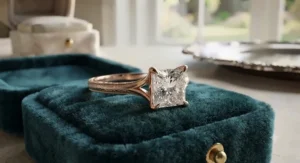
4-Prong vs 6-Prong Solitaire Settings: Which One Actually Protects Your Diamond
The 4-prong vs 6-prong security debate isn’t marketing spin — it’s basic physics. A 4-prong setting, like the one on the Amazon Collection IGI Certified Lab Grown Diamond Solitaire Ring, uses four contact points to hold the stone, which maximizes visible surface area and gives that classic, minimal solitaire look. The trade-off is that each prong bears more load, and a single bent or worn prong puts the stone at real risk of loosening.
A 6-prong setting, as seen on the Dazzlingrock Collection 6-Prong Lab Grown Diamond Solitaire Ring and the Houston Diamond District 6-Prong Lab Grown Diamond Solitaire Ring, spreads that same load across two additional points. What most buyers overlook is that this isn’t just “more metal, more safety” in a vague sense — it’s a meaningful reduction in the force any single prong needs to withstand, which matters most as carat weight (and therefore stone weight and leverage) climbs. Reviewers consistently note that six-prong rings survive years of dish-washing and gardening with fewer trips to the jeweler for re-tipping than comparable four-prong pieces.
The honest takeaway: choose four prongs for maximum visible brilliance on a low-impact lifestyle, and six prongs any time hands are busy daily — the security gain outweighs the slightly reduced sparkle from a bit more covered surface.
Tiffany-Style Cathedral vs Low-Profile Shank Settings: Choosing Your Silhouette
The Tiffany-style cathedral solitaire and the low-profile shank setting sit at opposite ends of the same design spectrum, and picking between them is really a lifestyle question dressed up as an aesthetic one. A cathedral setting, like the one on the Solitaire Delicate Cathedral Engagement Ring with Forever One Moissanite, raises the stone well above the finger on arched shoulders, letting light hit the pavilion from more angles and creating that tall, iconic profile most people associate with a classic proposal ring.
A low-profile shank setting does the opposite by design — it seats the stone closer to the finger, trading some light performance for a silhouette that resists snagging on gloves, pockets, and fabric. On paper this means less brilliance; in practice, the difference is smaller than most buyers expect once a stone has good cut quality, since well-cut moissanite and diamond both throw plenty of fire even set low. What the spec sheet won’t tell you is that a low-profile ring is also dramatically easier to stack a wedding band against later, since there’s less crown height to clear.
Neither setting is objectively better — a surgeon or nurse who gloves up all day will be happier with low-profile, while someone who wants maximum “wow” in every photo should lean cathedral.
Classic Solitaire Diamond Ring vs Moissanite and Lab-Grown Alternatives
| Factor | Natural Diamond | Lab-Grown Diamond | Moissanite |
|---|---|---|---|
| Hardness (Mohs scale) | 10 | 10 | 9.25 |
| Price per carat | Highest | Mid | Lowest |
| Certification available | Yes (GIA/IGI) | Yes (IGI) | Sometimes |
| Best For | Traditionalists, resale value | Value-focused buyers wanting real diamond | Maximum sparkle per dollar |
A classic solitaire diamond ring built around a natural stone, like the Dazzlingrock Collection Classic Round Diamond Solitaire Ring, will always carry an origin premium that lab-grown alternatives simply don’t — that’s not a quality gap, it’s a rarity and marketing gap. Lab-grown diamonds, chemically and optically identical to mined stones, let buyers land noticeably larger or higher-clarity center stones for the same budget, which is exactly what drives the value case for picks like the Amazon Collection IGI Certified Lab Grown Diamond Solitaire Ring.
Moissanite occupies its own lane entirely — it’s not diamond and isn’t trying to be, technically registering slightly softer on the Mohs hardness scale at 9.25 versus a diamond’s 10, but it actually throws more fire due to a higher refractive index. For anyone chasing maximum visual sparkle per dollar rather than diamond specifically, moissanite pieces like the cathedral pick above genuinely compete with diamond in casual side-by-side comparisons.
Common Mistakes When Buying a Solitaire Engagement Ring for Women
The single most common mistake is buying the exact ring size without ever confirming it against a professional sizing, since finger size fluctuates with temperature and time of day — order a printable ring sizer or visit a local jeweler before finalizing any size. A close second is skipping certification entirely to save money upfront, then having no independent documentation if an appraisal or insurance claim is ever needed down the line.
Buyers also frequently underestimate maintenance costs, assuming a ring is a one-time purchase rather than a small ongoing expense for cleaning, prong checks, and eventual re-shanking. Another frequent misstep is choosing a setting purely on Pinterest inspiration without considering the wearer’s actual daily hand use — a stunning cathedral ring is a poor match for someone who works with their hands constantly. Finally, many buyers focus entirely on carat weight while ignoring cut quality, when a well-cut smaller stone will consistently out-sparkle a larger, poorly cut one.
Features That Actually Matter (And Those That Don’t)
Cut quality matters more than almost anything else on this list, since it directly controls how much light a stone returns to the eye — a poorly cut 1.5-carat stone can look duller than a well-cut 1-carat one. Certification matters for the same reason insurance matters: it’s protection you hope never to need, but you’ll be glad it exists if you do. Prong count and setting height genuinely affect daily durability and lifestyle fit, as covered above, so they deserve real consideration rather than an afterthought.
What doesn’t matter nearly as much as marketing suggests: brand name alone, absent independent certification, tells you very little about actual quality. Fluorescence, a spec many listings highlight, is largely invisible to the naked eye in the vast majority of stones and rarely justifies a price swing on its own. And while exact carat weight gets the most attention in casual conversation, two stones of the same weight can look meaningfully different in size depending on cut proportions — a spec worth understanding before carat weight becomes the only number that matters.
Long-Term Cost & Maintenance: The Real Price of a Solitaire Over Time
The sticker price is only the entry fee. Budget for annual or semi-annual professional cleanings and prong inspections, typically a modest cost at most local jewelers, plus insurance — either a rider on a homeowner’s or renter’s policy or a dedicated jewelry policy, generally running a small percentage of the ring’s appraised value per year. Re-plating gold-plated pieces like the PAVOI 14K Gold Plated Solitaire Ring should be factored in as a near-certainty within a few years of regular wear, while solid gold pieces like the Friendly Diamonds Allen Solitaire Engagement Ring avoid that specific cost entirely.
Total cost of ownership also depends heavily on stone choice. Lab-grown diamonds and moissanite both hold up structurally for decades with proper care, but resale value differs sharply — natural diamonds retain a small secondary market that lab-grown stones largely don’t yet have, which matters if resale is part of the long-term plan rather than a piece meant to be worn and eventually passed down. Weighing that against the meaningfully lower upfront cost of lab-grown and moissanite options is a personal calculation, not a universal answer.
Solitaire Engagement Rings Under $500: What You Actually Get
A genuine solitaire ring under $500 today doesn’t have to mean settling for a simulant — both the PAVOI 14K Gold Plated Solitaire Ring and the Dazzlingrock Collection 6-Prong Lab Grown Diamond Solitaire Ring prove that real diamond and diamond-adjacent options exist well under that ceiling. What buyers give up at this price point is primarily carat size and metal solidity, not necessarily stone authenticity, since lab-grown diamond technology has pushed genuine-stone prices down dramatically over the past several years.
The honest trade-off under $500 is usually band material — sterling silver and gold plating both cost less than solid gold but require more maintenance over time. For a first ring, a placeholder while custom work is completed, or simply a values-based decision to spend less on the ring and more elsewhere, this price bracket is a legitimate, non-compromising choice rather than a consolation prize.
✨ Compare the two under-$500 picks side by side above before deciding — the six-prong lab-grown option and the plated CZ option serve genuinely different priorities.
Frequently Asked Questions
❓ What is a solitaire engagement ring?
❓ Is a 4-prong or 6-prong solitaire ring safer?
❓ How much does a solitaire ring under $500 actually get you?
❓ What makes a cathedral setting different from a low-profile setting?
❓ Are lab-grown diamonds a good choice for a classic solitaire diamond ring?
Conclusion
If there’s one thread running through everything above, it’s that “best” depends entirely on the hands the ring will live on. The PAVOI 14K Gold Plated Solitaire Ring and Dazzlingrock Collection 6-Prong Lab Grown Diamond Solitaire Ring cover genuine budget needs without faking authenticity. The Solitaire Delicate Cathedral Engagement Ring with Forever One Moissanite delivers that Tiffany-style silhouette people search for by name. The Amazon Collection IGI Certified Lab Grown Diamond Solitaire Ring, Houston Diamond District 6-Prong Lab Grown Diamond Solitaire Ring, and Friendly Diamonds Allen Solitaire Engagement Ring each push further into certified, higher-clarity territory for buyers ready to invest more. And the Dazzlingrock Collection Classic Round Diamond Solitaire Ring stands as the natural-stone anchor for traditionalists.
Whichever direction fits, the FTC’s Jewelry Guides are worth a skim before any purchase — they exist specifically to protect buyers from vague or misleading stone and metal claims, and knowing what a seller is legally required to disclose puts you in a stronger position at checkout.
Recommended for You
- Three Stone Engagement Ring: 7 Stunning Picks for 2026
- Pear Shaped Halo Engagement Ring: 7 Stunning Picks for 2026
- 7 Best Halo Engagement Ring Women Picks for 2026
Disclaimer: This article contains affiliate links. As an Amazon Associate, I earn from qualifying purchases. If you purchase products through these links, we may earn a small commission at no additional cost to you.
✨ Found this helpful? Share it with your friends! 💬🤗
