In This Article
Somewhere between the candlelit dinner and the actual one-knee moment, there’s a quieter decision that somehow eats up more hours than the proposal itself: which natural diamond engagement ring do you actually buy, and from where? If you’ve spent any time scrolling Amazon’s bridal jewelry section, you already know the problem isn’t scarcity. It’s the opposite. Thousands of listings, every single one promising “100% natural,” “conflict-free,” and “GIA certified” in roughly the same font, like a chorus of strangers all swearing they’re trustworthy.
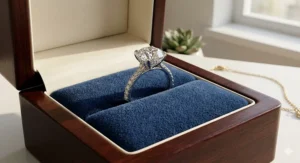
We did the unglamorous part so you don’t have to. That meant pulling real listings, cross-checking which brands actually disclose lab grading versus which ones bury it in the fine print, and figuring out which rings are worth your money at $600 and which ones only make sense once you’re north of $4,000. A natural diamond engagement ring isn’t a single product — it’s a category with budget gold bands, platinum GIA solitaires, and everything in between, and the right pick depends entirely on what you’re optimizing for: carat size, certification, metal, or just not blowing the whole budget on one ring.
Here’s what stood out, why it stood out, and who should actually buy each one.
Quick Comparison: Best Natural Diamond Engagement Rings at a Glance
| Ring | Carat / Cut | Metal | Certification | Price Range* | Best For |
|---|---|---|---|---|---|
| Houston Diamond District Emerald Cut Solitaire | 1 ct, Emerald | Platinum | GIA | $4,000–$6,000 | Buyers who want paperwork-backed resale value |
| Angara Knife-Edged Round Solitaire | Customizable | 14K Gold/Platinum | Certificate of Authenticity | $500–$2,500+ | Anyone who wants to design their own ring |
| Dazzlingrock Collection Round Solitaire | ~1.2 ct, Round | 14K White Gold | AGS | $2,400–$3,600 | Classic look with accredited grading |
| Diamondere Vintage Ring Set | 0.86 ct ttw, Vintage | 14K White Gold | GIA | $1,600–$2,400 | Buyers who want ring + band bundled |
| FINEROCK Cushion Halo | 1 ct ttw, Cushion Halo | 14K Solid Gold | Brand-graded | $900–$1,400 | Maximum visible sparkle on a modest budget |
| AFFY Rose Gold Halo Bridal Set | 1 ct, Round Halo | 14K Rose Gold | Brand-graded | $600–$950 | Rose gold lovers on a tight budget |
| Kobelli Petite Round Solitaire | 1/2 ct, Round | 14K White/Yellow Gold | Brand-graded | $450–$700 | First-time buyers, smallest realistic budget |
*Prices are approximate ranges at the time of research and fluctuate with gold spot price, seller stock, and Amazon promotions — always check the current listing before buying.
A pattern jumps out fast: the gap between the cheapest and most expensive ring here isn’t really about whether the diamond is “real.” It’s about certification rigor, metal choice, and carat weight stacking on top of each other. Platinum alone adds a real premium over gold, and a third-party GIA report costs the seller more to obtain than an in-house grading claim — which is exactly why the Houston Diamond District ring sits at the top of the price range while the Kobelli petite solitaire anchors the bottom. Neither one is a bad ring; they’re just answering different questions.
Just one click — help others make better buying decisions too! 😊
✨ Don’t Miss These Exclusive Deals!
🔍 Take your ring search to the next level with the picks below. Click through on any highlighted ring to check today’s price and current availability — Amazon listings shift fast, and the good ones don’t sit at a low price for long.
Top 7 Natural Diamond Engagement Rings: Expert Analysis
1. Houston Diamond District 1 Carat GIA Certified Solitaire Emerald Cut
Houston Diamond District’s emerald-cut solitaire is the ring in this lineup built for someone who wants the paperwork to match the proposal. The 1-carat center stone comes graded D-E color and VS1-VS2 clarity by GIA, set in platinum rather than gold-plated alternatives.
Here’s what that actually means day to day: D-E color is essentially colorless, so you won’t catch any yellow tint even next to a white tablecloth, and VS1-VS2 clarity means any inclusions are invisible without a jeweler’s loupe. Platinum doesn’t just look cool and white — it’s denser and more scratch-resistant than white gold, so the prongs holding that stone stay tighter for longer with everyday wear.
What most buyers overlook about emerald cuts specifically is that they show color and inclusions more readily than round brilliants, because the step-cut facets act like a window instead of scattering light. That’s exactly why the D-E VS1-VS2 grading here matters more than it would on a round stone — Houston Diamond District clearly priced the quality to match the cut’s unforgiving nature.
Shoppers researching this brand tend to flag the GIA certificate and the platinum build as the standout reassurance, since both are independently verifiable rather than taking the seller’s word for it.
Best for: Buyers who plan to insure, resize, or eventually resell the ring and want independent paperwork attached to it.
✅ GIA-graded, independently verifiable
✅ Platinum setting resists tarnish and wear
✅ Emerald cut reads larger than round for the same carat weight
❌ Premium price point compared to gold alternatives
❌ Emerald cut shows inclusions more visibly than brilliant cuts
Price & verdict: Expect to land in the $4,000–$6,000 range — steep, but you’re paying for platinum and third-party grading, not marketing.
2. Angara Natural Knife-Edged Classic Round Diamond Solitaire
Angara’s knife-edged round solitaire earns its spot here for one reason: it’s fully customizable, letting you pick carat weight, diamond quality grade, and metal (white, yellow, or rose gold, or platinum) before checkout.
The knife-edge band detail isn’t just decorative — that slim, ridged profile is designed to direct light toward the stone rather than competing with it visually, which makes a modest center diamond punch above its actual size. Because the family-run brand sources both natural and lab-grown stones with GIA-trained professionals doing the sourcing, you’re not stuck with whatever grading the listing happened to ship with.
The real advantage here is flexibility most fixed listings don’t give you: someone proposing on a tight timeline and a tight budget can start around half a carat in gold, while someone with more room can scale the same design up to platinum and a full carat without switching rings entirely.
Customers shopping Angara’s customizable listings frequently mention the Certificate of Authenticity arriving alongside the ring as a reassuring touch, plus the option to size up later if the relationship — and the budget — grows.
Best for: Buyers who want one design they can scale to their actual budget instead of choosing between seven fixed configurations.
✅ Fully customizable carat, metal, and quality grade
✅ Certificate of Authenticity included
✅ Knife-edge band makes smaller stones look proportionally bigger
❌ Final price varies widely depending on what you select
❌ Made-to-order pieces typically ship slower than in-stock rings
Price & verdict: Starting around $500 for a modest gold setup and climbing past $2,500 for platinum and a larger stone — solid value either way you configure it.
3. Dazzlingrock Collection AGS Certified Round Diamond Engagement Ring
Dazzlingrock Collection built its reputation on one thing: a classic round solitaire that doesn’t cut corners on accredited grading just because it’s not GIA. This roughly 1.2-carat round diamond ring carries AGS (American Gem Society) certification in solid 14K white gold.
AGS grading uses a similarly rigorous scale to GIA, and in practice it’s one of the few labs whose cut grades are considered just as trustworthy by independent jewelers — so you’re not actually settling for a lesser report, just a less universally recognized name. The “solid” white gold designation also matters more than it sounds: solid gold can be resized and re-polished repeatedly over decades, where gold-plated rings thin out and lose their finish within a few years of daily wear.
What most listings in this price bracket skip is a 90-day workmanship warranty and a 30-day return window — Dazzlingrock backs both, which is a meaningful safety net for a purchase this size bought sight-unseen online.
Buyers researching this collection consistently note the classic styling reads as timeless rather than trend-driven, with the accent on accredited grading over flashy marketing language.
Best for: Traditionalists who want a round solitaire with credible grading, without paying the platinum-and-GIA premium.
✅ AGS-certified for independently verified quality
✅ Solid 14K white gold, not plated
✅ 90-day warranty plus 30-day returns
❌ AGS is less universally recognized by name than GIA
❌ White gold needs occasional rhodium replating over the years
Price & verdict: Typically around $2,400–$3,600 — a sensible middle ground between budget halo rings and platinum GIA solitaires.
4. Diamondere Natural and GIA Certified Diamond Engagement Ring Set
Diamondere’s vintage-style set solves a problem most single-ring listings ignore entirely: you’ll need a wedding band eventually anyway, so why buy it separately? This 0.86 total carat weight set pairs a vintage-detailed engagement ring with a matching wedding band, both GIA-graded, in 14K white gold.
The vintage detailing — typically milgrain edges and a scalloped gallery under the stone — does real work beyond looks, since the extra metalwork around the setting reinforces the structure holding the diamonds in place, which matters on a piece you’ll wear daily for decades. Buying the pair together also avoids the classic mismatch problem where a wedding band purchased months later doesn’t quite sit flush against the engagement ring’s curve.
Diamondere backs every piece with third-party certification covering the gemstones, metal, and craftsmanship — not just a marketing claim, but an actual certificate that ships with the order.
Shoppers comparing vintage-style sets tend to flag the matched-band convenience as the deciding factor over buying pieces separately, even when the total carat weight is split across both rings rather than concentrated in one center stone.
Best for: Engaged couples who want to solve the ring and the band in a single purchase instead of two separate shopping trips.
✅ GIA certification on the full set, not just the center stone
✅ Wedding band guaranteed to match the engagement ring’s profile
✅ Vintage detailing adds structural reinforcement, not just style
❌ 0.86 total carat weight is split across two rings, not one large stone
❌ Vintage filigree requires gentler cleaning than smooth modern bands
Price & verdict: Generally falls in the $1,600–$2,400 range for both rings combined — solid value once you factor in skipping a separate band purchase.
5. FINEROCK 1 Carat Cushion Shape Halo Diamond Engagement Ring
FINEROCK’s cushion halo ring exists for one purpose: making a modest center stone look considerably bigger than its actual carat weight. A cluster of smaller diamonds surrounds a cushion-cut center stone, bringing the ring to 1 total carat weight in solid 14K gold.
This is the optical-illusion trick of the diamond world, and it genuinely works — a halo setting can make a 0.5-carat center stone read as visually close to a full carat from across a dinner table, because your eye perceives the combined sparkle of the cluster rather than measuring the center stone in isolation. The listing’s G-H color and I1-I2 clarity grading sits a notch below the premium picks in this roundup, which is precisely why the price comes in so much lower.
What’s worth knowing before you buy: I1-I2 clarity inclusions can occasionally be visible to the naked eye depending on their size and position, so if you’re someone who’ll be staring at this ring under bright kitchen lighting every morning, it’s worth reading buyer photos carefully rather than assuming all clarity grades look identical.
Customers shopping cushion halo styles in this price tier generally report satisfaction with the apparent size-to-price ratio, with occasional notes that the cluster setting demands slightly more careful cleaning than a plain solitaire.
Best for: Buyers who want maximum visual size and sparkle without paying for a large single stone.
✅ Halo setting maximizes apparent size relative to actual carat weight
✅ Solid 14K gold construction, not plated
✅ Cushion cut pairs well with both vintage and modern aesthetics
❌ I1-I2 clarity may show minor visible inclusions
❌ Cluster setting has more nooks that collect everyday grime
Price & verdict: Usually around $900–$1,400 — a strong pick if visual impact matters more to you than raw carat count.
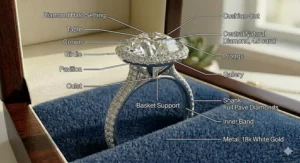
6. AFFY Round Cut White Natural Diamond Halo Bridal Wedding Ring Set
AFFY’s rose gold halo set is the budget-bridal answer for anyone who’s decided rose gold is non-negotiable. The set pairs a 1-carat halo engagement ring with a matching wedding band, both in 14K solid rose gold.
Rose gold gets its warm pink tone from a higher copper content alloyed into the gold, which has a practical upside most shoppers don’t realize: that copper content makes rose gold meaningfully harder and more scratch-resistant than yellow or white gold of the same karat, so it tends to hold up better against the daily knocks of dishwashing and keyboard typing. AFFY has been manufacturing jewelry since the early 1990s and supplies several established brick-and-mortar chains, which is worth knowing if “is this a fly-by-night seller” is on your mind at this price point.
The listing notes I2-I3 clarity, which is the most affordable end of the clarity scale — inclusions here are more likely visible without magnification, so this is a ring that prioritizes carat weight and rose gold styling over diamond purity.
Buyers shopping AFFY’s bridal sets in this price range tend to comment on the rose gold tone matching photos accurately and the bundled band saving them a second purchase, with the clarity grade noted as the expected trade-off for the price.
Best for: Rose gold devotees who want a complete bridal set without spending four figures.
✅ Rose gold’s copper content adds real-world scratch resistance
✅ Engagement ring and wedding band bundled together
✅ Brand has decades of manufacturing history, not a newcomer
❌ I2-I3 clarity means inclusions may be visible without magnification
❌ Halo cluster setting needs more frequent professional cleaning
Price & verdict: Typically $600–$950 for the set — genuinely hard to beat if rose gold and budget are your two non-negotiables.
7. Kobelli Round Diamond Solitaire Petite Engagement Ring
Kobelli’s petite solitaire is the smallest financial commitment in this entire roundup, and that’s precisely the point. A half-carat round diamond sits in a six-prong setting in your choice of 14K white or yellow gold.
Six prongs instead of the more common four matters more than it sounds: more metal contact points mean the stone is held more securely, which is reassuring on a daily-wear ring where catching it on a sweater sleeve is a real and recurring risk. Kobelli has operated out of Los Angeles for over four decades specializing specifically in natural diamonds, and the petite design keeps the band slim and low-profile rather than chunky.
This is genuinely one of the few listings worth recommending if you’re searching specifically for a natural diamond ring under $1000 and want an actual diamond rather than a stand-in stone — the half-carat size keeps the price grounded while still being a real, natural, mined diamond.
Shoppers buying this petite style frequently mention it as a thoughtful “starter” engagement ring, with several noting they plan to upgrade the center stone later using exactly the lifetime upgrade policies several natural-diamond sellers (including Kobelli) commonly offer.
Best for: First-time buyers on the smallest realistic budget, or anyone who prefers a minimalist, low-profile ring over a statement piece.
✅ Six-prong setting adds extra security for the center stone
✅ Decades of brand history specializing in natural diamonds
✅ Petite, low-profile design suits minimalist style
❌ Half-carat center stone is genuinely small in person
❌ Limited to white or yellow gold, no rose gold or platinum option
Price & verdict: Generally $450–$700 — about as low as a real natural diamond solitaire ring gets without compromising on it actually being a mined stone.
Real Couples, Real Rings: Matching Your Profile to the Right Pick
Not everyone shopping this list is solving the same problem, so here’s how three common situations actually map to the rings above.
The grad-student proposal on a tight timeline. Budget tops out around $700, the proposal is happening in six weeks, and resale value isn’t the priority — getting engaged is. The Kobelli petite solitaire or AFFY rose gold set both deliver an authentic natural diamond ring under $1000 without forcing a financing plan into the equation.
The couple who wants one big “wow” moment. Visual impact matters more than raw carat count, and the budget sits comfortably in four figures. The FINEROCK cushion halo or Dazzlingrock Collection round solitaire both stretch a modest center stone into something that photographs like it cost more than it did.
The buyer thinking about resale and insurance from day one. Maybe it’s a second marriage, maybe it’s simply someone who reads insurance policy fine print for fun — either way, GIA paperwork and platinum durability aren’t optional. The Houston Diamond District emerald cut solitaire is built specifically for this buyer.
Caring for Your Natural Diamond Ring: A 30-Day Owner’s Guide
The first month with a new ring is when most preventable damage happens, simply because the wearer hasn’t adjusted habits yet.
Week one: Skip the hand sanitizer pump and dish soap marathon while you’re still getting used to wearing it. Alcohol-based sanitizers can dull a diamond’s surface shine over repeated exposure, and the prongs haven’t had a “settling in” inspection yet.
Week two: Get the prongs checked by any local jeweler, even if you didn’t buy the ring locally — a quick prong-tightness check is usually free and catches loose settings before you actually lose a stone, not after.
Weeks three and four: Establish a cleaning rhythm rather than waiting until it looks dull. Warm water, a drop of mild dish soap, and a soft toothbrush handle 90% of everyday buildup; save jewelry-specific cleaners for monthly deep cleans.
The most common first-30-days mistake isn’t damage at all — it’s simply forgetting to get the ring formally appraised and added to a homeowner’s or renter’s insurance policy, a step that takes one afternoon and matters enormously if the ring is ever lost.
What Is a Natural Diamond Engagement Ring?
A natural diamond engagement ring features a diamond formed underground over roughly one to three billion years under extreme heat and pressure, then mined, cut, and set into a ring — as opposed to a lab-grown diamond, which is created in weeks using similar conditions replicated in a controlled chamber. Both are chemically real diamonds; the difference is entirely about origin and formation timeline, not authenticity.
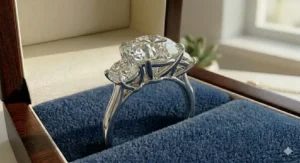
How to Choose a Natural Diamond Engagement Ring: 6 Steps
- Set a firm budget first, before browsing. Carat size is the single biggest price driver, and browsing without a number in mind almost guarantees scope creep.
- Decide on cut before color or clarity. A well-cut diamond in a lower color or clarity grade consistently outshines a poorly cut diamond with “perfect” paper specs.
- Pick certification level deliberately. GIA and AGS carry the most universal trust; brand-only grading is fine at lower price points but worth knowing going in.
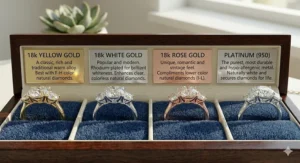
- Choose metal based on lifestyle, not just looks. Platinum suits daily heavy use; white gold needs replating every few years; rose gold resists scratches better than yellow.
- Decide solitaire versus halo based on priorities. Solitaires showcase the stone itself; halos maximize apparent size on a smaller budget.
- Confirm the return window before buying. A 30-day return policy matters enormously for a purchase this personal, made sight-unseen online.
The 4Cs and Certification: What Actually Drives Sparkle, Price, and Trust
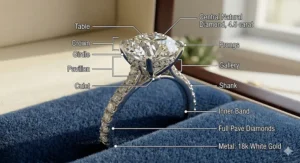
The 4Cs of diamond quality — cut, color, clarity, and carat — were standardized by the Gemological Institute of America and remain the universal language for describing any diamond, anywhere. Cut determines how a diamond interacts with light and is widely considered the most important of the four, since a poorly cut stone looks flat even with flawless color and clarity. Color is graded D (colorless) to Z (visibly yellow), clarity from Flawless down to Included based on visible inclusions, and carat simply measures weight — one carat equals 200 milligrams.
Certification is where the rubber meets the road: a GIA certified natural diamond ring means an independent lab — not the seller — assigned those grades using standardized equipment, which is exactly why GIA and AGS reports carry more resale and insurance weight than a brand’s in-house grading claim. The FTC’s Jewelry Guides actually require sellers to disclose accurately whether a stone is mined or lab-grown, and misusing certification language can constitute a federal disclosure violation — so a seller who’s vague about who graded the stone is worth a second look before you buy.
Natural Diamond vs. Lab-Grown vs. Moissanite: The Real Comparison
| Natural Diamond | Lab-Grown Diamond | Moissanite | |
|---|---|---|---|
| Formation | Mined, billions of years | Grown in weeks | Lab-grown silicon carbide |
| Relative Price | Highest | 20-40% less than natural | Lowest |
| Resale Value | Holds value better long-term | Resale value still developing | Minimal resale value |
| Best For | Resale, tradition, rarity | Budget-conscious, larger carat | Maximum sparkle per dollar |
Price is the headline difference, but resale tells the more interesting story: natural diamonds have decades of established secondary market pricing, while lab-grown diamond resale values are still finding their footing as the technology has only scaled commercially in the past several years. Moissanite isn’t a diamond at all — it’s a separate gemstone that simply mimics diamond’s brilliance — so it belongs in a different conversation entirely if diamond rarity value is part of why you’re buying.
Common Mistakes When Buying a Natural Diamond Engagement Ring
Buying carat weight before checking cut quality. A 1.5-carat diamond with a mediocre cut can look smaller and duller than a well-cut 1-carat stone — cut should win every tiebreaker.
Assuming all “natural” claims are equally verified. Brand-only grading and independent GIA grading aren’t the same level of assurance, even when both listings say “natural diamond.”
Skipping the return window research. Ring sizing is genuinely hard to nail from a phone screen — confirm the seller’s resize and return policy before you commit, not after the ring arrives too small.
Ignoring metal durability for daily wear. A delicate vintage filigree band looks stunning in photos but may need more frequent professional maintenance than a simple solid band.
Forgetting insurance until after something goes wrong. A formal appraisal and a rider on an existing policy take one afternoon and cost far less than replacing a lost stone.
Conflict-Free Sourcing: Why the Kimberley Process Still Matters
The Kimberley Process Certification Scheme was established in 2003 under a United Nations resolution specifically to keep so-called “conflict diamonds” — rough stones used to fund armed rebellions — out of the legitimate global market. Participating countries require every international rough diamond shipment to travel with a Kimberley Process certificate, and trading with non-participating countries is prohibited entirely under the scheme.
It’s not a perfect system — critics including former observer organizations have pointed out it only covers rough, uncut stones and doesn’t track diamonds once they’re polished — but Kimberley Process certification at the country level, combined with a reputable seller’s own conflict-free sourcing claims, is genuinely the best verification tool an individual consumer has access to. Every brand in this roundup states its sourcing is conflict-free; it’s still worth asking a seller directly which warranties back that claim if it matters to you.
Long-Term Cost, Resale, and the “Investment” Myth
| Carat Weight | Typical Price Range* | Resale Reality |
|---|---|---|
| Under 0.5 ct | $400–$900 | Resale market is thin; sentimental value dominates |
| 0.5–1 ct | $900–$4,000 | Most liquid resale segment, best demand |
| 1–2 ct | $4,000–$12,000+ | Strong resale if cut and clarity are high |
| 2 ct+ | $12,000+ | Niche resale market, depends heavily on certification |
*Ranges reflect general market patterns at the time of research, not guaranteed pricing for any specific ring.
Here’s the uncomfortable truth jewelers don’t lead with: a diamond ring is not a liquid investment the way a stock or bond is. Retail markup means most rings resell for noticeably less than purchase price regardless of carat weight, and the 0.5-to-1-carat range holds value best simply because it’s the size most buyers are shopping for when they’re the ones doing the reselling. If diamond rarity value matters to your decision, buy the best cut and clarity your budget allows rather than chasing carat weight alone — quality holds resale interest longer than raw size does.
Features That Actually Matter (And the Hype You Can Skip)
Actually matters: Cut grade, independent certification, prong count and setting security, metal purity stamps (14K, 18K, platinum markings).
Mostly hype: “Brilliant” or “ideal” used as marketing adjectives without an actual grading report behind them, oversized halo clusters marketed as carat-equivalent to a solid center stone, and vague phrases like “premium quality” that don’t correspond to any standardized scale.
The honest filter: if a listing’s best-selling point can’t be traced back to a number on a grading report, treat it as marketing flavor text rather than a real differentiator.
FAQ
❓ How much does a natural diamond engagement ring cost in 2026?
❓ Is a natural diamond engagement ring worth it over lab-grown?
❓ What carat size natural diamond engagement ring is most popular?
❓ How can I tell if a diamond ring is natural or lab-grown?
❓ Where can I find a natural diamond ring under $1000?
Conclusion
A natural diamond engagement ring doesn’t have to mean choosing between “cheap and questionable” or “gorgeous and financially terrifying.” The seven rings above span roughly $450 to $6,000 and prove the real differentiator isn’t whether the diamond is genuine — every brand here sells real, natural, mined stones — it’s how much independent verification, metal durability, and carat size you’re paying for on top of that baseline.
If you remember nothing else: prioritize cut quality over carat weight, confirm who actually graded the stone, and never skip the return policy fine print on a purchase this personal. Whichever ring you land on, that’s the moment that matters far more than the listing price.
✨ Found Your Ring? Here’s What’s Next
🔍 Click through to check today’s price and current stock on any ring above before it sells out of your size — Amazon bridal listings move fast, especially around proposal season.
Recommended for You
- Best Lab Grown Diamond Engagement Ring: 7 Brilliant Picks for 2026
- 7 Best Unique Engagement Rings Not Diamond She’ll Love in 2026
- Best Bohemian Engagement Rings in 2026: 7 Stunning Boho Picks
Disclaimer: This article contains affiliate links. As an Amazon Associate, I earn from qualifying purchases. If you purchase products through these links, we may earn a small commission at no additional cost to you.
✨ Found this helpful? Share it with your friends! 💬🤗
