In This Article
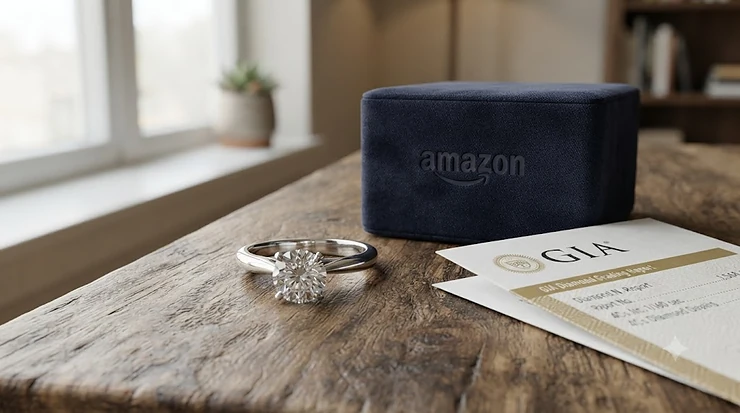
A GIA certified diamond ring is simply a ring whose center stone has been independently graded by the Gemological Institute of America on the 4Cs — color, clarity, cut, and carat weight — rather than just described by the seller. The surprising part for most shoppers: you can buy one on Amazon, with Prime shipping and a return window, instead of sitting across a glass counter from a salesperson who’s paid on commission.
That second part is the thing people don’t believe until they see it. I didn’t either, the first time a friend sent me a screenshot of a platinum solitaire with a GIA report number sitting next to a “Buy Now” button usually reserved for phone chargers. But it’s real, and it’s been real for years — wholesale jewelers figured out that Amazon’s audience wants the same diamonds without the showroom theater, and they built entire storefronts around it.
That doesn’t mean every listing deserves your trust equally. “Diamond ring” on Amazon ranges from genuinely GIA-graded natural stones to cubic zirconia dressed up in flattering photography. The goal here is to walk through seven listings that are currently live, explain what their grading reports actually tell you, and flag the spots where the spec sheet leaves something important unsaid.
Quick Comparison Table
| Ring | Best For | Cert Lab | Center Stone | Metal |
|---|---|---|---|---|
| Amazon Collection GIA Certified Cushion Halo | Best Amazon-brand pick | GIA | 2–2.5 cttw | 14K white gold |
| Houston Diamond District 1 Ct Solitaire Cushion Cut | Best clarity-per-dollar | GIA | 1 ct, I/VVS1-VVS2 | Platinum |
| Houston Diamond District 1.75 Ct Heart Cut | Best statement shape | GIA | 1.75 ct, D-E/VS1-VS2 | Platinum |
| Houston Diamond District 1.5 Ct Emerald Cut | Best vintage-leaning cut | GIA | 1.5 ct, G-H/VS1-VS2 | Platinum |
| Dazzlingrock Collection GIA Bridal Set | Best budget bridal set | GIA | 1.5 ct + accents | 14K white gold |
| Dazzlingrock Collection AGS Certified Ring | Best AGS-graded pick | AGS | 1.20 cttw | 14K white gold |
| Customize Jewels GIA/IGI Solitaire | Best entry point | GIA or IGI | 0.30–0.90 ct | 14K white gold |
A pattern jumps out immediately: the priciest-looking ring on this list isn’t the one with the biggest number in the title. The heart cut wins on color (D-E, essentially colorless) and clarity (VS1-VS2), which actually costs more per carat than the bigger cushion halo, since color and clarity move the price needle harder than carat weight alone in this range. If your budget is the constraint, the entry-level solitaire and the bridal set are where you start; if color is non-negotiable, skip straight to the heart cut or the emerald cut.
💬 Just one click — help others make better buying decisions too! 😊
✨ Compare the Full Lineup Before You Decide
Scroll through the breakdowns below — each one tells you exactly which grading detail matters and which one is mostly marketing. Tap through to check current availability and pricing on any ring that fits.
The 7 Rings, Broken Down Honestly
1.Amazon Collection GIA Certified Cushion Halo Engagement Ring
Amazon Collection GIA Certified Cushion Halo Engagement Ring is Amazon’s own private-label entry, and it’s the one most likely to show up first in your search results for good reason.
The center stone runs 2 to 2.5 carat total weight in a cushion-cut halo setting, rhodium-plated 14K white gold. The GIA certification means the stone has gone through independent gemological analysis of its quality and characteristics, and the supplier confirms compliance with the Kimberley Process for conflict-free sourcing. In practice, that second detail matters more than people give it credit for — it’s the difference between a paper trail you could hand to an insurer and a seller just telling you to trust them.
What most buyers overlook about halo settings specifically: the “total weight” number includes every accent stone around the center, so a 2.5 cttw ring might have a noticeably smaller actual center diamond than a 2-carat solitaire of the same weight. Read the listing’s stone breakdown, not just the headline carat figure.
✅ Pros: GIA-graded center stone, halo setting maximizes apparent size, backed by Amazon’s own return policy infrastructure
❌ Cons: Total carat weight can mislead on actual center stone size, rhodium plating will eventually need re-plating
Expect this one to land somewhere in the $2,500–$4,500 range, with the final number shifting hard based on which size variant you select — check current pricing on the listing itself since these multi-variant pages reprice per option.
2. Houston Diamond District 1 Carat GIA Certified Solitaire Platinum Cushion Cut Ring
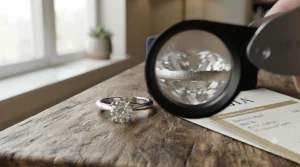
Houston Diamond District 1 Carat GIA Certified Solitaire Platinum Cushion Cut Ring is where the “I color, VVS1-VVS2 clarity” combination becomes genuinely interesting.
Here’s the trick most jewelry guides won’t spell out: a flawless clarity grade means no inclusions or blemishes visible under 10x magnification, while the grades just below it — VVS — mean inclusions so slight they’re difficult for even a skilled grader to spot. This ring sits in VVS territory on clarity, which is about as close to invisible-flaw as you’ll get without paying flawless-grade prices. The trade-off is color: “I” sits past the colorless range, meaning it’ll show a faint warmth under bright white light next to a D-color stone. Most people, including most jewelers without a comparison stone in hand, won’t catch it.
That’s the actual lesson here — clarity buys you peace of mind under a loupe nobody will ever use on your ring; color buys you something visible across a dinner table. If you have to compromise somewhere, this listing bets correctly on which one most people actually notice.
✅ Pros: VVS clarity is genuinely rare at this price point, platinum won’t need replating like white gold, GIA-graded
❌ Cons: I-color will show slight warmth versus colorless grades, platinum scratches show patina faster than gold
Platinum plus GIA plus 1 carat typically lands around $3,000–$5,000.
3. Houston Diamond District 1.75 Carat GIA Certified Heart Cut Diamond Ring
Houston Diamond District 1.75 Carat GIA Certified Heart Cut Diamond Ring is the one I’d point a hopeless-romantic shopper toward without hesitation.
D-E color and VS1-VS2 clarity is a serious combination — D-E sits at the very top of GIA’s colorless range, and GIA’s color scale runs from D, representing colorless, down through increasing presence of color to Z, which is light yellow or brown. A heart cut is also genuinely harder to source well-proportioned than a round or cushion, since the symmetry has to be perfect on both lobes or the whole shape looks lopsided in photos.
The retailer behind this listing is worth knowing about, too: Houston Diamond District operates out of Houston, Texas, and brings customization options to its engagement ring buyers. One independent reviewer who’s tracked their Amazon storefront for years noted something practical worth repeating here — because sellers commonly use stock renders rather than photographing every individual ring in inventory, you should scroll down to the customer review section and look specifically for buyer-submitted photos before trusting the hero image. That single habit will save you from more disappointment than any spec on the page.
✅ Pros: Near-colorless grade, distinctive shape for a memorable proposal, GIA-verified
❌ Cons: Heart cuts show inclusions more readily near the cleft, premium shape commands a premium price
This one sits at the top of the lineup, typically $6,000–$9,000+ depending on the exact stone variant selected.
4. Houston Diamond District 1½ Carat GIA Certified Platinum Solitaire Emerald Cut Ring
Houston Diamond District 1½ Carat GIA Certified Platinum Solitaire Emerald Cut Ring is the option for someone who finds round brilliants a little predictable.
Emerald cuts are step-cut rather than brilliant-cut, meaning fewer, larger facets that show off clarity rather than disguising it with sparkle. That makes the G-H, VS1-VS2 spec here meaningfully different in real life than the same numbers on a round stone — inclusions are easier to spot in an emerald cut’s open table, so VS clarity is doing real work, not just sitting on a certificate.
This particular listing also carries Amazon’s Small Business badge, meaning it comes from a brand Amazon classifies and promotes as a small business seller. That’s a nice-to-know detail for buyers who weigh that kind of thing, though it doesn’t change the return policy or certification.
✅ Pros: Step-cut elegance reads as vintage-modern, platinum setting, GIA documentation
❌ Cons: Emerald cuts hide flaws less forgivingly than brilliant cuts, sizing adjustments are pricier on platinum
Expect roughly $4,000–$6,500.
5. Dazzlingrock Collection GIA Certified 2.00 Cttw Diamond Bridal Engagement Ring
Dazzlingrock Collection GIA Certified 2.00 Cttw Diamond Bridal Engagement Ring earns its spot as the value pick of the bunch.
The setup here is a 1.50-carat GIA-certified center stone surrounded by accent diamonds bringing the total to 2.00 cttw, in solid 14K white gold. Dazzlingrock backs the piece with a 90-day warranty covering lost accent stones or setting damage from normal wear, on top of standard conflict-free sourcing claims. A 90-day structural warranty is genuinely uncommon at this price tier — most budget bridal sets offer nothing beyond the standard return window.
The catch with any “bridal set” listing: you’re paying for two pieces (engagement ring plus matching band), which is great if you want them, and an unnecessary line item if you don’t. Check whether the listing lets you buy the solitaire alone before assuming you need the set price.
✅ Pros: 90-day structural warranty is rare at this price, GIA center stone, includes matching band
❌ Cons: Bundled pricing isn’t ideal if you only want one ring, side stones add bulk some buyers don’t want
Typically $1,200–$2,200 for the pair.
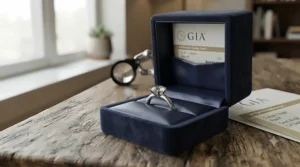
6. Dazzlingrock Collection AGS Certified 1.20 Carat Round Diamond Ring
Dazzlingrock Collection AGS Certified 1.20 Carat Round Diamond Ring is the one secondary-keyword shoppers searching for an AGS certified diamond ring specifically should know about — and it comes with a wrinkle worth understanding before you buy.
AGS Laboratories closed its grading lab in 2022, folding its cut-grading expertise into a partnership where GIA now issues the AGS Ideal Report as a supplemental document alongside standard GIA reports. So an “AGS Certified” listing today is almost certainly referencing an older report issued before that transition, not a brand-new evaluation. That’s not a red flag by itself — the AGS grading scale runs 0 to 10, with 0 being the best possible grade across cut, color, and clarity, and AGS pioneered the Ideal “Triple Zero” cut grade. It’s just context most listings won’t volunteer.
What that means practically: if the certificate matters to you, ask the seller (via Amazon Messages) for the actual report date and number so you can verify it’s a real, pre-2022 AGS Laboratories document rather than a generic claim.
✅ Pros: AGS’s deduction-based scale is genuinely rigorous on cut quality, solid 14K gold construction, round cut maximizes brilliance
❌ Cons: “AGS Certified” almost certainly means a pre-2022 report — verify the actual certificate, fewer AGS-graded listings exist than GIA ones so comparison shopping is harder
Generally $1,800–$3,000.
7. Customize Jewels GIA/IGI 0.30–0.90 Carat Round Cut Diamond Solitaire Ring
Customize Jewels GIA/IGI 0.30–0.90 Carat Round Cut Diamond Solitaire Ring is the most flexible — and most honest — entry point on this list, and it’s the one I’d send a first-time buyer to.
The listing lets you choose between 0.30 and 0.90 carat options in F-G color and VS2–SI1 clarity, with your choice of GIA or IGI certification, set in a classic four-prong solitaire on a 14K white gold band with a 2.0–2.2mm comfort fit. The seller also discloses something most competitors bury: the stones are natural, untreated, and carry medium to slight fluorescence, along with a laser inscription for authenticity.
That fluorescence note deserves a second look rather than a shrug. GIA’s own research has found that diamonds in the D to H color range with bluish fluorescence are sometimes considered less desirable in the trade because some buyers perceive a hazy or oily look, while diamonds with lower color grades and stronger fluorescence can actually appear up to one grade whiter. At F-G color, “medium to slight” fluorescence is unlikely to cause visible haze — it’s a disclosure that should reassure you, not worry you, since they told you instead of hoping you wouldn’t ask.
✅ Pros: You choose your certification lab and carat, fluorescence and treatment status are disclosed upfront, laser inscription deters fraud
❌ Cons: SI1-SI2 clarity at the lower carat options may show minor inclusions to the naked eye, F-G color sacrifices a touch of brilliance versus D-E
Depending on your carat selection, this runs anywhere from under $1,000 to around $2,500.
How GIA Diamonds on Amazon Stack Up Against a Traditional Jeweler
| Amazon (GIA-Graded Listings) | Traditional Jeweler | |
|---|---|---|
| Price transparency | Listed upfront, no haggling | Often negotiable, opaque markup |
| Return window | Typically 30 days | Varies, often store-credit only |
| Try-before-buy | Not possible | Yes, in person |
| Verification | Look up GIA report number yourself | Jeweler usually explains it for you |
The biggest gap isn’t price — it’s verification literacy. A jeweler walks you through a grading report in person; Amazon hands you a product title and expects you to know what VS1 or AGS 0 actually means. That’s a fair trade if you do a little homework first, and a bad one if you don’t. The flip side is real money saved: without a storefront markup baked in, several of these listings undercut mall-jeweler pricing for comparable grades.
💎 Don’t Buy Until You’ve Cross-Checked the Report Number
Whatever ring you’re eyeing, take thirty seconds before checkout to verify its certification is real and matches what’s listed. The next two sections show you exactly how.
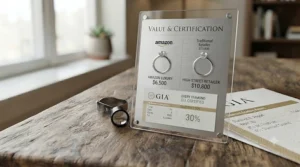
How to Verify Your Diamond Grading Report Actually Exists
This is the single highest-value thing you can do before buying any certified diamond ring online, and it takes less time than reading this paragraph.
- Find the GIA report number. It’s usually in the product images or description — a string of digits, often 8-10 characters.
- Go to GIA’s Report Check tool. Every diamond evaluated by GIA is cataloged with a report number that’s stored in GIA’s database and can be looked up anytime through Report Check.
- Compare the carat, color, and clarity on GIA’s record against what the Amazon listing claims. They should match exactly.
- For AGS-certified pieces, ask the seller directly for the report number — grading details for AGS documents issued after April 2010 are verifiable through AGS’s own Report Verification service.
- If a seller can’t produce a report number on request, treat that as the loudest red flag on the page.
A diamond grading report isn’t a marketing flourish — FTC guidance specifically requires that if a seller represents a grade for a diamond, the grading system used has to be disclosed. A real seller has nothing to hide here.
Which of These Rings Actually Fits Your Situation
The “we just got engaged, budget is tight” couple: Start with the Customize Jewels solitaire or the Dazzlingrock bridal set. Both let you get a real certified stone without stretching past what you can comfortably spend, and both disclose exactly what you’re getting.
The traditionalist who wants a flawless-looking white diamond: The Houston Diamond District heart cut or emerald cut. D-E and G-H color, respectively, both read as essentially colorless, and platinum settings age better than white gold for a piece you’ll wear daily for decades.
The “I want maximum sparkle without maximum spending” shopper: The cushion-cut platinum solitaire’s VVS clarity-for-an-I-color trade is the smartest dollar-for-dollar play on this list — most people clock color before clarity, so leaning the other way usually wins you more visible quality per dollar.
GIA vs. IGI vs. AGS: What the Letters Actually Cost You
This is the question buried in half the secondary searches that bring people to this page, so let’s settle it directly.
GIA reports are generally used as the benchmark for natural diamonds, while IGI built its reputation on extensive experience grading lab-grown stones specifically. The practical difference shows up in your wallet: IGI’s grading is generally considered slightly more lenient than GIA’s on color and clarity, meaning a stone that earns a VS1/G from IGI might come back as a VS2/H if it were sent to GIA instead. Neither lab is “wrong” — they’re calibrated differently, and IGI’s reports for lab-grown stones include useful extras like an explicit HPHT-or-CVD growth method notation that GIA reports historically didn’t emphasize as heavily.
AGS occupies a different lane entirely now. Since its lab closed in 2022, new “AGS certified” claims are rare; what you’ll mostly encounter are older reports or GIA’s newer AGS Ideal supplemental report for cut quality specifically.
The bottom line: GIA commands a price premium for a reason — stricter, more consistent grading — but IGI isn’t a downgrade, just a different calibration that tends to favor lab-grown shoppers and tighter budgets.
Common Mistakes Buyers Make on These Listings
A few patterns show up over and over in this category, and most of them are avoidable in under a minute:
- Confusing total carat weight with center stone weight. Many listings show two different numbers — total carat weight for the entire piece including accent stones, and a separate, smaller weight for just the center stone — and the two get confused constantly.
- Assuming every listing is certified just because the brand sells certified pieces elsewhere. If a listing’s title doesn’t explicitly say GIA or IGI certified, don’t assume it is — uncertified pieces from the same seller often come with only a certificate of authenticity instead, which is not the same as an independent lab grade.
- Skipping the photo reviews. Hero images are frequently rendered, not photographed. Real owner photos in the reviews section tell you far more about how the stone actually catches light.
- Ignoring fluorescence entirely. It rarely matters much, but it can shift price and, in rare extreme cases, appearance — so it’s worth thirty seconds of reading rather than zero.
Buying a Certified Diamond Ring for Women: Sizing and Returns on Amazon
A few Amazon-specific quirks matter here that a brick-and-mortar jeweler would normally walk you through in person.
Most of these listings sell by numeric ring size with no in-person try-on, so order a $2–5 plastic ring sizer before you buy rather than guessing. If you do need to return or have the ring resized, keep in mind that FTC disclosure rules require sellers to clearly state if a treatment or lab-grown origin applies — so re-read the listing once more before finalizing a purchase you can’t easily undo after resizing. Most of the sellers above offer a standard return window (commonly 30 days), but a resized ring is typically final sale — confirm before you size up or down.
FAQ
❓ Is a GIA certified diamond ring on Amazon actually GIA certified?
❓ Can you return a GIA certified diamond ring bought on Amazon?
❓ How much more does GIA certification add to a diamond ring's price?
❓ Does Amazon Collection jewelry come with a real GIA report?
❓ Is IGI certification trustworthy enough for an engagement ring?
The Bottom Line
Seven rings, three grading labs, and one consistent takeaway: the certification matters less than whether you actually read it. A GIA report number you never look up is just decoration. The same five-minute habit — pull the report number, check it against GIA or AGS’s database, scroll to the buyer photos before the hero image — works whether you’re spending $800 or $8,000, and it’s the difference between buying a diamond and buying a listing.
Start with whichever fits your budget from the seven above, verify before you buy, and you’ll end up with exactly what the certificate promises.
💍 Ready to Compare These Side by Side?
Tap through to any of the seven rings above to check today’s price and current size availability before they’re updated again.
Recommended for You
- Natural Diamond Engagement Ring: 7 Best Amazon Picks (2026)
- Best Lab Grown Diamond Engagement Ring: 7 Brilliant Picks for 2026
- 7 Best Unique Engagement Rings Not Diamond She’ll Love in 2026
Disclaimer: This article contains affiliate links. As an Amazon Associate, I earn from qualifying purchases. If you purchase products through these links, we may earn a small commission at no additional cost to you.
✨ Found this helpful? Share it with someone shopping for a ring right now! 💬
