In This Article
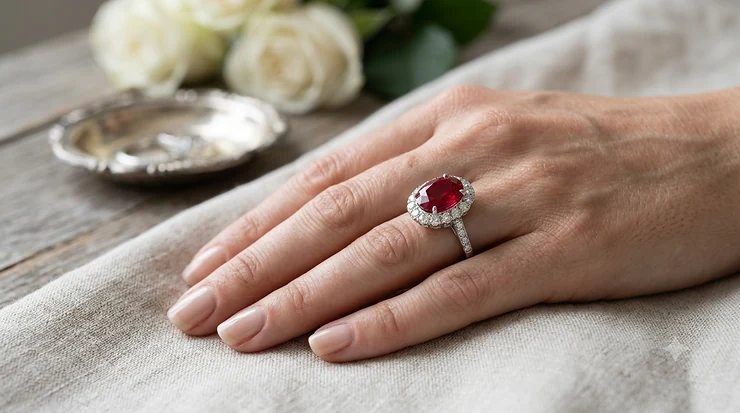
There’s a reason ruby is having a real moment in the engagement ring world right now. While diamonds still dominate the market, more couples are choosing a colored center stone that actually says something — and ruby, with its deep red glow and built-in symbolism of passion, is leading that shift. If you’re shopping for a ruby engagement ring for a woman in your life (or for yourself, no judgment), you’ve probably already noticed how wildly the options vary. Some rings run under $200 with a lab-created stone in sterling silver. Others sit in four figures with a natural Burmese-style ruby in solid gold or platinum.
That spread can make shopping genuinely confusing. What’s the real difference between a “created ruby” and a “natural ruby”? Is a $150 ring going to look cheap, or just smart? Does ruby even hold up to daily wear the way diamond does?
We dug through real, currently listed Amazon rings — not hypothetical “similar products” — to put together seven options that actually represent the range of what’s out there: budget lab-created stones, mid-range natural rubies with diamond halos, and a couple of statement-piece natural rubies for people who want something an heirloom-quality jeweler would sign off on. Below, you’ll find honest commentary on each, plus a breakdown of what actually matters when you’re choosing a ruby engagement ring — versus what’s just marketing noise.
Quick Comparison Table
| Ring Tier | Stone Type | Typical Metal | Best For |
|---|---|---|---|
| Budget | Lab-created ruby | Sterling silver / 14K gold | First-time buyers, gifting, trying the look |
| Mid-Range | Natural ruby, smaller carat | 14K white/yellow gold | Halo styles, everyday elegance |
| Premium | Natural ruby, statement carat | 14K gold / platinum | Heirloom pieces, larger centerpieces |
If you’re newer to colored-stone shopping, the table above is really the decision in miniature. Budget rings get you the ruby look and the gold or silver setting without the natural-stone price tag — and for many buyers, that’s the right call. Mid-range rings step up to a genuine mined ruby but keep the carat size modest to control cost. Premium pieces are where you start seeing 2-carat-plus natural rubies that function more like a family heirloom than a fashion ring.
💬 Just one click — help others make better buying decisions too!😊
✨ Compare Before You Commit!
🔍 Check current pricing, sizing, and availability on each ring below before deciding — Amazon prices and stock shift often, so it pays to look right before you buy.
Top 7 Ruby Engagement Rings for Women — Expert Analysis
1. Gem Stone King 14K Yellow Gold Created Ruby Solitaire
This is the entry point for a lot of buyers, and it earns that spot honestly. The ring centers a 6mm round created ruby at roughly 1.00 cttw, set in solid 14K yellow gold with a 6-prong solitaire mount. What most people overlook about created (lab-grown) rubies is that they’re chemically the same corundum as natural ones — they’re just grown in a controlled environment instead of a mine, which is exactly why the price drops so dramatically without the color or sparkle taking a hit. Buyer feedback on Gem Stone King’s created-stone rings tends to highlight how secure the prong setting feels and how the stone catches light well despite the lower price point.
Pros: Genuine 14K gold (not plated), secure 6-prong setting, sizes 5–9 available.
Cons: Created stone won’t hold resale value like a natural ruby; smaller carat than some buyers expect at first glance.
This one’s best for someone buying their first colored-stone ring, or a couple prioritizing the gold setting over stone provenance. Price tier: budget — worth checking the current listing for active promotions.
2. PEORA Created Ruby Princess Cut Ring in Sterling Silver
PEORA built its whole brand around accessible colored-stone jewelry, and this princess-cut piece shows why. It’s a 2.25-carat created ruby cut at 7mm, set in sterling silver with a comfort-fit band — meaning the underside of the band is gently rounded so it doesn’t dig into your finger during long wear, a small detail that matters more than spec sheets usually let on. The ring ships with a Certificate of Authenticity and a jewelry box, and buyer comments commonly mention that the color reads as a vivid pinkish-red rather than the darker, almost-black red of some natural stones — which some people prefer for everyday brightness.
Pros: Large carat weight for the price tier, comfort-fit band, comes with authenticity certificate.
Cons: Sterling silver tarnishes faster than gold without regular care; not ideal for daily heavy-duty wear long-term.
Best for buyers who want size and sparkle without a gold-tier budget — particularly anyone newer to fine jewelry. Price tier: budget.
3. Gem Stone King 14K White Gold Black Diamond & Created Ruby 3-Stone Ring
This is the most distinctive design on this list. Instead of a single ruby, it pairs a 4mm created ruby with a 5mm black diamond in a 3-stone setting (1.05 cttw total), in 14K white gold. The real-world appeal here is contrast — black diamond doesn’t compete with the ruby’s red the way a white diamond accent does, so the ruby stays the visual focus while the black stone adds depth instead of sparkle competition. It’s a ring for someone who wants something that doesn’t look like every other ruby ring on Amazon.
Pros: Unique 3-stone design, 14K white gold construction, USA-based quality checks before shipping.
Cons: Less traditional look may not suit buyers wanting a classic solitaire; smaller individual stone sizes than the carat total suggests.
Best for buyers who want a ring with a genuinely different silhouette. Price tier: budget-to-mid.
4. Dazzlingrock Collection Ruby & White Diamond Halo Ring, 14K White Gold
Dazzlingrock has built a reputation on Amazon for genuine-stone bridal jewelry at accessible prices, and this halo ring is a clear example. A round ruby center stone is ringed by a halo of white diamonds, set in solid 14K white gold. The halo design isn’t just decorative — surrounding a smaller center stone with diamonds makes it read visually larger from across a room, which is exactly why halo settings dominate the mid-range engagement ring market regardless of center stone type. This is one of the more traditional “engagement ring” silhouettes on this list.
Pros: Genuine ruby center stone, classic halo design reads larger than its actual carat weight, comes with a complimentary jewelry box.
Cons: Available sizing can run limited on popular variants; halo settings need more frequent cleaning to keep the diamond accents bright.
Best for buyers who want a natural ruby but in a familiar, traditional engagement ring shape. Price tier: mid-range.
5. Angara Natural Ruby and Diamond Halo Ring in 14K Gold or Platinum
Angara operates differently from most Amazon jewelry sellers — every piece is made to order, which means you actually choose your metal (14K gold or platinum), and the ring ships with a Certificate of Authenticity plus a lifetime warranty. This particular halo design pairs a natural ruby with a diamond surround. What stands out here is the customization: most Amazon ruby rings come in fixed specs, but Angara lets you adjust carat weight and gemstone grade, which matters if you have a specific budget ceiling or a specific look in mind.
Pros: Made-to-order customization, lifetime warranty, choice between gold and platinum.
Cons: Made-to-order means longer processing time than off-the-shelf rings; customization can push the price up quickly if you upgrade carat or clarity.
Best for buyers who want a natural ruby ring tailored to their exact budget and metal preference rather than picking from fixed inventory. Price tier: mid-to-premium.
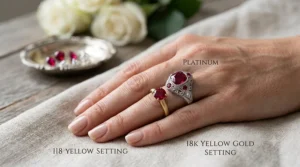
6. Houston Diamond District 2.6 Carat 14K Gold Twisting Eternity Ring with 2-Carat Natural Ruby Center
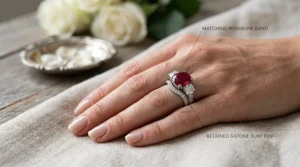
This is the showpiece on the list. The center is a 2-carat natural ruby, flanked by a diamond-set twisting eternity band in 14K gold (available in white, yellow, or black gold), bringing the total weight to roughly 2.6 carats. Houston Diamond District markets this as part of its “Heirloom Quality” line, and the design backs that up — the twisting channel-set diamond band is the kind of detail that’s genuinely hard to find at this carat size without paying jeweler markup. A 2-carat natural ruby is a meaningful size; for context, most natural ruby engagement rings in this price range cap out well below 1 carat, so this is a real outlier in scale.
Pros: Large natural ruby center stone, intricate twisting diamond band, multiple gold tone options.
Cons: Significant jump in price tier compared to everything else on this list; a 2-carat colored stone this size demands careful sizing and insurance consideration.
Best for someone buying a statement piece meant to be worn for decades — or passed down. Price tier: premium.
7. Angara 0.25 ct Natural Ruby and Diamond Split Shank Ring in Platinum
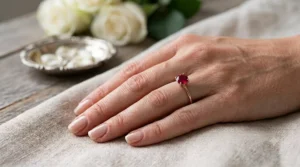
If the Houston Diamond District ring above is the splurge, this is the smart middle ground for buyers who want a natural ruby and platinum without the premium-tier price jump. It’s a smaller oval natural ruby (around 5x3mm) prong-set with diamond accents on a split-shank platinum band. Platinum doesn’t fade or require replating the way white gold eventually does, which is a real practical advantage most buyers don’t think about until years into ownership.
Pros: Genuine natural ruby, platinum setting (no replating ever needed), Certificate of Authenticity included.
Cons: Smaller stone size than other natural-ruby options here; platinum is denser and slightly heavier on the finger than gold.
Best for buyers who want the durability and prestige of platinum with a natural ruby, without paying for a large center stone. Price tier: mid-range.
Top 7 at a Glance
| Ring | Stone | Metal | Best For |
|---|---|---|---|
| Gem Stone King Solitaire | Created ruby, ~1.00 ct | 14K yellow gold | First-time buyers |
| PEORA Princess Cut | Created ruby, 2.25 ct | Sterling silver | Budget + size |
| Gem Stone King 3-Stone | Created ruby + black diamond | 14K white gold | Distinctive design |
| Dazzlingrock Halo | Natural ruby | 14K white gold | Traditional halo look |
| Angara Halo (Made-to-Order) | Natural ruby | 14K gold/platinum | Customization |
| Houston Diamond District Eternity | Natural ruby, 2 ct | 14K gold | Statement/heirloom |
| Angara Split Shank | Natural ruby, 0.25 ct | Platinum | Durable natural-stone entry |
Looking at this lineup, the real pattern is that carat size and stone provenance — not brand — drive most of the price difference. The two Gem Stone King rings and the PEORA piece keep costs low specifically because the ruby is lab-created, while Dazzlingrock and both Angara rings step up to natural stones at modest sizes. The Houston Diamond District ring is really in its own category once you cross into a 2-carat natural center stone.
Real-World Scenarios: Which Ruby Ring Fits Your Story
If you’re proposing on a tight budget: The Gem Stone King solitaire or PEORA princess cut both deliver real gold or sterling silver with a vivid created ruby, and neither will look like a compromise in photos. Save the natural-stone upgrade for an anniversary ring later.
If you want tradition without overspending: The Dazzlingrock halo hits the classic engagement ring silhouette most people picture, with a genuine ruby, at a price that doesn’t require financing.
If this is a once-in-a-lifetime purchase and budget is flexible: The Houston Diamond District 2-carat piece or an upgraded Angara custom order are built for exactly this — a ring meant to be the family heirloom, not just this year’s ring.
Ring Care & Setup Guide
Once the ring arrives, a few habits make a real difference in how it looks years from now.
- Clean it monthly, not just occasionally. Warm water, a drop of mild dish soap, and a soft toothbrush around the prongs removes the buildup that dulls sparkle — this matters more for halo settings, where diamond accents trap residue fast.
- Take it off for workouts, dishes, and gardening. Ruby is durable, but the metal prongs holding it in place can bend or loosen from repeated impact, which is the actual cause of most “my stone fell out” stories — not the stone itself.
- Get prongs checked annually, especially in the first year. A jeweler can tighten a loose prong in minutes; replacing a lost stone costs considerably more.
- Store it separately from other jewelry. Ruby is hard, but it can still scratch softer metals or get scratched by harder gems if rings are tossed together in one box.
How to Choose the Right Ruby Engagement Ring
- Decide on natural vs. created first. This single choice affects price more than any other factor, so settle it before you start comparing specific rings.
- Set a carat ceiling based on your stone type. A 2-carat created ruby costs a fraction of a 2-carat natural one — know which budget bracket you’re actually shopping in.
- Pick the metal for lifestyle, not just looks. Platinum resists wear better for daily-wear rings; gold offers more color and tone options.
- Choose a setting style that matches how she dresses. Halo settings suit people who like noticeable jewelry; solitaires suit a more minimalist everyday style.
- Confirm the return and sizing policy before buying. Ring sizing is the single most common return reason — check the seller’s resize or exchange policy first.
- Ask for a Certificate of Authenticity on natural stones. Reputable sellers like Angara and Houston Diamond District include this; if a “natural ruby” listing doesn’t offer one, ask before buying.
- Read the most recent reviews, not just the top-rated ones. Older reviews may reflect a different version of a listing; recent ones tell you what’s shipping today.
Natural vs. Lab-Created Ruby: What the Difference Really Means
Both natural and created rubies are corundum — the same mineral, same chemical structure, same hardness. The difference is origin: natural rubies form over millions of years underground, while created rubies are grown in a lab in weeks under controlled heat and pressure. Visually, a well-cut created ruby can be difficult to distinguish from a natural one without lab equipment, which is exactly why the budget rings on this list don’t look “fake” in any meaningful way.
Where the difference actually matters is rarity and resale. Natural rubies, especially larger or finer-colored ones, can appreciate in value and hold worth as an asset; created rubies are priced for their beauty, not as an investment. If resale value or family-heirloom status matters to you, lean natural even at a smaller carat size. If you just want the look and the gold setting, created stones are the financially smarter move.
Ruby Halo Engagement Rings vs. Solitaire Settings
A solitaire setting puts the ruby front and center with no distraction — clean, classic, and arguably the most timeless option, which is why the Gem Stone King solitaire on this list reads as understated rather than plain. A halo setting, like the Dazzlingrock and Angara pieces above, surrounds the center stone with smaller diamonds, which does two things practically: it makes the center stone look larger than its actual carat weight, and it adds overall brilliance since white diamonds reflect more light than colored stones typically do on their own.
The trade-off is maintenance and cost. Halo rings have more total stones, which means more settings that can loosen over time and more surfaces to clean. Solitaires are lower-maintenance and put 100% of the budget into the center stone rather than splitting it with accent diamonds.
Common Mistakes When Buying a Ruby Engagement Ring
- Assuming “ruby” on a listing always means natural. Many budget listings say “ruby” without clarifying it’s created — read the full title and bullet points, not just the photo.
- Buying the wrong ring size and hoping it’ll work. Resizing is possible on most rings but not all settings handle it equally well, especially halo styles with stones close to the band edge.
- Ignoring the metal’s long-term maintenance needs. Sterling silver and gold plating both require more upkeep than solid 14K gold or platinum — factor that into the “true cost” of a cheaper ring.
- Overlooking the return window. Engagement ring shopping is emotional and rushed; confirm the return policy before checkout, not after the proposal.
- Skipping the Certificate of Authenticity on natural-stone purchases. If a seller offers one, get it — it protects both the resale value and any future insurance claim.
Ruby Hardness, Durability & Everyday Wear: What to Expect
Ruby belongs to the corundum mineral family — the same family as sapphire — and sits at 9 on the Mohs hardness scale, just below diamond’s 10. In practical terms, that means a ruby can handle daily wear, accidental knocks against doorframes, and years of regular use without scratching under normal conditions. According to the Gemological Institute of America, corundum’s hardness is part of why ruby has remained a durable choice for engagement and anniversary jewelry across centuries, alongside diamond and sapphire.
What this means day-to-day: you don’t need to baby a ruby ring the way you might a softer gem like opal or pearl. The real vulnerability isn’t the stone — it’s the setting. A 9-hardness stone can still pop out of a worn or bent prong, which is why the care routine above matters more than the stone’s durability rating ever will.
Long-Term Value: Ruby vs Diamond Engagement Rings
| Factor | Ruby | Diamond |
|---|---|---|
| Hardness (Mohs scale) | 9 | 10 |
| Color | Vivid red, symbolic of passion | Colorless to faint tones |
| Price at equal carat (natural) | Often lower than top diamond grades | Premium pricing at high clarity/color |
| Resale/Investment | Strong for fine natural stones | Well-established resale market |
| Everyday distinctiveness | Stands out, less common choice | Traditional, widely recognized |
The table makes the trade-off pretty clear: diamond is marginally harder and has the more established resale infrastructure, but ruby offers more visual distinctiveness and, gem-for-gem, can deliver a larger or more vivid natural stone for the same budget. Neither is “better” outright — it comes down to whether you want the most traditional choice or one that stands out at every dinner party for the next fifty years.
Pigeon Blood Red & Burmese Origin: What “Ruby Quality” Really Means
If you’ve shopped for natural rubies at all, you’ve probably run into the term “pigeon blood red” — it refers to a specific, highly saturated pure red with a slight blue undertone, historically associated with rubies mined in Myanmar’s Mogok region (commonly called Burmese rubies). It’s considered the gold standard of ruby color, and stones with this exact hue command significant premiums at auction. Most rubies on Amazon, including the natural ones in this guide, won’t carry formal pigeon-blood grading — that designation is typically reserved for gem-lab-certified, high-end stones — but understanding the term helps you evaluate color quality even informally: the closer a ruby’s red leans toward this pure, saturated tone rather than brownish or purplish red, the higher quality it generally is.
Origin matters less for everyday buyers than color and clarity do, but it’s worth knowing that Burmese, Thai, and African rubies (notably from Mozambique) each have slightly different typical color profiles. None of this should stop you from buying a beautiful ring without lab certification — it’s simply useful context for understanding why two rubies of similar carat weight can be priced so differently.
Frequently Asked Questions
❓ How much does a ruby engagement ring cost?
❓ Is a ruby a good stone for an engagement ring?
❓ What's the difference between natural and lab created ruby rings on Amazon?
❓ Can you get a lab created ruby ring on Amazon affordably?
❓ Is ruby harder than sapphire for an engagement ring?
Conclusion
Choosing a ruby engagement ring really comes down to two decisions: natural or created, and how much carat size matters to you relative to budget. Both paths lead to a genuinely beautiful ring — the Gem Stone King and PEORA picks prove that a created ruby in real gold or silver can look every bit as striking as a natural stone, while the Dazzlingrock, Angara, and Houston Diamond District options show what’s possible once you move into natural territory. There’s no wrong answer here, only the one that fits your budget and the story you want the ring to tell.
✨ Don’t Miss These Exclusive Deals!
🔍 Take your ruby engagement ring search to the next level – click through to any ring above to check current pricing, sizing, and availability before stock or promotions change.
Recommended for You
- Emerald Engagement Ring for Women: 7 Best Picks for 2026
- 7 Best Sapphire Engagement Rings for Women in 2026
- 7 GIA Certified Diamond Rings on Amazon Actually Worth Buying (2026)
Disclaimer: This article contains affiliate links. As an Amazon Associate, I earn from qualifying purchases. If you purchase products through these links, we may earn a small commission at no additional cost to you.
✨ Found this helpful? Share it with your friends! 💬🤗
